The Incredible Epic of the Milwr Tunnel
Wales hides beneath its hills an exceptional industrial heritage. Among these underground treasures, the Milwr Tunnel stands out for its scale and ingenuity. Located in the county of Flintshire, this colossal structure was not only used for mineral extraction. Its main purpose was to drain the water that constantly flooded the galleries.
From the romans to the first miners
The Romans were already mining lead on Halkyn Mountain, taking advantage of the deposits accessible on the surface. Later, during the Middle Ages, local farmers dug trenches to extract this precious metal, often at the request of King Edward I for the construction of his castles (roofs, plumbing, and piping).
By the 16th century, miners had reached depths where flooding became unmanageable. Even the arrival of the first steam engines in the 18th century was not enough to make extraction profitable compared to the high pumping costs.
The 19th century: the milwr tunnel, a colossal project
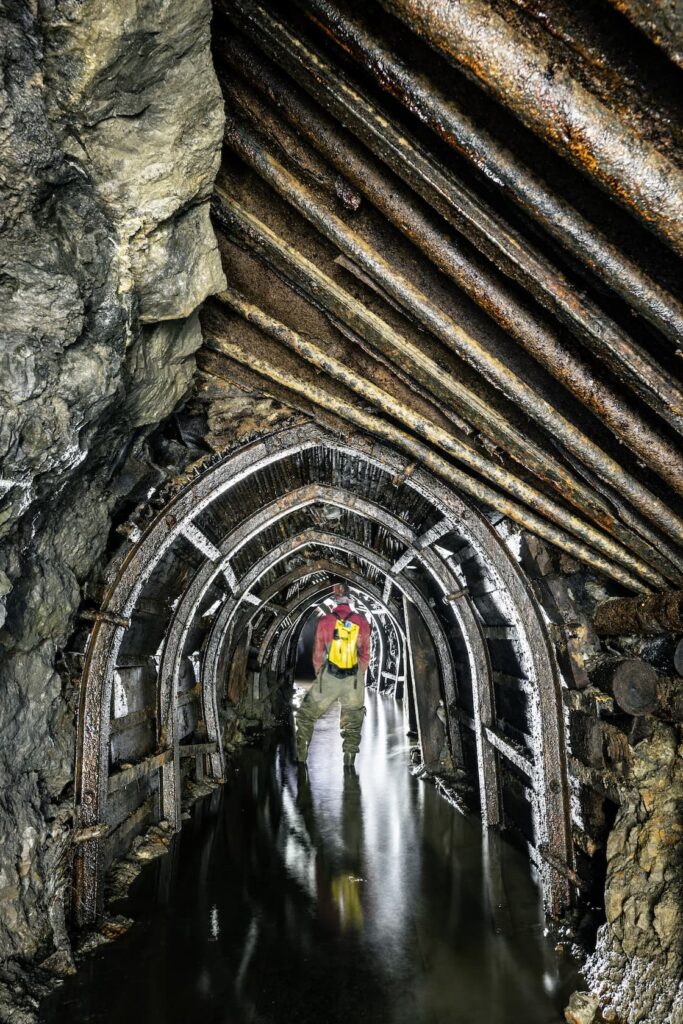
To solve this problem, the Holywell Halkyn Mining and Tunnel Company launched an ambitious project in 1897. The goal was simple but monumental: to dig a drainage tunnel starting from sea level at Bagillt. This structure was designed to extend underground, allowing the mine water to drain naturally by gravity.
Engineers designed the tunnel with a gentle gradient of 1:1000 (1%). They even installed automatic gates at the entrance to prevent high tides from flooding the gallery. At the outbreak of the First World War, drilling teams were advancing at a relentless pace of 13 meters per week.
The starting point was Boot End, in Bagillt. The destination: Halkyn Mountain, approximately 10 miles away. Work began in July 1897. After several financial pauses, the miners didn’t stop until 1957.
At first, the tunnel workers used brick lining, as the tunnel was being dug through coal and shale. When it finally reached limestone more than a kilometer and a half in, the lining was no longer necessary.
The 1917 disaster
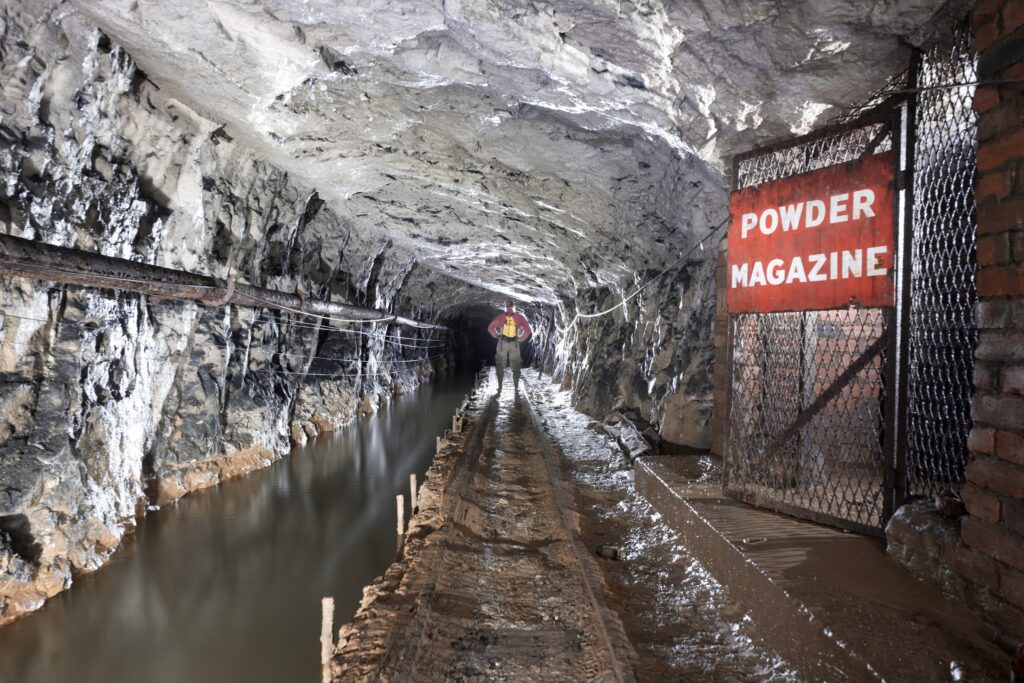
The progress of the tunnel was not without mishaps. In January 1917, the workers broke into a flooded cavern. The result was disastrous. A torrent of water—about 10,500 gallons per minute—rushed into the tunnel, sweeping away everything in its path.
WWII: strategic military use
During the Second World War, the mining operations changed radically. Twenty storage chambers were subleased by Halkyn Mines to the Ministry of Supply. Their purpose: storing TNT.
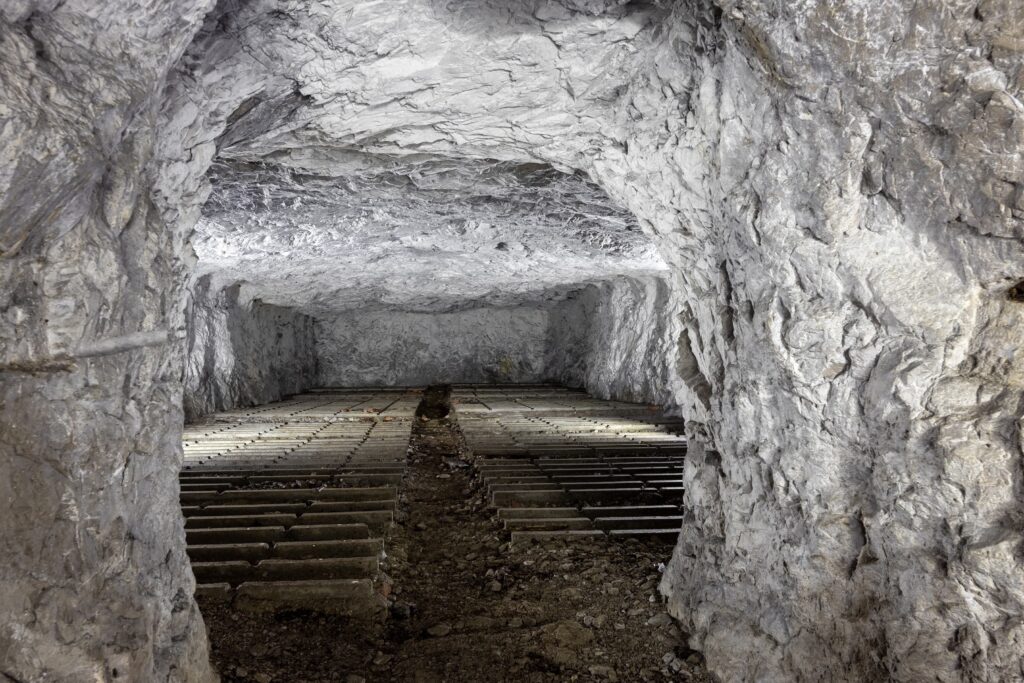
Each chamber measured roughly 80 feet long by 30 feet wide and was spread across various workings. Most were located in the Pen-y-Bryn shaft area, while several others were found along the Rhosesmor branch tunnel.
The total storage capacity exceeded 565,000 cubic feet. Each chamber had a wooden floor, and a corrugated iron “roof” protected it from water drips above.
Despite the enormous quantity of TNT once stored there, all the chambers now stand empty. Only the concrete bases that supported the wooden floors remain. This military chapter represents an important, yet often forgotten, part of the site’s history.
Resumption and expansion: a new mining dynamic
The Holywell Halkyn Mining and Tunnel Company was purchased in 1928 by Halkyn District Mines Ltd, reigniting a new phase of vigorous expansion. The Olwyn Goch Shaft was reached in 1931.
Underground operations required complex logistics.
The Olwyn Goch Shaft, about 500 feet deep, served as the main lift for men and equipment. In winter, the cold was so intense that icicles formed inside the lift cage, forcing miners to run empty trips just to break them off.
A vast railway network threaded through the galleries. Diesel and electric locomotives hauled hundreds of ore wagons, and a fully equipped workshop was installed at the heart of the network to maintain these machines.

wagons
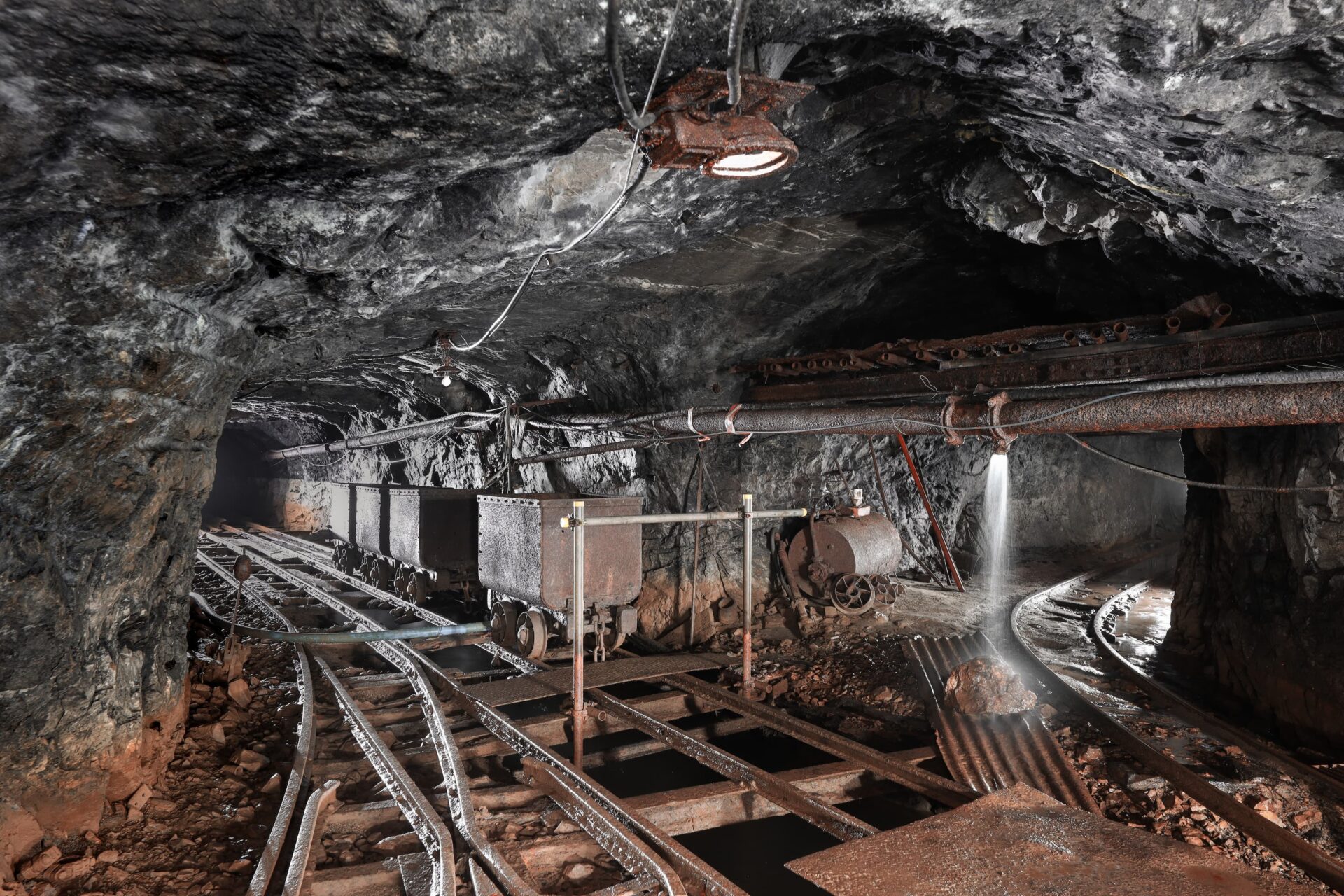
Pont de chargement des batteries pour locomotive
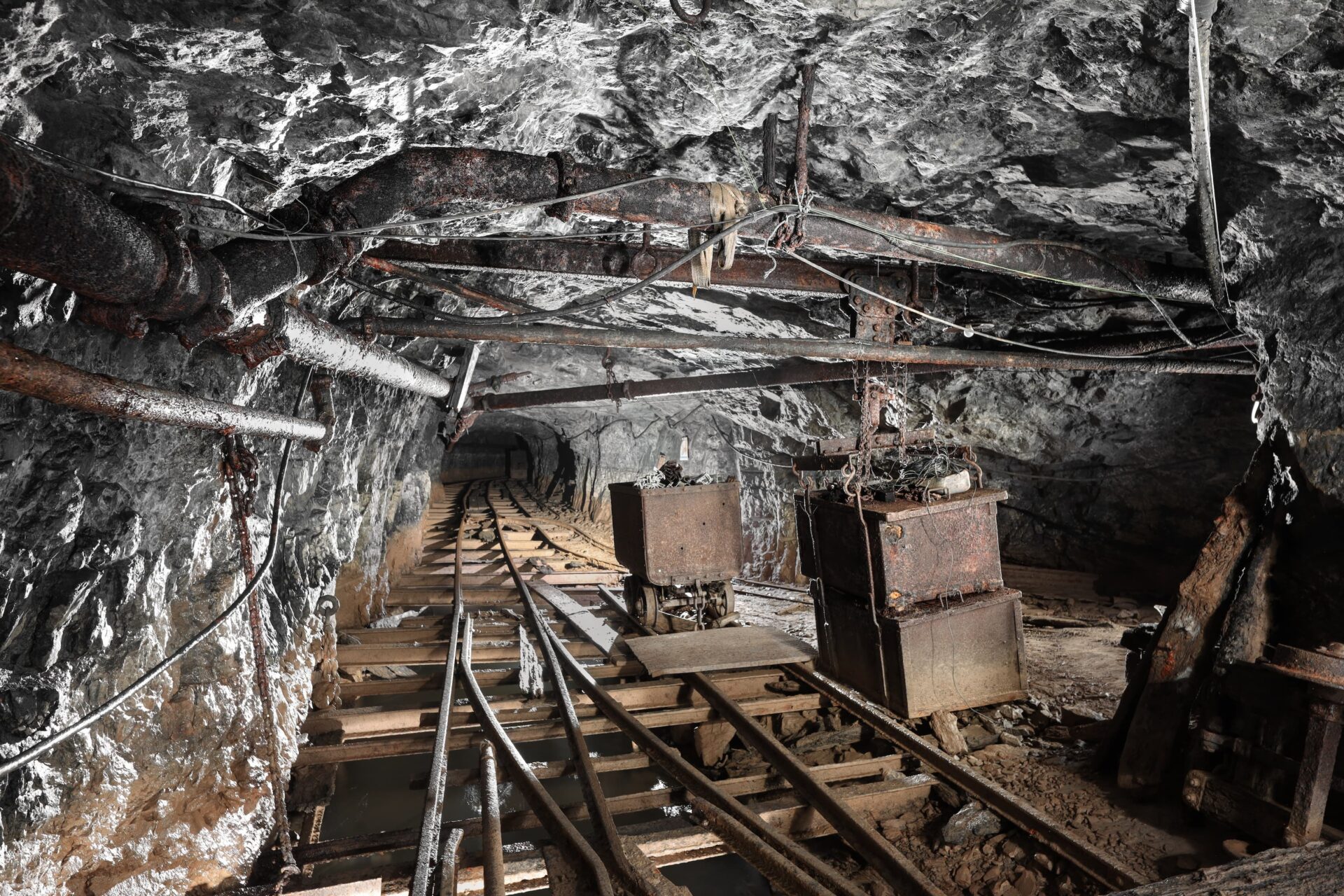
Station de chargement wagon-batterie
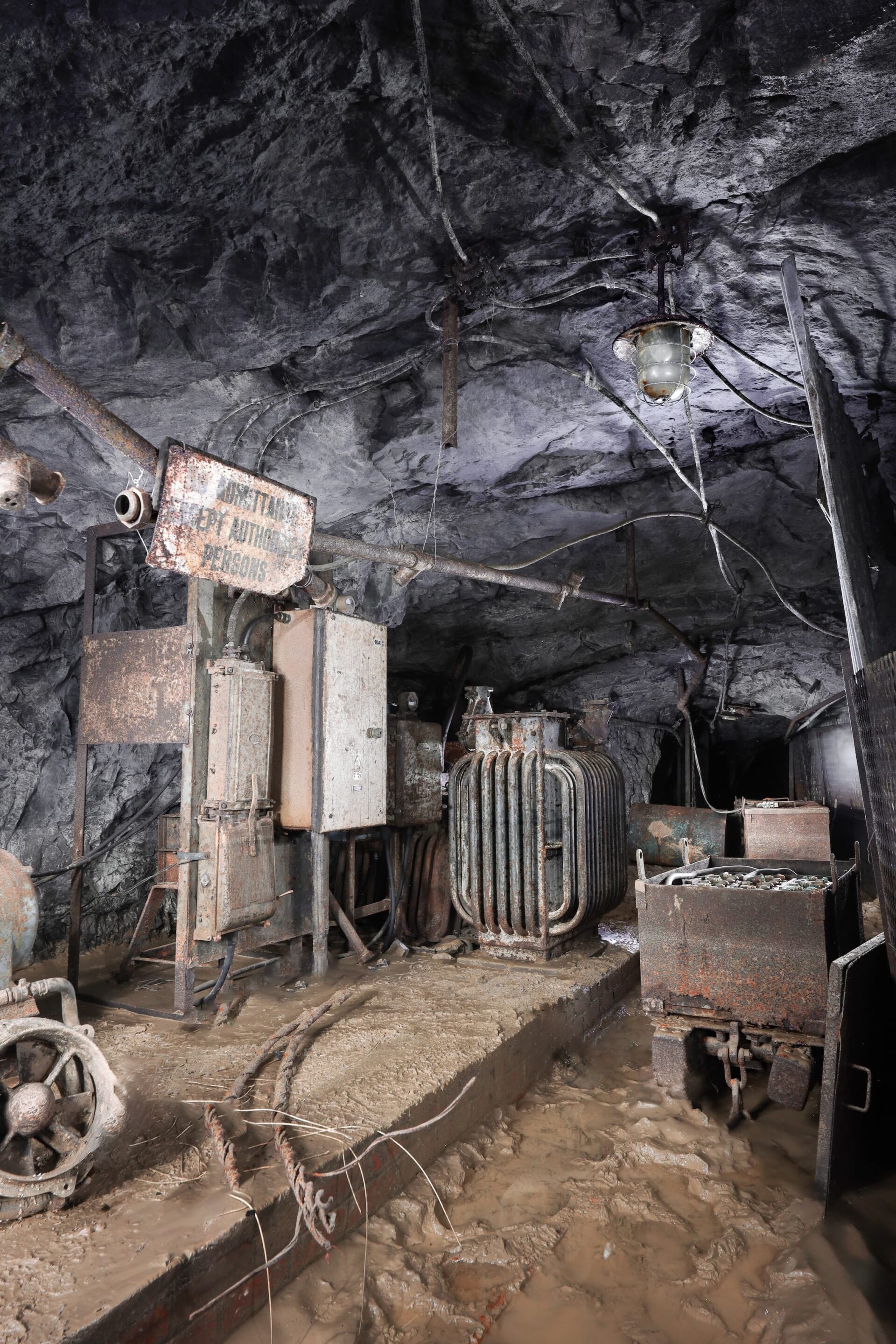
The arrival of pilkington glass: limestone extraction
The price of lead ore was highly unstable. A sharp decline caused work to pause until 1939, leading to major layoffs.
It was then that Pilkington Glass began using the tunnel to extract high-quality limestone for glass production. This marked the start of large-scale mining activity.
Massive quantities of stone were quarried, mainly west of the Olwyn Goch Shaft, and—apart from the war years—this underground extraction continued until 1969. The limestone was used in the manufacture of premium glass.
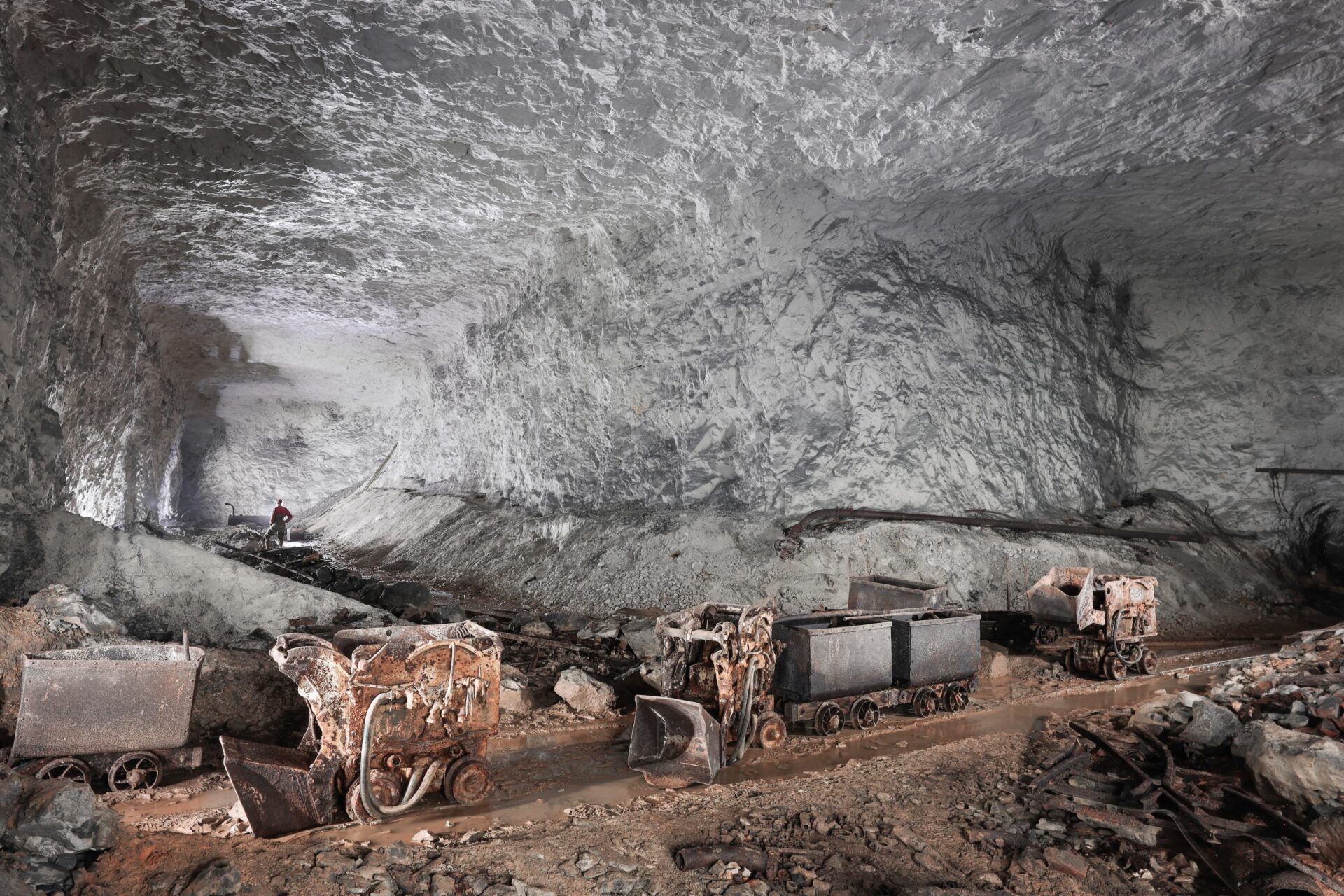
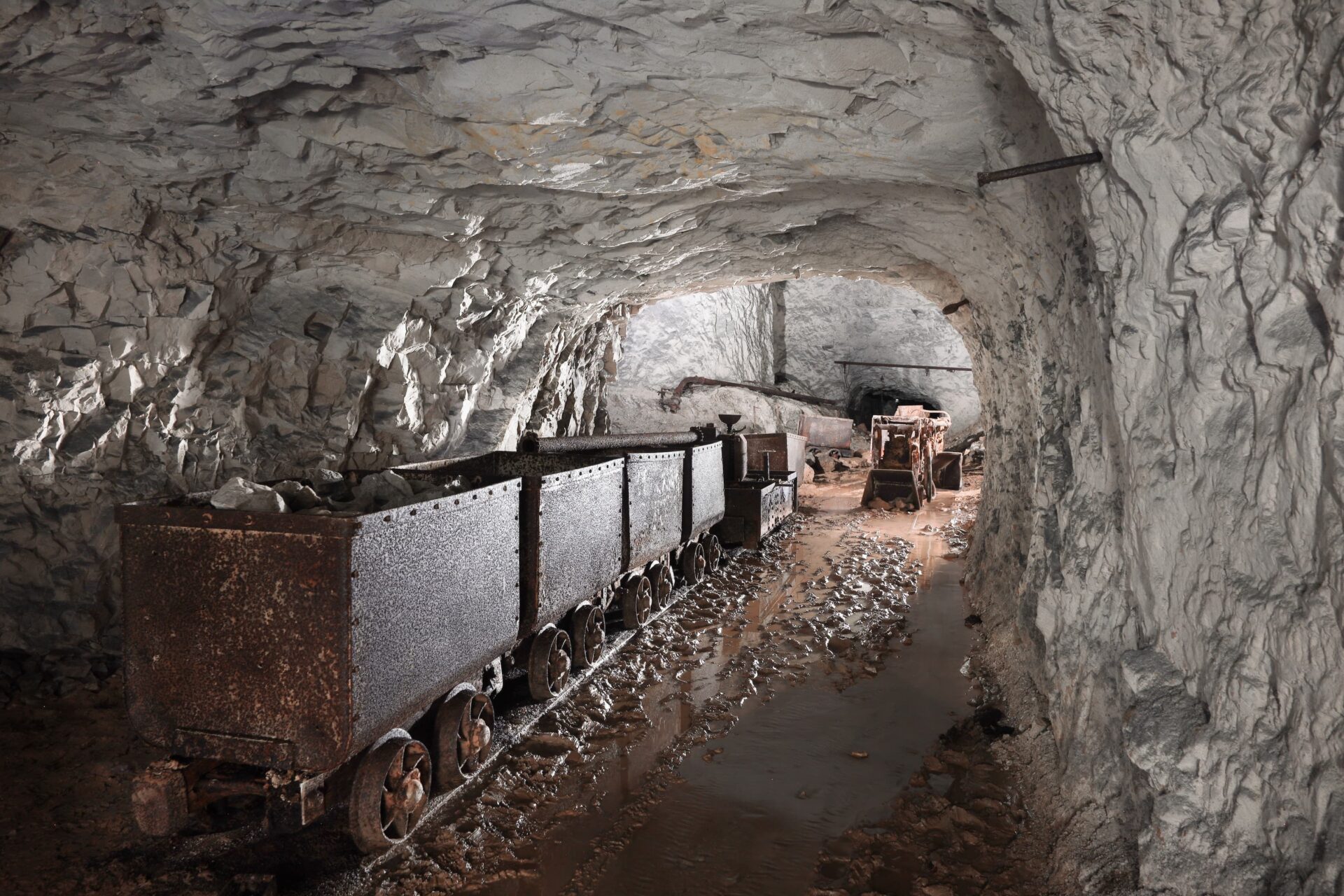
This period produced a series of colossal chambers. Some reached 80 feet in height, stretching about 2 miles in total length. Annual output ranged from 70,000 to 80,000 tons of limestone.
Pelles Eimco, vestiges de l’exploitation de la carrière calcaire
The eimco loading shovels: mechanizing extraction
Eimco power shovels came into service in the 1940s. These revolutionary machines transformed limestone quarrying beneath Hendre, dramatically boosting productivity through efficient rock loading.
Natural caves: exceptional underground discoveries
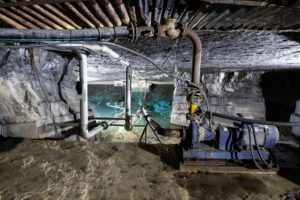
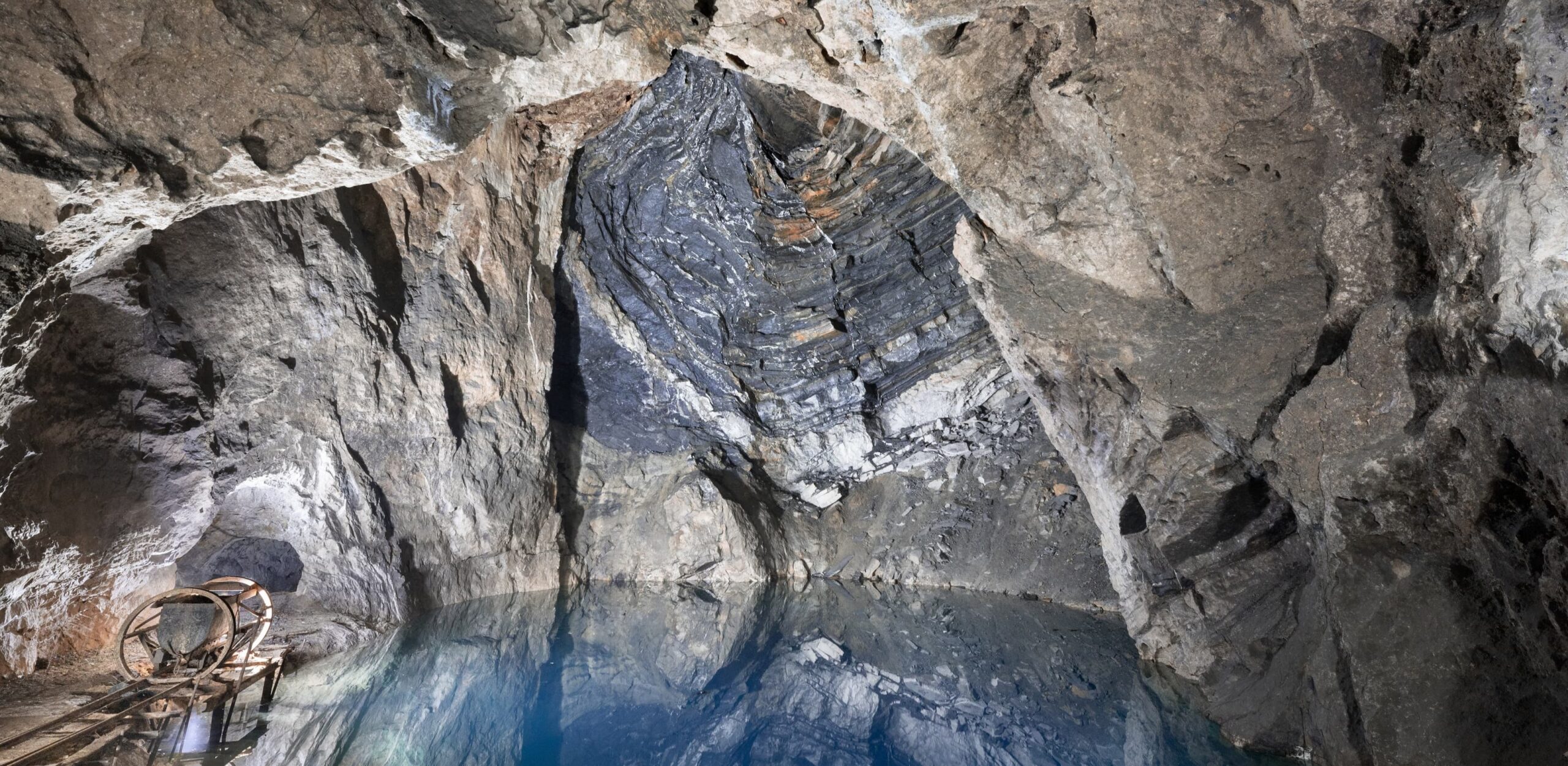
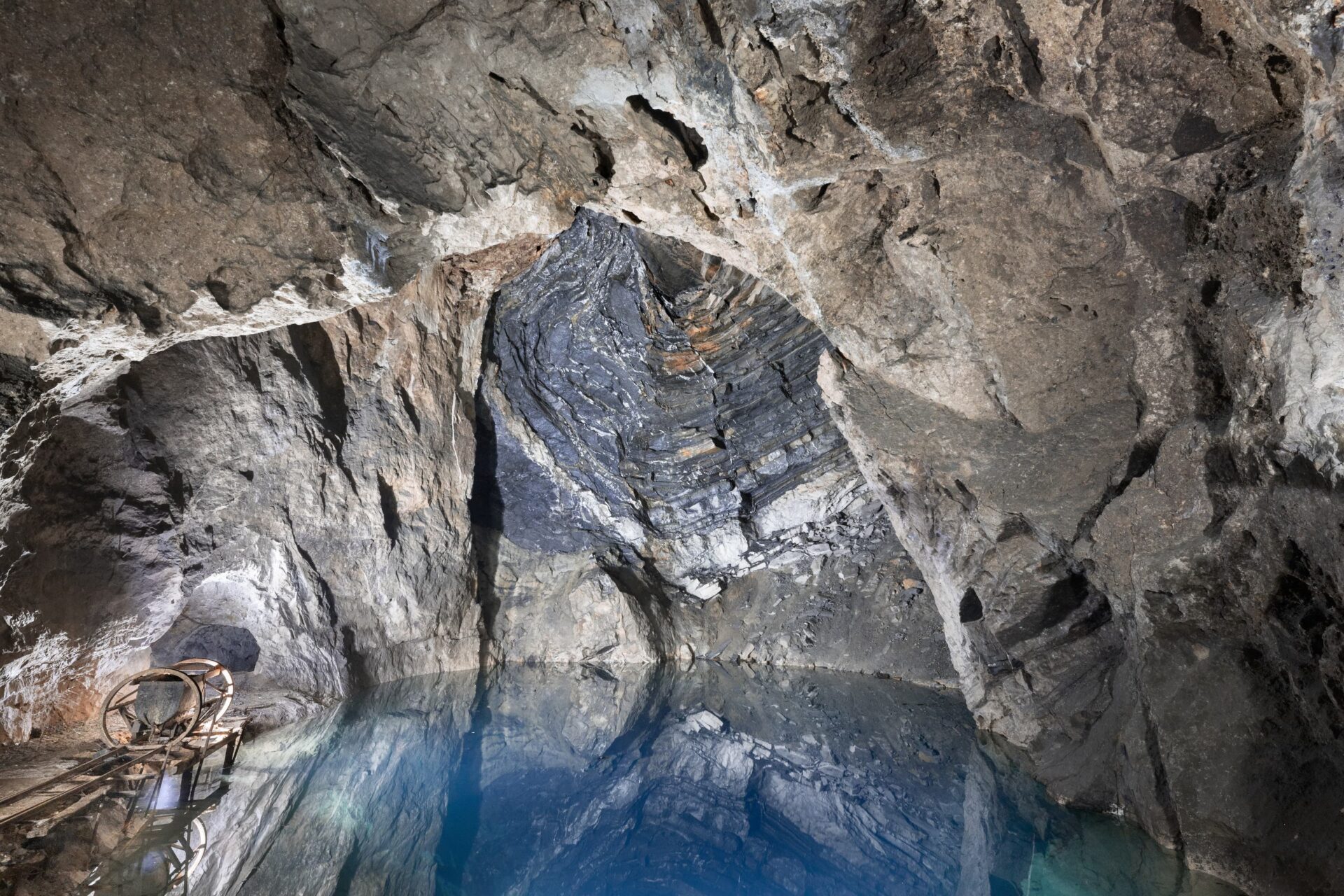
Discovered in 1931, Powell’s Lode is a vast natural cavern measuring roughly 130 by 220 feet. To reach the ore beneath the lake, engineers undertook an extraordinary feat: installing what was then the largest pumping complex in the United Kingdom. The operation successfully lowered the lake level by 120 feet, exposing the rich veins below.
An interesting detail: the pumped water wasn’t simply discarded—it was piped to supply a munitions factory in Queensferry, giving this engineering triumph a strategic role as well.
ingenious safety measures
In these flood-prone tunnels, safety depended on a simple yet vital principle: the electric lighting was directly powered by the pumps. If the lights went out, it was the miners’ immediate warning that pumping had stopped and water would soon begin to rise.
Powell’s Lode
Accès au niveau supérieu du filon
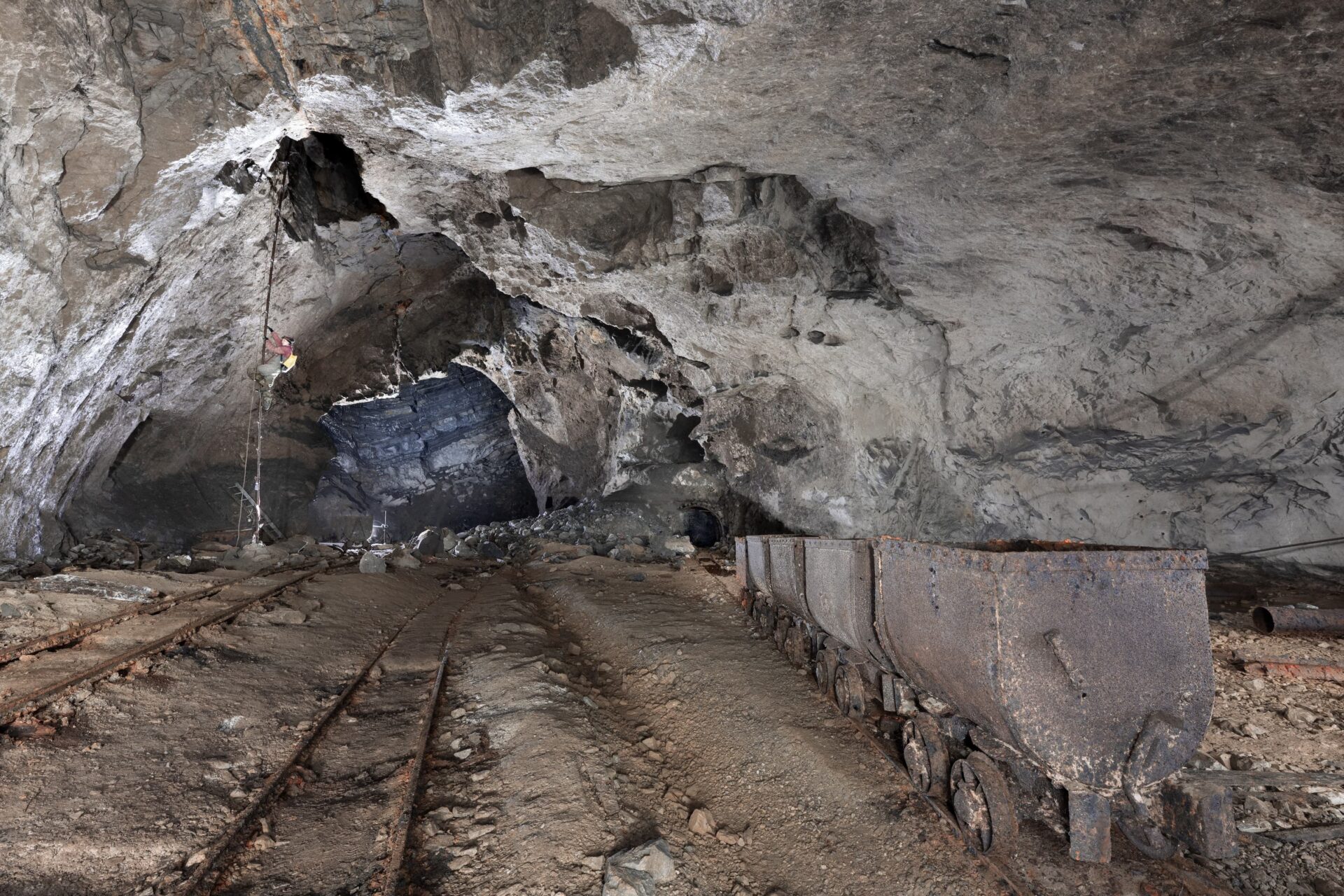
rolling stock: specialized locomotives and wagons
The rolling stock of the 1930s was remarkable for its variety and specialization. The fleet included one diesel locomotive, one twin battery locomotive, and two single battery locomotives.
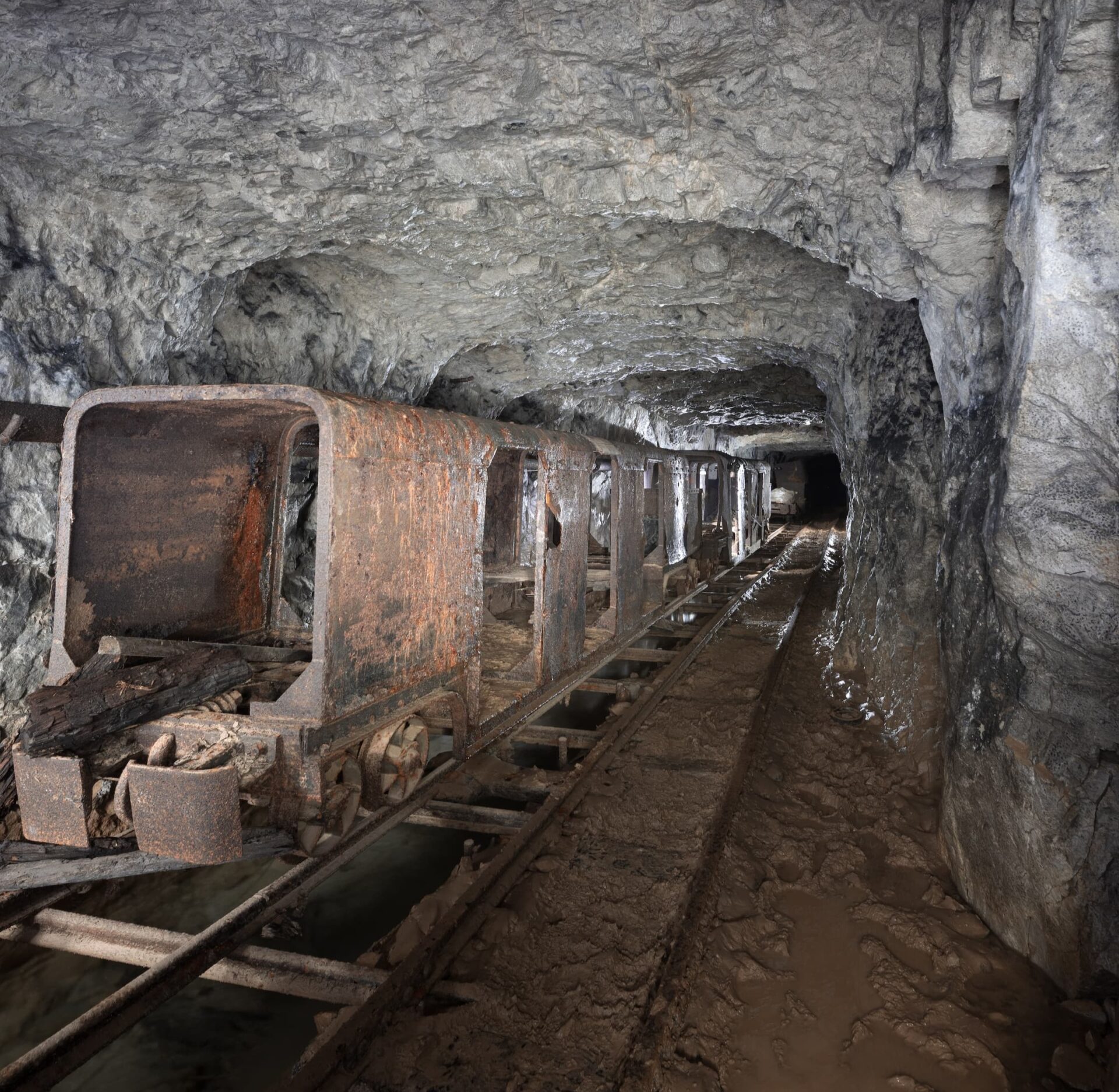
In total, there were 360 mine wagons with a capacity of about 7 cubic yards each, plus several “man-riders”—underground passenger cars designed to carry workers.
The double-bogie diesel locomotive, introduced in 1933, weighed around 7.5 tons and could haul up to 60 loaded wagons. This powerful engine became a symbol of advanced mining mechanization.
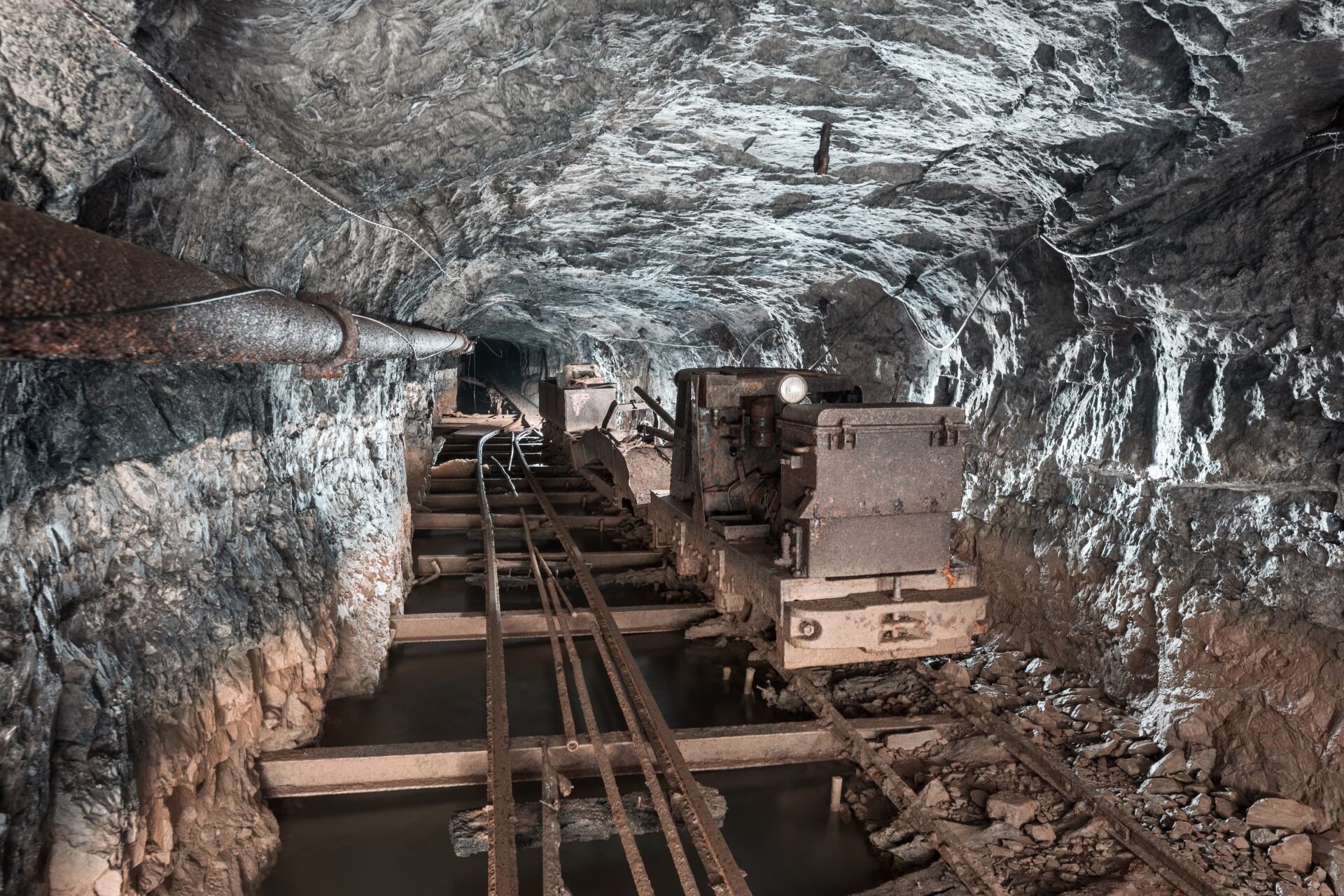
The twin battery locomotive consisted of two separate units connected by starter cables and a pivoting coupler. The pair weighed about 5 tons and could pull 50 loaded wagons.
The other single battery locomotives each weighed roughly 2.25 tons and operated at speeds up to 6 miles per hour. Of the 360 wagons, 310 were side-tipping type while 50 were covered wagons.
Every wagon was numbered, and a detailed registry tracked all maintenance and repairs. The maintenance workshop was located near the Olwyn Goch Shaft level, ensuring maximum operational efficiency.
wagon de transport de passager
Locomotive avec batterie plomb
The postwar era: mining boom and economic competition
Lead prices began to rise again around 1948, rekindling excitement and extending the tunnel farther south toward Loggerheads.
Rich lead veins were discovered during this phase, providing employment for another decade. Labor demand peaked at around 650 men.
Between 1958 and 1964, limestone extraction once again became the dominant activity. The quality of the stone was exceptional, and when lead prices soared again, mining remained active until 1977.
That year marked the end of lead mining on Halkyn Mountain, after which the operations focused mainly on maintenance for another decade.
The final closure of the Milwr Tunnel came in 1987, ending an extraordinary era of 90 years of continuous underground activity.
The tunnel today
The Milwr Tunnel network was purchased in 1992 by Welsh Water, whose goal was to supply regional industries with water.
Access to this vast tunnel system is only possible through a restricted route managed by the Grosvenor Caving Club. Welsh Water enforces strict rules to ensure safety and preservation.
Overall, the Milwr Tunnel stretches from Bagillt to Cathole—a straight-line distance of roughly 10 miles—while the extended network of mines, veins, and caves spans over 60 miles in total.
Even today, it discharges around 21 million gallons of water daily into the Dee Estuary. After heavy rainfall, this volume increases dramatically. The system continues to operate more than a century after its creation, standing as a remarkable monument to the industrial heritage of Flintshire.
Sources:
- https://www.mythslegendsodditiesnorth-east-wales.co.uk/milwr-tunnel
- The Milwr Tunnel: Bagillt to Loggerheads, 1897-1987, first version
- http://www.cambrianmines.co.uk/flintshireleadmining/index.html