

360° PANORAMAS · UNDERGROUND HERITAGE
Virtual tours of underground heritage
Beneath our feet lies another world: forgotten galleries, hydraulic works, quarries, shelters, crypts and architecture carved into the rock. This page brings together 360° virtual tours so you can explore that underground heritage at your own pace, taking the time to notice the details a real visit sometimes rushes past: tool marks, inscriptions, masonry, technical fittings, volumes and atmospheres.
No sensationalism here: each panorama is a way into understanding what the place was for (extracting, sheltering, storing, transporting, collecting water) and setting the space back in its historical and human context. Pick a site, go full screen, move from point to point, and let the logic of the underground guide you: access, circulation, function.
FREE NAVIGATION · FULL SCREEN RECOMMENDED
FRANCE · SWITZERLAND · GERMANY · MALTA · NETHERLANDS · ITALY · BELGIUM · EGYPT
THE CATALOG
Places to explore
Click on a site to open its virtual tour.
The tours located in Paris are also gathered on a separate page: virtual tours of underground Paris.
Quarries and mines
The void left by extraction: limestone, chalk, marble, slate, coal, iron ore. See also underground quarries and mining operations.
 The quarries of the Jardin des Plantes
Hidden nearly ten meters below the Jardin des Plantes in Paris lies a set of underground galleries that served, among other things, as a zoological laboratory for the founder of biospeleology.
 The underground quarries of the Cochin Hospital in Paris
Discover a unique place in the underground quarries of Paris, located beneath the Cochin hospital. Saved, restored and opened up by an association since 1983.
 The Carrara marble quarries (Italy)
In north-west Tuscany, the town of Carrara is best known for the famous quarries that have supplied marble for works of art over the last 2,000 years.
 Iron mines
Virtual tour of several French mines where iron ore was extracted.
 The Kanne Caves (Belgium)
Discover the underground chapel and the guided tour, with a tasting of Mosasaurus beer, cave sausage and cave pie.
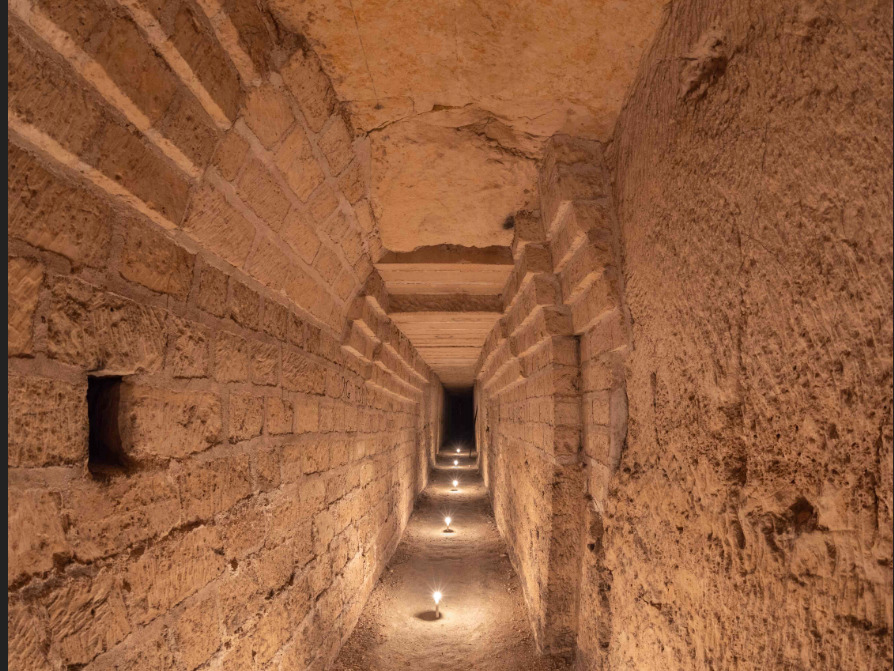 The Costa Rica quarry
Virtual tour of a former stone quarry in Paris, with some magnificent consolidation work.
 The Lescuyer underground cathedral
This very well-preserved underground quarry is considered the finest example of reinforcement work in the Paris region.
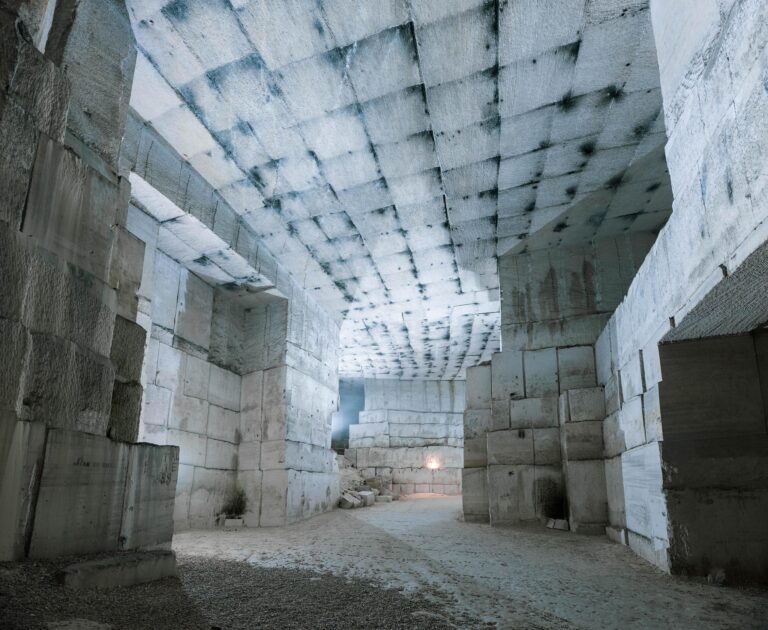 Aubigny underground quarry (France)
In Aubigny, in the Yonne, the stone was extracted with the lance and the needle, without machines. It built the cathedrals of Sens and Auxerre, the Opéra Garnier and the Paris Hôtel de Ville.
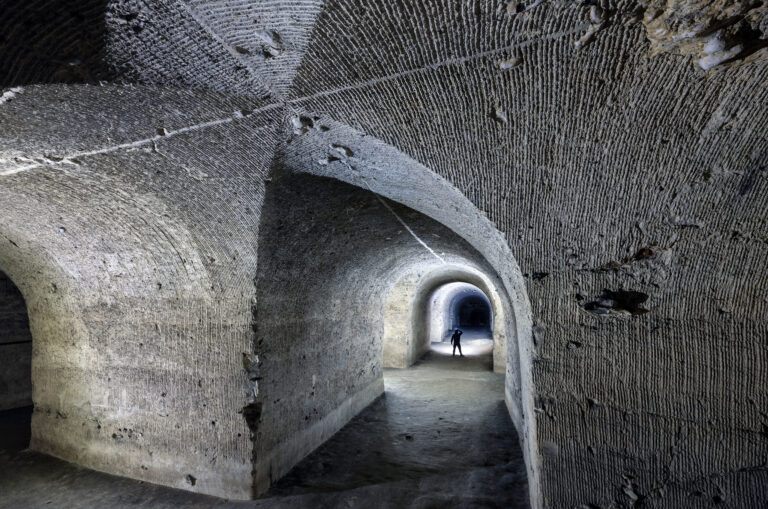 The Arnaudet quarries, Meudon (France)
Eight kilometers of chalk galleries on three levels beneath the Rodin hill in Meudon: the history of Meudon white, of the mushroom farms, of the wartime shelters, and of the backfilling that threatens the site.
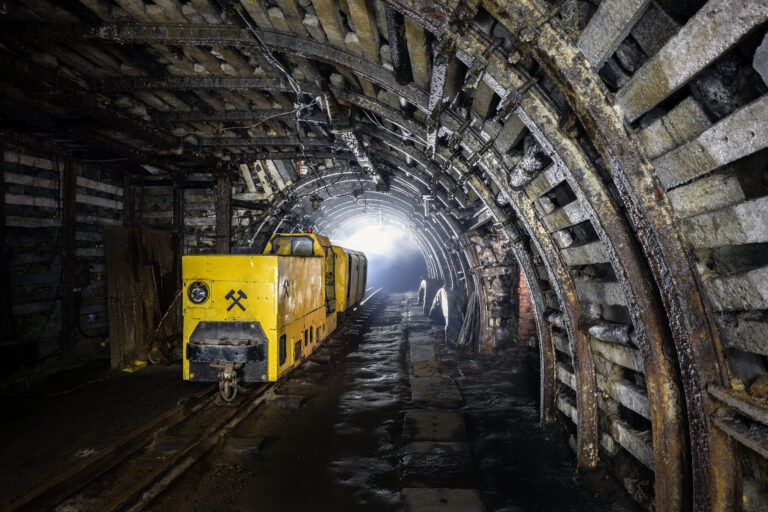 Nowa Ruda coal mine (Poland)
Go down into the Nowa Ruda coal mine, in Lower Silesia: six centuries of mining, the most feared gas outbursts in Europe and a museum born of the closure.
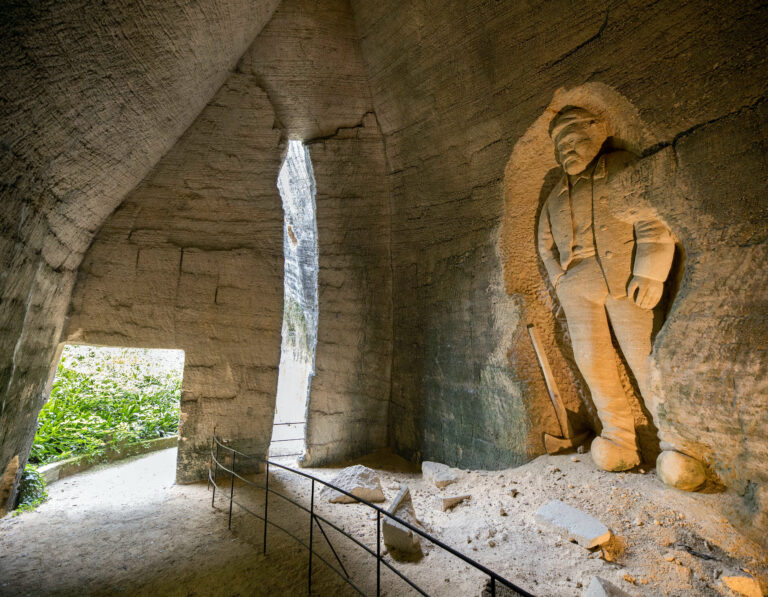 Le Mystère des Faluns, Doué-en-Anjou (France)
At Les Perrières in Doué-en-Anjou, quarrymen dug twenty-meter “cathedrals” into a fossil seabed ten million years old. A tour of Le Mystère des Faluns.
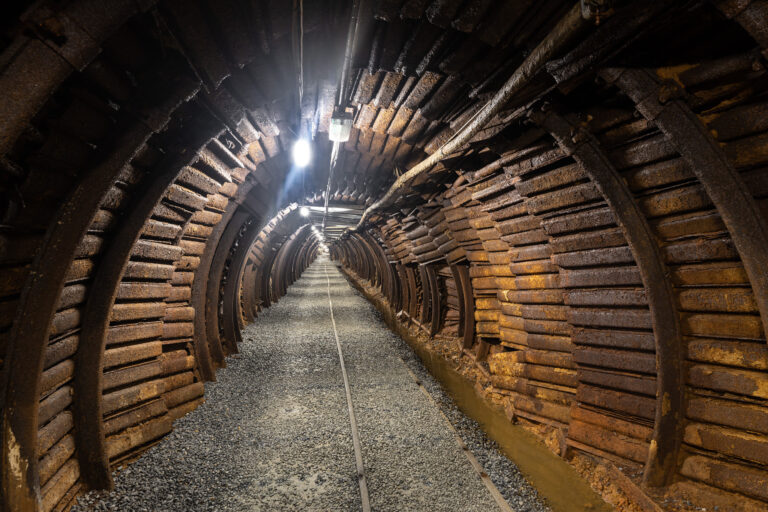 Speleotherapy in Zlaté Hory (Czechia)
In Zlaté Hory, in Czechia, 1,600 meters of galleries in a former gold mine are used to treat children’s airways. A tour of a working speleotherapy center.
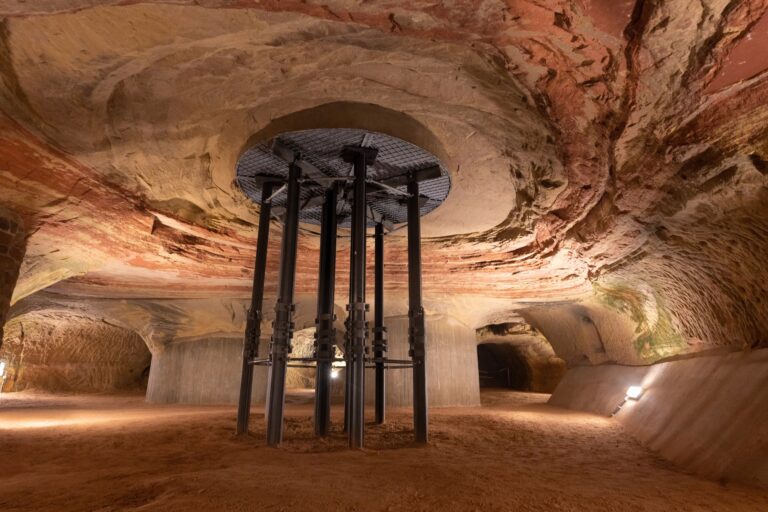 The Schlossberg caves (Germany)
Twelve levels of galleries dug into the Bunter sandstone of Homburg to extract its sand.
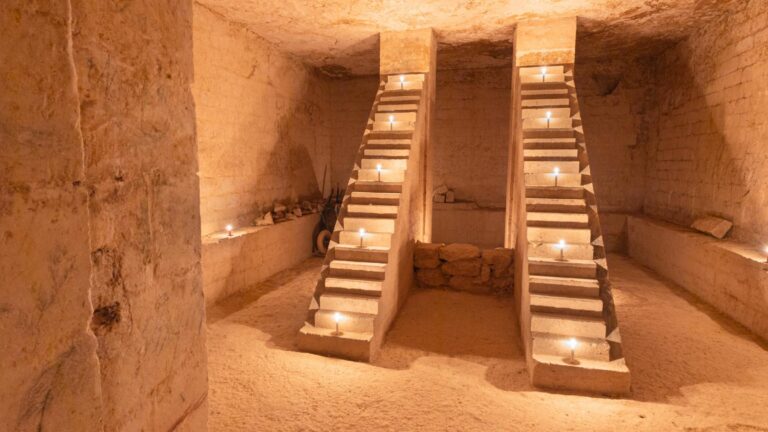 The Guérinet mineralogical cabinet (France)
Two parallel staircases built around 1810 to show the geological cross-section of the Paris subsoil.
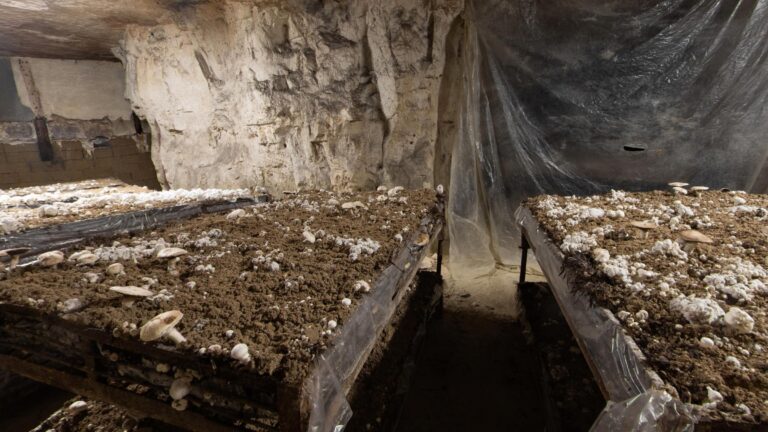 An underground mushroom farm
Ridge beds, bags and stacked crates: the evolution of button mushroom growing in quarries.
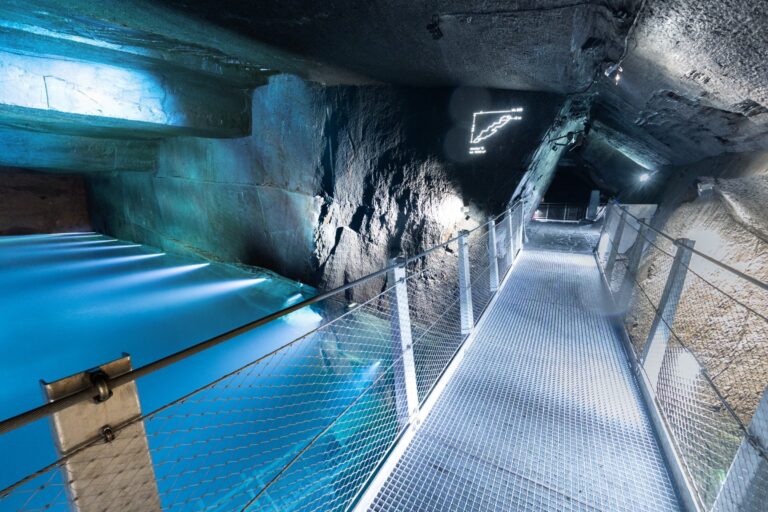 The Slate Museum in Haut-Martelange (Luxembourg)
In Haut-Martelange, Luxembourg’s last slate quarry closed in 1986. A tour of the Johanna gallery, which descends 42 meters underground.
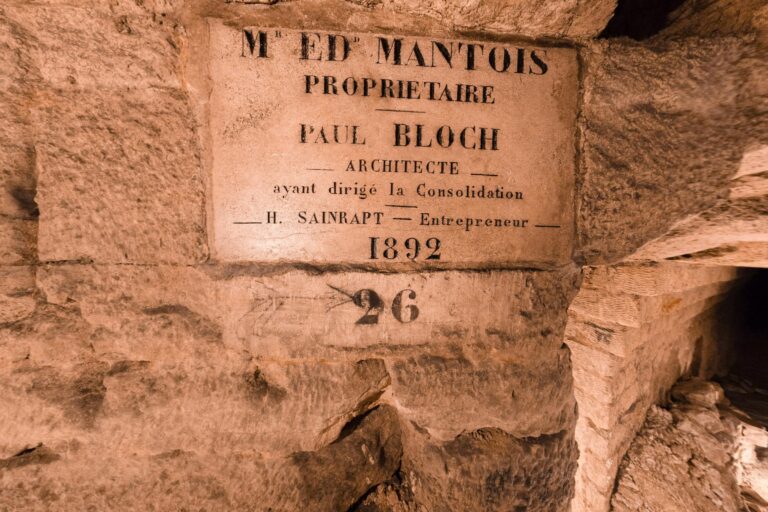 The coal cellar, Paris 13th (France)
Beneath a bus depot in the 13th arrondissement, a former limestone quarry partly turned into a coal cellar, consolidated in 1880 and 1892.
Churches, crypts and tombs
What is dug for the dead and for worship: necropolises, ossuaries, churches carved in a single piece, royal tombs. See also crypts and ossuaries and underground chapels.
 The crypt of Père Lachaise
Virtual tour of the Père Lachaise crypt, a tangle of underground galleries housing bodies from many Parisian cemeteries.
 Paris Catacombs Museum
Through a series of 360° panoramas, visit the official museum of the Paris Catacombs, an emblematic place.
 The Serapeum of Saqqara (Egypt)
The Serapeum of Saqqara is an ancient necropolis dedicated to the sacred bull Apis, north of the funerary complex of Djoser in Lower Egypt.
 The tomb of Pharaoh Ramses VI (Egypt)
Begun by Ramses V, this tomb was usurped and enlarged by Ramses VI. Plundered in antiquity, it has stayed open ever since and bears nearly a thousand graffiti by Greek and Roman visitors.
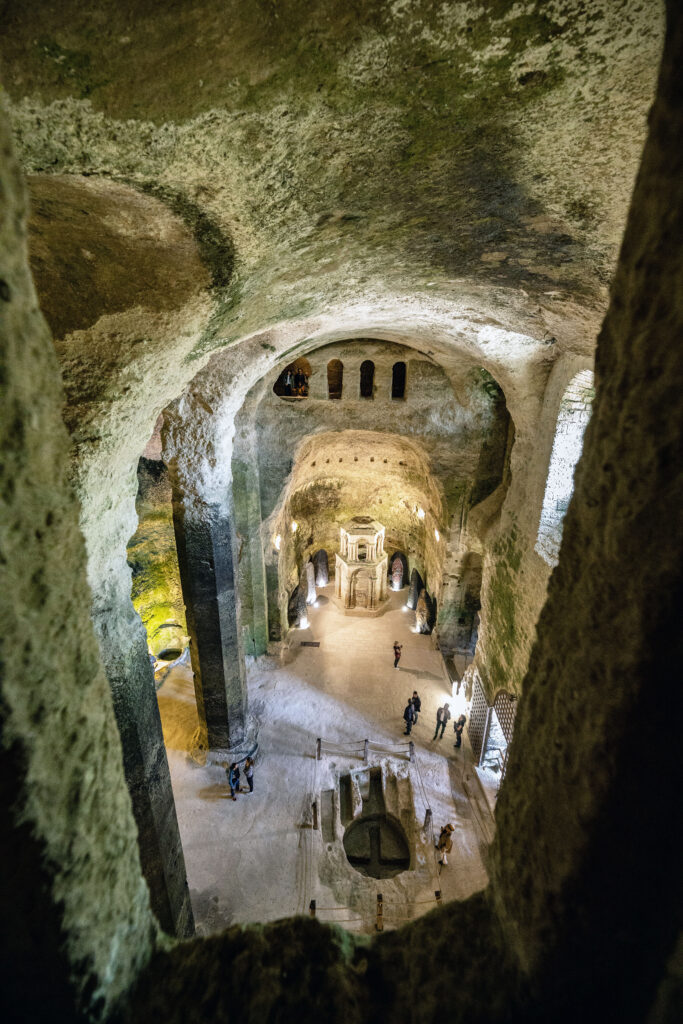 Monolithic church of Aubeterre-sur-Dronne (France)
The monolithic church of Aubeterre-sur-Dronne: 27 meters long, 20 meters to the vault, a reliquary modeled on the Holy Sepulchre and a necropolis of sarcophagi, all carved entirely out of the cliff.
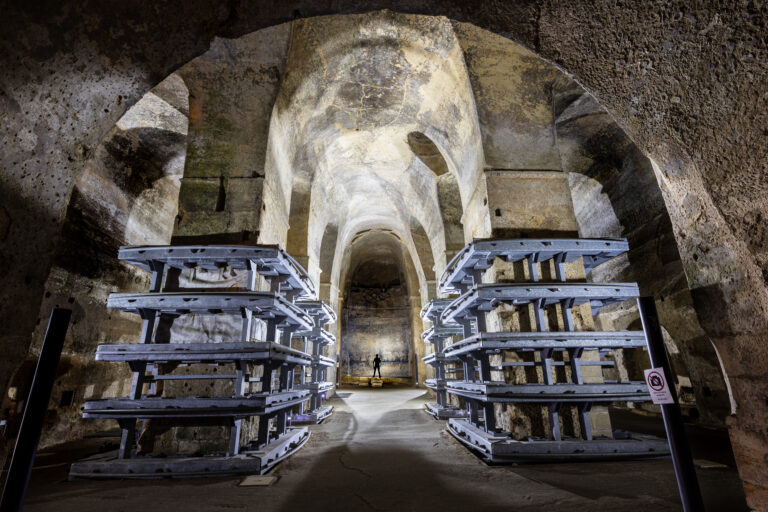 Monolithic church of Saint-Émilion (France)
The largest monolithic church in Europe: 15,000 m³ of rock removed beneath Saint-Émilion, an 8th-century hermitage, catacombs and a bell tower that threatened to bring everything down.
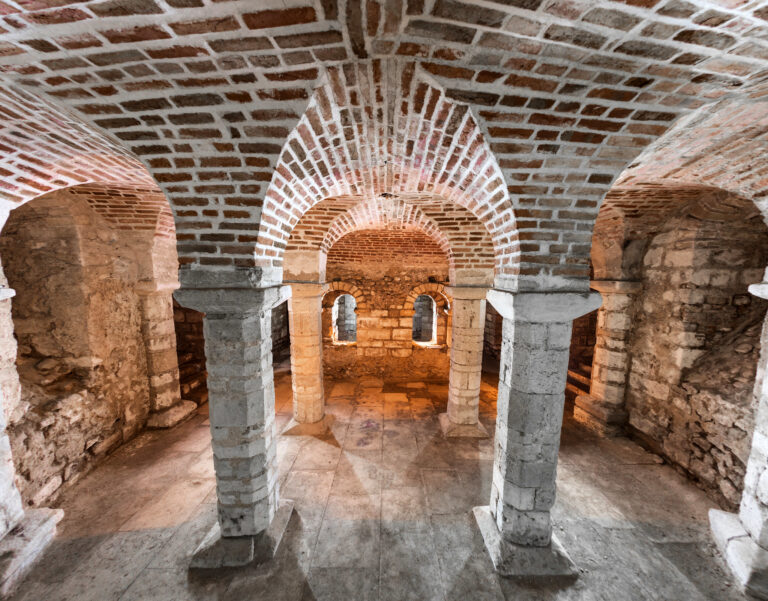 Saint-Avit and Saint-Aignan crypts, Orléans (France)
Orléans has kept two 11th-century Romanesque crypts, Saint-Aignan and Saint-Avit, built around the relics of their saints. An underground tour of the martyria and their ossuary.
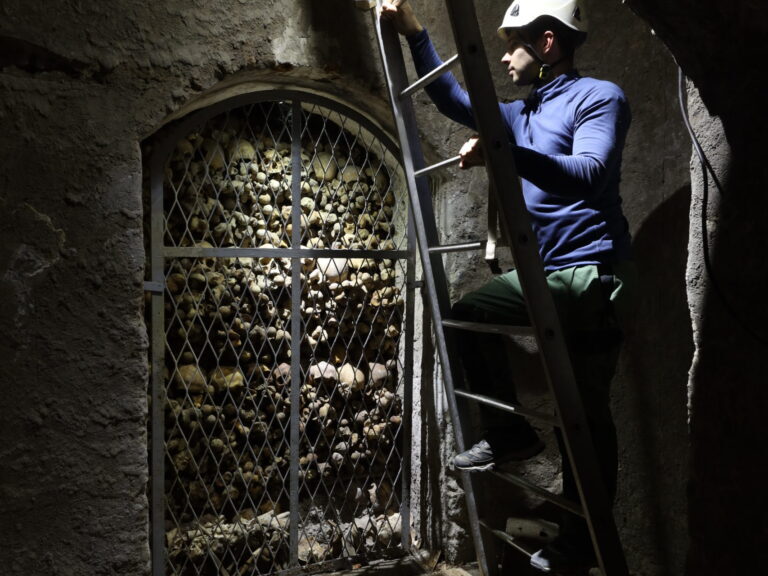 Underground ossuary of Saint-Paul, Orléans (France)
Beneath the church of Saint-Paul in Orléans, a limestone quarry turned cellar, then common grave in the 18th century. The bombing of 1940 brought it back to light.
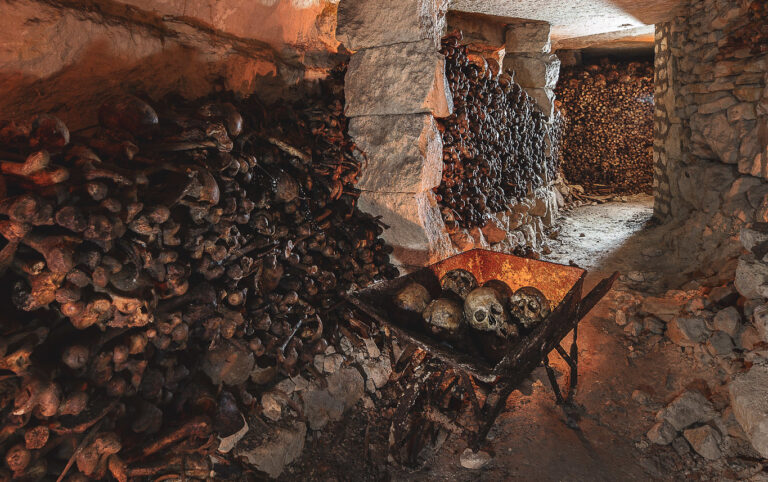 Crypt of the Paris cemetery of Montrouge (France)
The Paris cemetery of Montrouge is the only one with an underground crypt. The history of the site, of the Montrouge plain and of its quarries that became ossuaries.
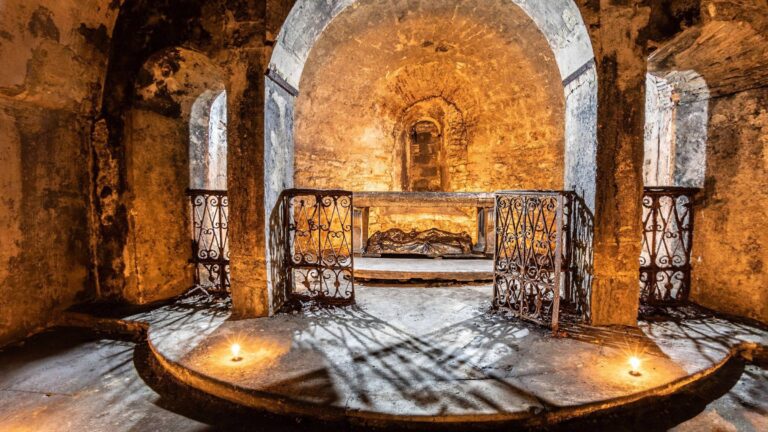 The Notre-Dame-de-Cana crypt
A vaulted crypt, a choir closed off by wrought-iron gates and a recumbent effigy beneath the altar.
Cellars and mills
Going underground to produce, or to keep: a waterfall harnessed out of reach of the frost, millstones buried so that flour would keep coming in time of war, cellars where beer finds the cold that bottom fermentation requires. And, at the extreme, burying what the surface cannot preserve. See also cellars and troglodyte sites.
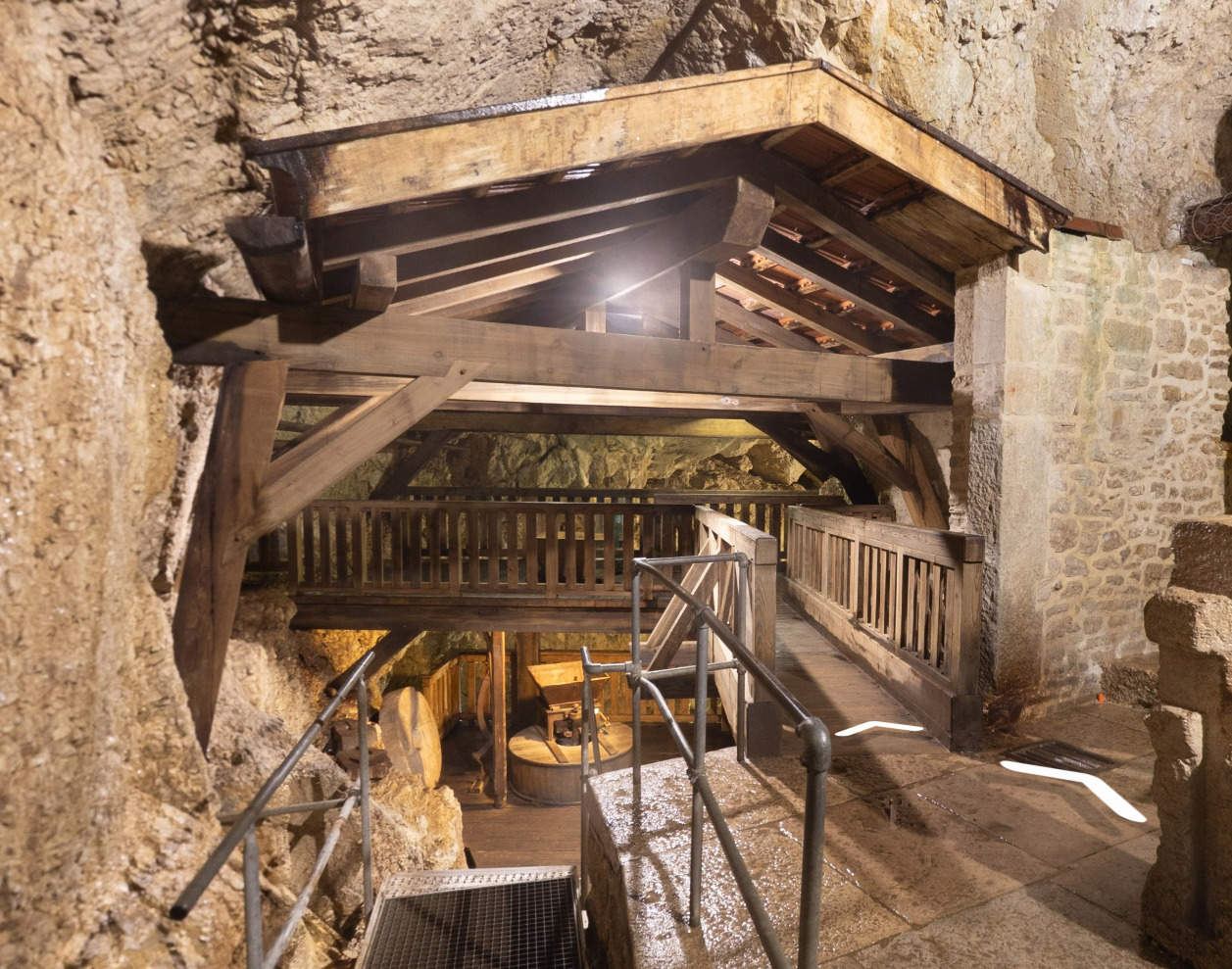 The Col-des-Roches mills (Switzerland)
Discover mills carved into the rock, where water once drove millstones, a sawmill, an oil mill and textile workshops.
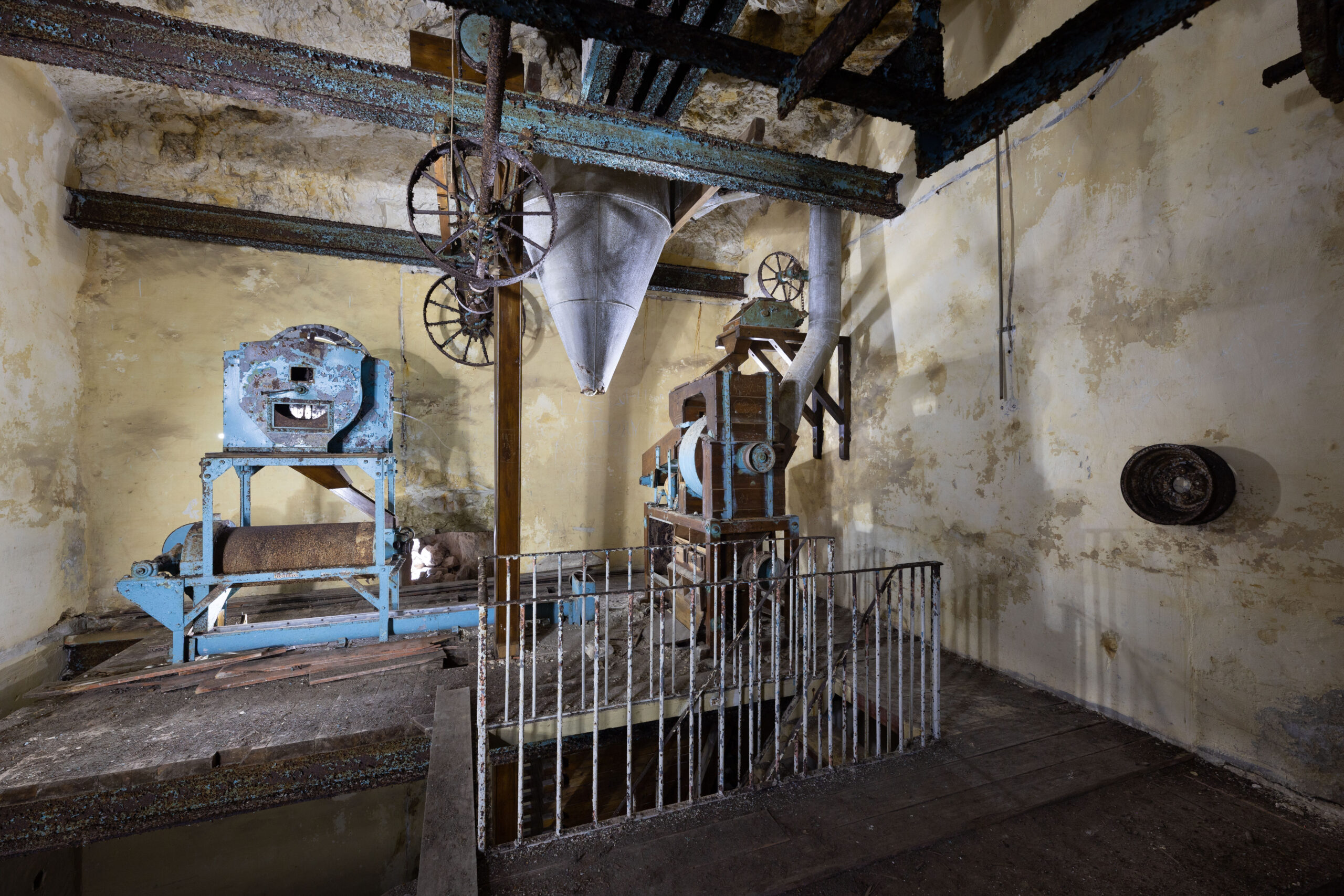 The underground flour mills (Malta)
Explore the Maltese mills, built to turn wheat and barley into the flour used to bake bread.
 ANDRA: the CIGEO underground nuclear storage project
Cigéo is a deep geological storage project for radioactive waste, located in France.
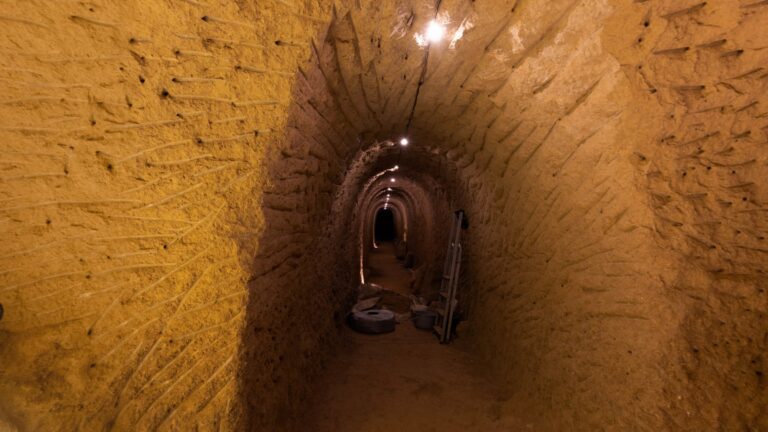 La Cave aux coquillages (France)
Galleries dug into Lutetian sand, where the fossils of a tropical sea remain in place.
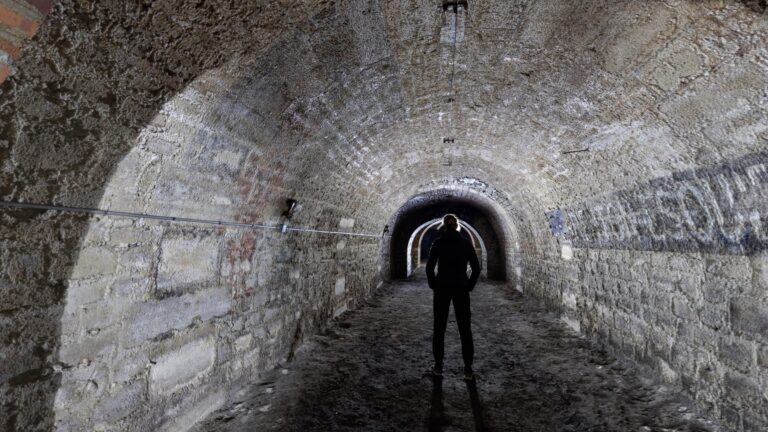 The cross-shaped cellar of Saint-Maurice (France)
Four vaulted naves arranged in a cross, dug in 1764 beneath a hospital park.
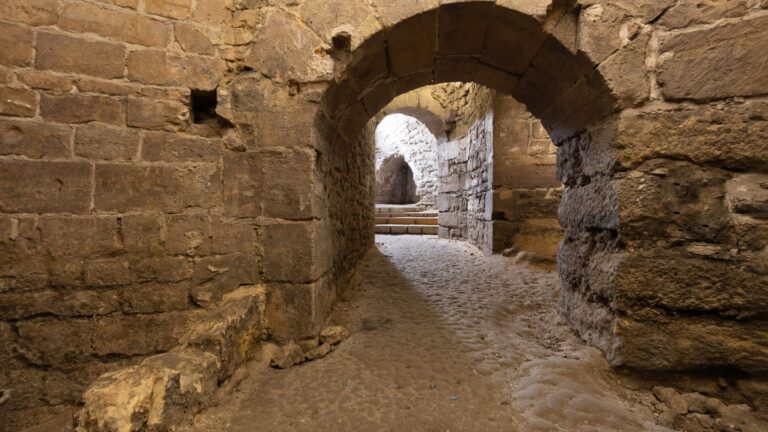 The underground passages of Pontoise (France)
Medieval quarries turned into storerooms, refuges and shelters beneath the houses of the town.
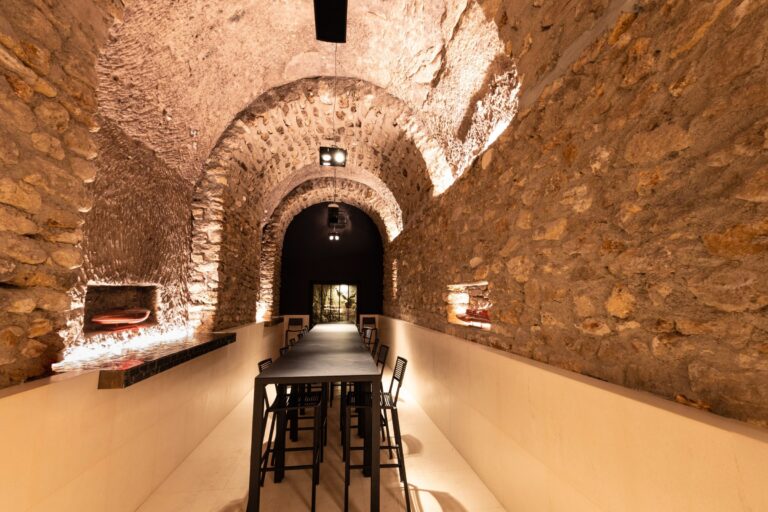 The tasting room in the chalk cellars of Meudon (France)
At Meudon, near Paris, a tasting room fitted out in cellars dug into the chalk.
Shelters, bunkers and fortifications
Taking cover, or holding a stronghold: village refuges, countermine galleries, passive defense shelters, Cold War bunkers. See also underground shelters and passive defense shelters.
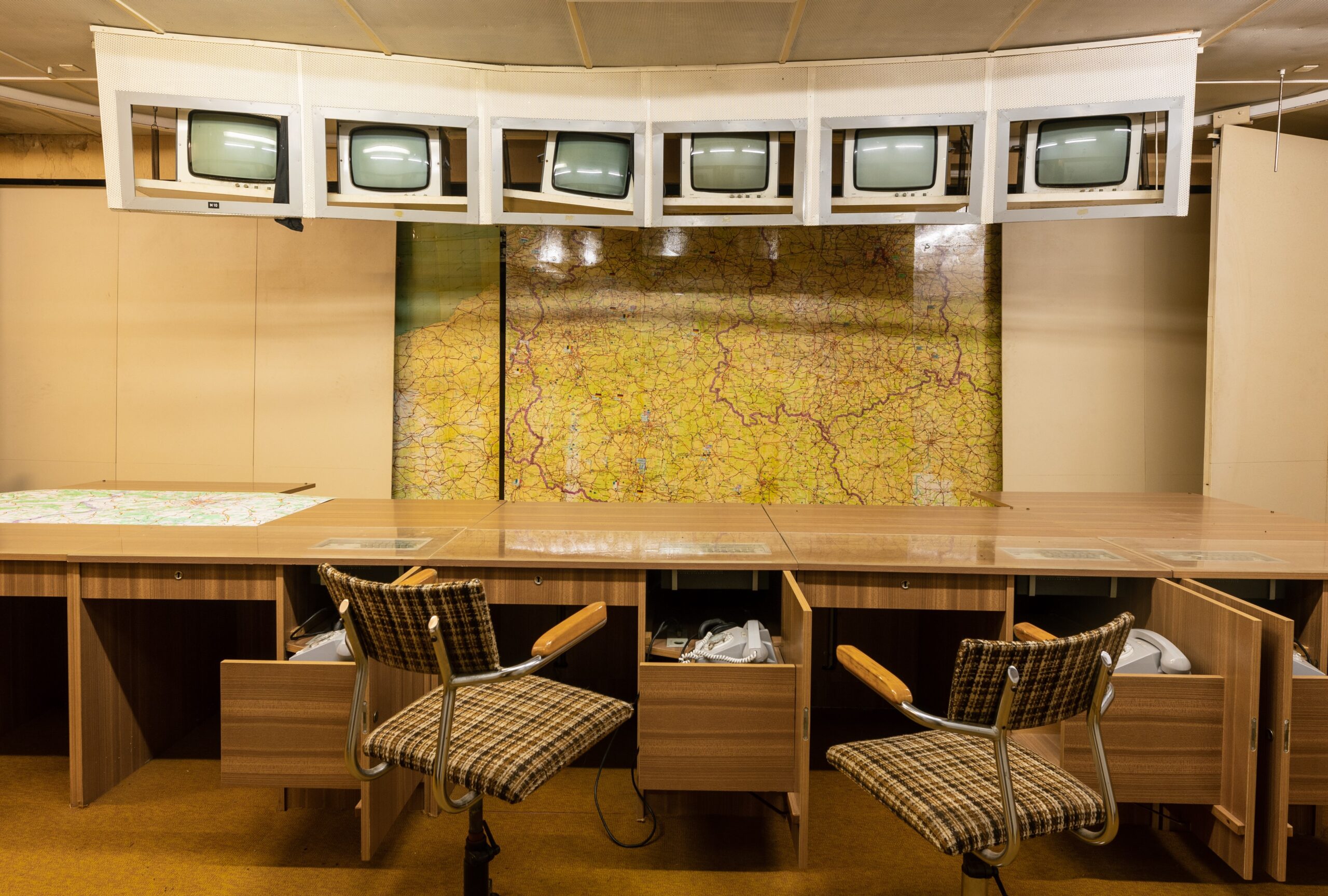 The Harnekop bunker (Germany)
Visit the former nuclear command post of East Germany, a secret bunker built near Berlin to withstand a major crisis.
 The bunker at Gare de l'Est
Built on the eve of the Second World War to keep the trains running even during a gas attack, the bunker beneath the Paris-Est station is a remarkably well-preserved gem.
 The underground city of Naours
Delve into the history of the underground city of Naours, a network of galleries dug into the chalk and used as a refuge for centuries.
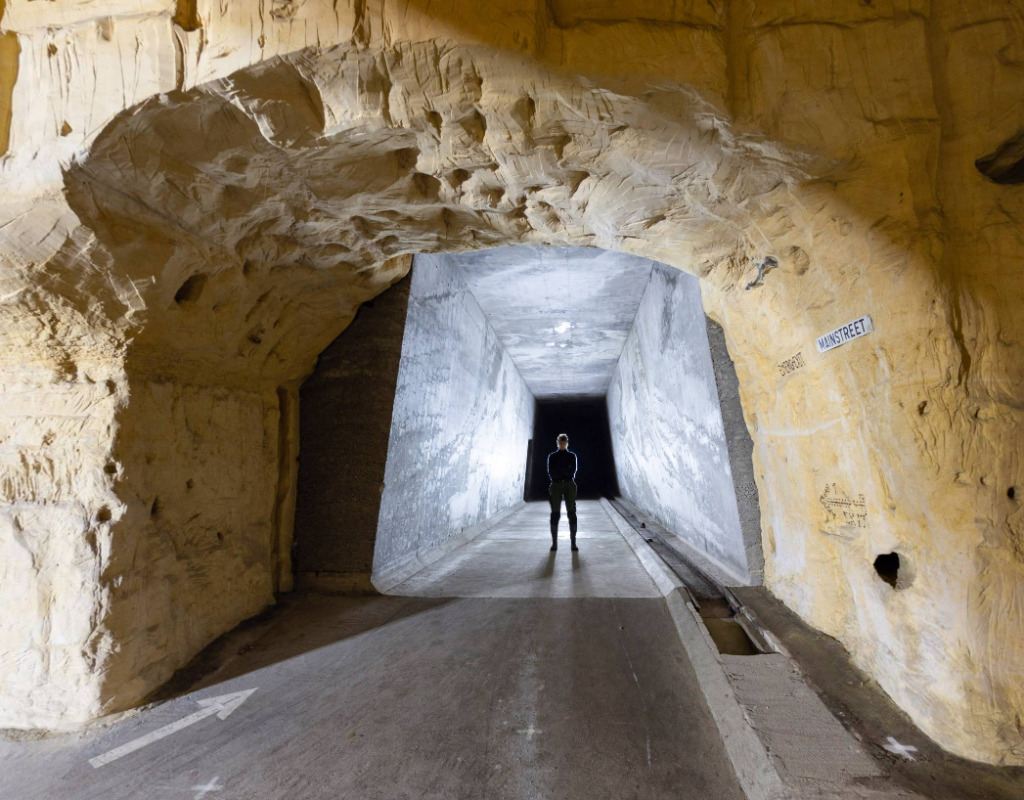 NATO's underground base
Virtual tour of a former NATO underground base.
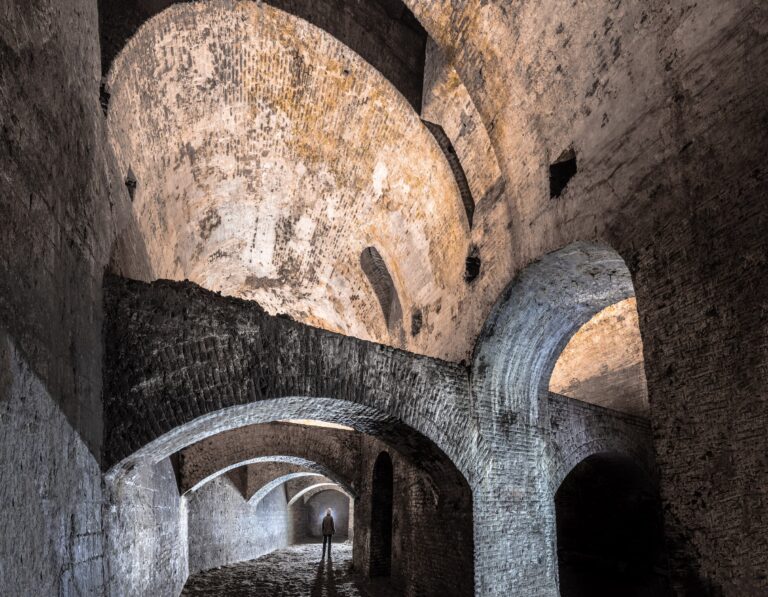 Underground passages of the Cambrai citadel (France)
Seven kilometers of countermine galleries beneath the citadel that Charles V had built in Cambrai in 1543: listening to the enemy dig, and blowing him up first.
 The Fort of Caluire
Virtual tour of a mushroom farm set up in 1960 in a former defensive gallery linking the forts of Montessuy and Caluire.
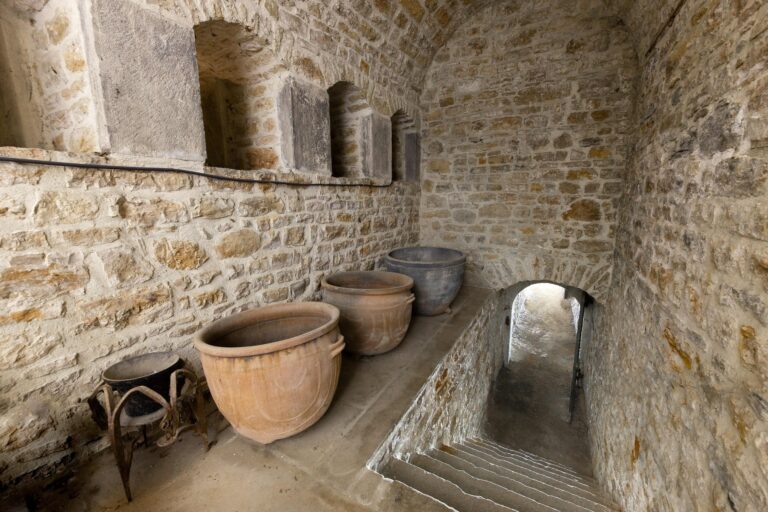 The underground passages of the Fort de Vaise (France)
Firing posts and the rifle gallery of a Lyon fort, which went underground when the ditch was filled in.
Reservoirs, aqueducts and sewers
Collecting, storing, carrying and draining away water, the oldest reason for digging beneath a city. See also groundwater management.
 The large well and reservoir of Bicêtre
Virtual tour of the Kremlin-Bicêtre well, 57 meters deep. The water was drawn by the hospital's own residents during the reign of Louis XIV.
 The Caluire reservoir
Virtual tour of the former water plant which, until 1976, supplied the city of Lyon with drinking water.
 The Medicis Aqueduct
 is the longest listed historical monument in France. This virtual tour reveals the many inspection points along it.
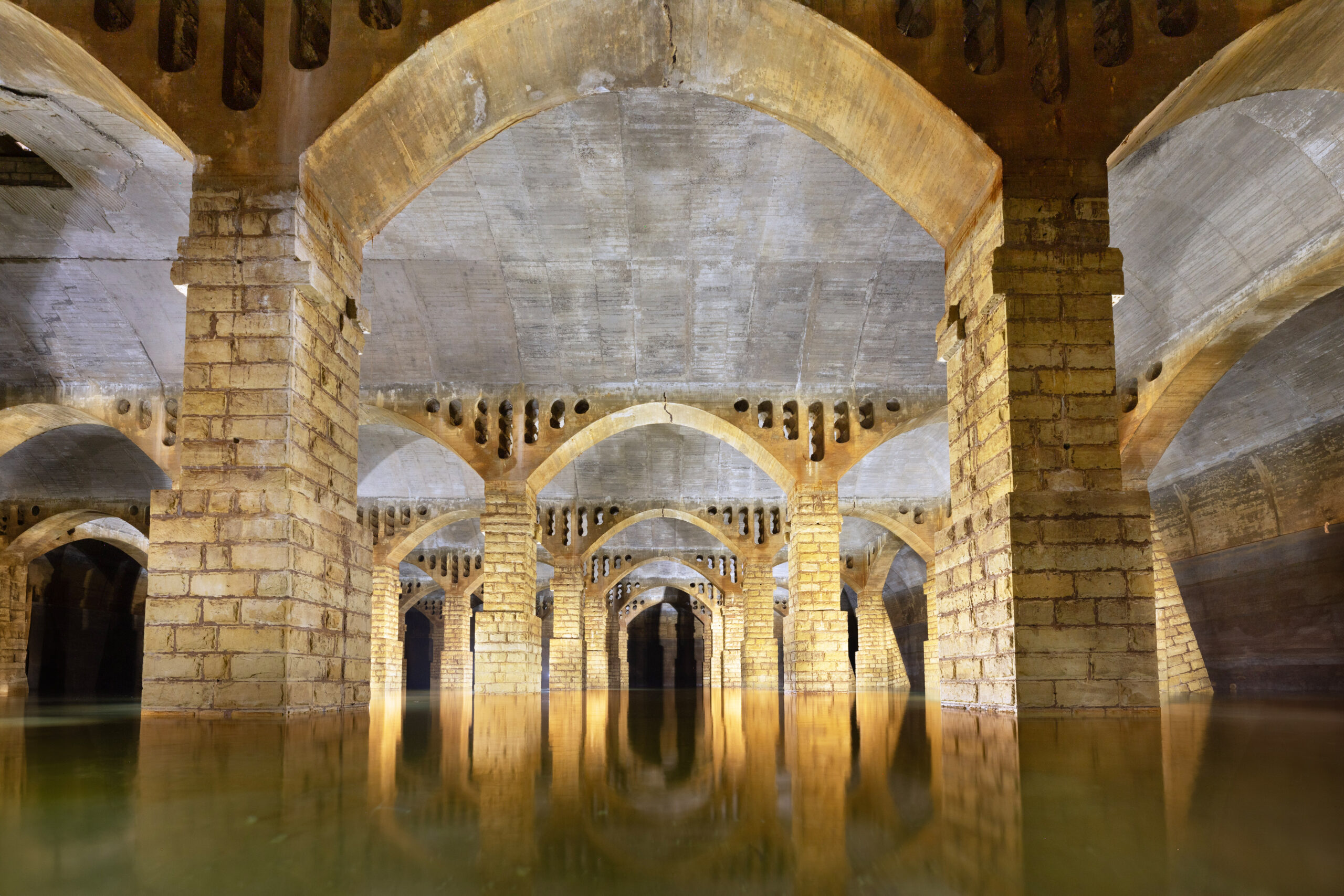 Underground cisterns and reservoirs (Malta)
Step into Malta's underground cisterns and reservoirs, built to collect, store and distribute a scarce supply of water.
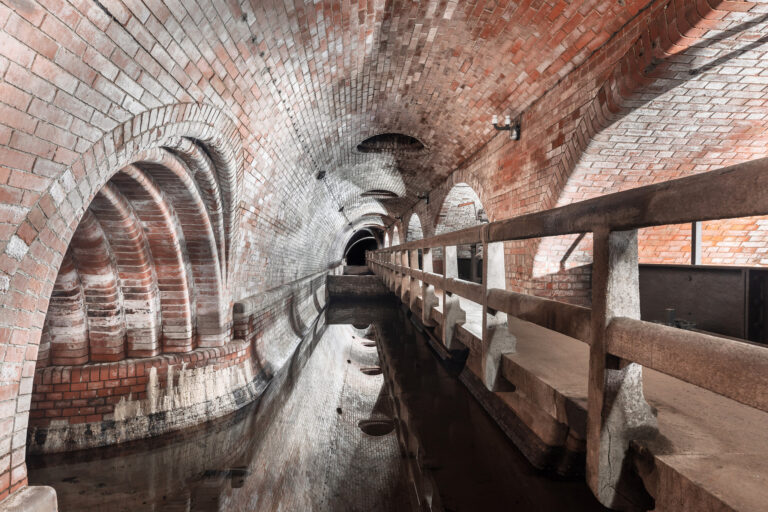 Former Bubeneč sewage treatment plant, Prague (Czechia)
In Prague, the Bubeneč sewage treatment plant is the oldest surviving facility of its kind in Europe: brick vaults, settling tanks and steam engines, intact since 1906.
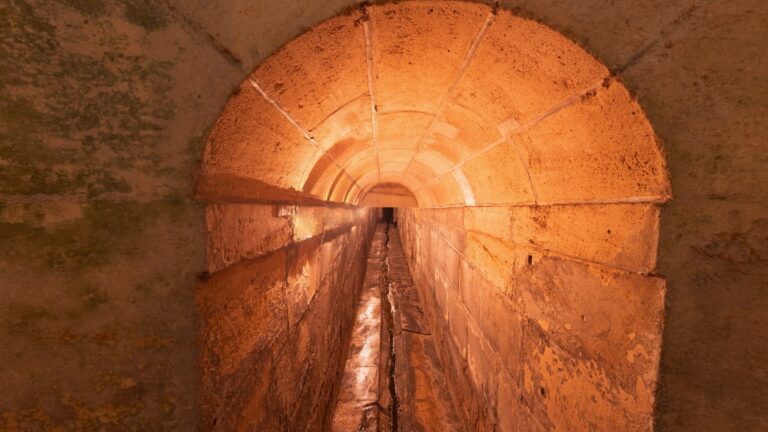 The Regard de la Lanterne (France)
The main inspection chamber of the great Belleville aqueduct, built between 1583 and 1613.
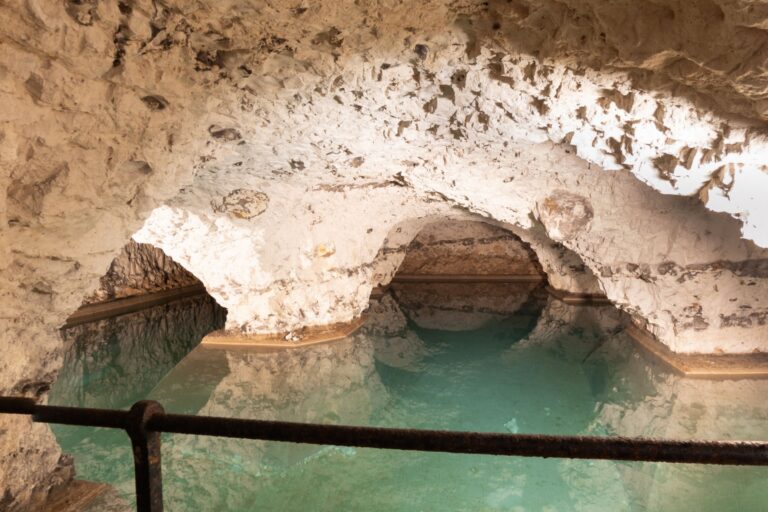 The chalk reservoir
A 200 cubic meter basin cut into the chalk, on the course of a tunnel that a mason dug alone with a pickaxe between 1836 and 1840.
Sculpture and underground art
Carving the rock face so that it becomes the work, or letting the void receive what is brought into it: bas-reliefs left by quarrymen between one extraction and the next, collective frescoes taken up again season after season, chalk quarries and tuffeau cellars turned into exhibition halls. See also art and sculpture.
 The underground quarry of Jezuïetenberg (Netherlands)
Virtual tour of one of the underground wonders of the Netherlands. Sculpted and painted by Jesuit monks since the 19th century, it is a magnificent setting.
 The Carrara-City area
The Carrara space is a genuine underground art gallery. Listed as an architectural heritage protection area, it is devoted to sculpture and stonework.
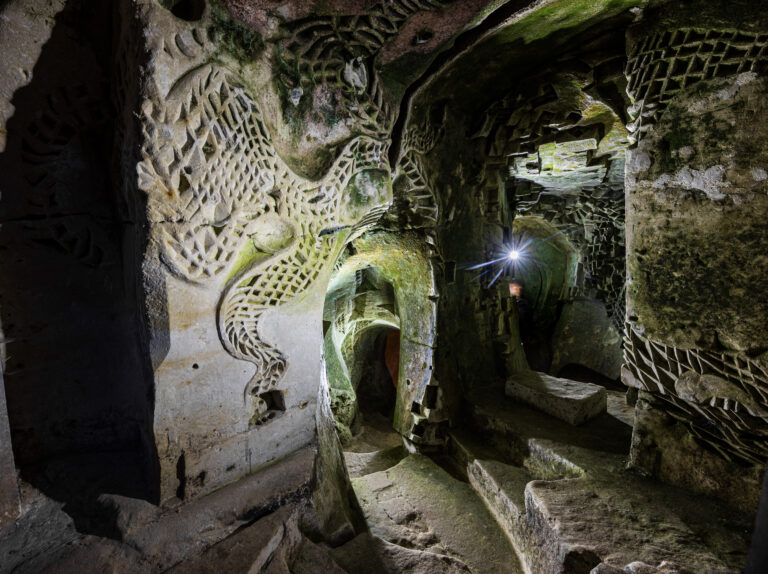 L’Hélice Terrestre de l’Orbière (France)
L’Hélice Terrestre de l’Orbière: five years of digging into the tuffeau by Jacques Warminski, for a monumental sculpture that is visited by walking inside it.
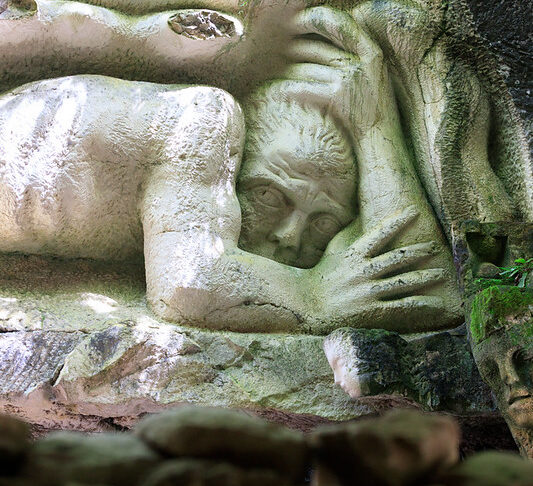 Les Lapidiales, Port-d’Envaux (France)
In the former Chabossières quarry at Port-d’Envaux, some fifty sculptors from all over the world have been carving a collective fresco directly into the quarry face since 2001.
 The Ackerman cellars
 offer a unique scenographic journey through a series of contemporary works.
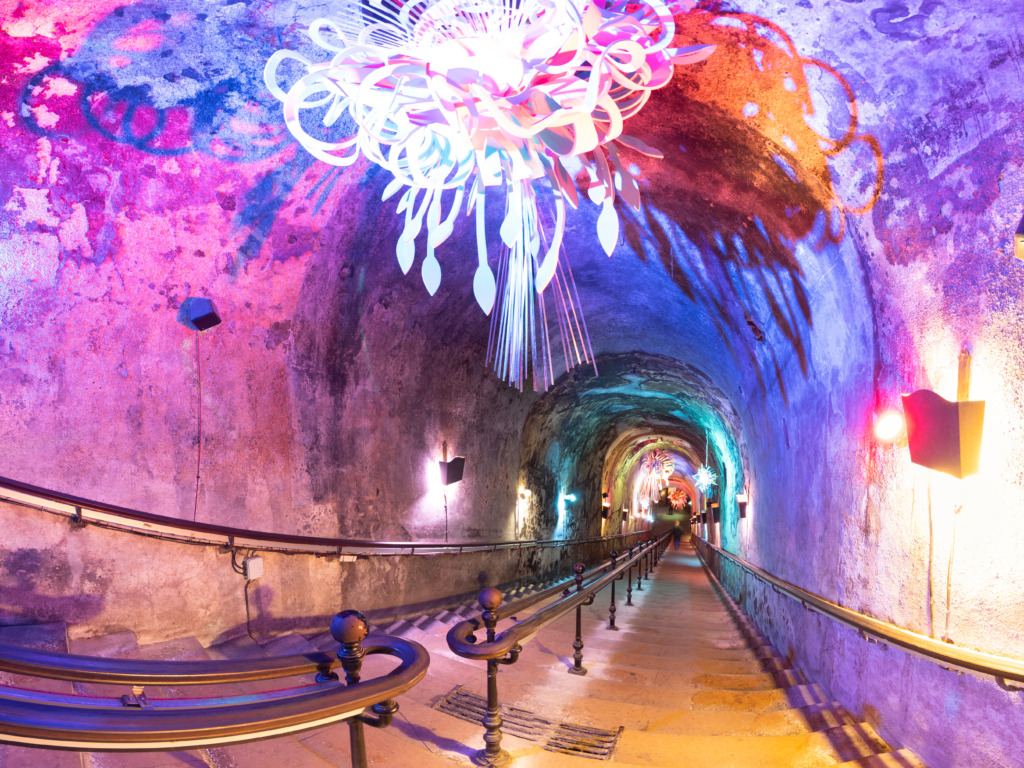 Pommery champagne cellars
Welcome to the Champagne Pommery cellars in Reims, where history, craft and tradition meet in a single place.
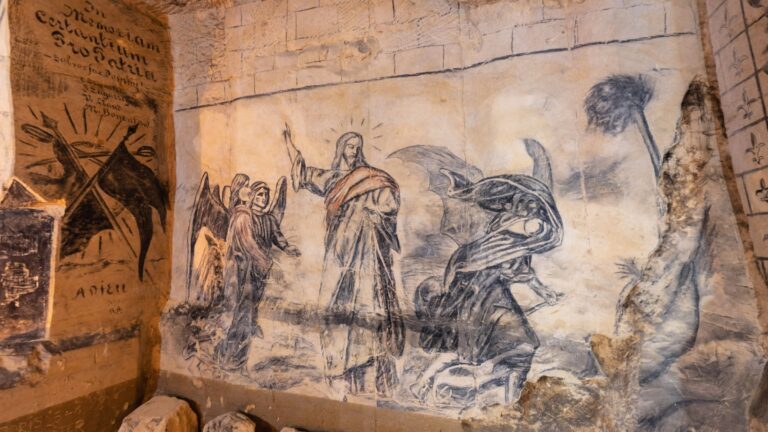 The quarry of the rock paintings
A former quarry whose pillars bear large religious drawings traced in black.
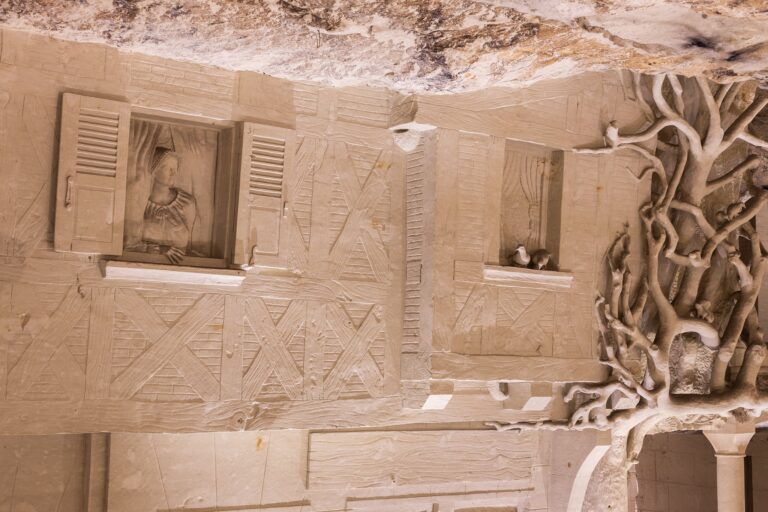 The underground town of the Cave des Roches (France)
In Bourré, a village street carved into the tuffeau thirty meters underground, deep in the quarries of the Cave des Roches.
Caves and glaciers
The only cavities in the catalog that nobody dug. Acid opened a cave in Sicily and lined it with sulfur; meltwater bored a tunnel beneath a Swiss glacier; in the Dévoluy, snow that has fallen to the bottom of a chasm turns into ice.
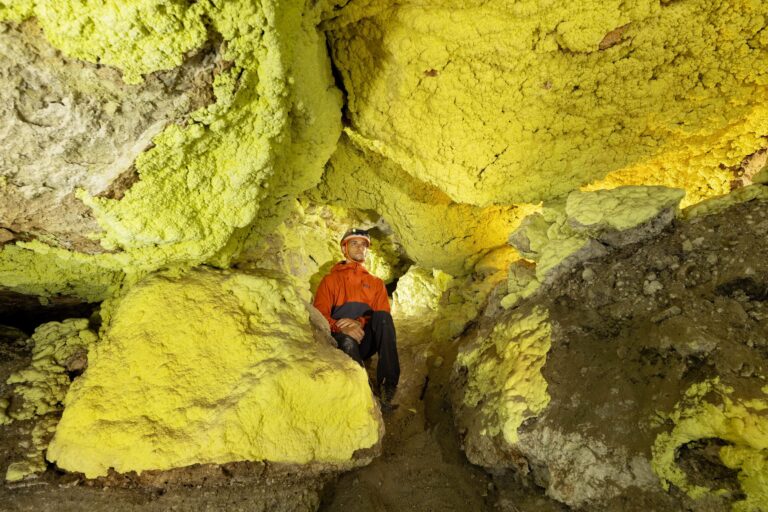 The sulfur cave (Italy)
A cave in Sicily hollowed out by acid, its walls covered with crystals of sulfur and gypsum.
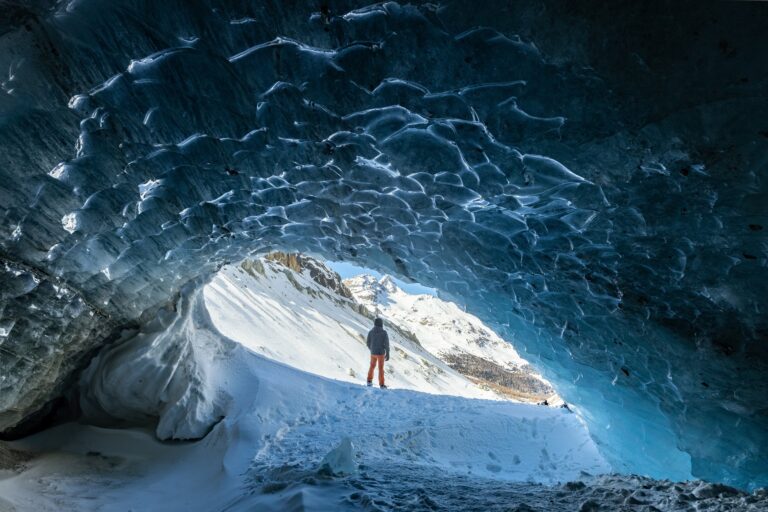 The Arolla glacier cave (Switzerland)
A long ice tunnel carved by water and air currents beneath a glacier in Valais. Its vault collapsed in September 2022.
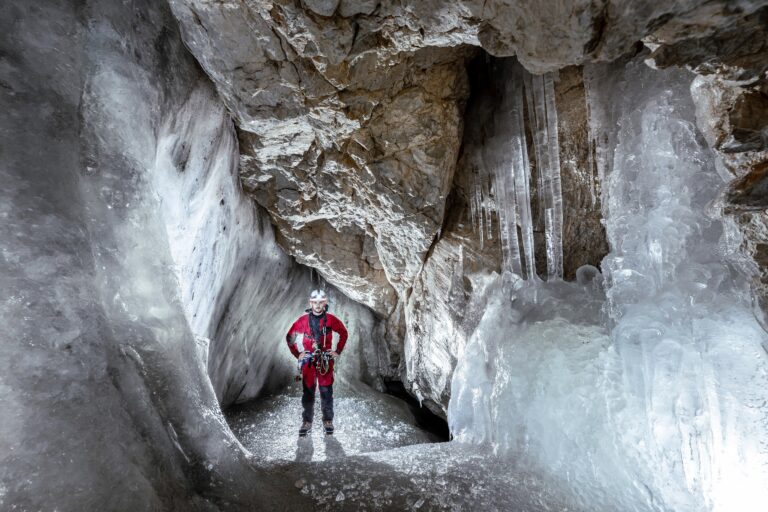 The underground glacier of the Chourum Clot (France)
A chasm in the Dévoluy where accumulated snow forms a glacier, which the CNRS is watching melt.
No tour matches this search.
A TOUR FOR YOUR SITE
Showing what cannot be visited
Museum, local authority, site operator: I create 360° virtual tours of your underground spaces, ready to embed in your website or your exhibition.