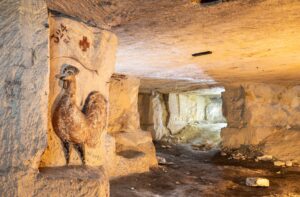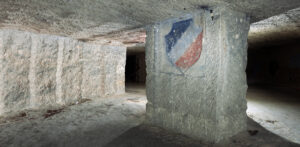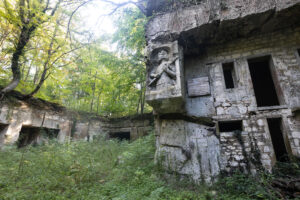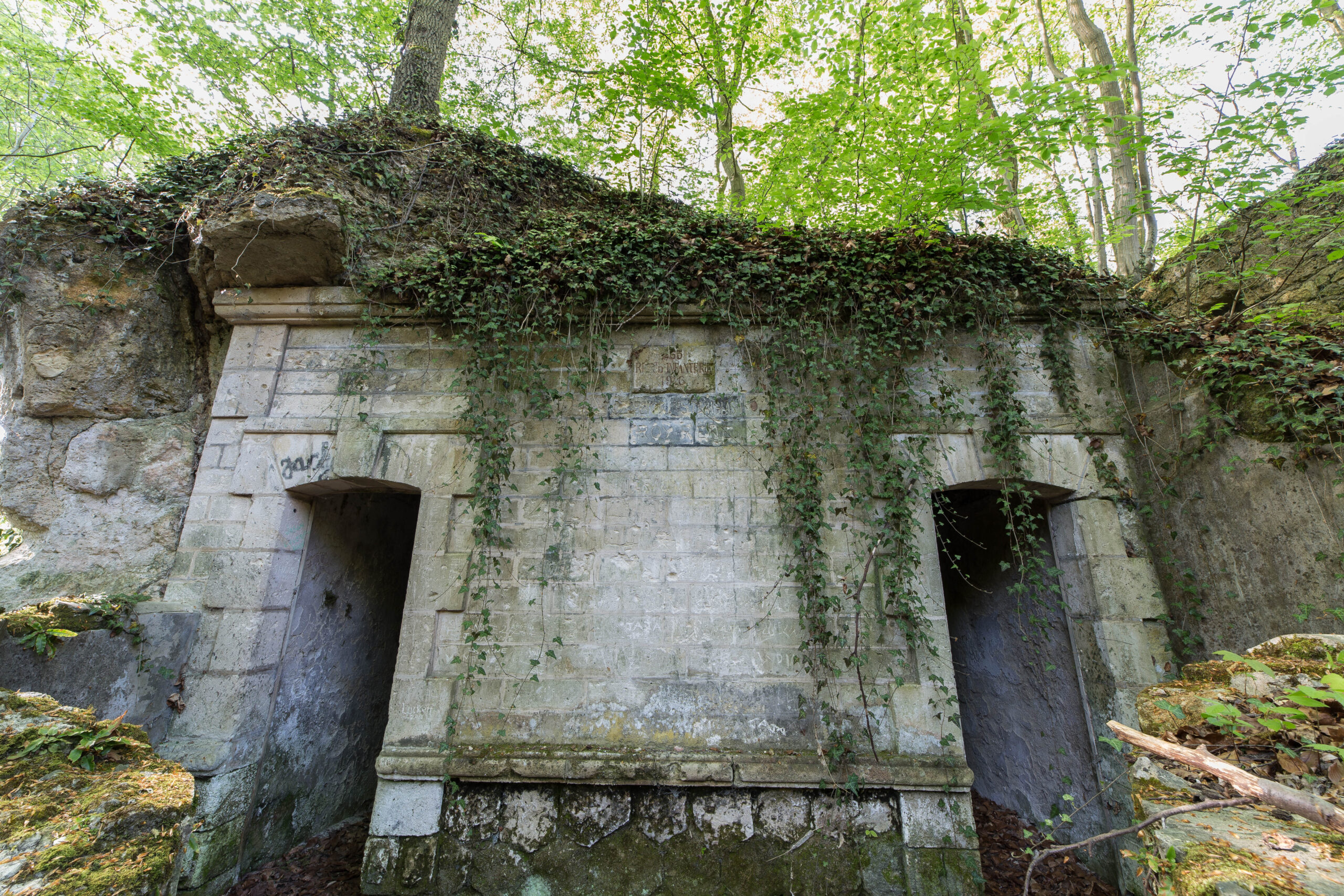
These creutes were of superior quality compared to those of the frontline fighters. They were mostly composed of a command post as well as quarters for rest.
Command post
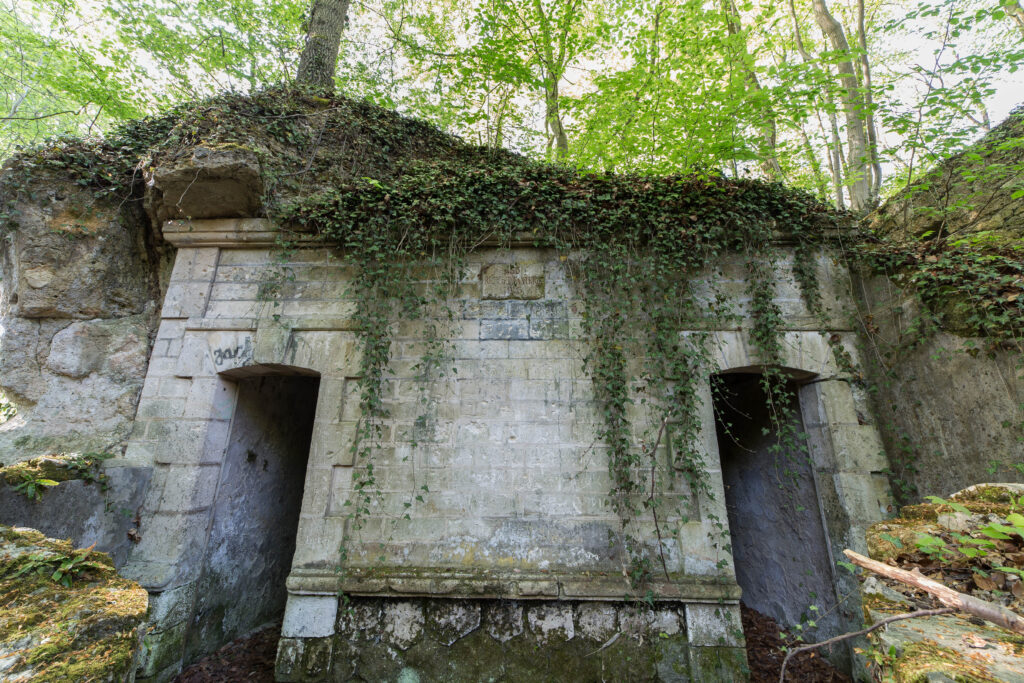
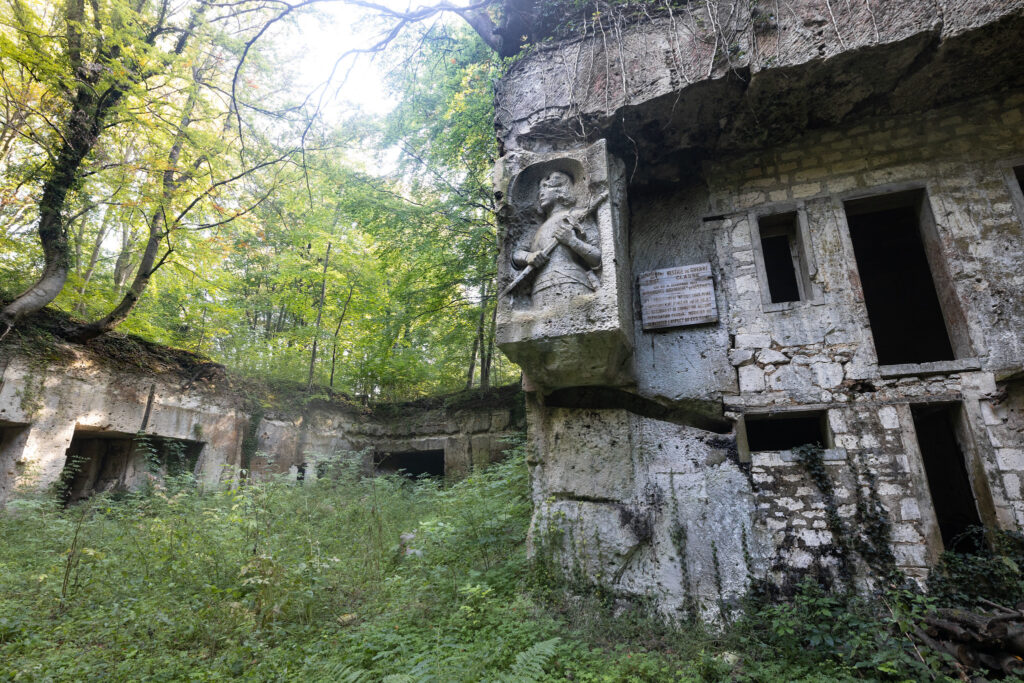
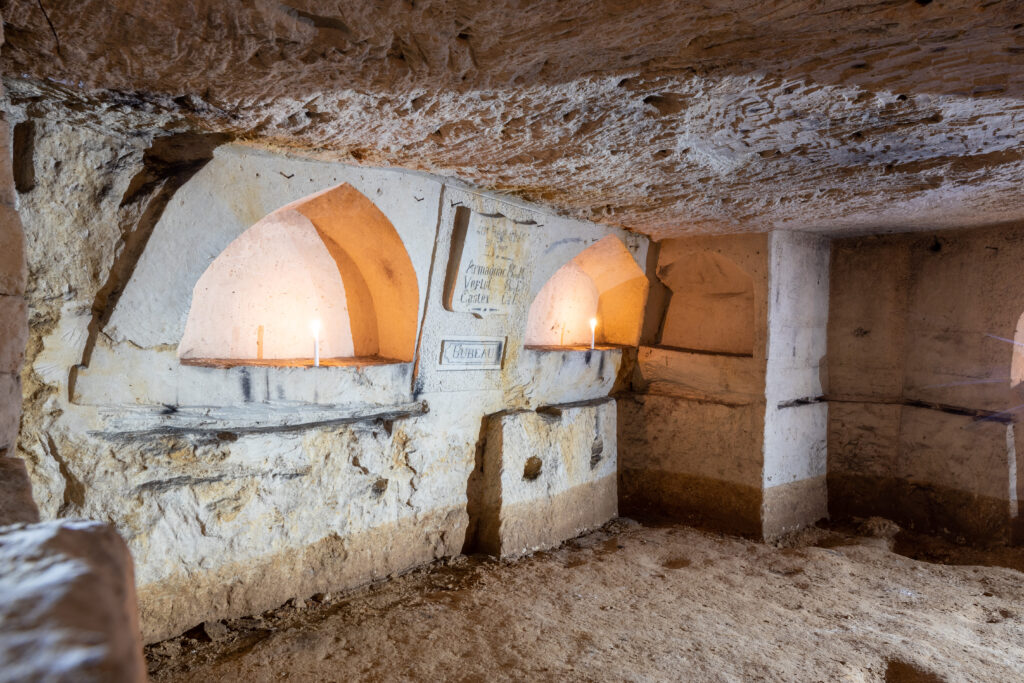
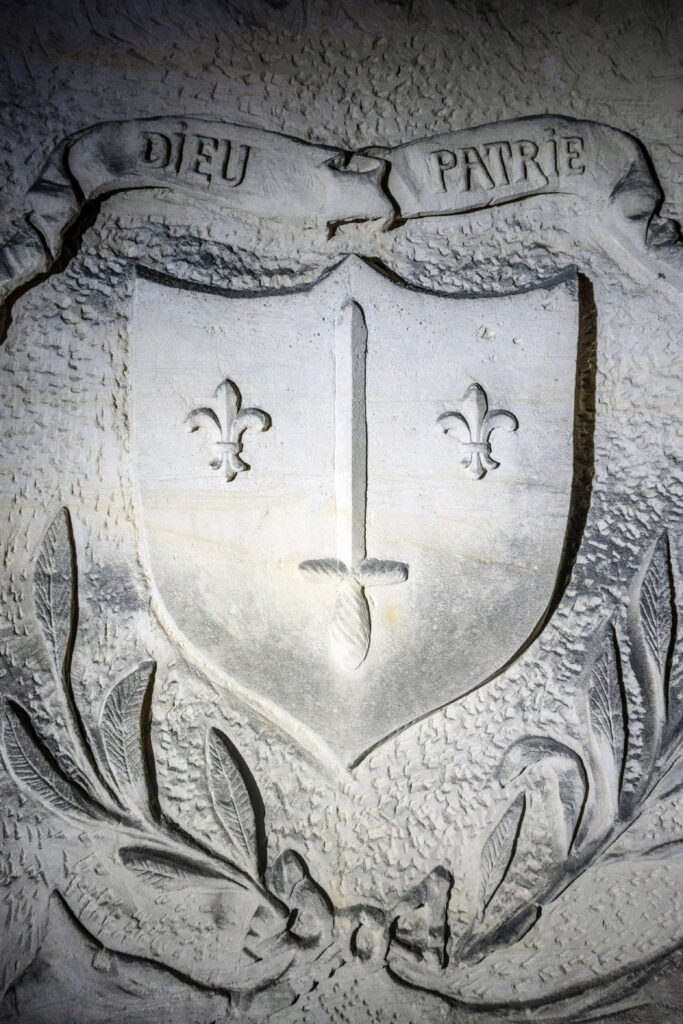
Most of the time, these command posts were perfectly built with masonry, located outside, near the creutes where their rest quarters were situated, to benefit from ventilation and light. Sometimes, they were decorated with sculptures depicting military symbols such as coats of arms, laurel branches, or war crosses. These posts served for war decision-making and were therefore located relatively far from the front line.
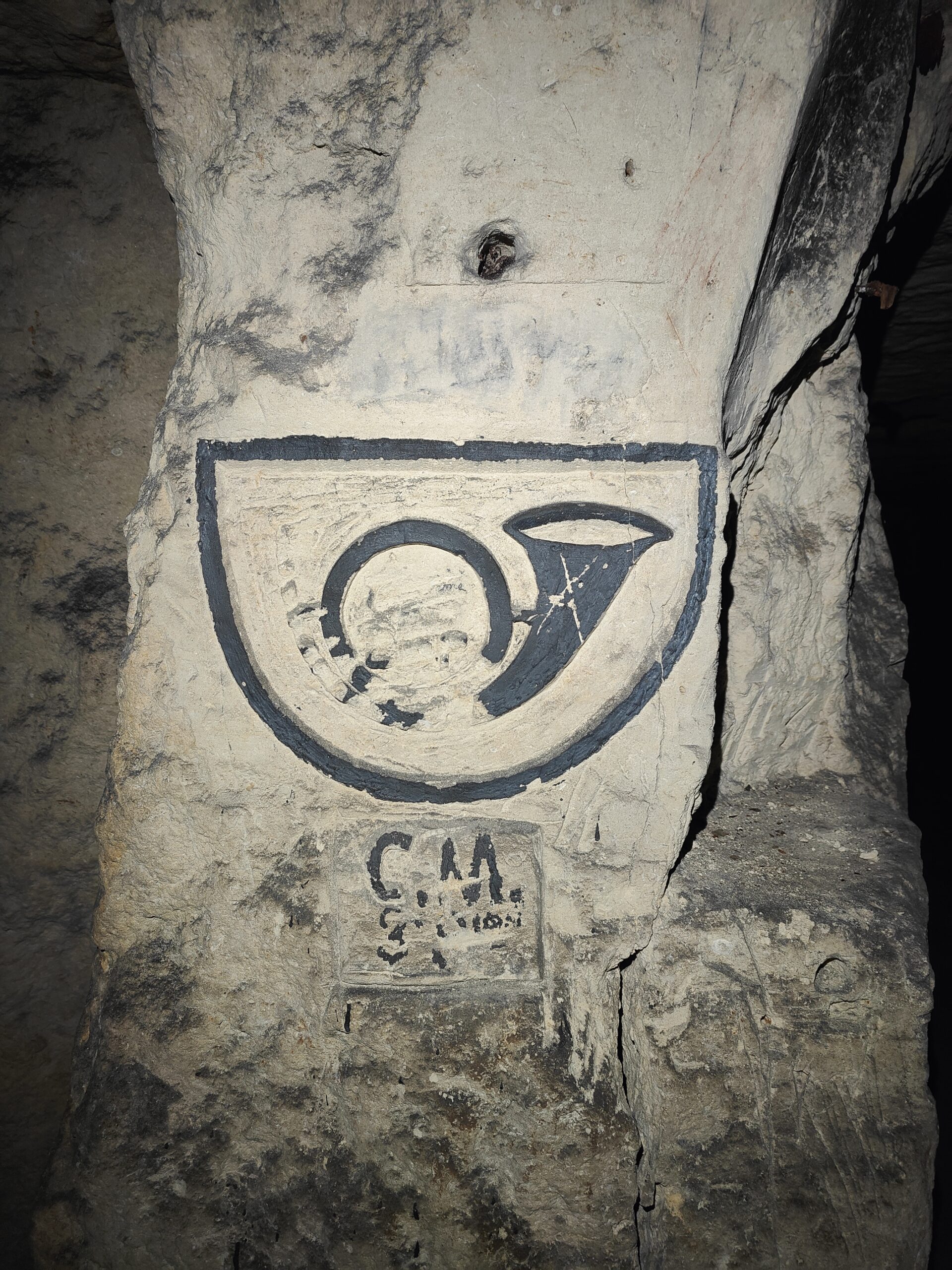
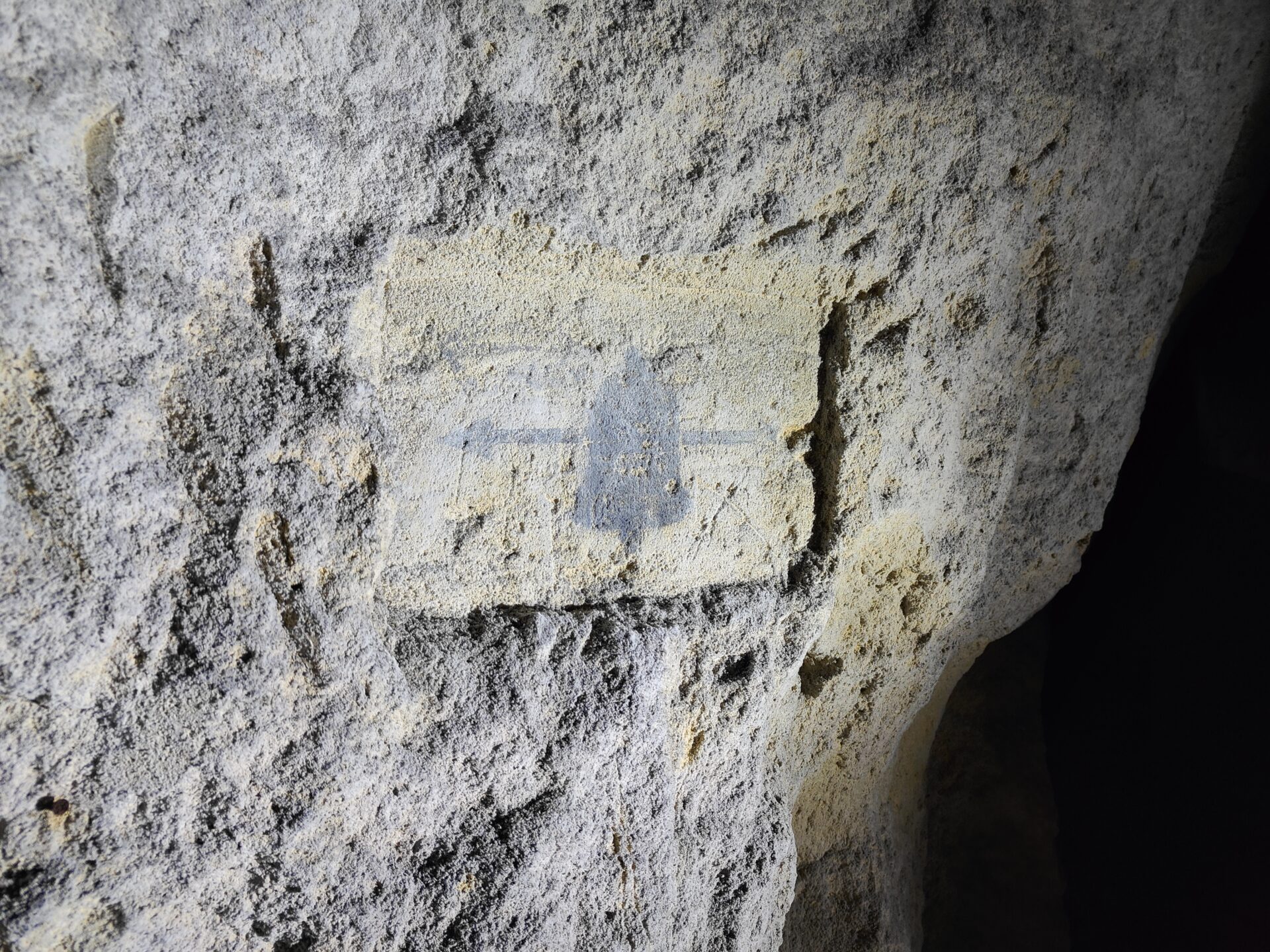
The command post was often associated with a telephone or communication post, provided that electricity could be supplied to the quarry. The Germans were the most advanced in installing electrical power in quarries. The French used messengers on bicycles or horses. In order to convey information through the creute, distinctive signs (bell, postal horn) intended for these messengers allowed them to find their way and reach the communication post.

This command post was less frequently associated with “officers’ offices”. Their function is not well established, but the presence of numerous alcoves suggests that some documents could be stored there.
Living quarters
The living quarters could be very varied. Located outside, on two floors, or deep inside the creutes. They paid particular attention to the aesthetics of their living space.
There is almost always a fireplace present, with the hearth dug directly into the quarry wall. Smoke evacuation is ensured by piping carved into the rock itself and sealed with plaster tiles. This duct leads outside, either by using a former ventilation well or by placing the fireplace directly at the creute entrances. Sometimes the fireplace also bears the initials of the officer for whom it was intended.
You might like the following articles:
Creute of the Poilus and civilians
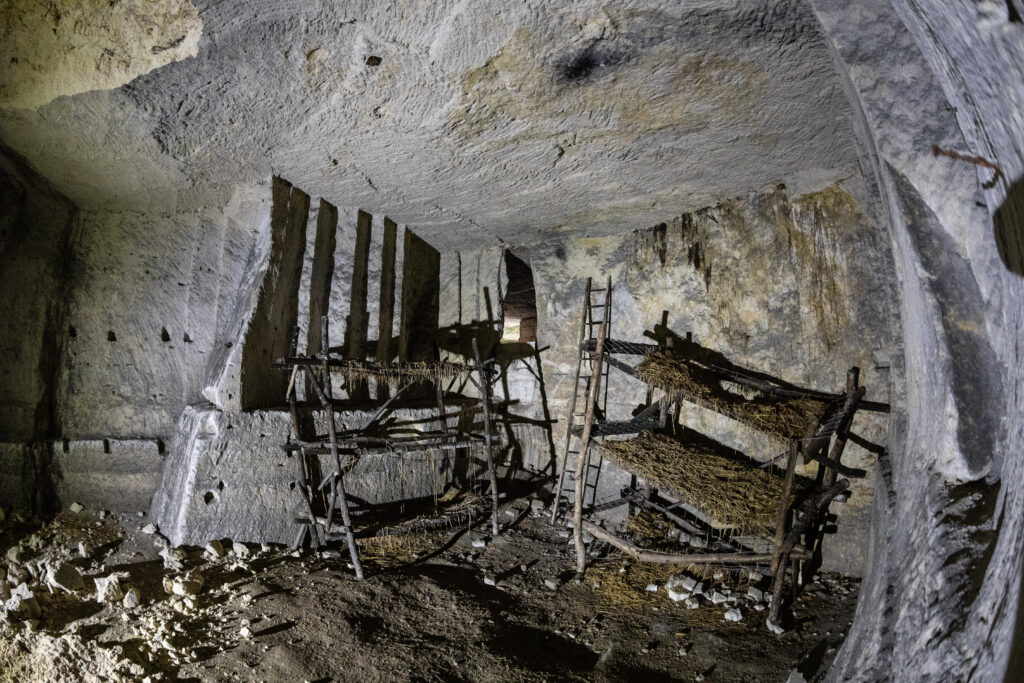
The creutes were used by civilians for protection from bombings and to find shelter following the destruction of their village by bombs.
Underground chapels
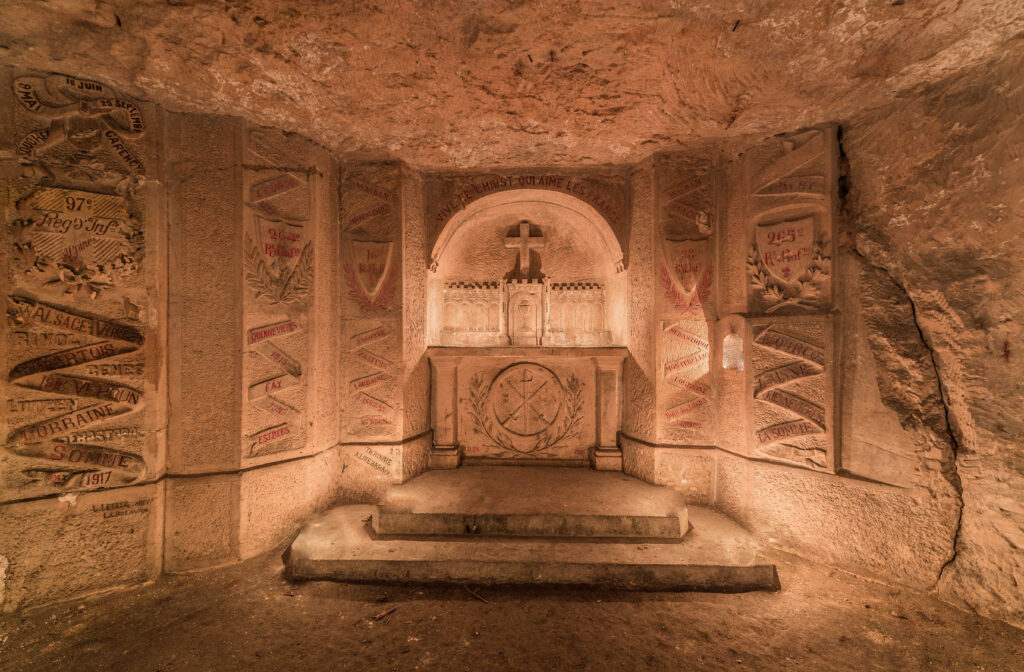
The chapels were used for daily prayers.
Mines and counter-mines
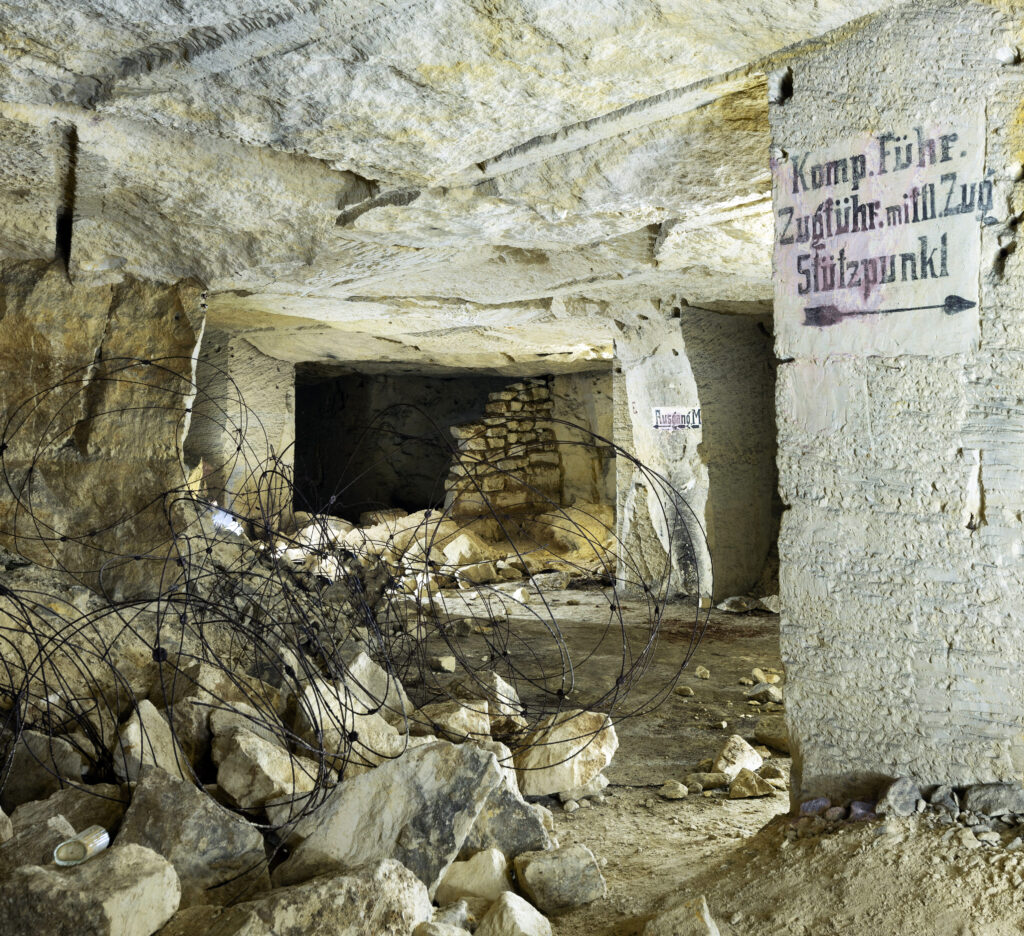
Focus on underground offensive and defensive systems during World War I.
Traces of WW1 soldiers
A collection of traces left by various soldiers during their stay in the creutes.