The Jezuïetenberg is a quarry located south of Maastricht near the Belgian border. It is called the Jesuit mountain (“mountain” here means “quarry”).
Dug during the medieval period, tuffeau, a fine-grained chalk intended for construction, was extracted here. In these quarries, there were nearly 375 quarrymen who worked to cut stone blocks. The equipment used was the pick and the saw, which created galleries with original walls. From 1880, the Jesuit monks took over the quarry during their only weekly day of rest: Wednesday.
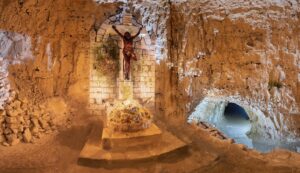
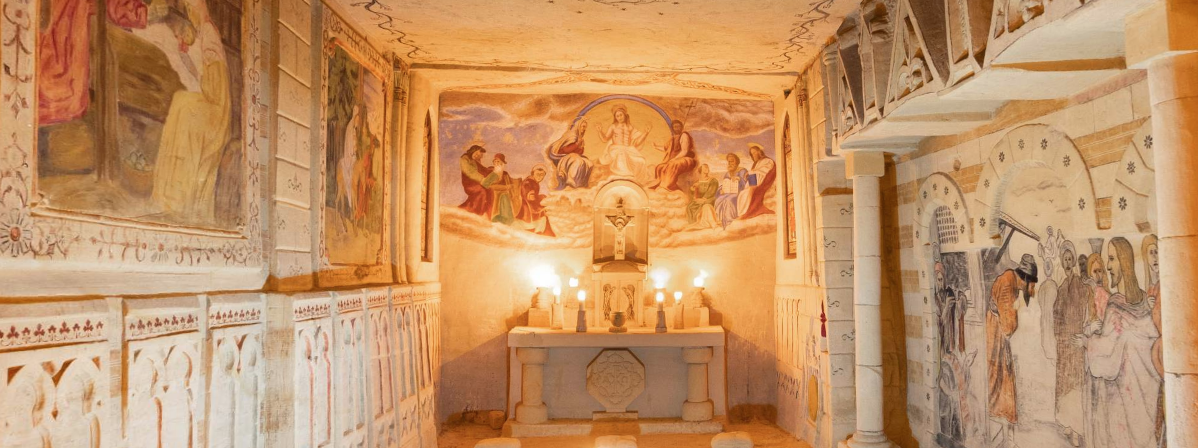
They engaged in the creation of numerous sculptures, reliefs, but also paintings, charcoal and color drawings. In total, about 400 pieces of art were created.
The Jesuits were free to do what they wanted. We therefore find very heterogeneous works.
All of these works cover 10 hectares, of which only 6 km are accessible. Indeed, a major collapse occurred on July 20, 1920, which led to the loss of five hectares of gallery. A large part of the quarry disappeared and about a hundred works of art were lost forever.
The centerpiece of this quarry is the underground chapel on which dozens of Jesuits worked. The virtual tour that I created reveals only a tiny proportion of the work carried out by the sculptors and painters. This shows the quantity of works present in this place.
In 1967, the Jesuit monks left the premises. The management and maintenance of the quarry were transferred to the province of Limburg and then to a foundation named “Jesuit Mountain Foundation”.
Since 1996, the underground museum has become a protected national monument.
In order to visit this place, you will find more information on the website jezuietenberg.eu.
This tour is part of the catalogue of virtual tours of underground heritage.