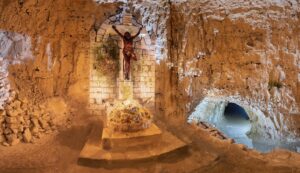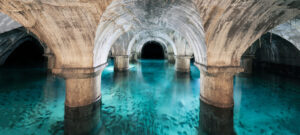
South of Paris, a treasure of hydraulic engineering has existed since 1623, taking the form of an aqueduct mostly hidden underground.
The history of this structure begins with the reign of Henry IV (1553-1610), faced with a crucial challenge: the insufficient water supply of the Left Bank of Paris. To remedy this situation, he devised various solutions, notably the famous Samaritaine pump, a three-story structure capable of drawing up to 700 m³ of water per day. However, these efforts proved insufficient.
The king then considered reactivating the Rungis springs, thus recalling the existence of an ancient aqueduct dating from the Gallo-Roman era, the “Aqueduct of Lutetia”, which once supplied Paris with water before being abandoned during the Barbarian Invasions.
Unfortunately, before his projects could materialize, Henry IV was tragically assassinated. It fell to Marie de’ Medici, the regent, to pursue his ambitions.
She therefore took up the torch of the project in 1614, launching the construction of a mainly underground aqueduct. Deployed over a length of 14 km, its objective was to transport the waters of Rungis to the Luxembourg Palace, also built under the aegis of Marie de’ Medici.
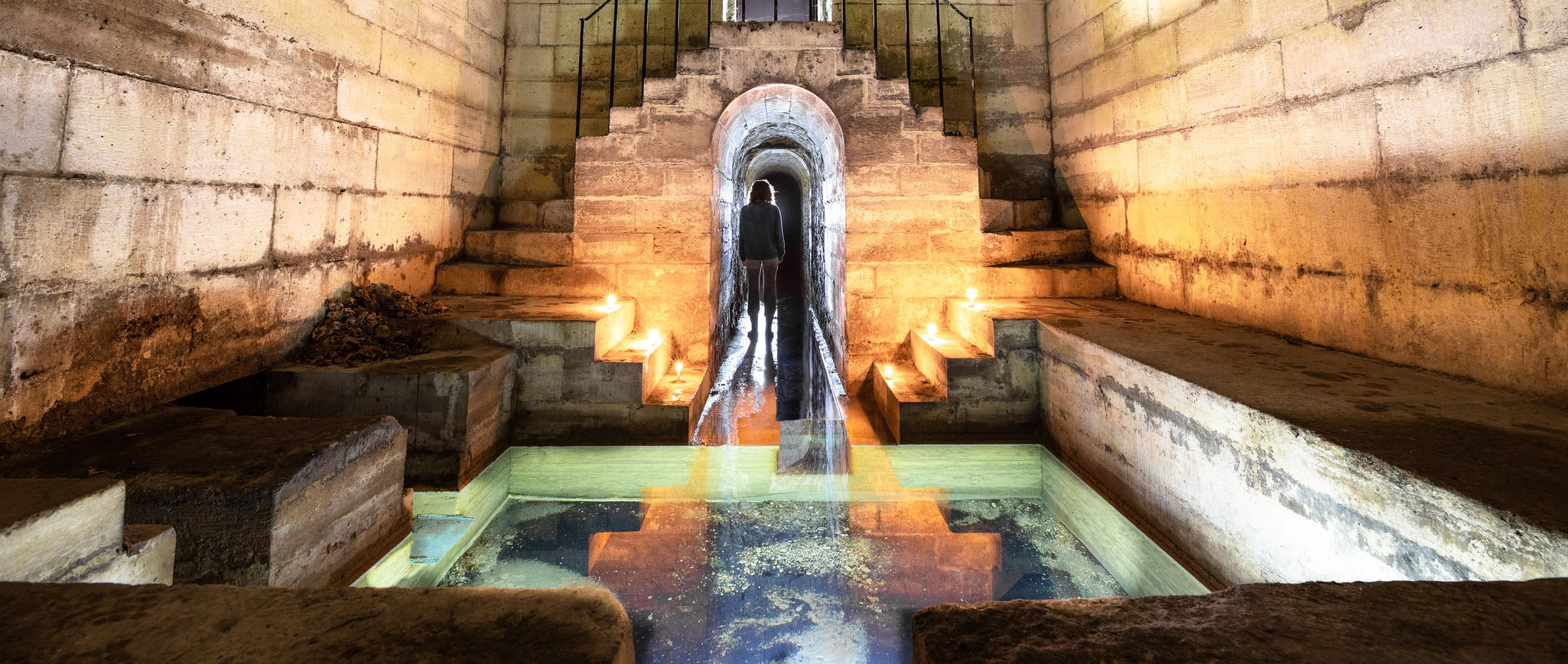
This remarkable structure consists of 28 inspection shafts, offering access points to the underground galleries for water control, spaced every 500 meters along the aqueduct’s route. A central basin promotes water oxygenation and the sedimentation of impurities.
A section of the aqueduct (from inspection shaft No. XI to inspection shaft No. XIII) emerges in the open, crossing the Bièvre valley at its narrowest point, where the Romans had built their bridge for the Aqueduct of Lutetia, thus highlighting the historical continuity of this precious hydraulic network.
In short, this often overlooked aqueduct represents a legacy of royal ingenuity and perseverance in solving the capital’s water supply challenges.
The virtual tour starts at the first inspection shaft located in Rungis and continues towards Paris.
This tour is part of the catalogue of virtual tours of underground heritage.