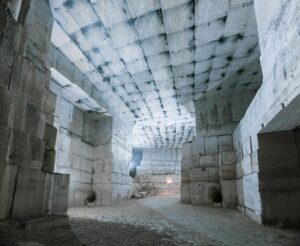
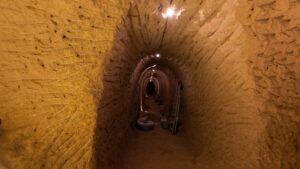
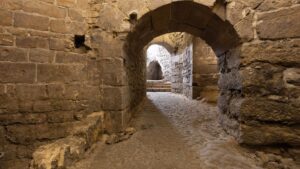
The Carrara-City Space occupies a former limestone quarry in Carrières-sur-Seine, in the Yvelines. The name of the commune already says what was done there. In 1137, Suger, abbot of Saint-Denis, granted the hamlet of Carrières-Saint-Denis to the treasurer of his abbey. The deed, on parchment, is kept at the Archives nationales.
Suger is also the man who had the basilica of Saint-Denis rebuilt, the first building in the architecture that would come to be called Gothic. The town links its quarries to this building project: the limestone taken from beneath it was used for religious buildings, and first of all for the basilica.
The Lutetian limestone
This limestone was deposited about 45 million years ago, at the bottom of a warm sea that covered the Paris Basin. Among other stones, the quarrymen extracted liais from it, a high-quality stone used for the basilica of Saint-Denis and for the Pont de Neuilly.
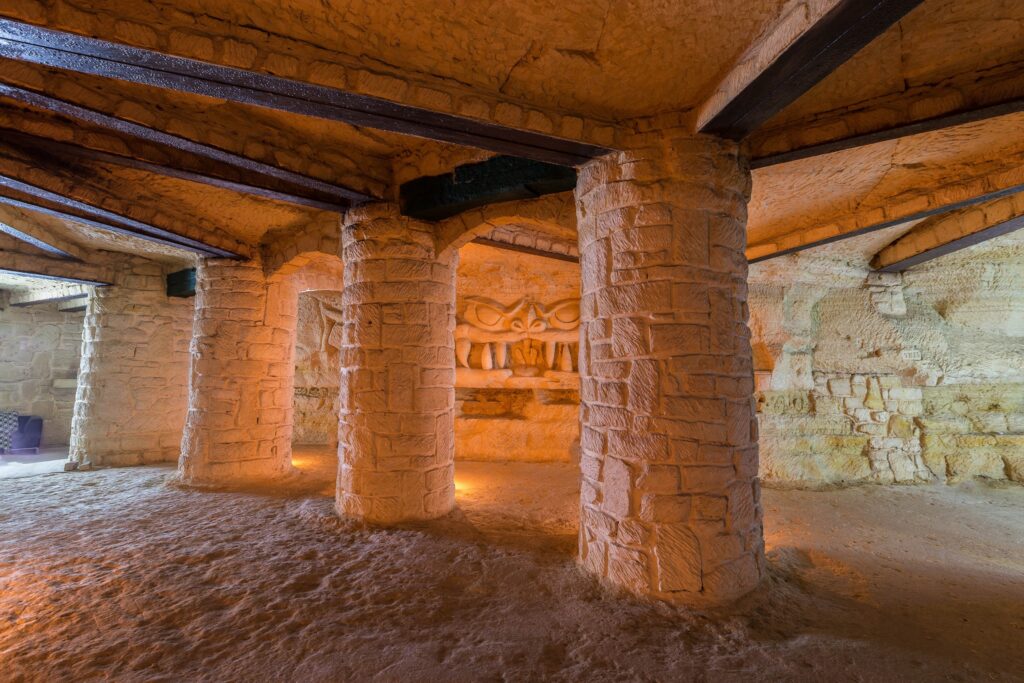
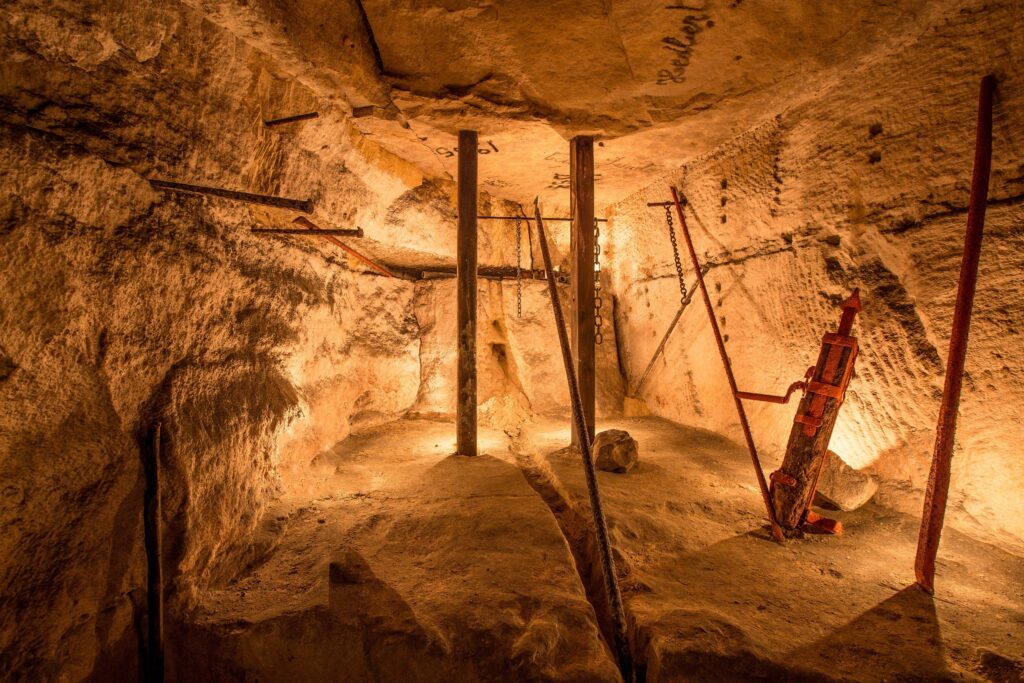
Extraction went on for eight centuries, from the 12th to the 19th. To hold up the ceiling of the galleries, pillars and walls were built of rubblestone, small undressed stones.
On a working face, a quarryman’s lance has been set up again. This three-meter metal rod, mounted on a wooden support, could only be used where the ceiling was high enough to install it. Other tools and methods are described in the article on extraction in underground quarries.
The mushroom farms
In the 19th century, the activity declined, facing competition from new materials such as concrete. The abandoned quarries, dark and damp, were gradually converted to growing button mushrooms, the “Paris mushroom”. This quarry had that second life for more than a century. The commune now has only one working mushroom farm.
A sculptors’ workshop
The quarry was restored by its owner, who invited sculptors and painters there. Under the name Carrara-City, it became a place devoted to sculpture and stone carving. It opens only for visits organized by the tourist office.
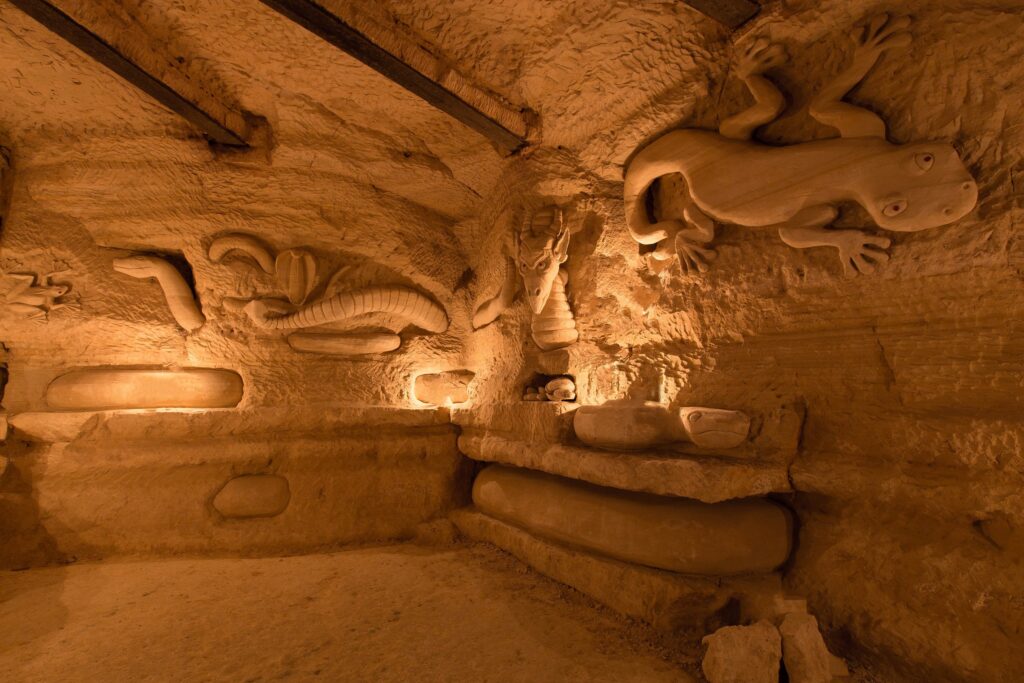
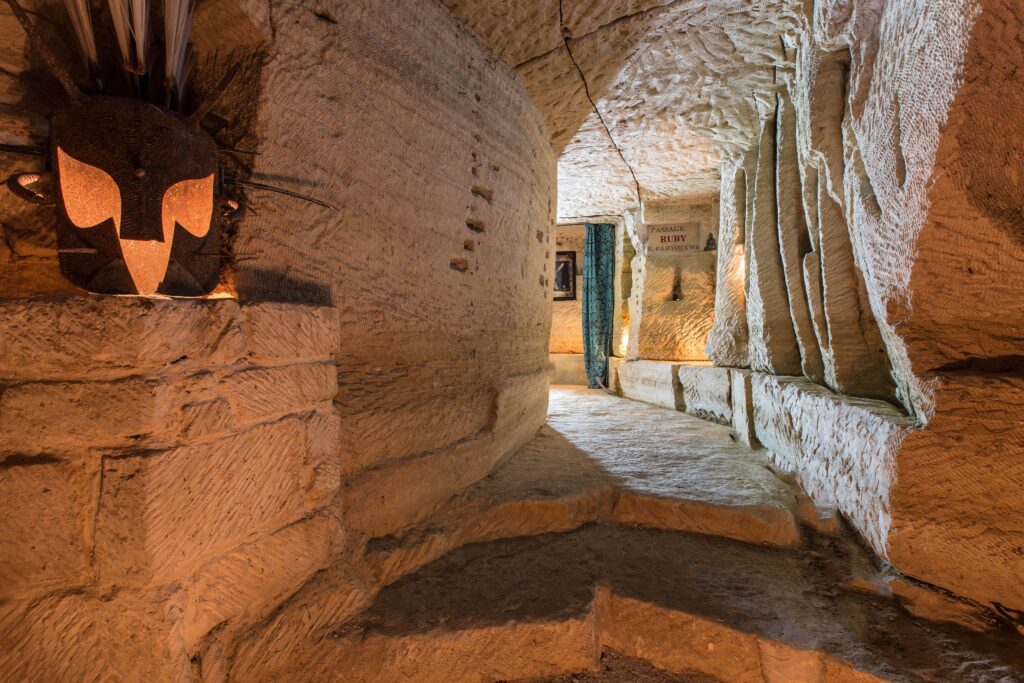
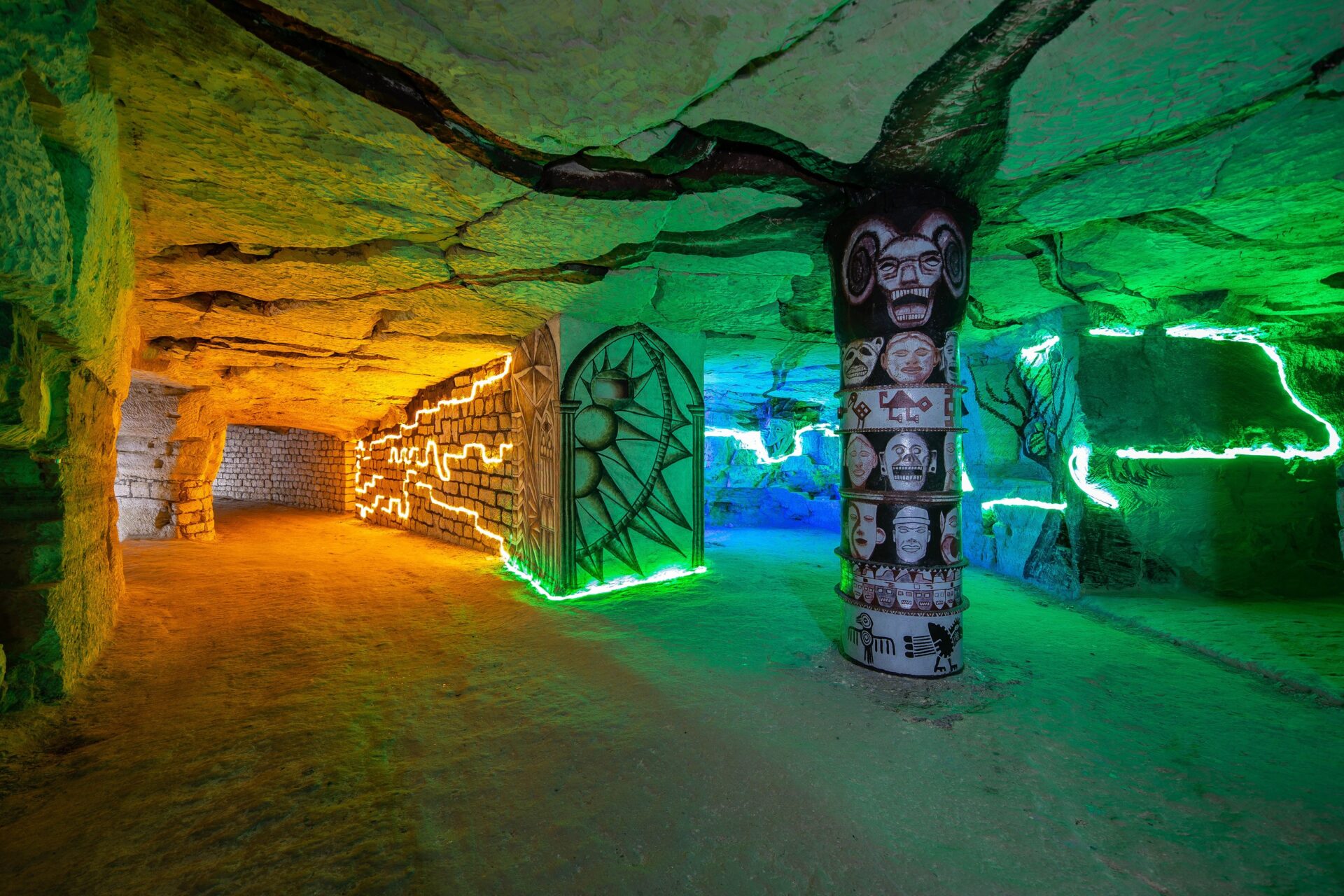
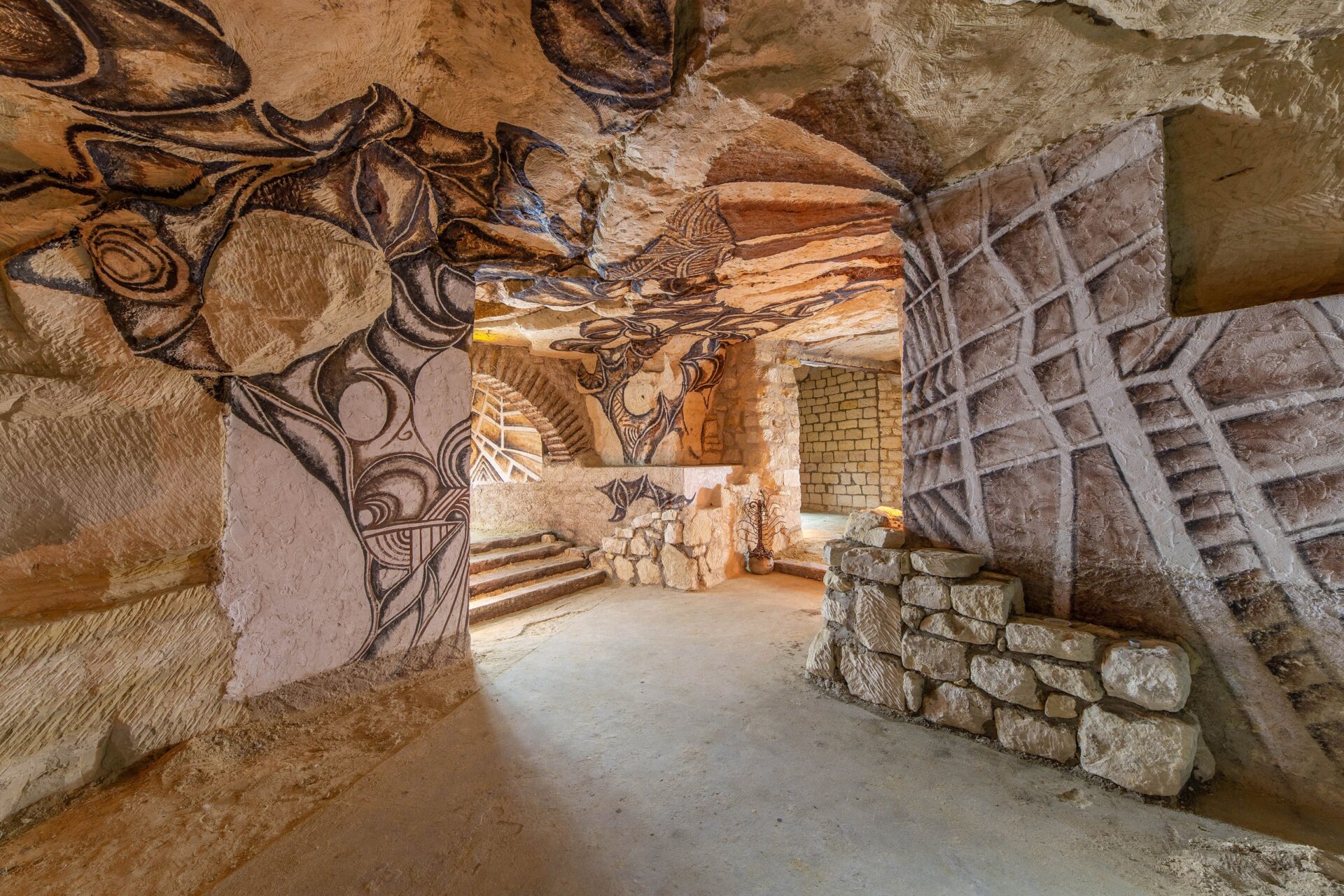
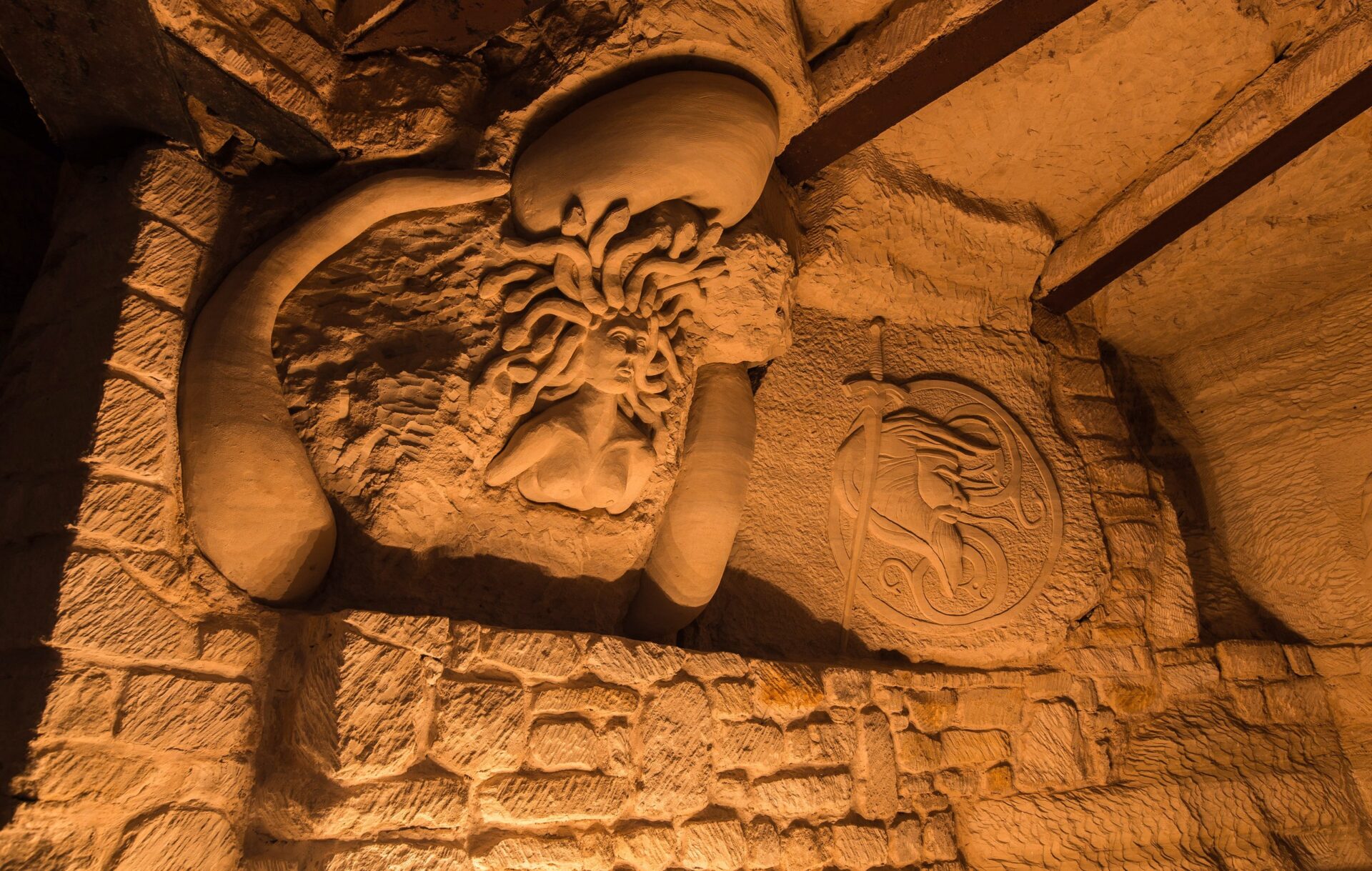
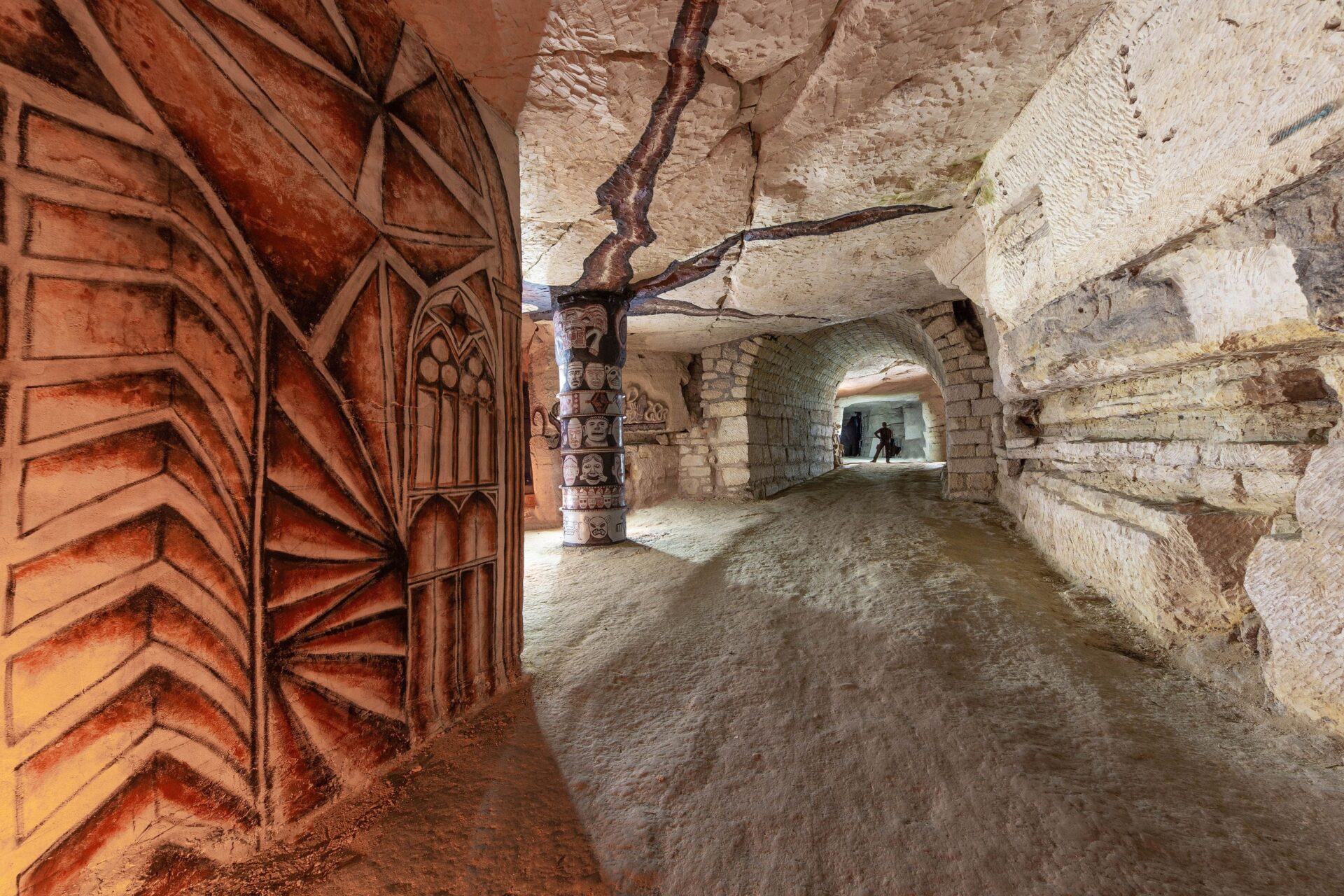
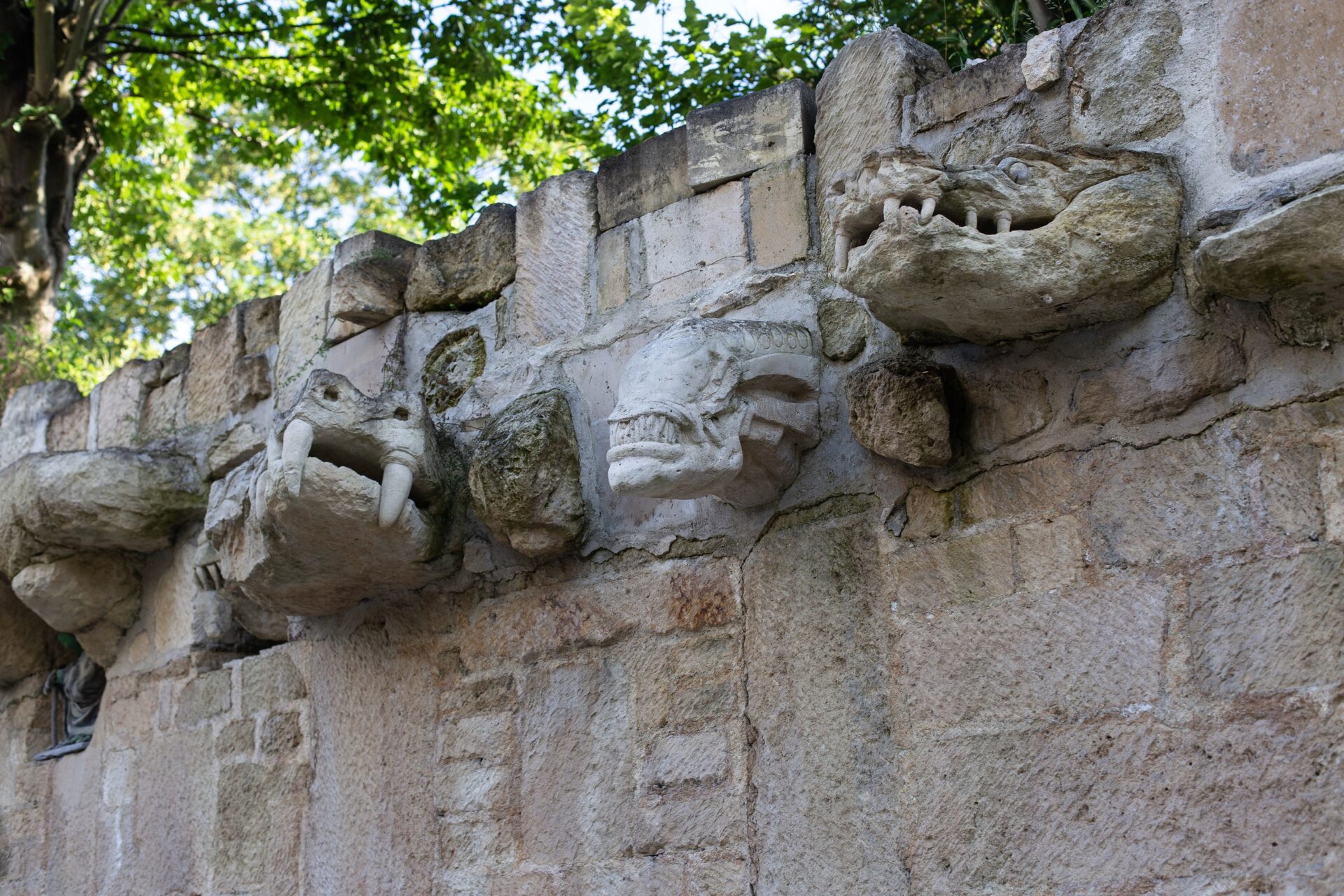
The works are carved into the solid rock. Creatures and faces emerge from the walls, neon lights and paintings highlight some of the galleries, and the passages bear names. The photographs below date from April 2018.
Other photographs of the quarry
The Carrara-City Space, photo 1 of 13
The Carrara-City Space, photo 2 of 13
The Carrara-City Space, photo 3 of 13
The Carrara-City Space, photo 4 of 13
The Carrara-City Space, photo 5 of 13
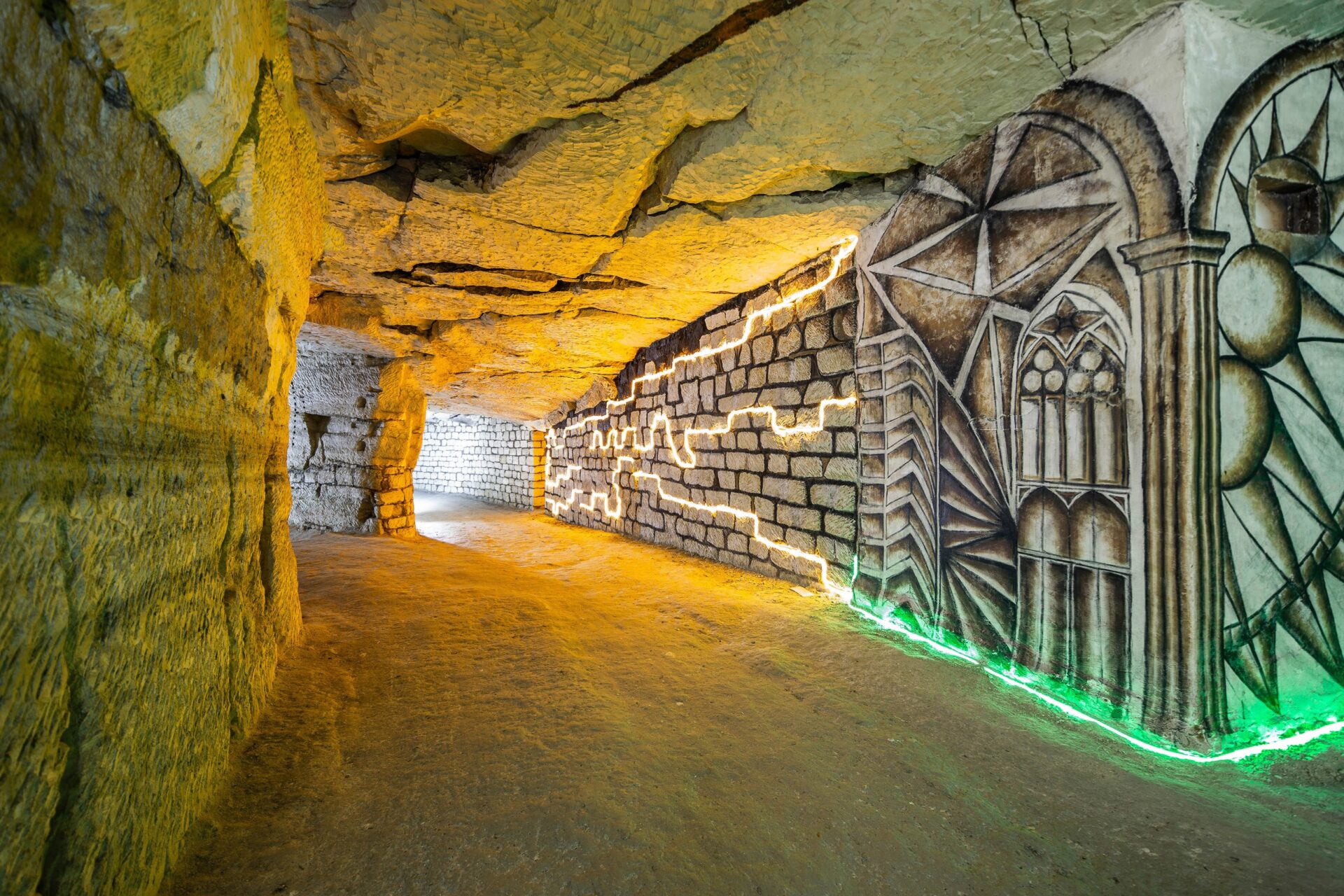
The Carrara-City Space, photo 6 of 13
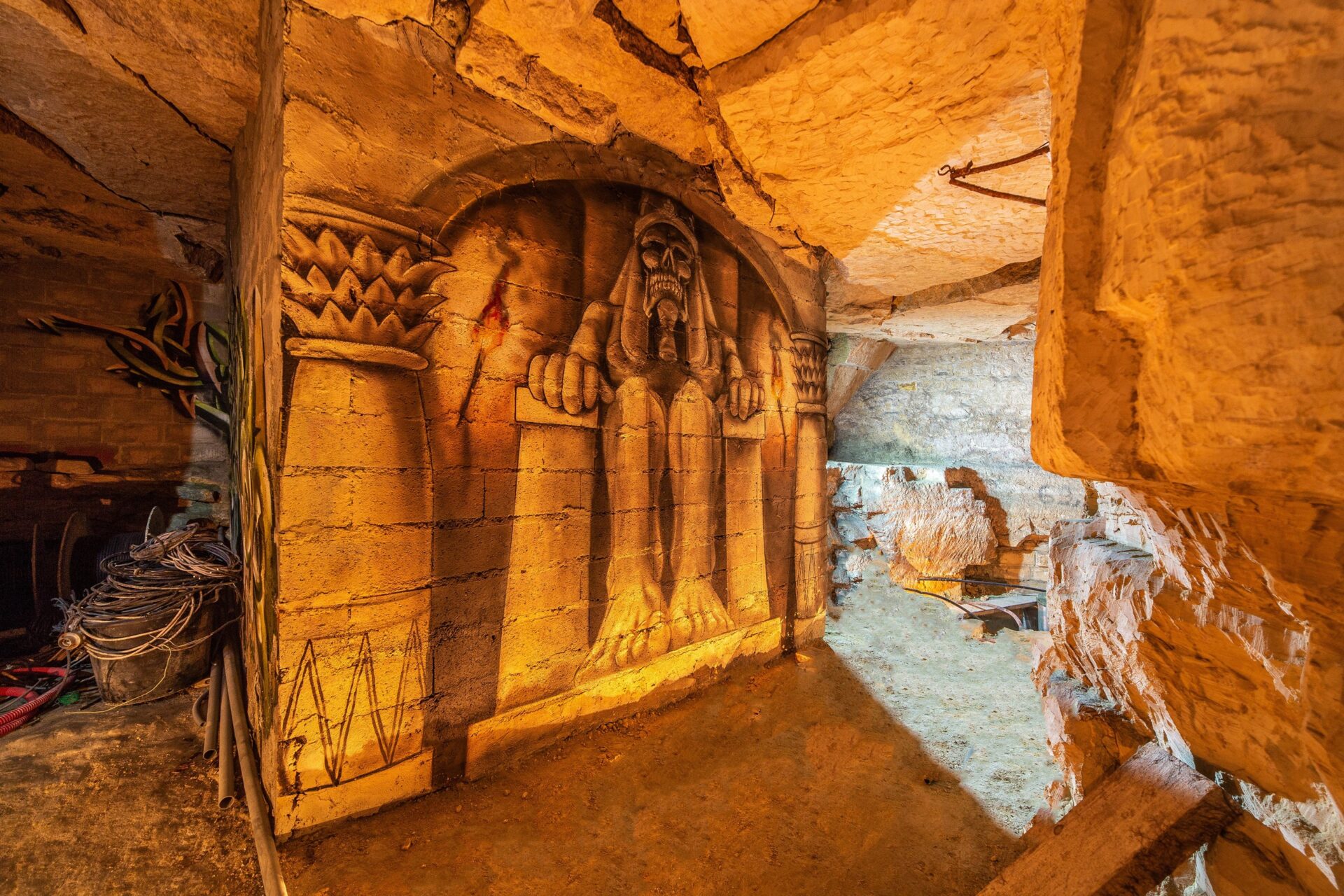
The Carrara-City Space, photo 7 of 13
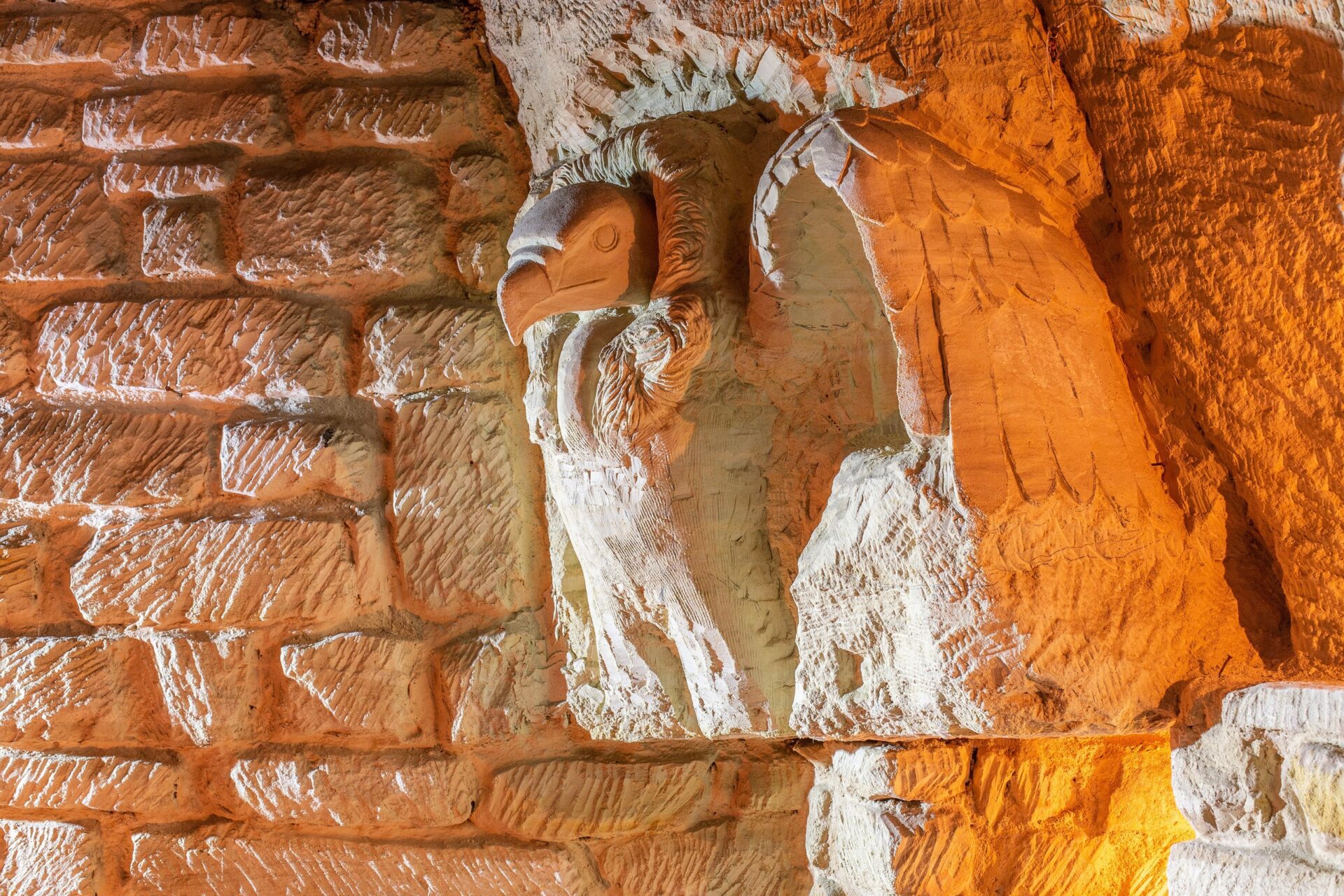
The Carrara-City Space, photo 8 of 13
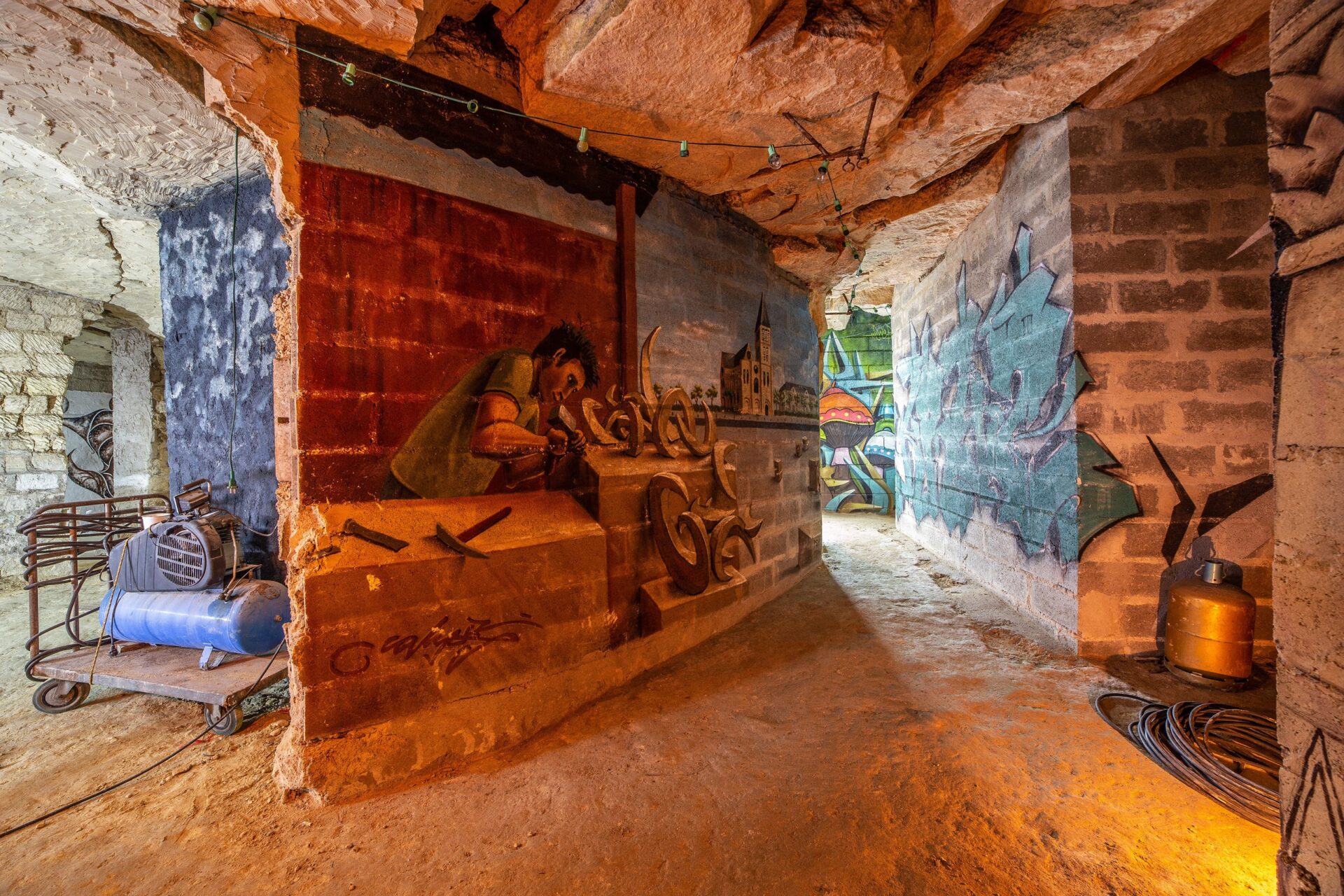
The Carrara-City Space, photo 9 of 13
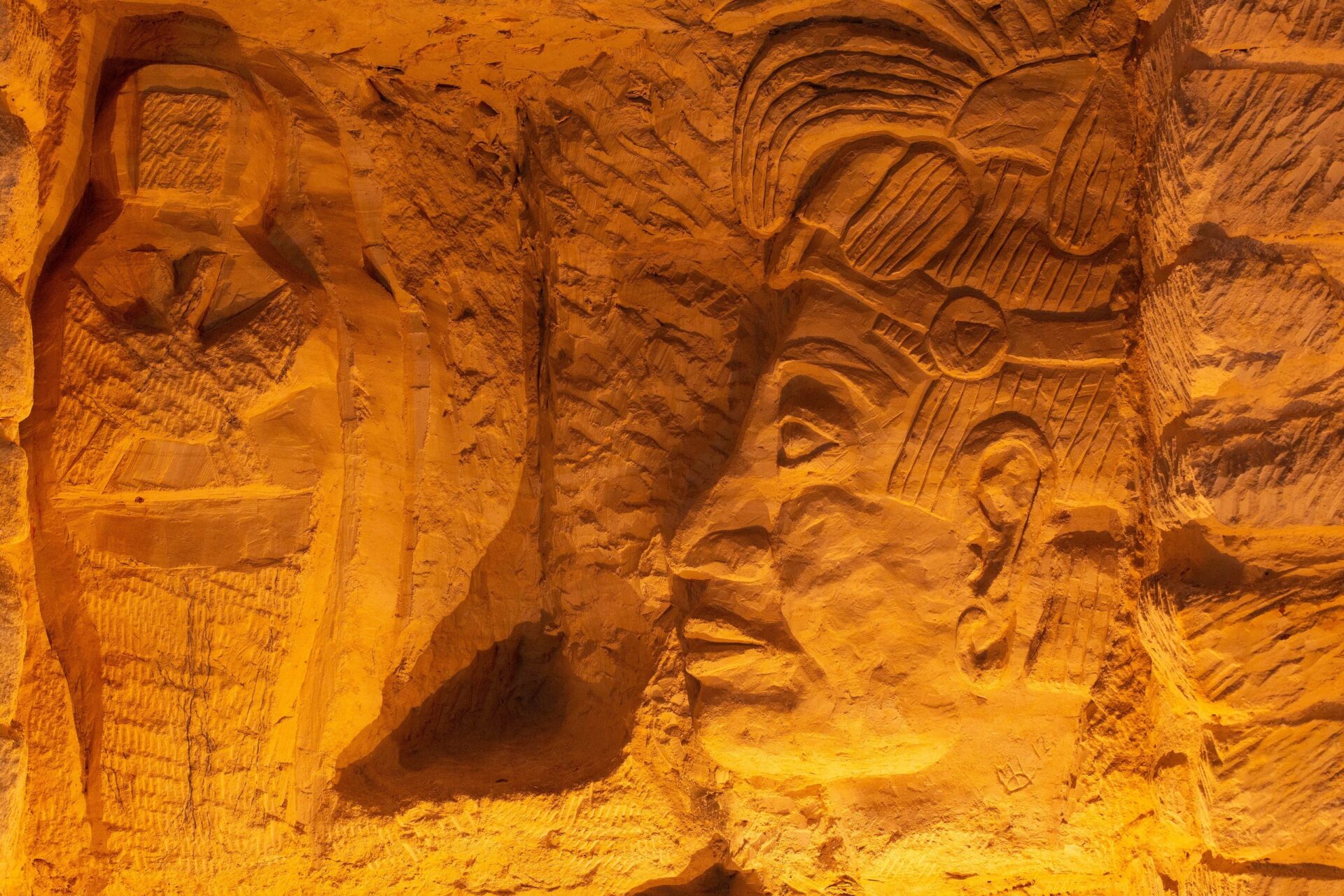
The Carrara-City Space, photo 10 of 13
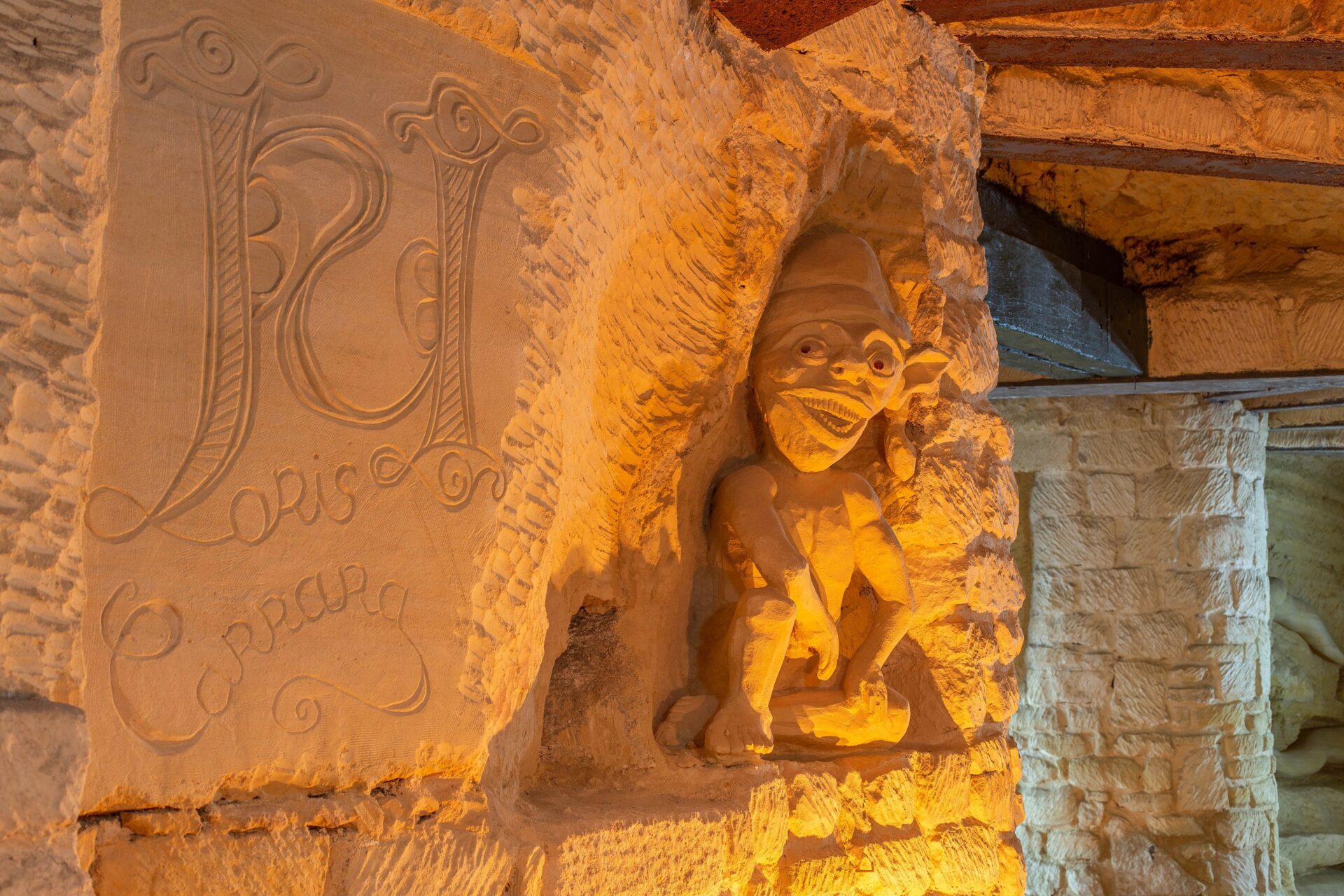
The Carrara-City Space, photo 11 of 13
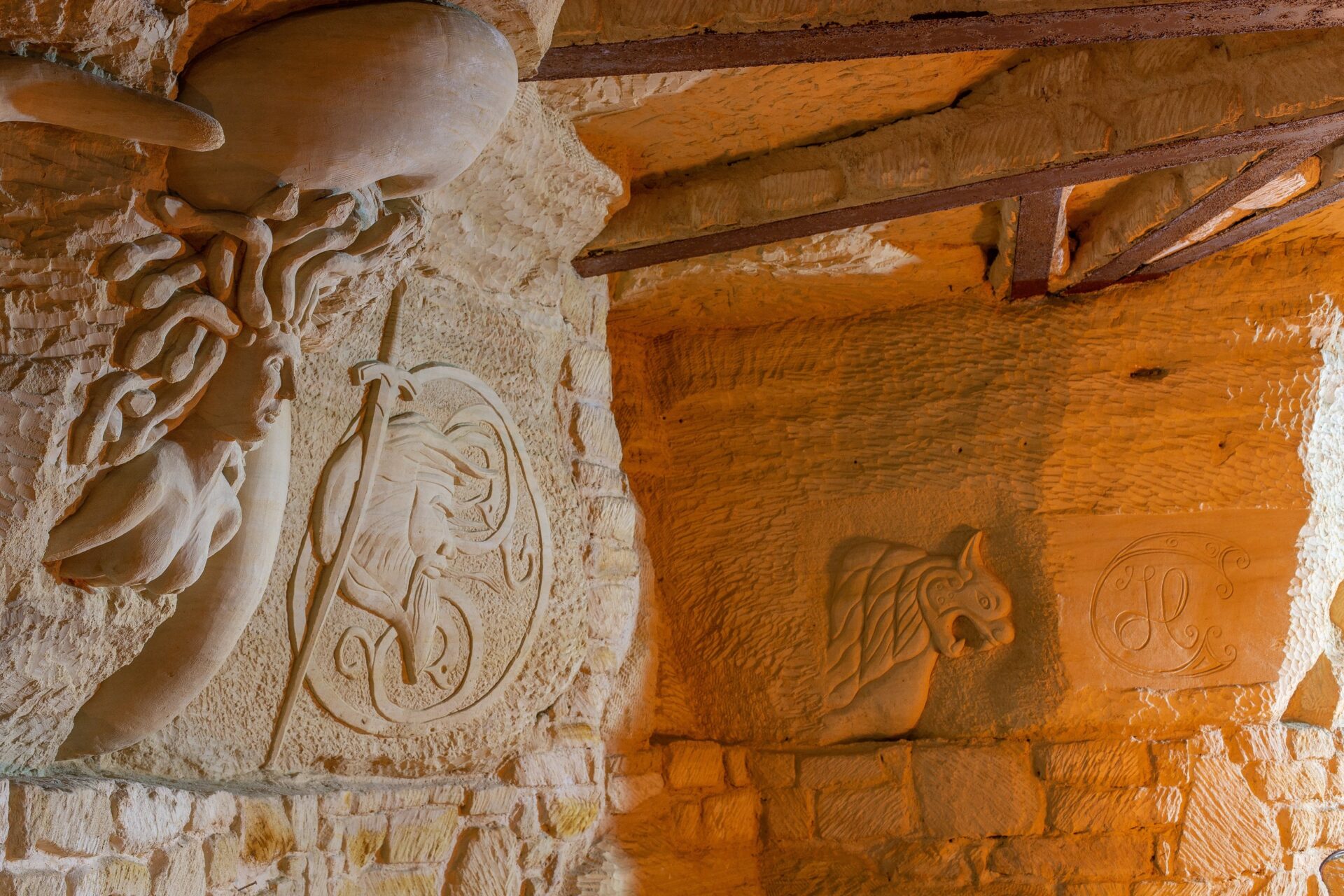
The Carrara-City Space, photo 12 of 13
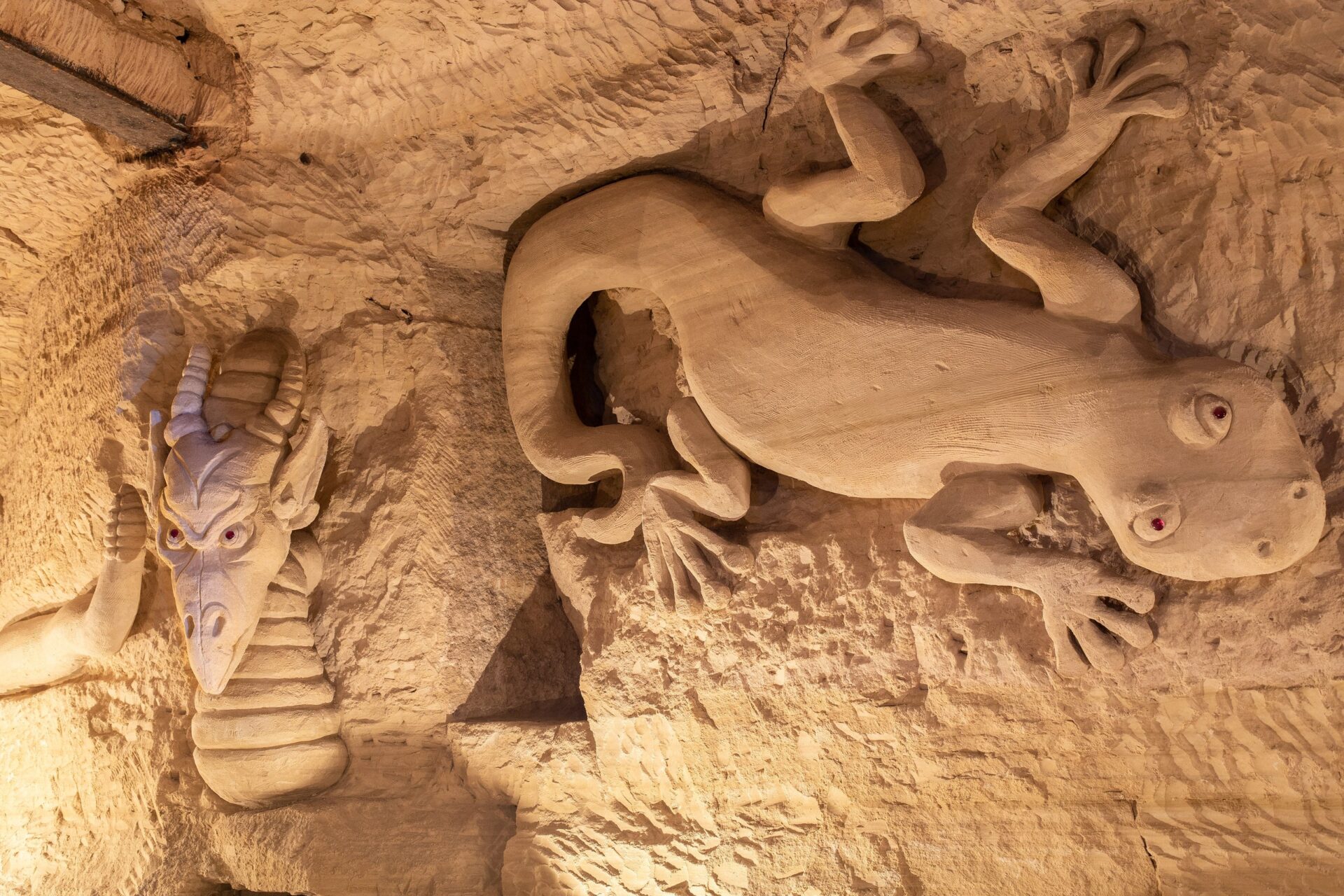
The Carrara-City Space, photo 13 of 13
Sources: Wikipédia, “Carrières-sur-Seine”; Town of Carrières-sur-Seine, “Carrières et champignonnières”; A.H.S.V.C., “L’extraction de la pierre”; Voko no. 6, “La carrière Carrara city”; Rue des lumières, “Les outils de carrier”
This tour is part of the catalog of virtual tours of underground heritage.