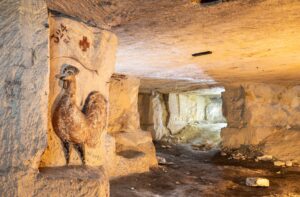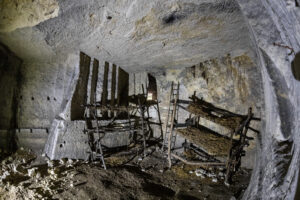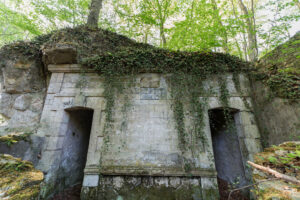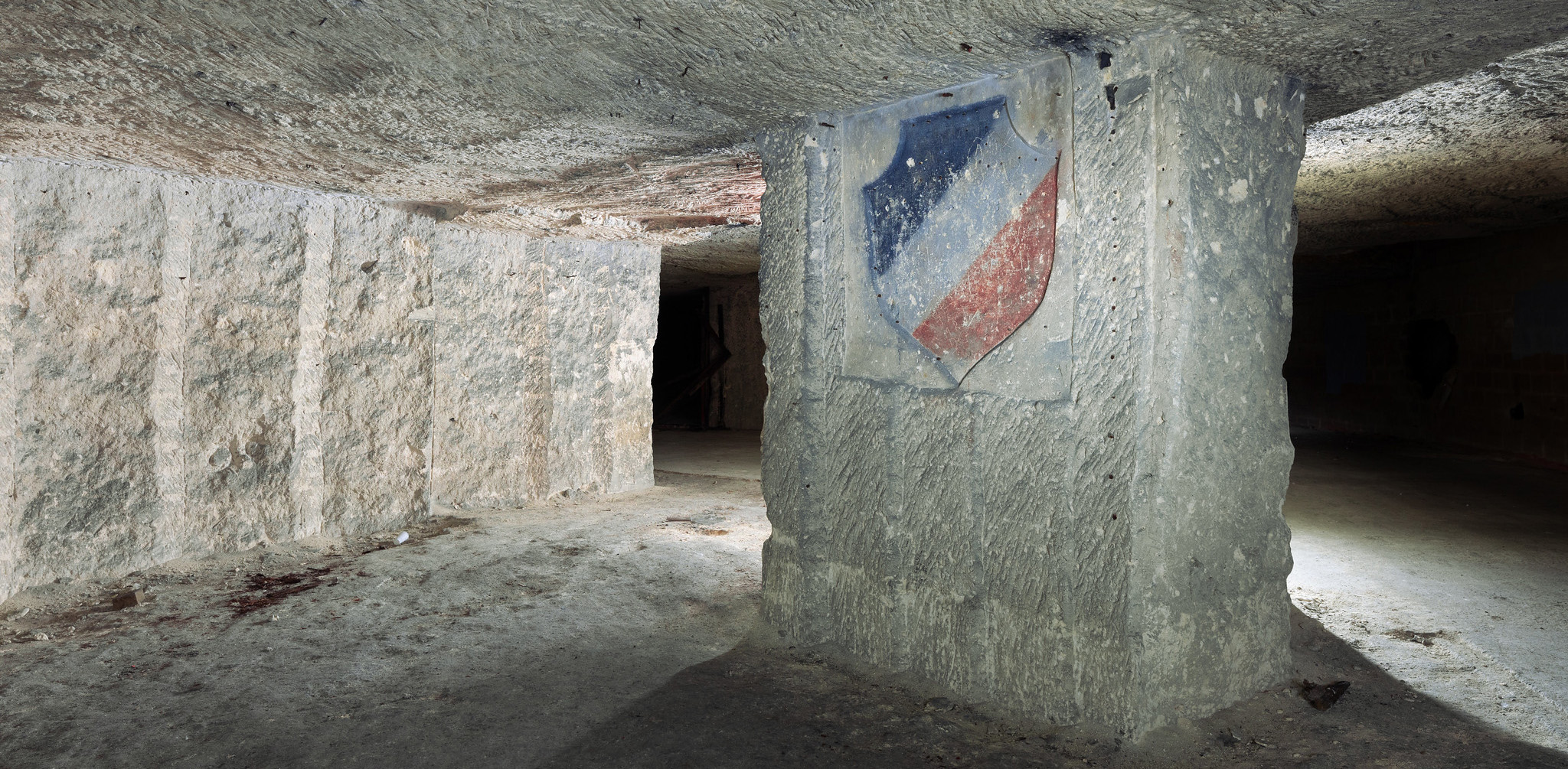
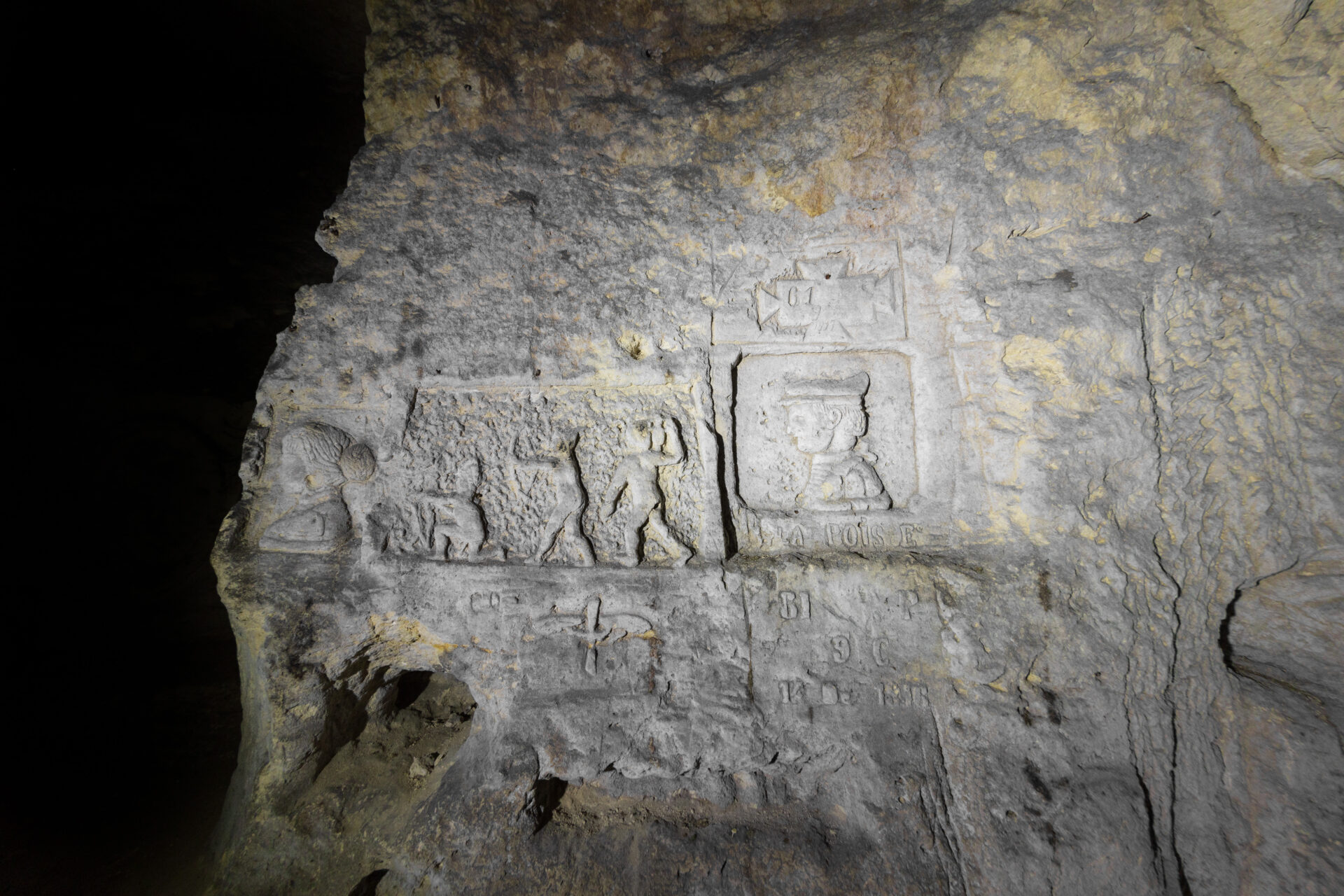
French, German and American soldiers, who were stationed in underground quarries for long periods while waiting to move up to the front, left numerous sculptures, drawings and graffiti on the walls of the creutes. Most of these traces are found near the entrances, in order to benefit from daylight to sculpt. The soldiers’ inspiration revolves around four main themes: war, religion, women and homeland.
Unfortunately, this heritage has been deliberately damaged or looted by military memorabilia collectors. Many sculptures were cut directly out of the walls.
Military representations
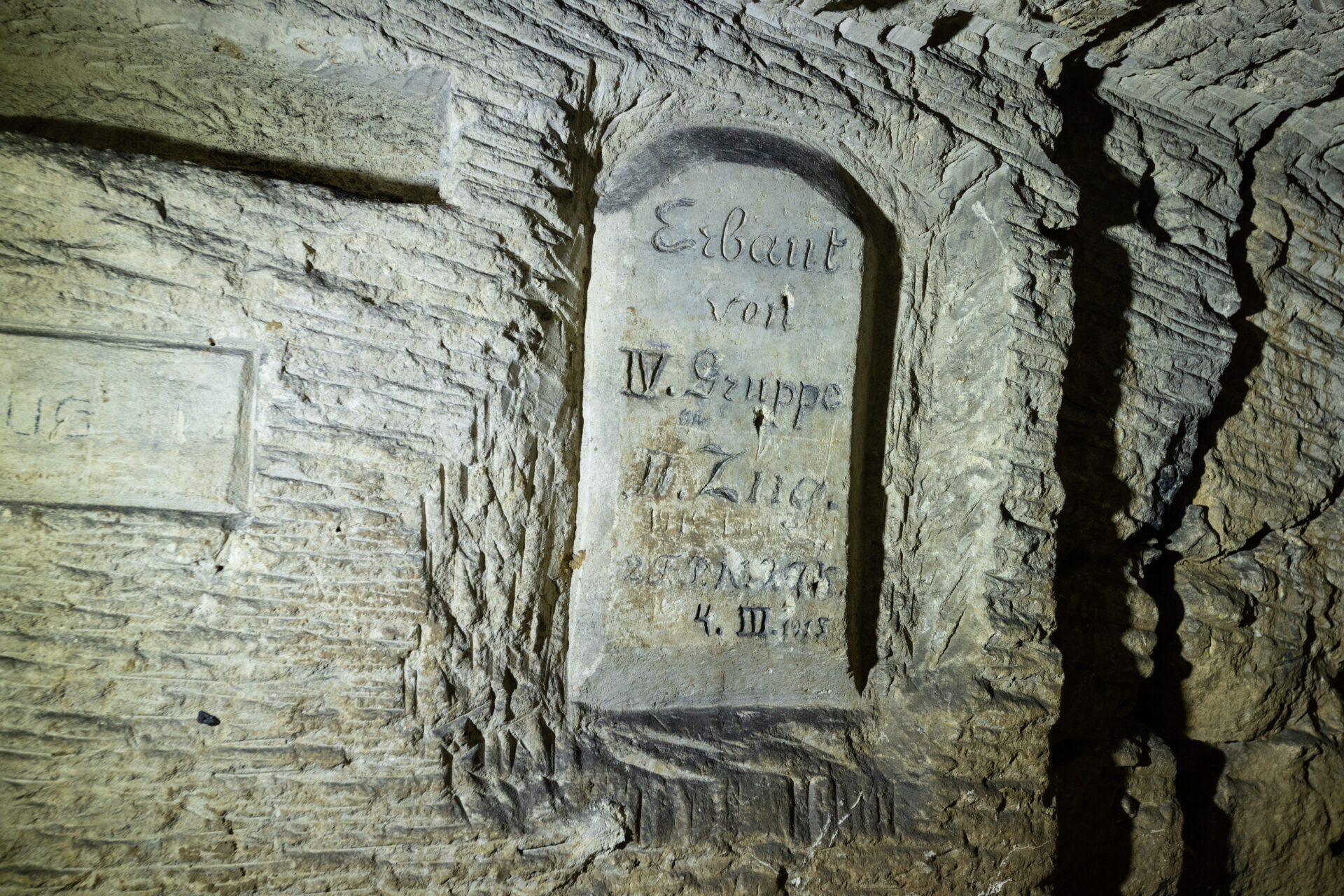
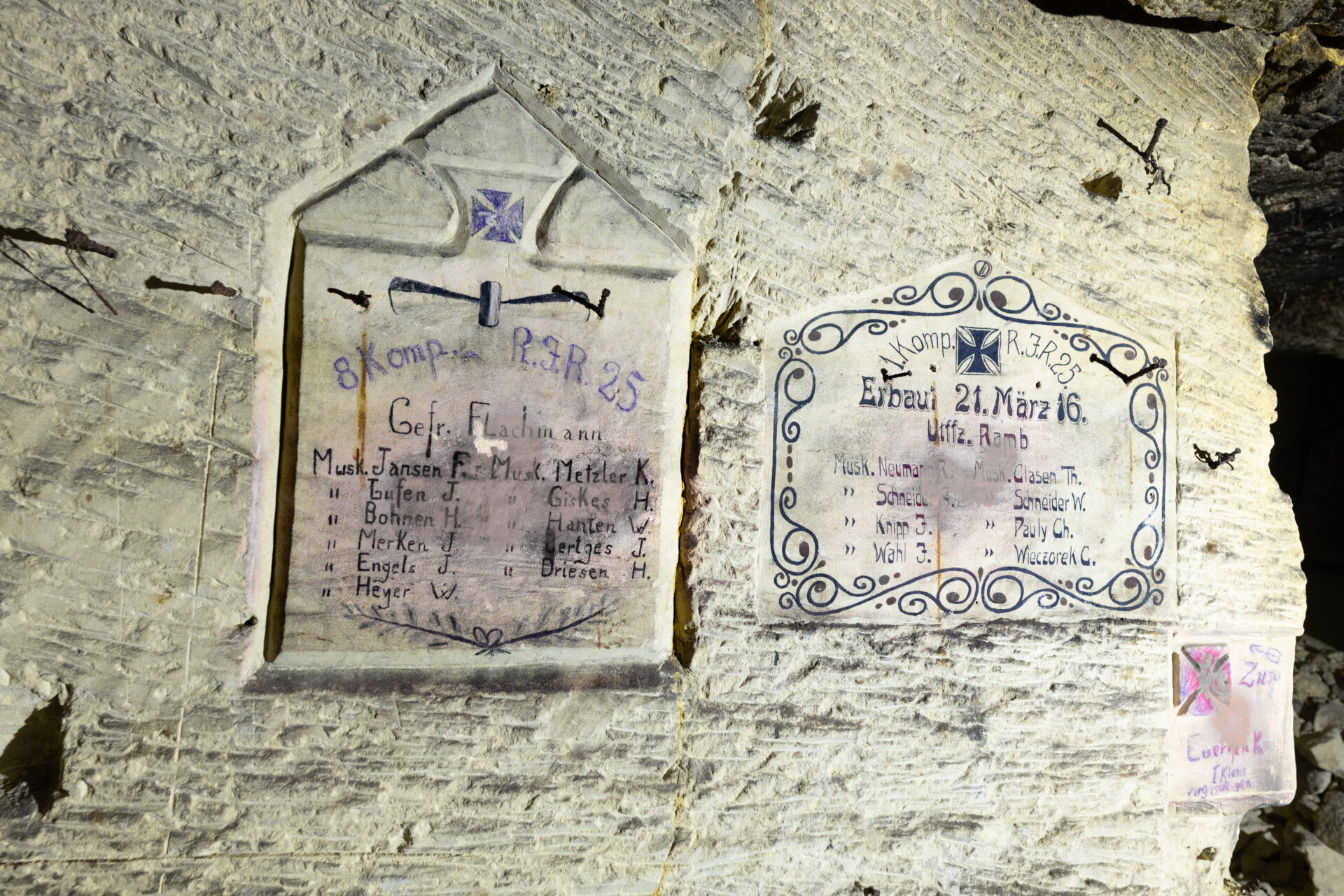
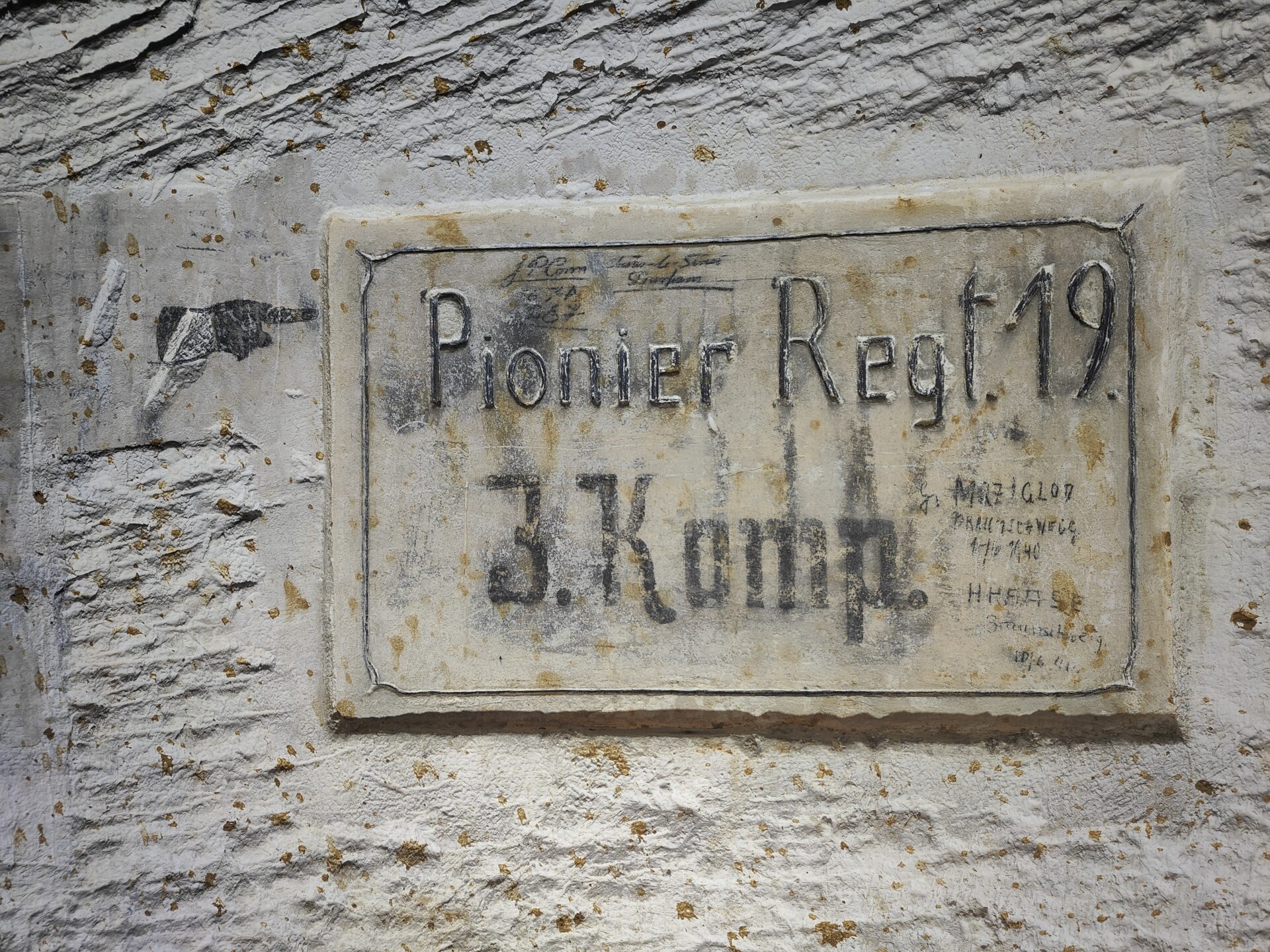
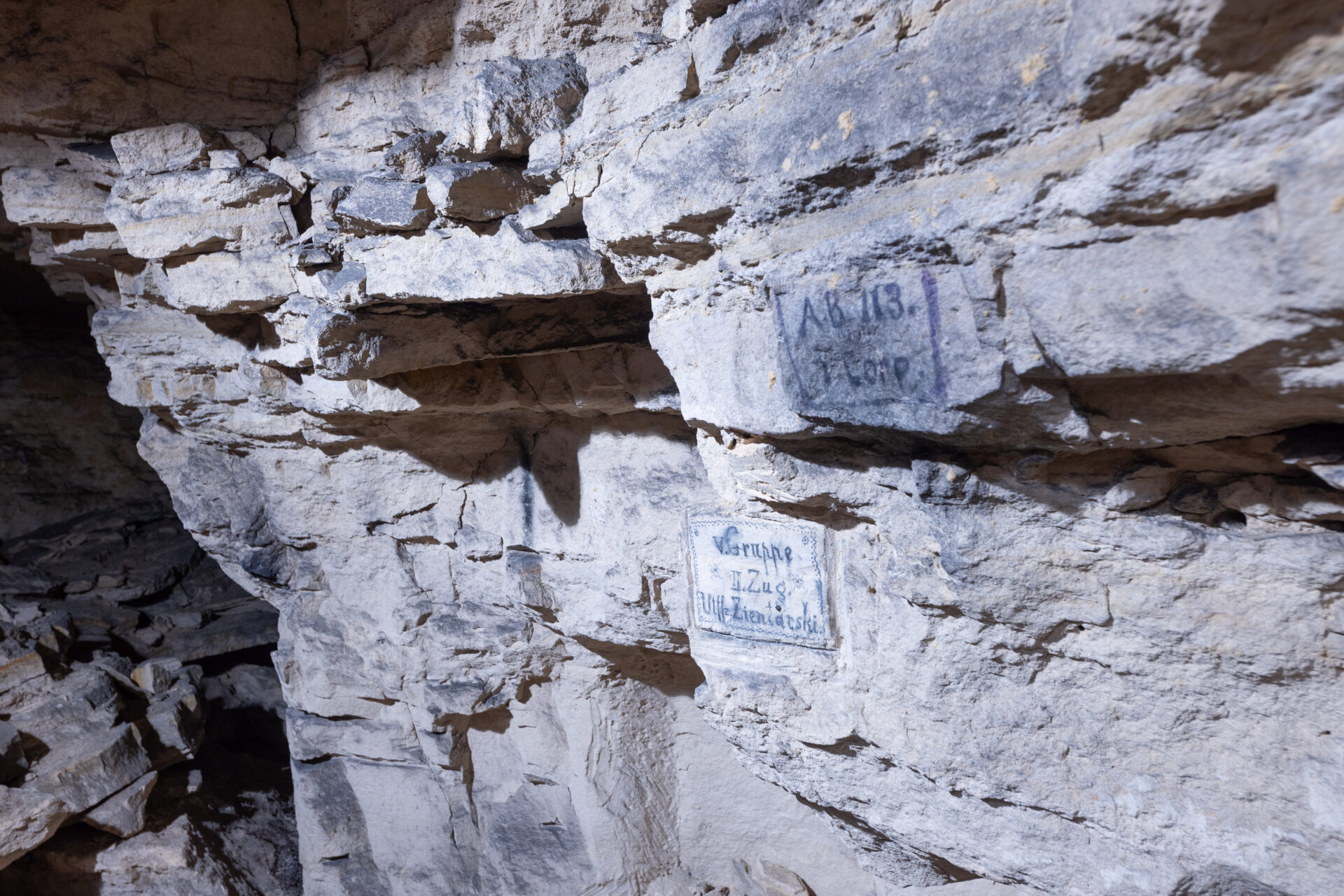
Most often, we find ornate sculptures featuring the name of regiments. This type of work notably made it possible to trace the movement of various troops during this war.
The coats of arms can be more or less elaborate and detailed. Those belonging to the French seem more sophisticated compared to the American or German ones.
French companies

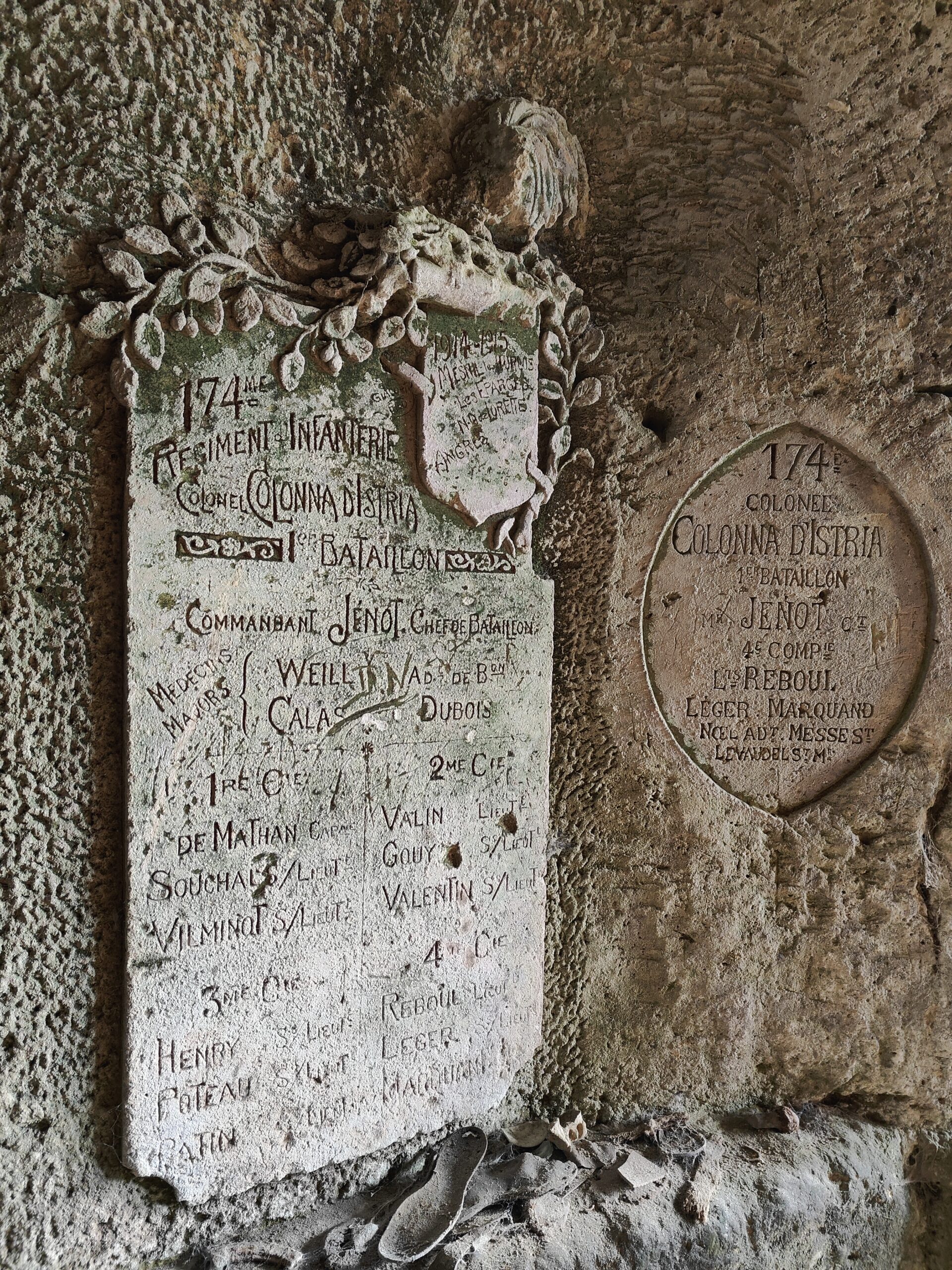
174th Infantry Regiment Colonel Colonna Distria
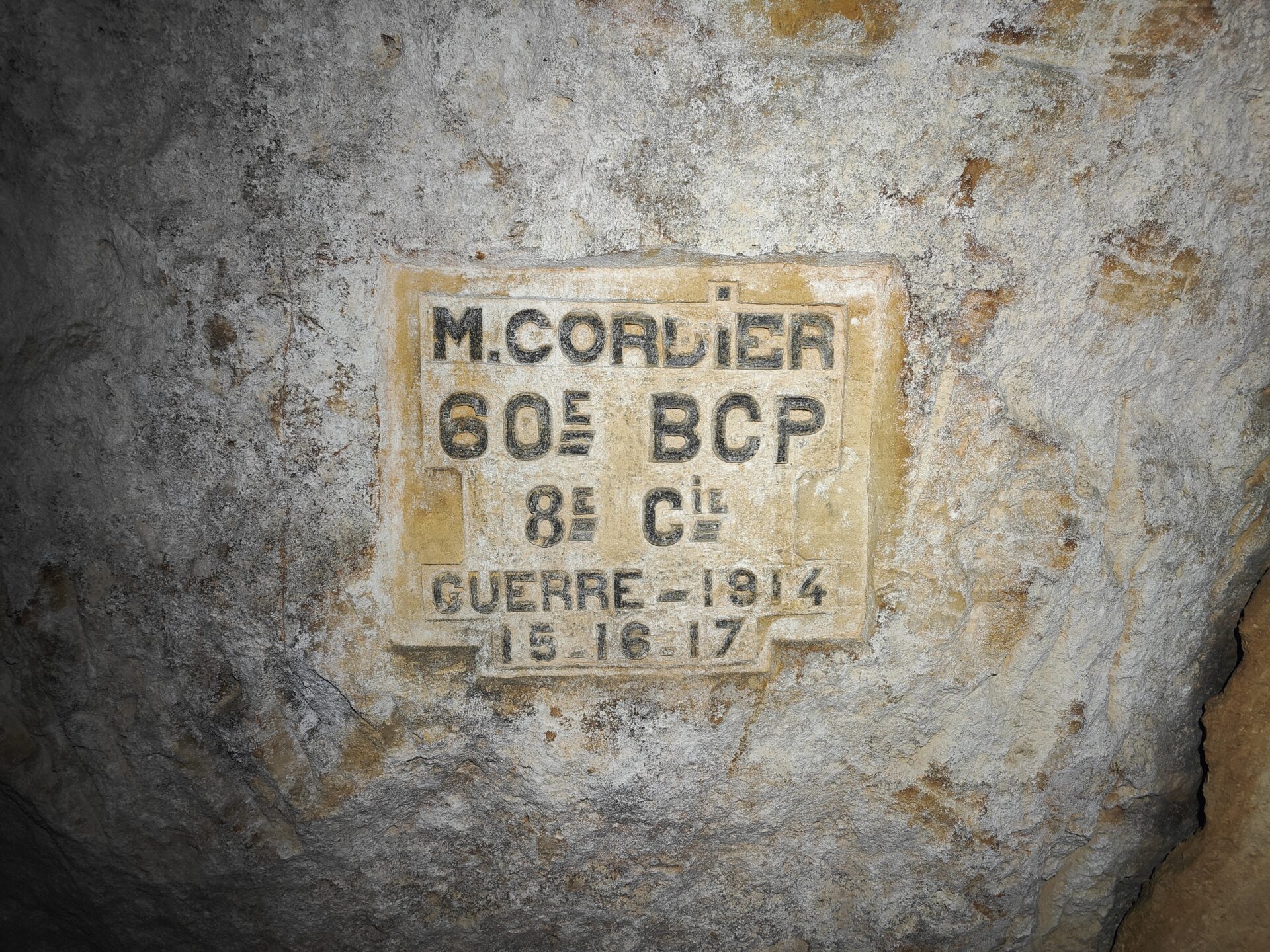
M.Cordier War 1914-5-6-17
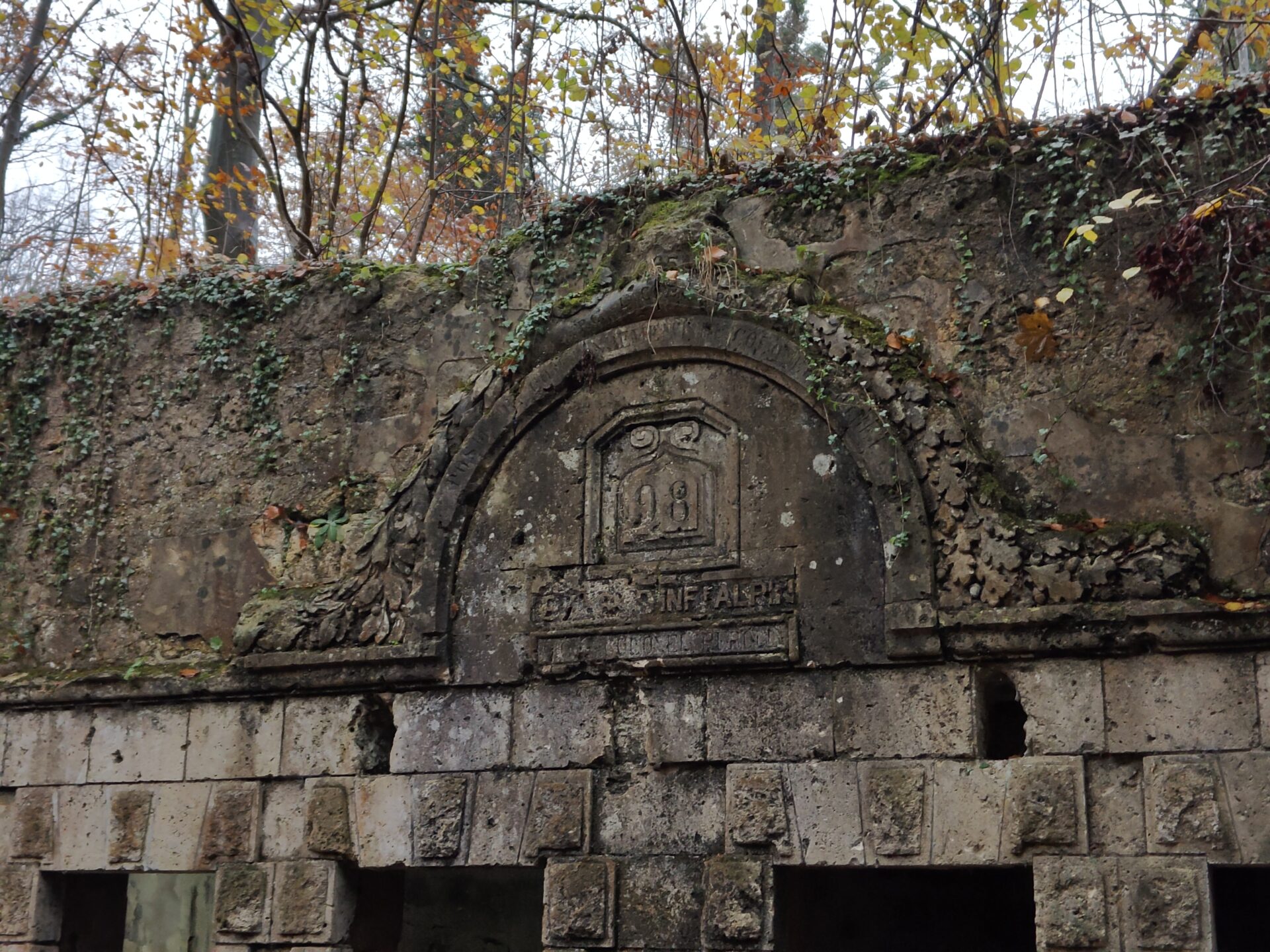
Alpine Infantry Regiment
60th Regiment Colonel H. De Castries

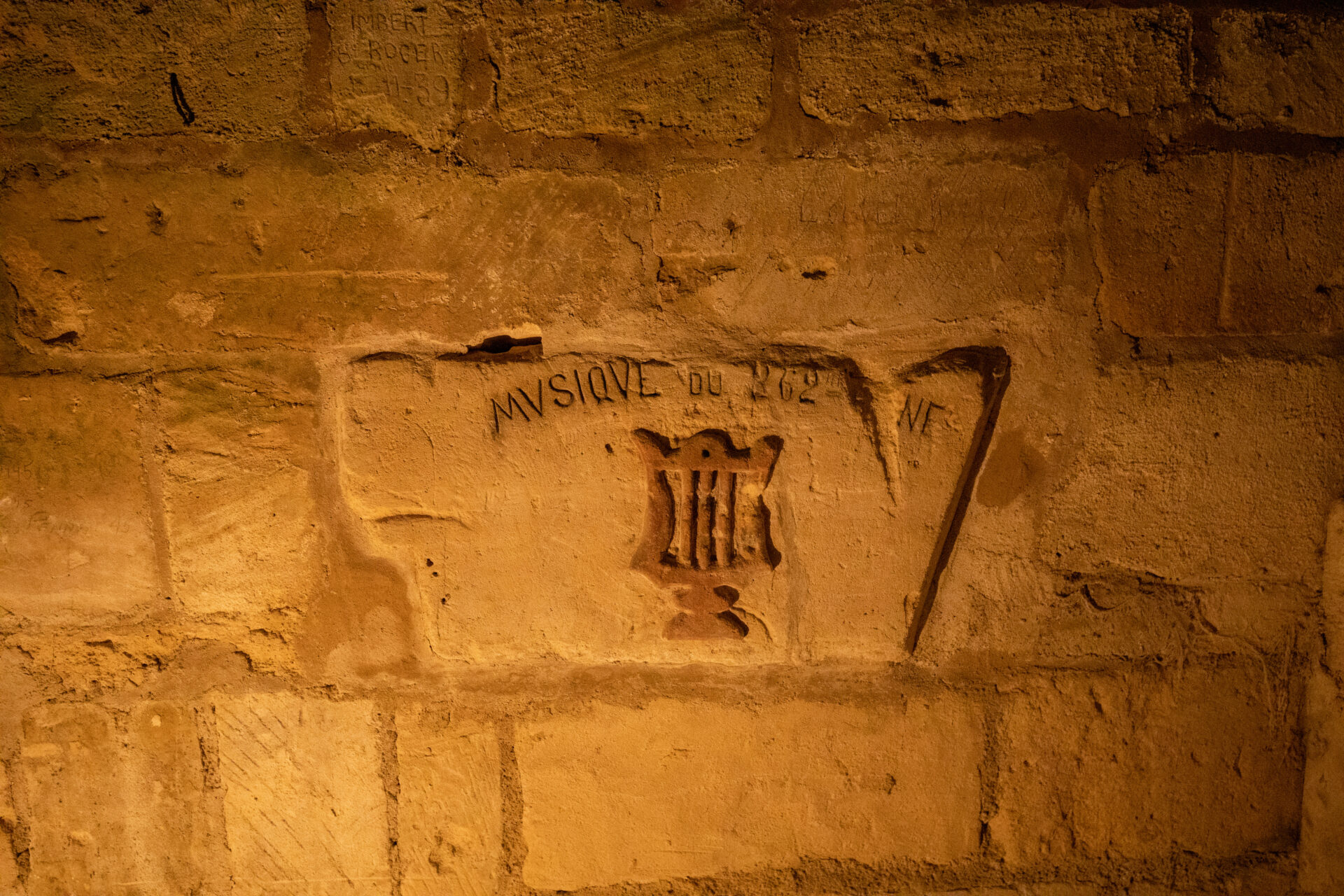
Band of the 362nd Infantry Regiment
Regiments
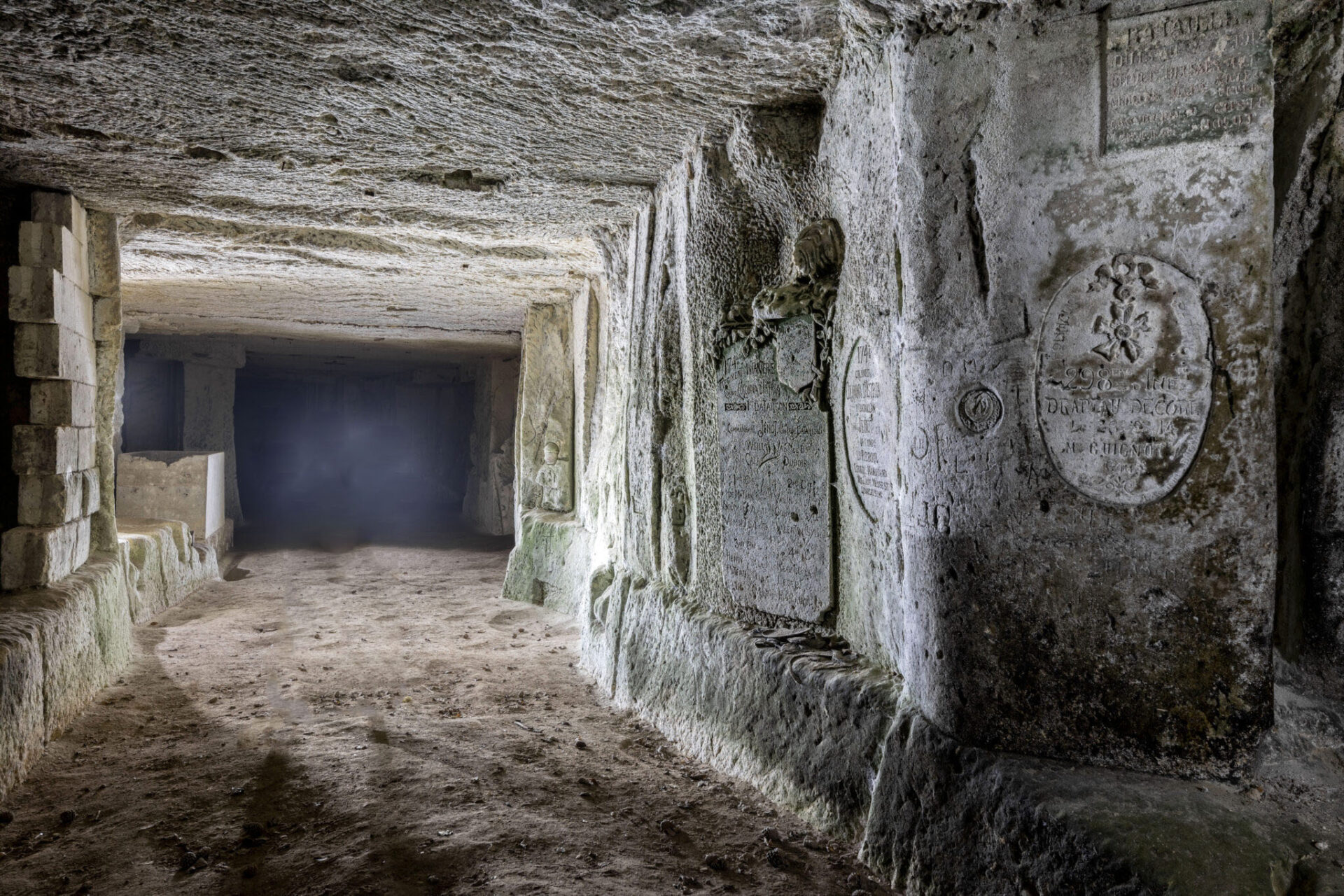
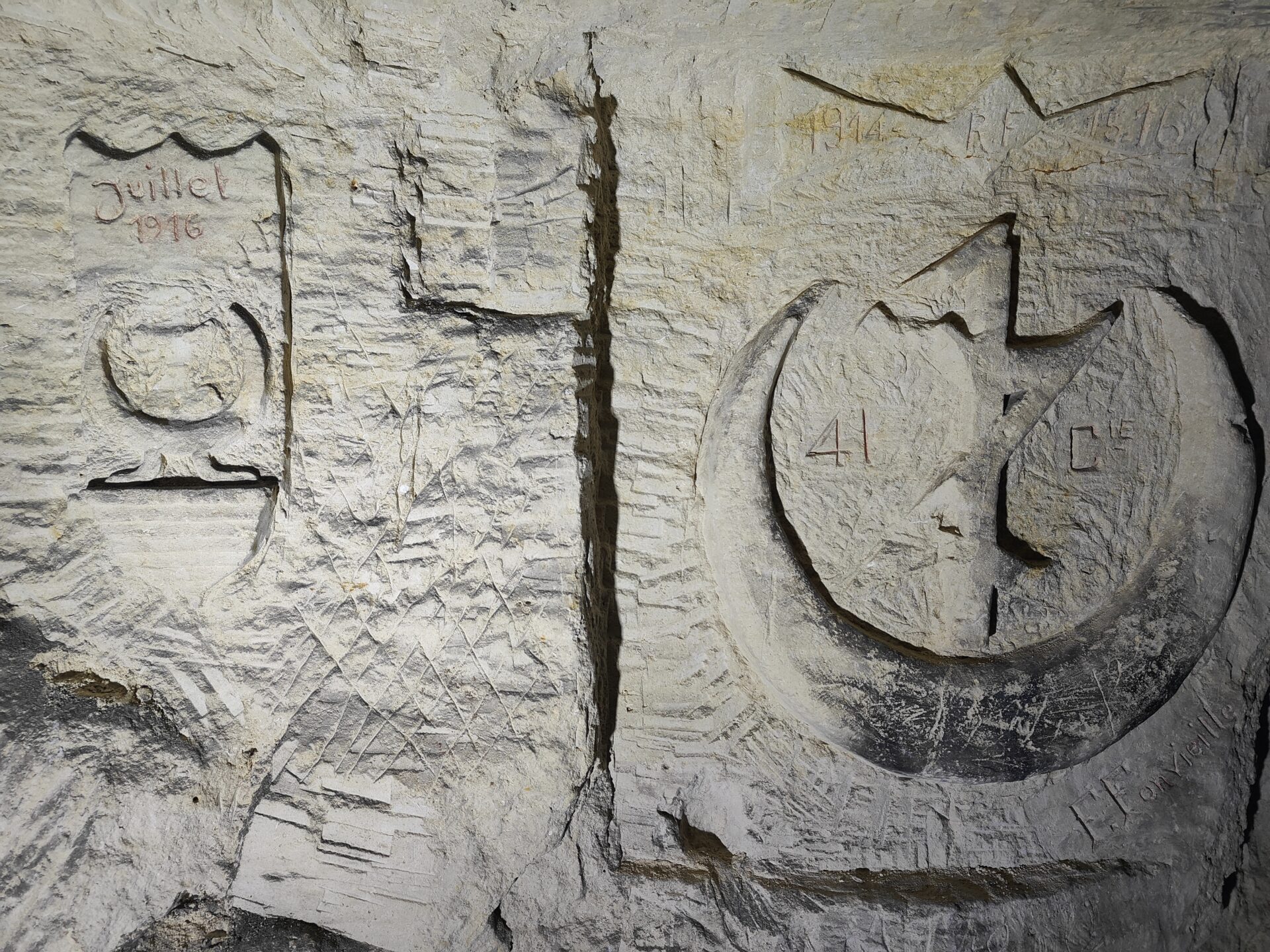
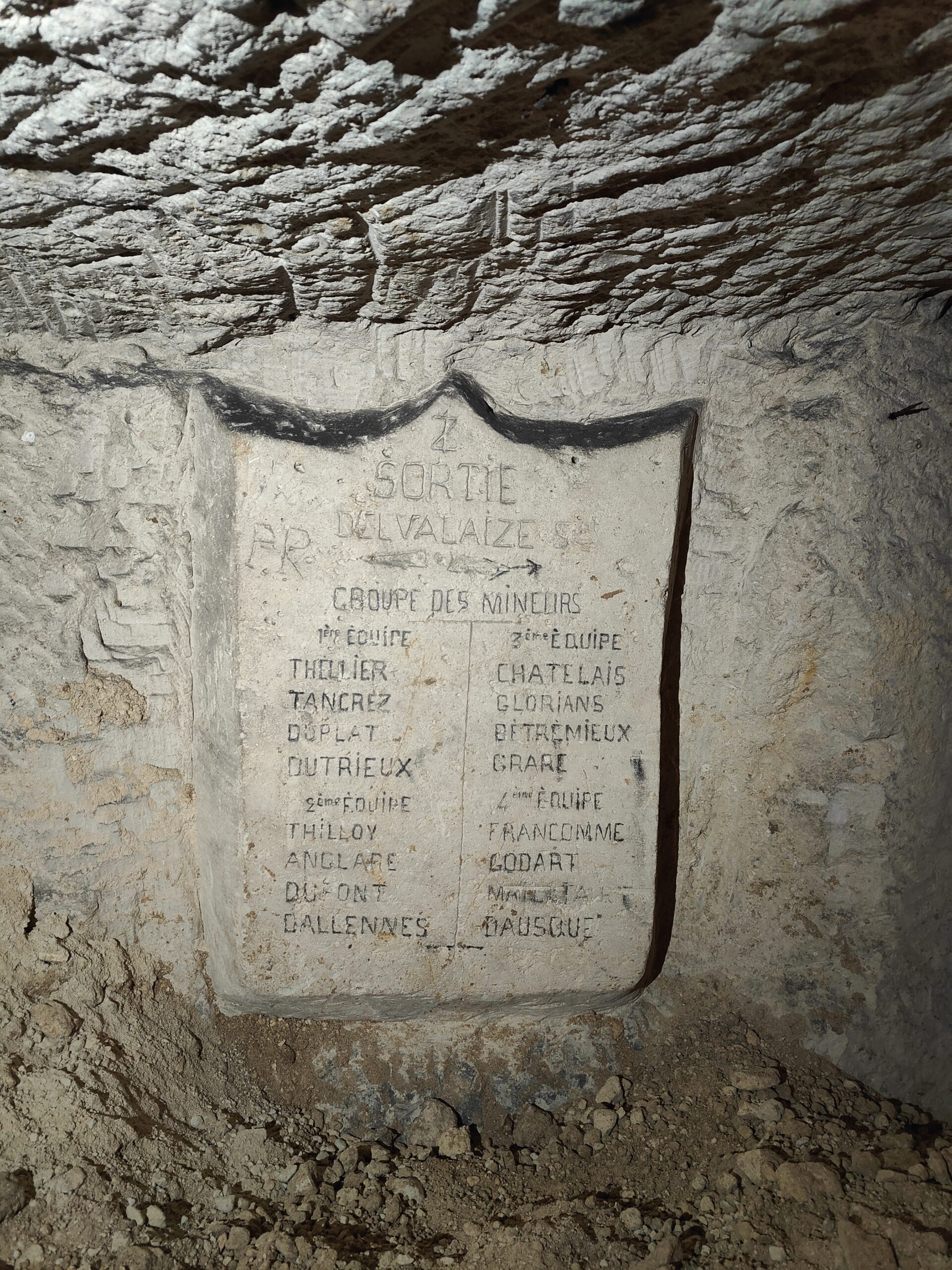
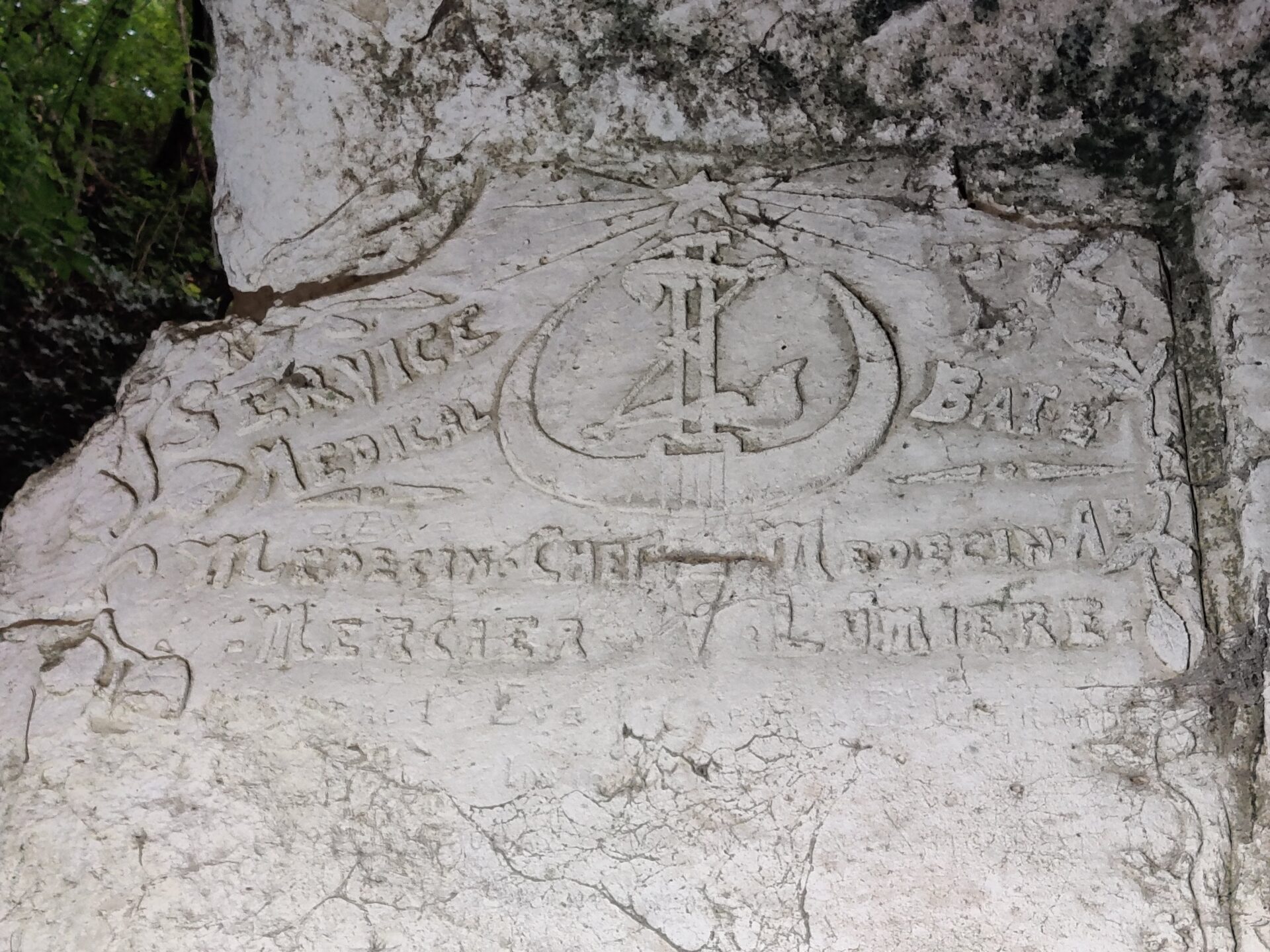
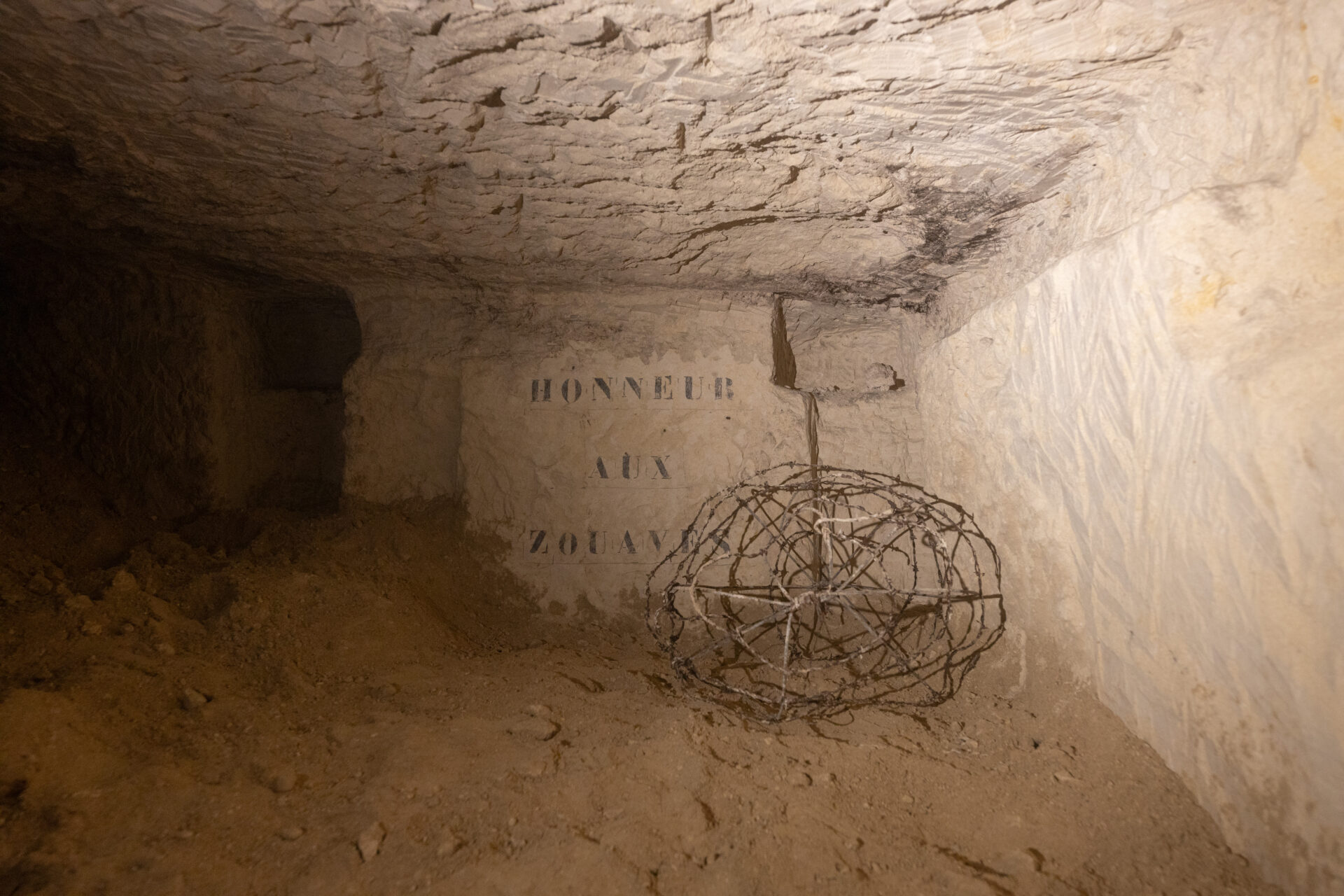
However, in many creutes, we can find the characteristic coat of arms of the different companies of the 1st Zouave Regiment, originally from Casablanca. Their badge features a “Z” for Zouave topped with a “1” for 1st Regiment as well as a crescent, symbol of the French Army of North Africa and referencing the lunar calendar adopted by the Muslim world.
More rarely, that of the Foreign Legion appears. During the First World War, the Foreign Legion was made up of 52 nationalities, predominantly Russians, Italians, Swiss and Belgians.
It is possible to find other types of sculptures depicting scenes of military life, as well as informative engravings on underground operation and life.
19th Zouave Company – 15 March 1913 – Verdun
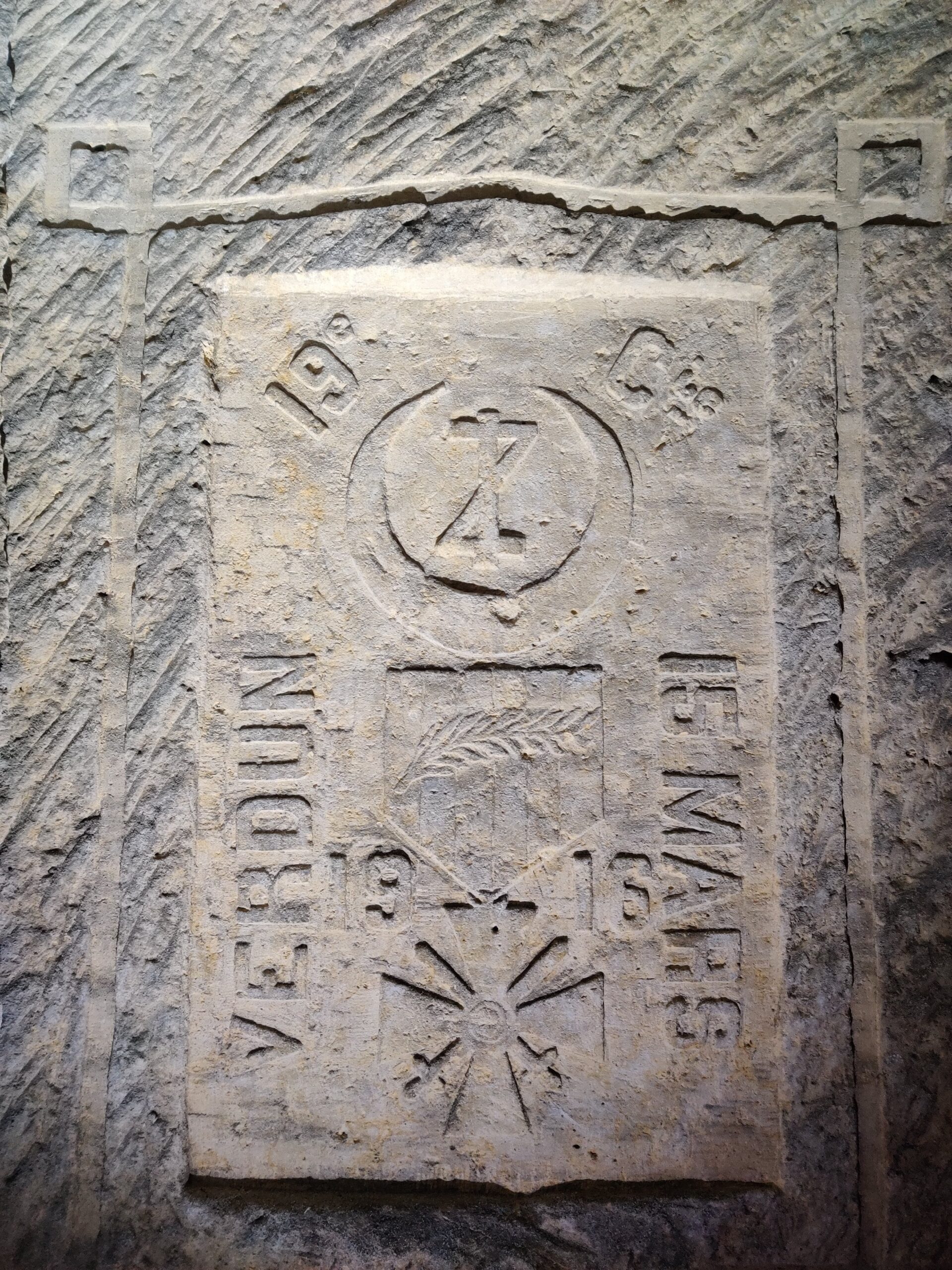
42nd Zouave Co. 13th Section
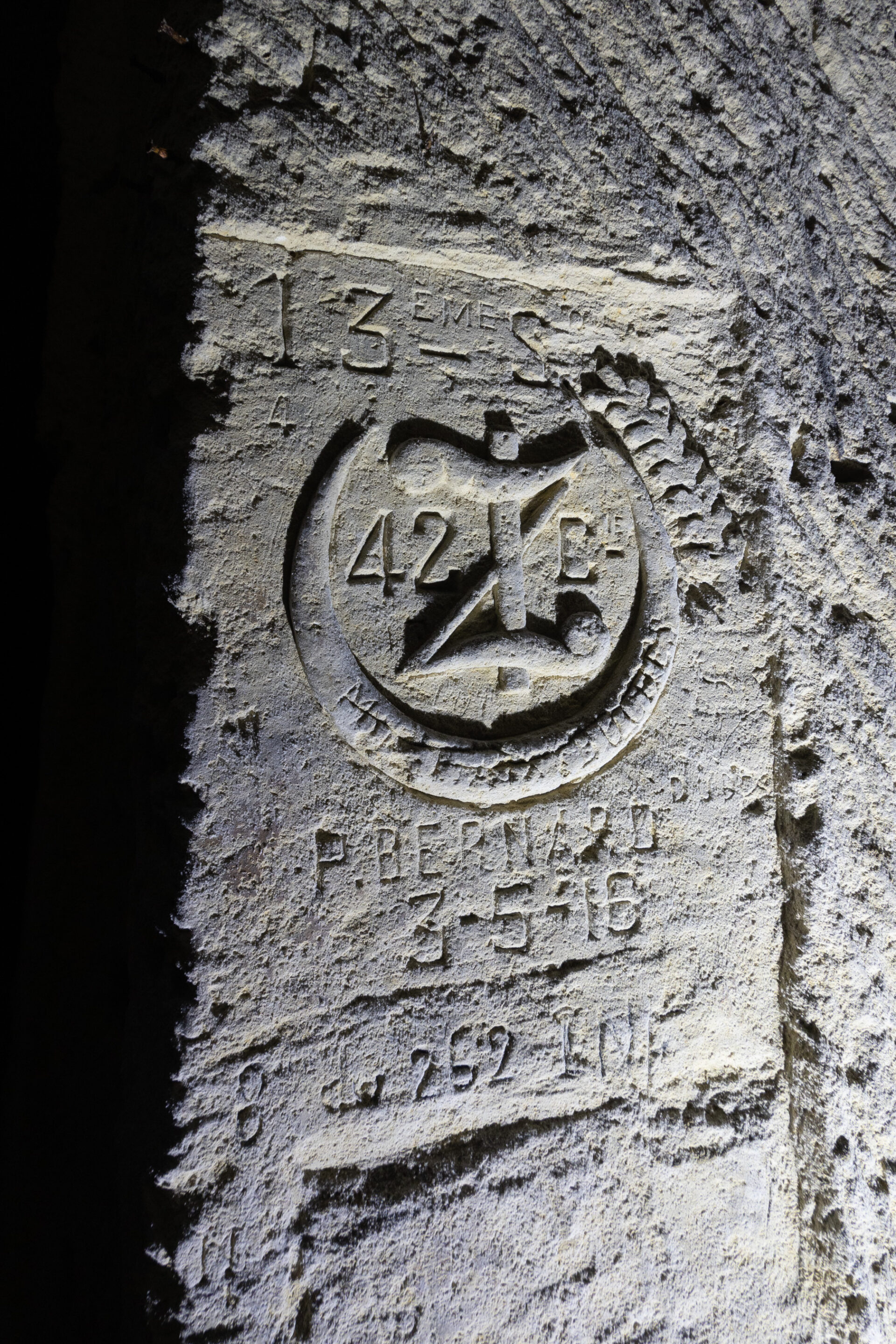
Foreign Legion
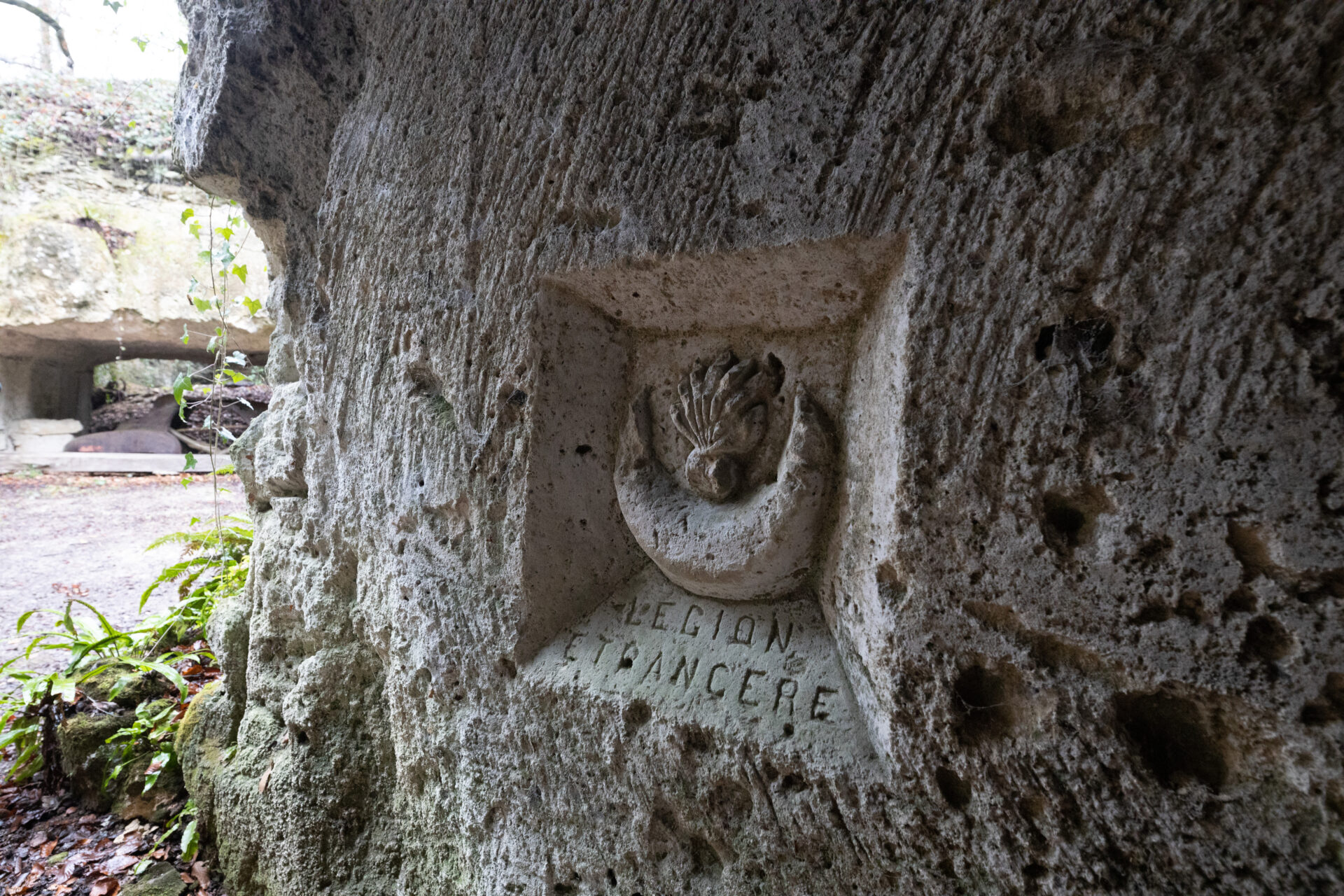
41st Zouave Company
On this sculpture, the Zouave coat of arms appears clearly at the top. It is accompanied by the inscription u0022miners’ groupu0022 which could refer to the soldiers who laid mines to blow up enemy galleries (see mines and counter-mines section)
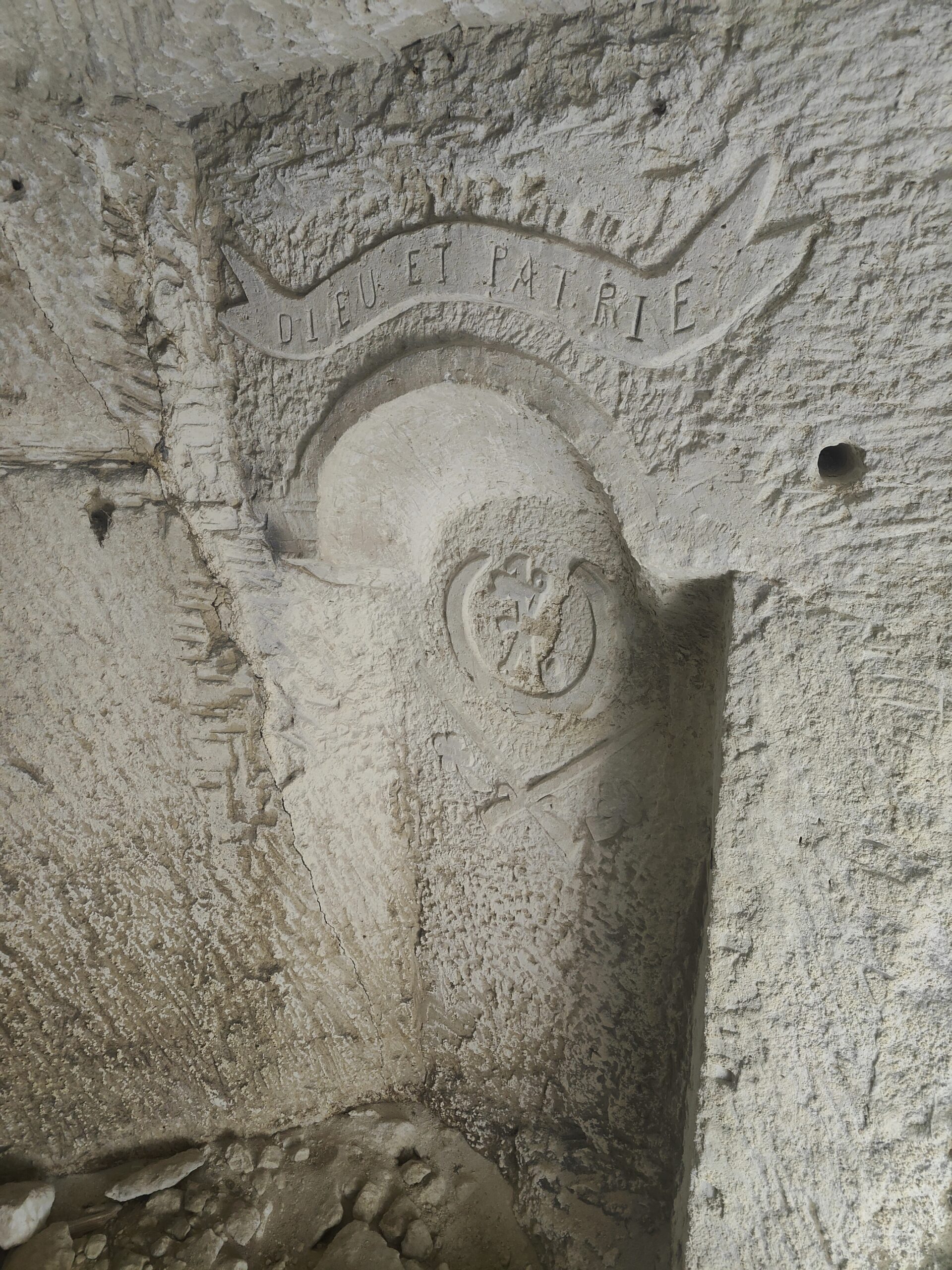
God and Homeland
Medical Service of the Zouaves
German companies
Figurative representations
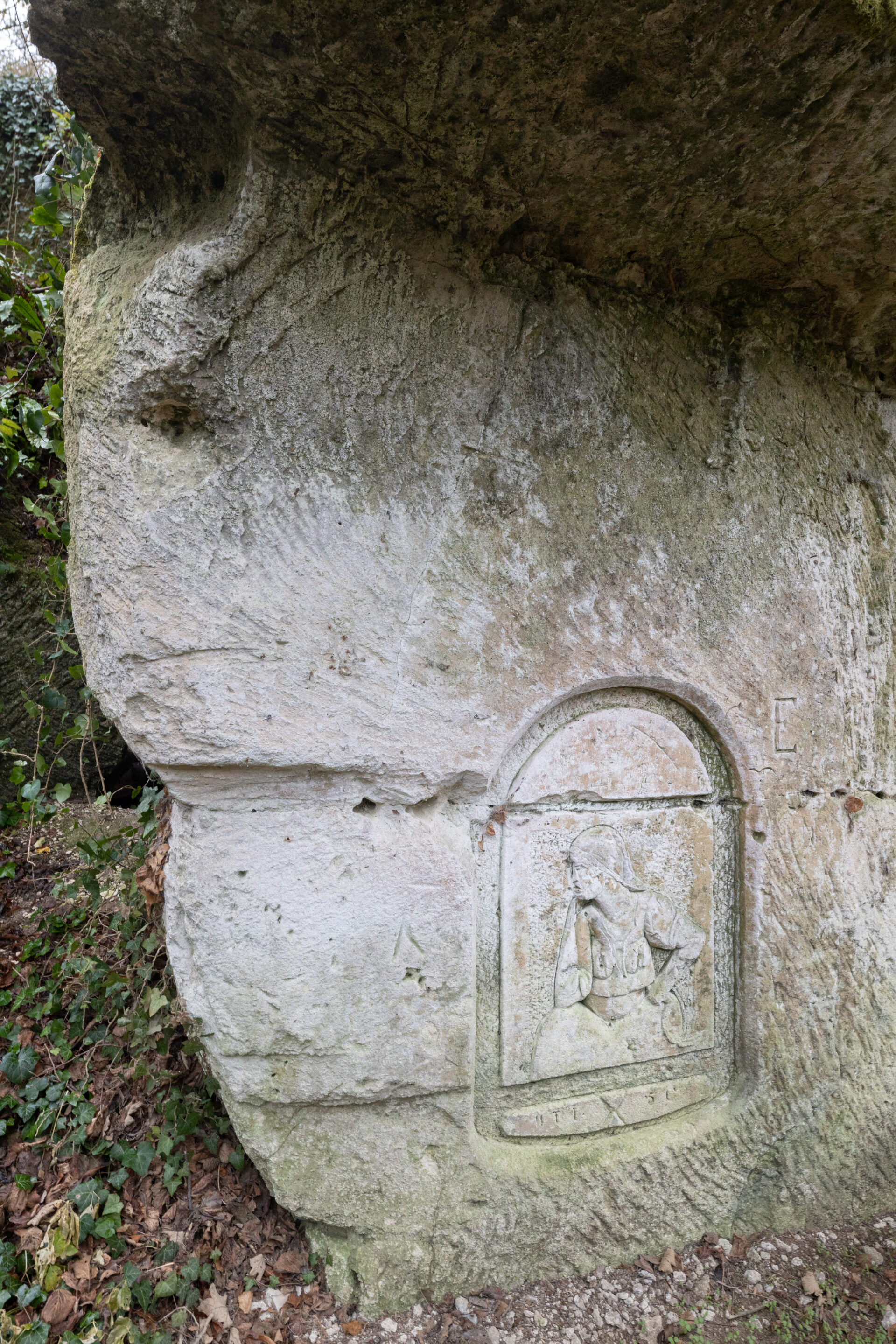
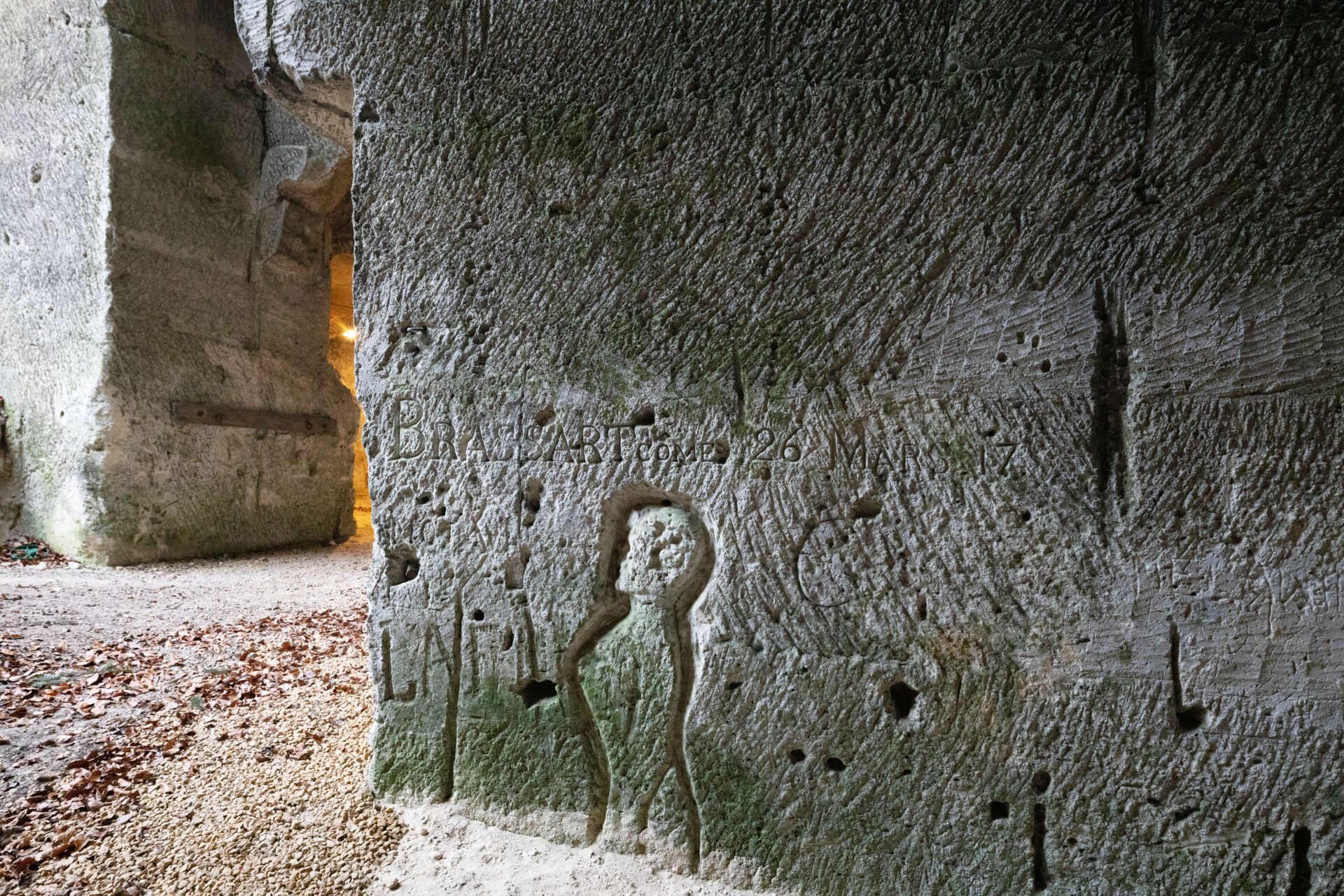
Many sculptures illustrate life in wartime or important figures who were passing through or residing in the creutes.
Sculpture of a soldier:
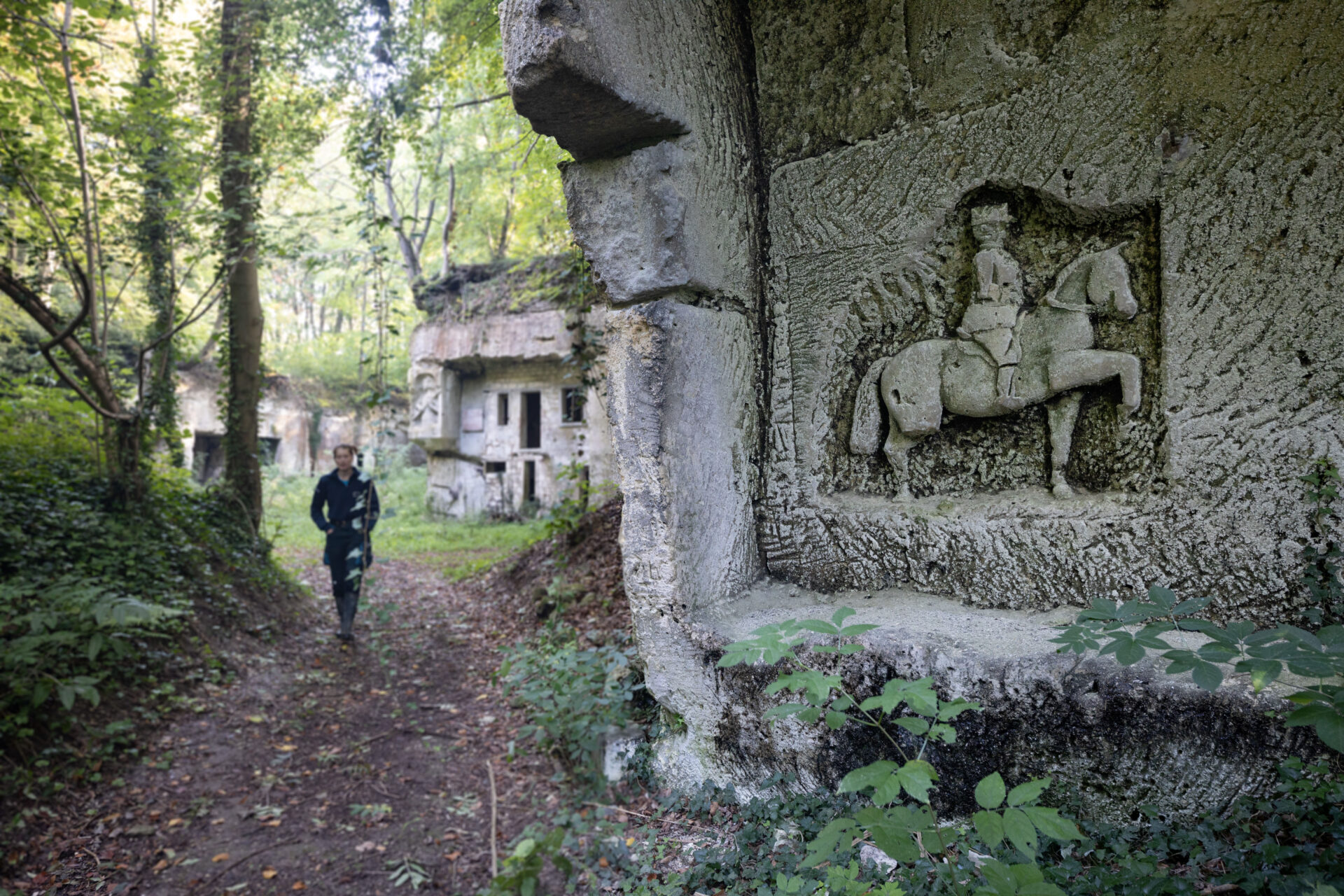
Cadars also sculpted what is probably a horseman, an officer cuirassier who occupied the quarry in 1915.
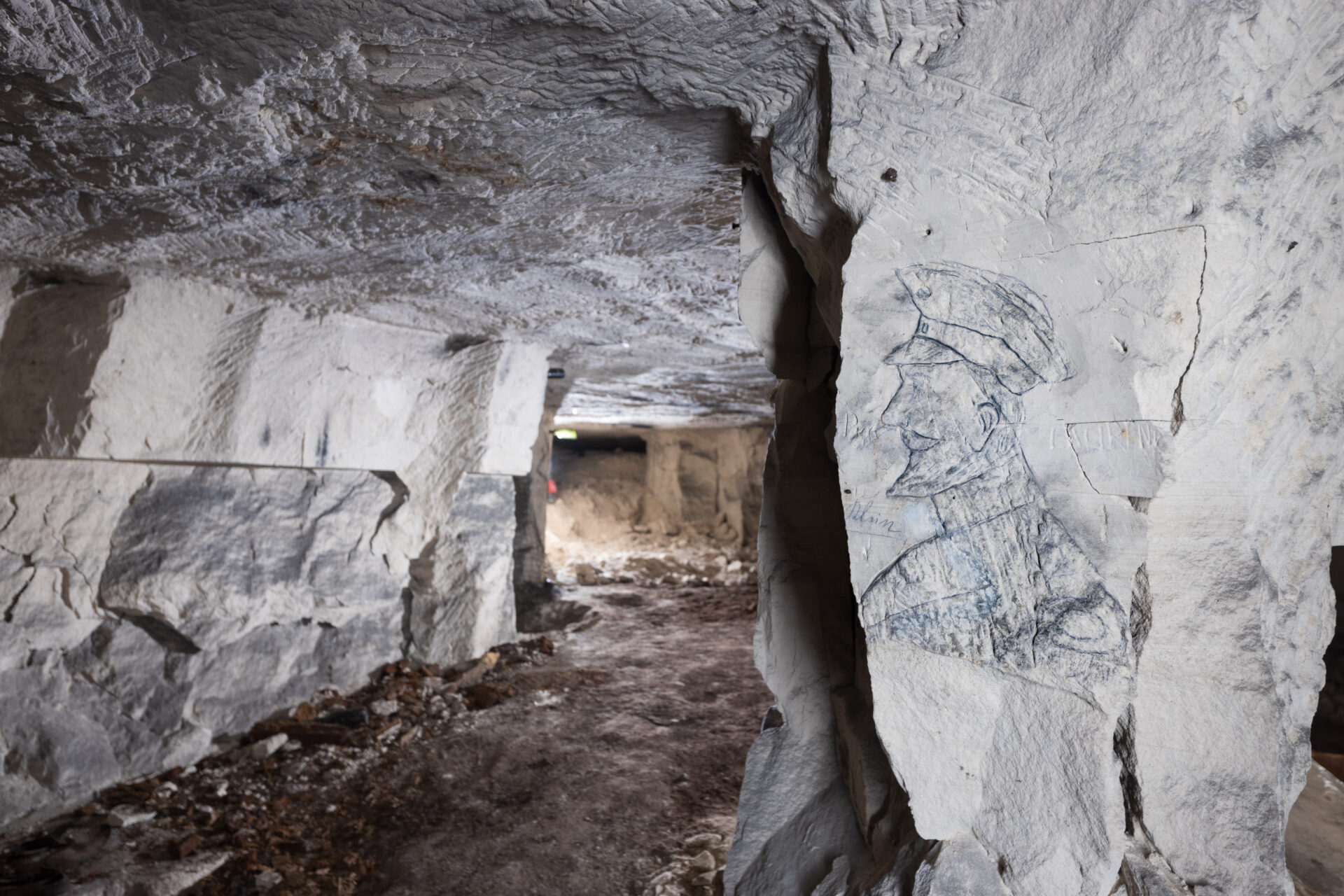
Bust of Colonel Georg Bruchmüller?
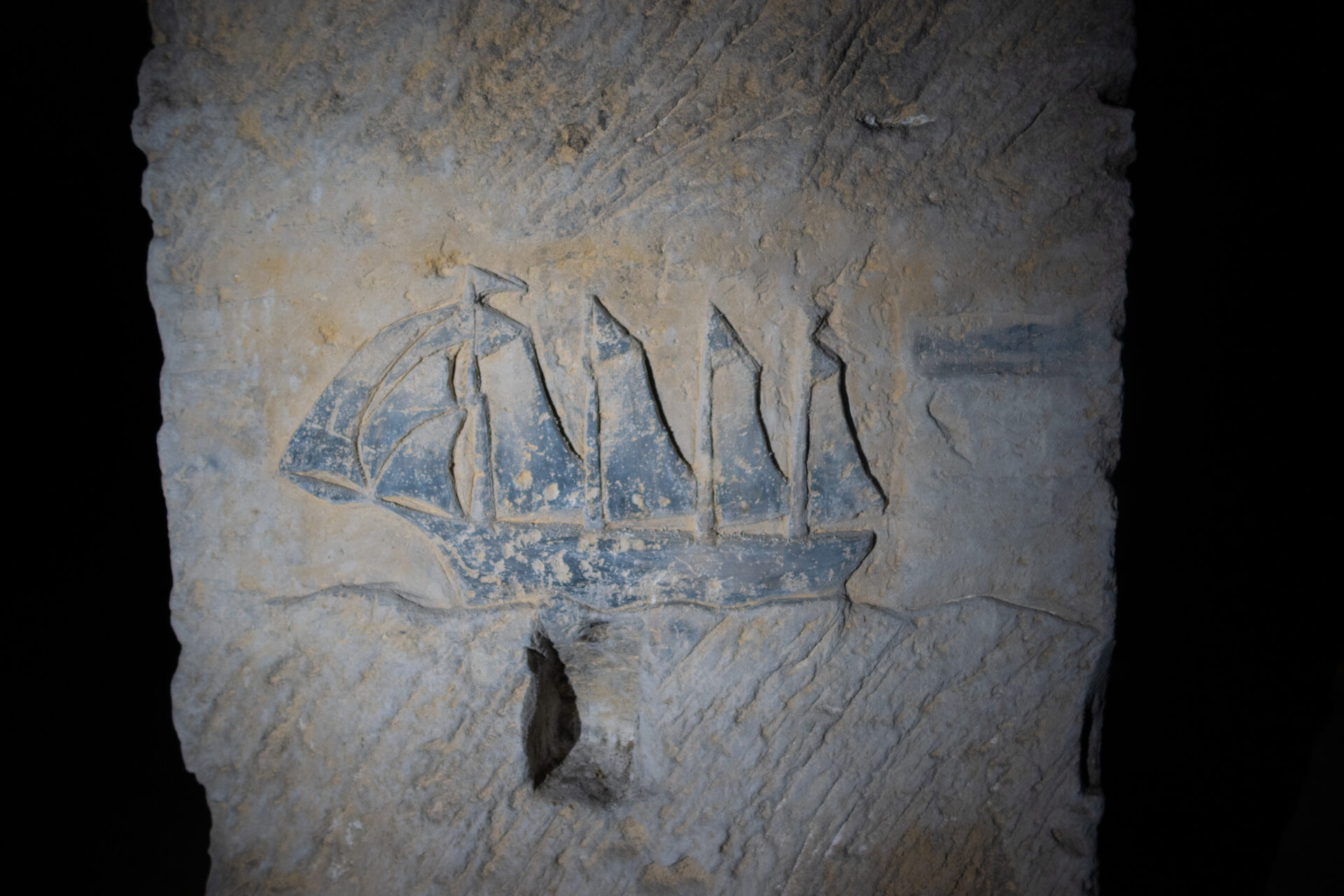
4-masted ship
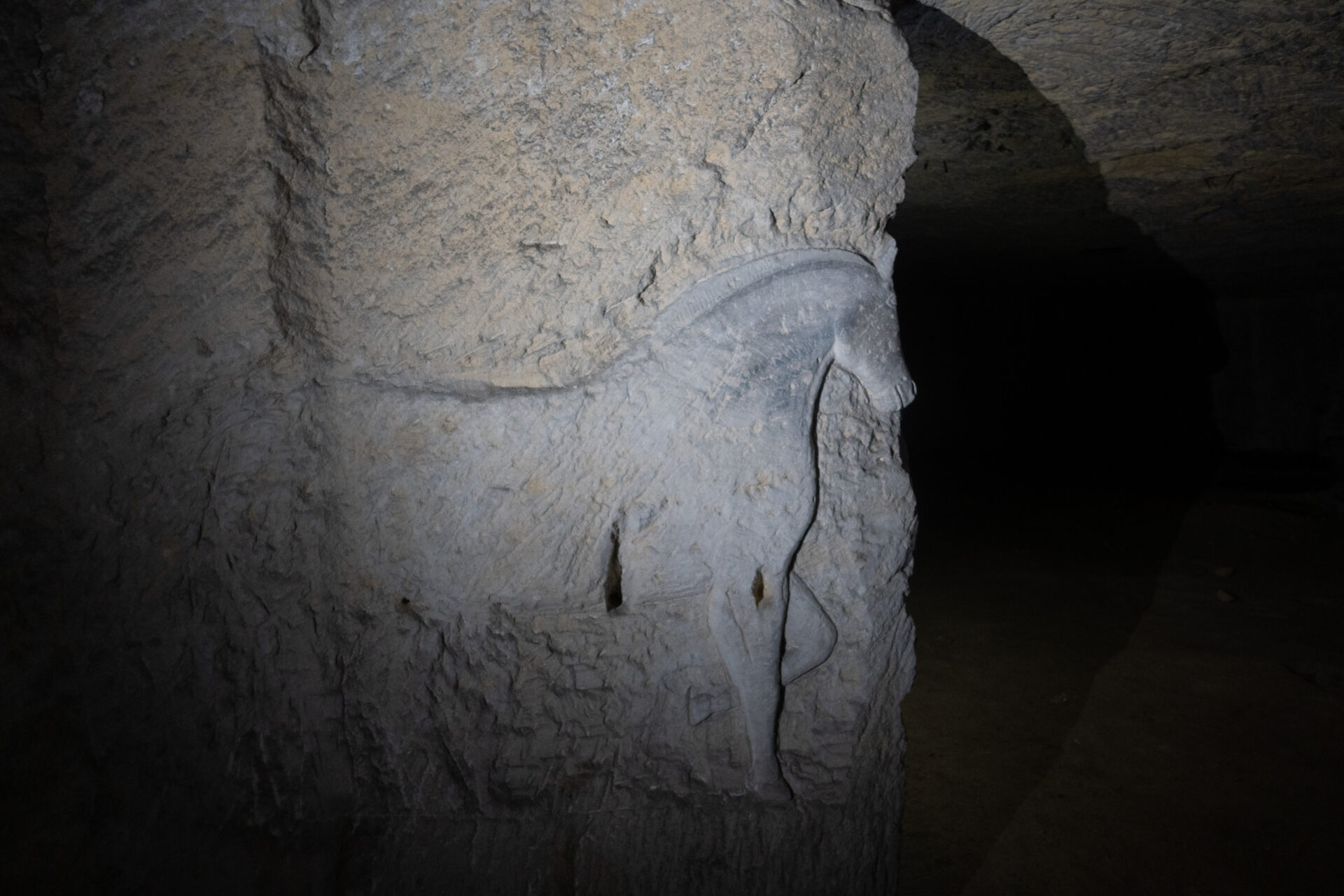
This work is attributed to Cadars, a dismounted cavalryman of the class of ’14. He joined the Chauffour in the autumn of 1915 with the detachment of the 6th Dragoons, light group of the first cavalry division. Cadars was a student at the École des Beaux-Arts in Bordeaux, mobilized in August 1914. On his arrival at Chauffour, he was 19 years old.

During the Battle of Chemin des Dames, the horse played a crucial role as a war tool and companion to the soldiers. Horses were used to transport supplies, weapons and ammunition to the front, offering essential mobility to troops in difficult conditions.
miscellaneous frieze
Informative inscriptions
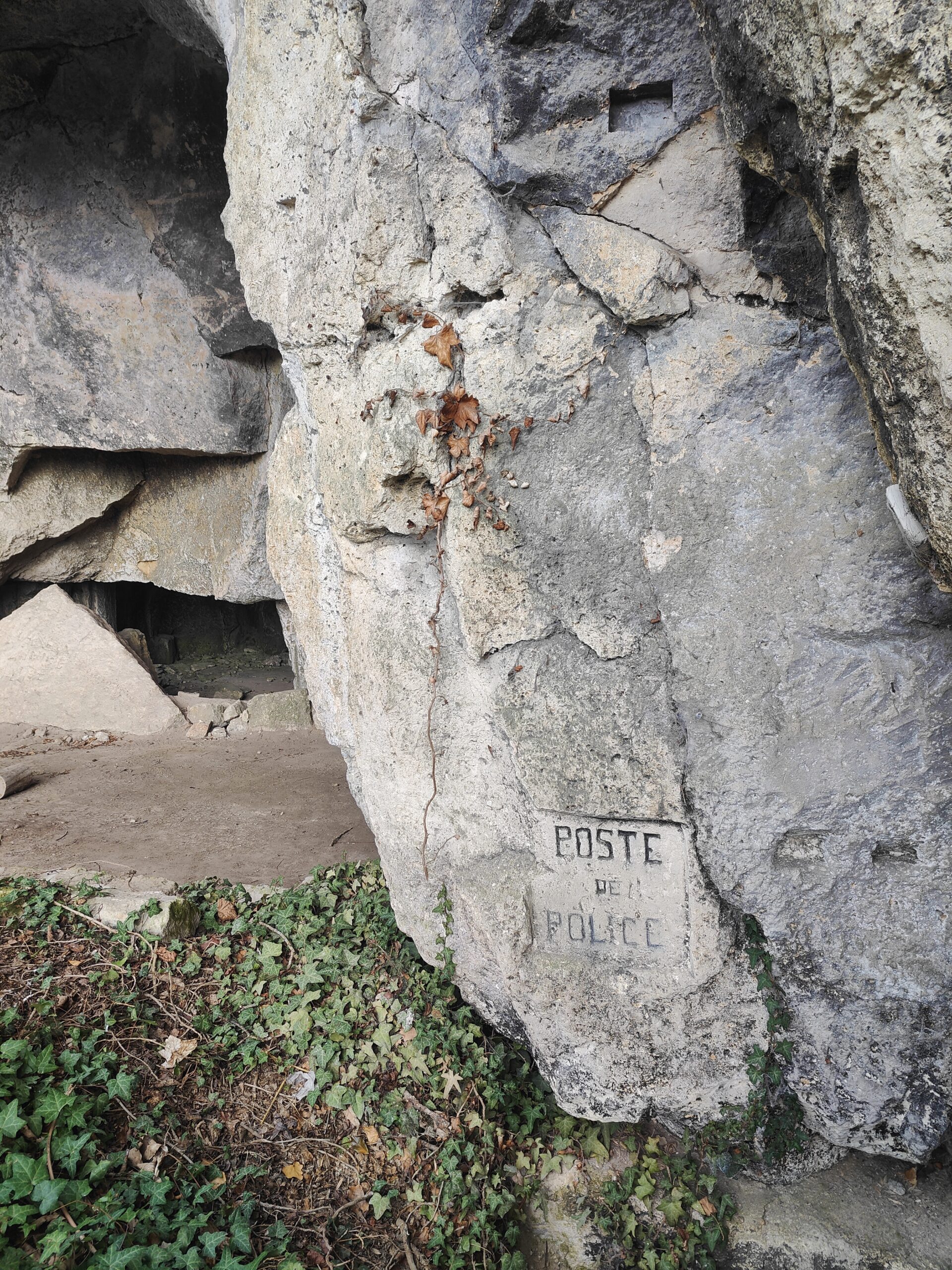
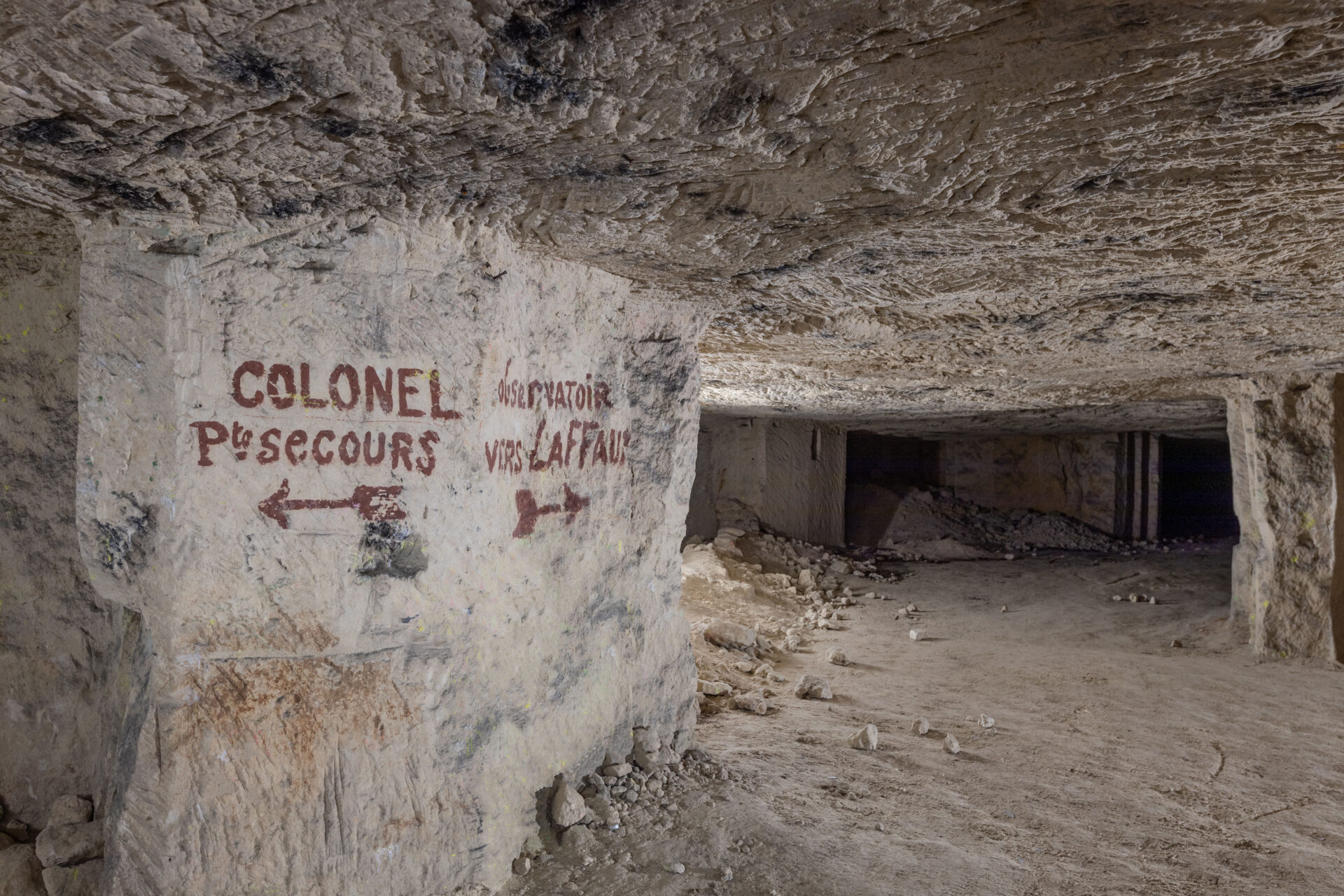
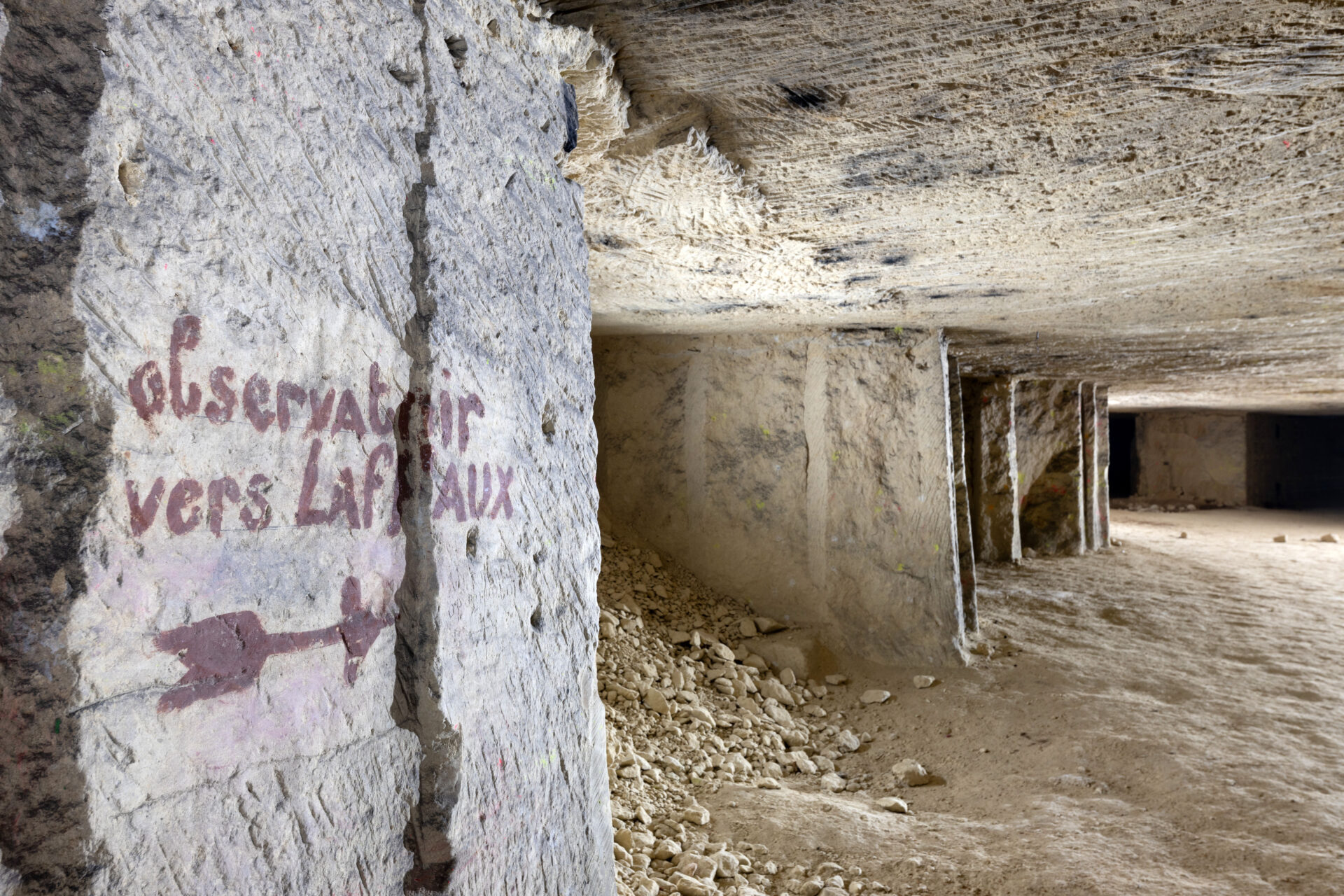
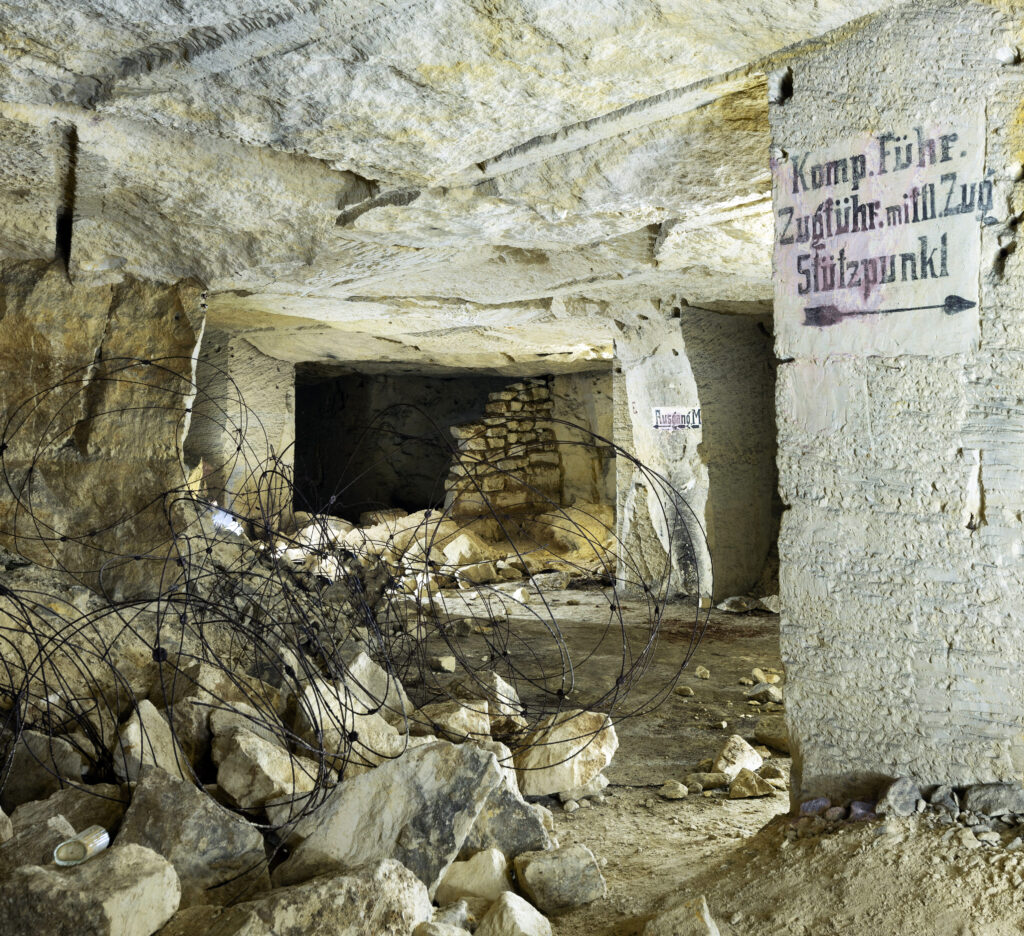
Other neatly carved inscriptions provide directions or functions of parts of the creute. They take the form of sculpted panels, engravings or stencils.
The Gallic Rooster
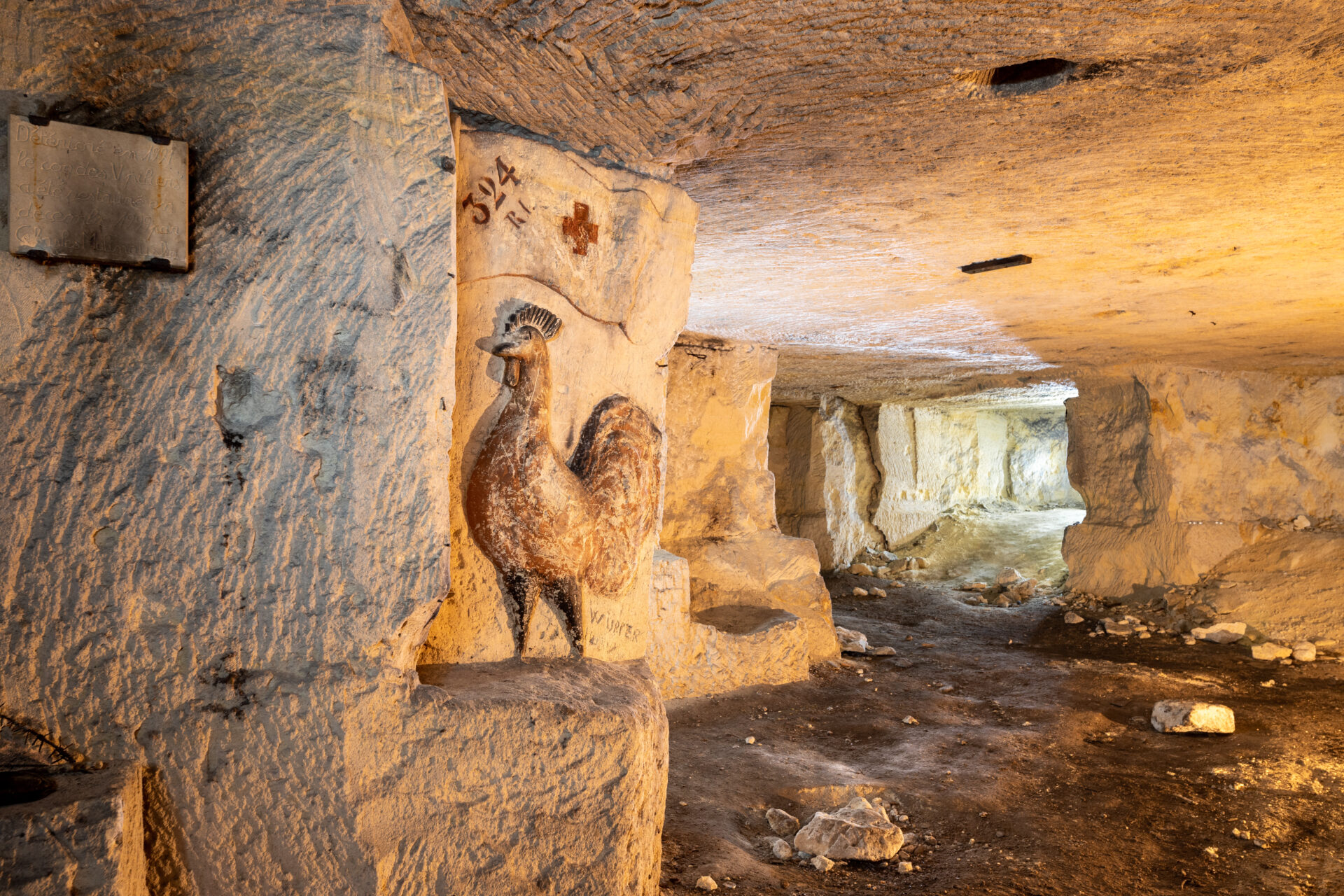
Indication of the well in German
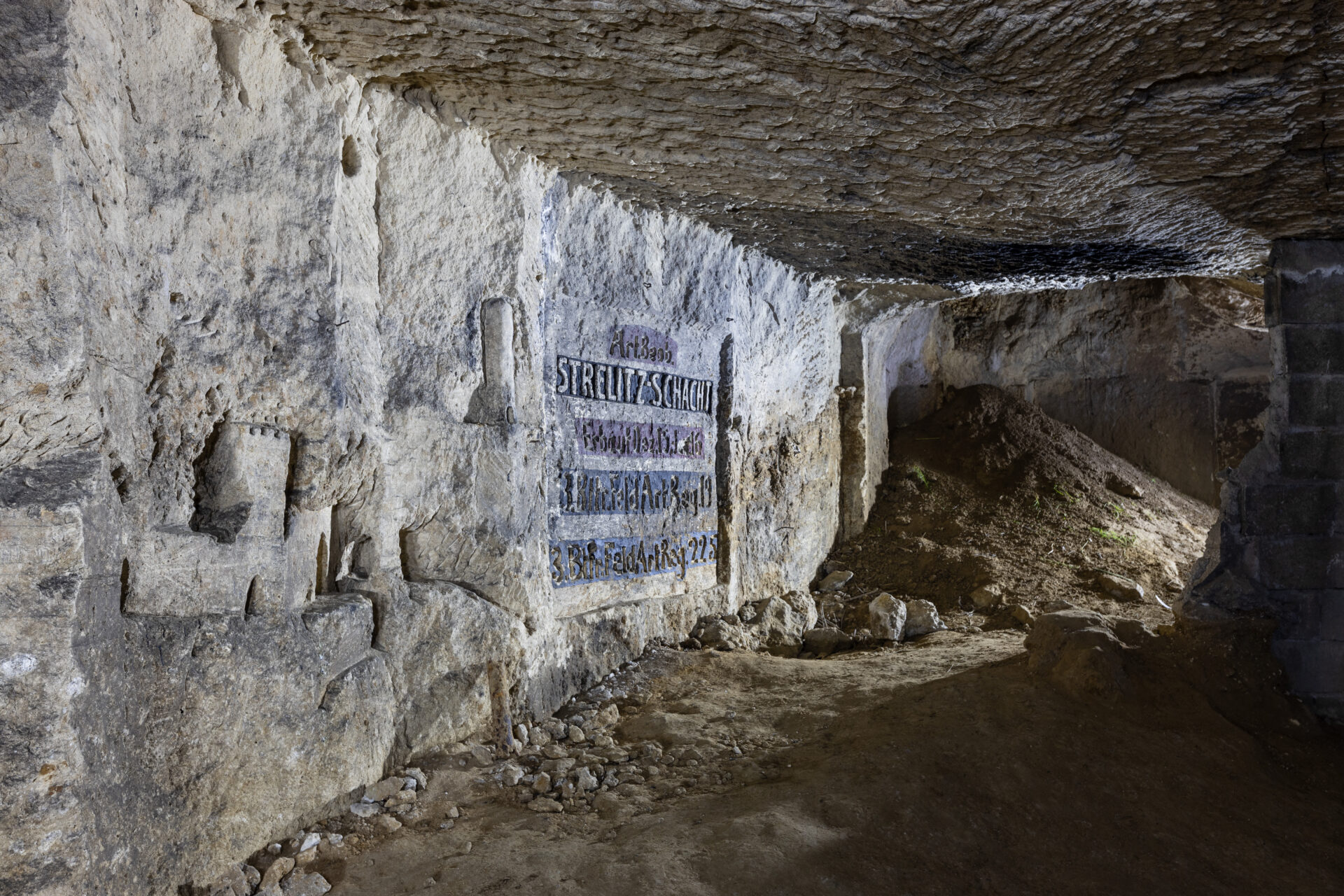
Direction in the creute
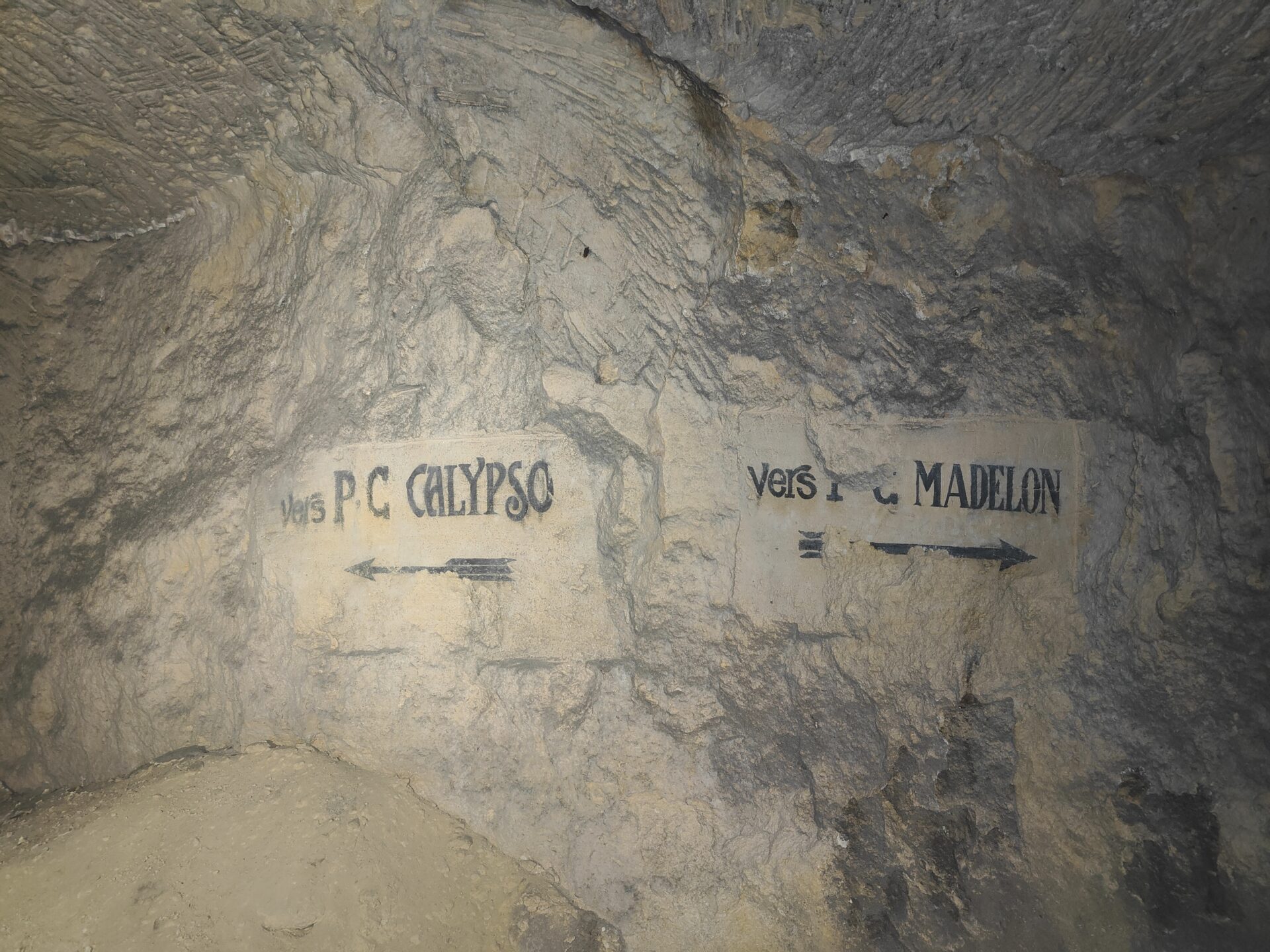
Police station
Direction to the aid station
Direction to observation post
Other representations have a symbolic connotation linked to war. These symbols are often ancient and associated with the military, notably inherited from the Napoleonic armies (war cross, coats of arms, double cross of Lorraine, rifles and swords), or referencing mythological figures.
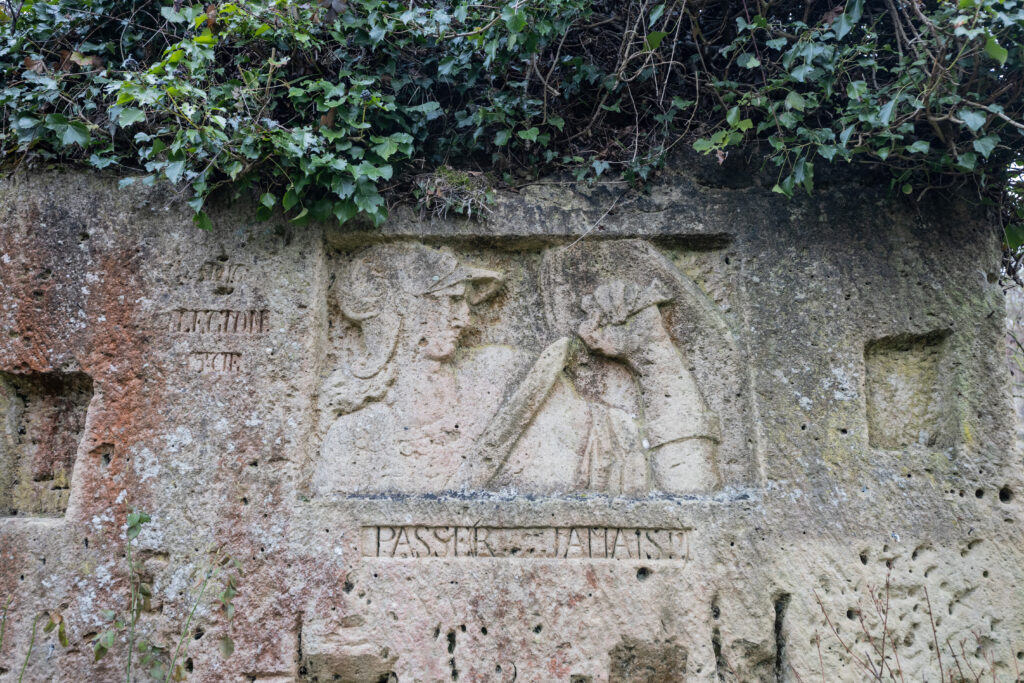
Pass … Never!
This work was sculpted in 1916 by soldier BUCHER, from the 5th Company of the Marching Regiment of the Foreign Legion. He depicted here the warrior goddess Athena, at the forefront of the fighters, carrying the shield decorated with the Gorgon intended to petrify the enemy and brandishing her sword. She is protected by a cuirass with lambrequins on her shoulders and an Attic helmet. Her long hair falls over her shoulders. She fights with fury and the enemy “shall not pass”
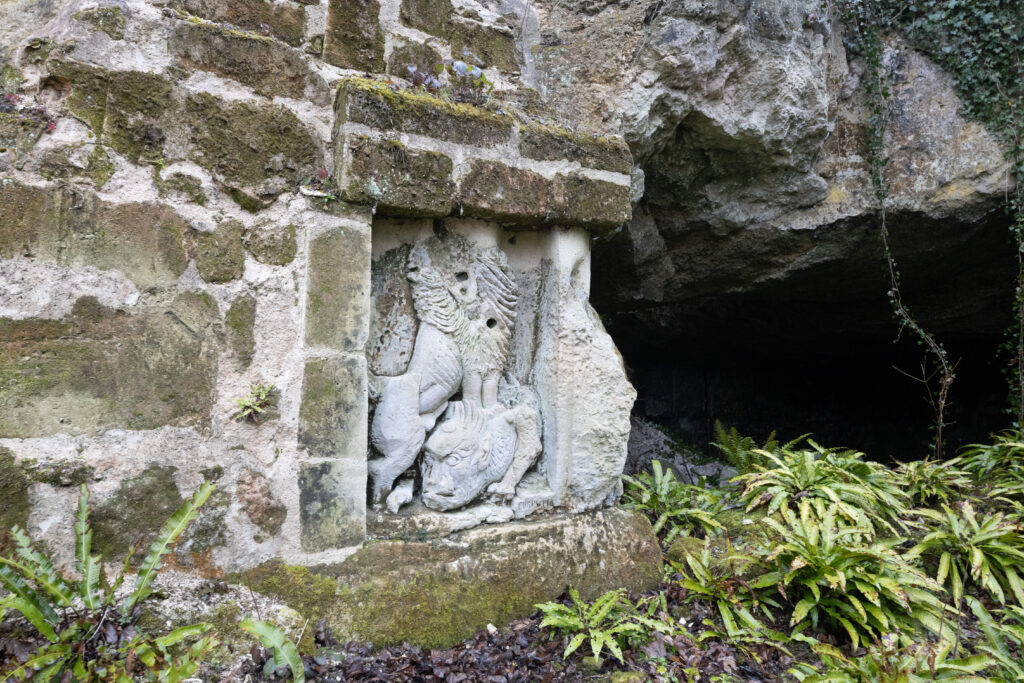
Lion slaying the dragon
Sculpted by Marius Corpait, it is an allegory of the Allies’ victory over the troops of Kaiser Wilhelm II. The lion subdues the dragon wearing a pickelhaube.
Patriotic symbols
Another theme addressed concerns references to the homeland. The symbols of the various countries engaged in the conflict are present depending on the occupations of the creutes. In the same creute, one can find traces of the passage of several nations, such as Americans, French, Germans, Algerians, etc. These sculptures reflect the patriotic propaganda maintained by nations to keep up the morale of troops engaged in war. They also express, for soldiers far from their country of origin, nostalgia for their native land and the desire to “return home”.
French :
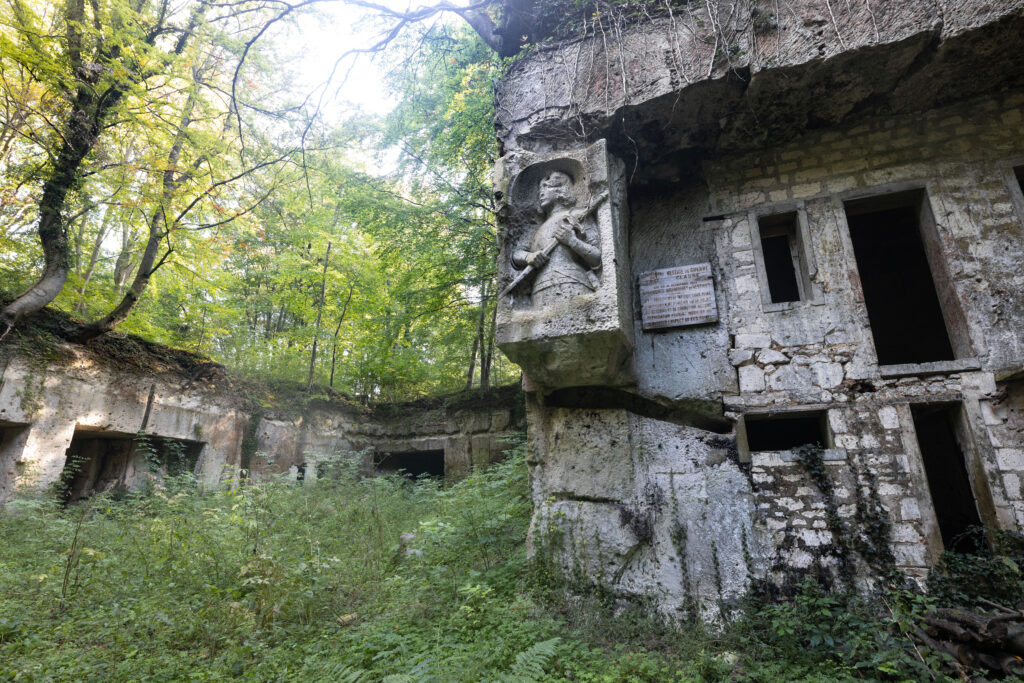
Depiction of Joan of Arc recognizable by her armor, sword and the Cross of Lorraine located below. Initially a message was engraved beneath “We will drive them out of France”. Unfortunately, the latter, the Cross of Lorraine, the coat of arms and Joan of Arc’s face were vandalized. This work was created by Henri Louis Leclabart who arrived at Chaufour in 1916 at 40 years old. He was a sculptor originally from Amiens. He was a corporal in the 12th R.I.T. – 1st battalion – medical service
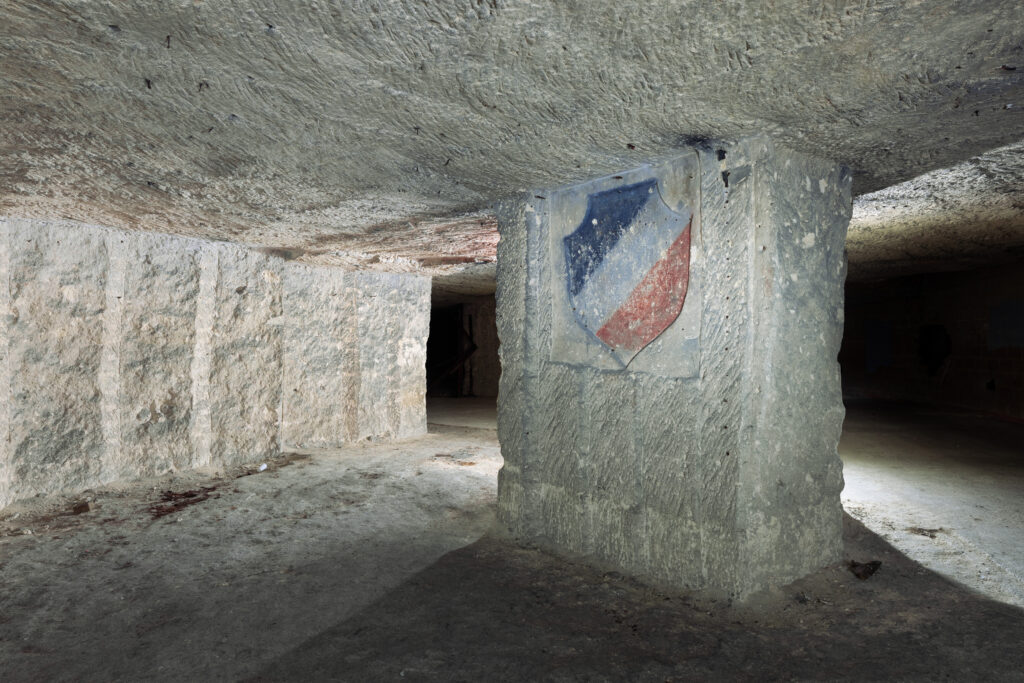
German :
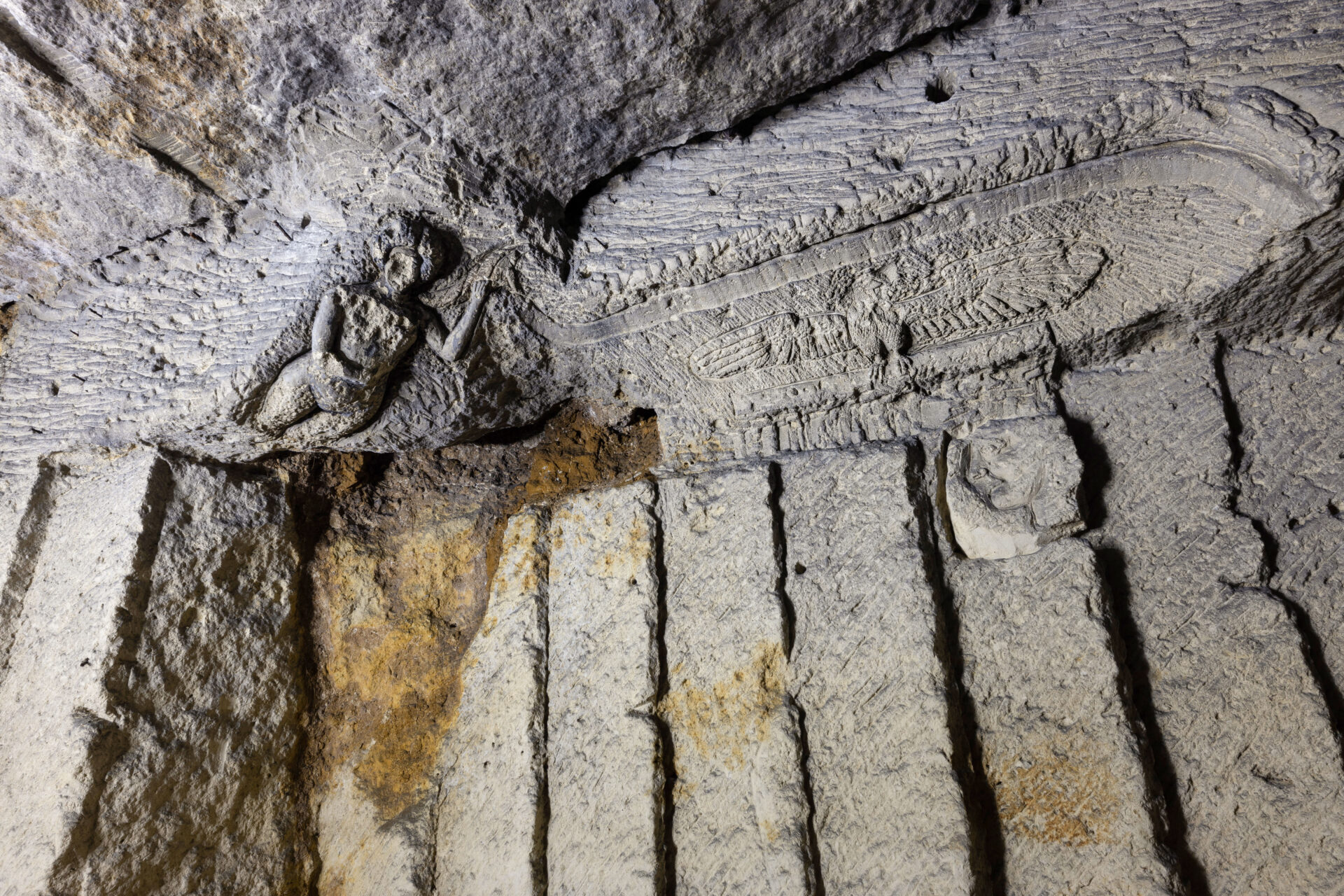
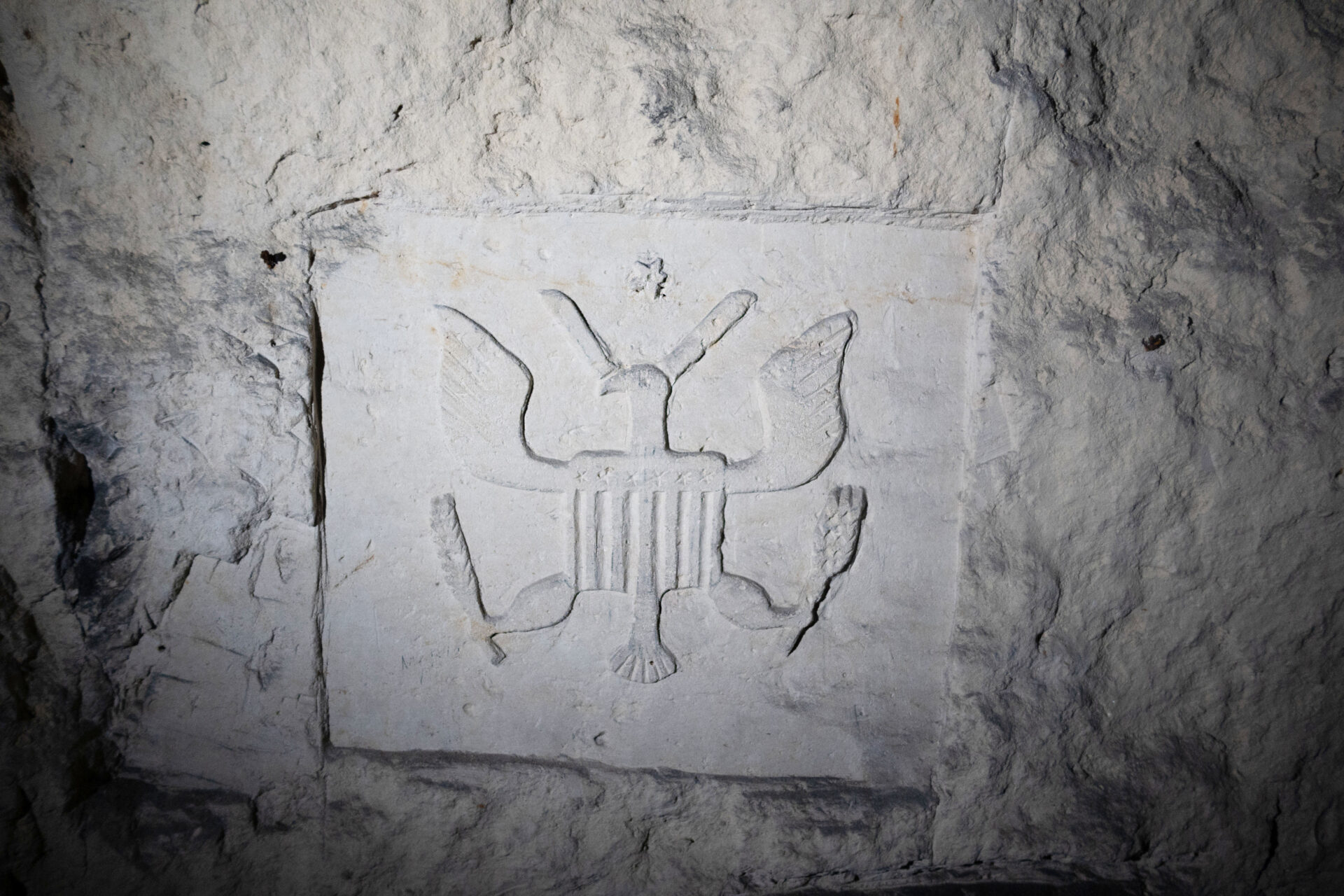
The presence of the Germans is often recognizable by drawings or sculptures of eagles, which are nevertheless quite distinguishable from the American eagle.
Red Eagle of Brandenburg, motto of the 12th German Grenadiers
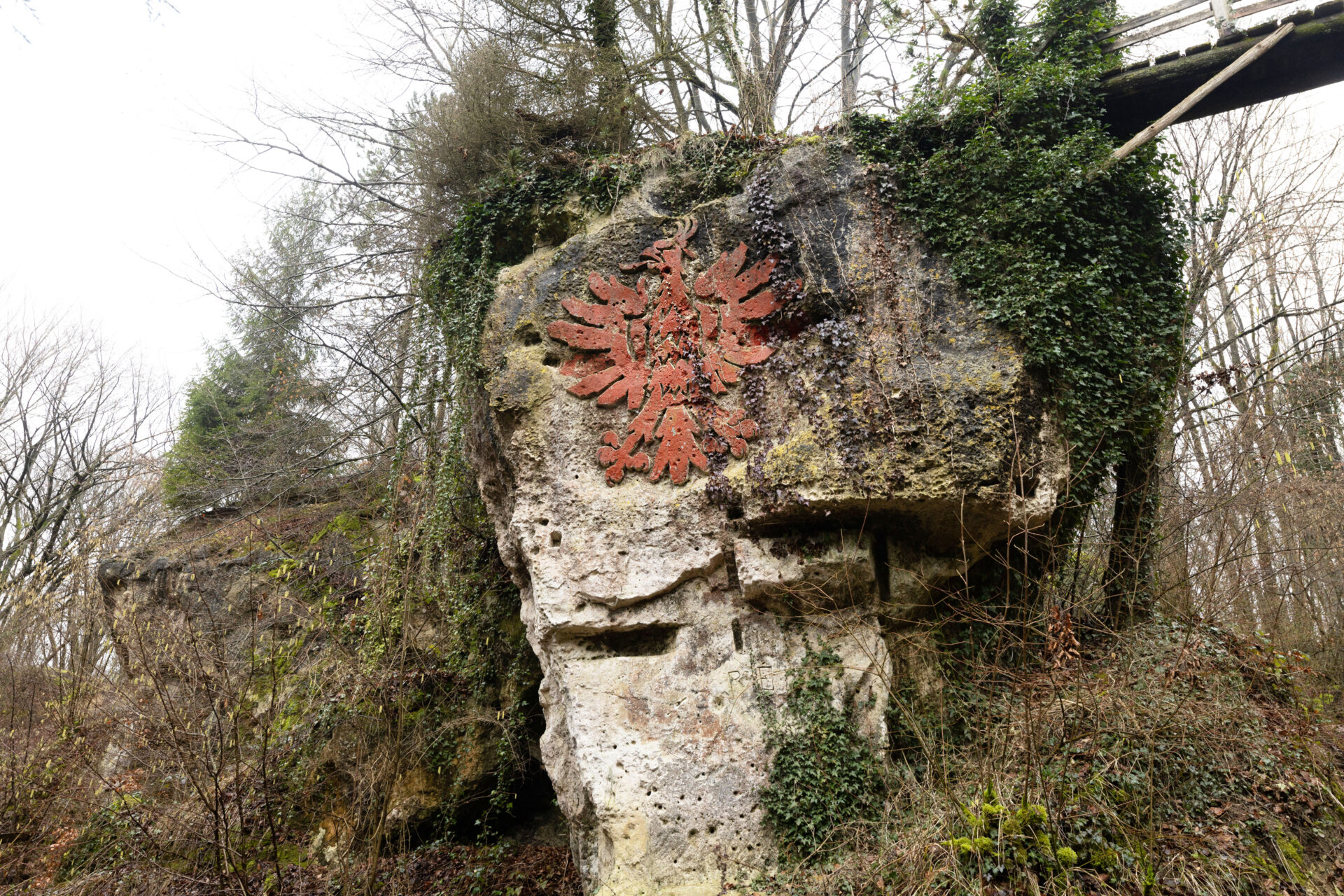
Motto u0022Wir Deutsche Fürchten Gott sonst nichts auf der weltu0022 meaning u0022We Germans fear nothing in the world, except Godu0022 sculpted in Gothic letters
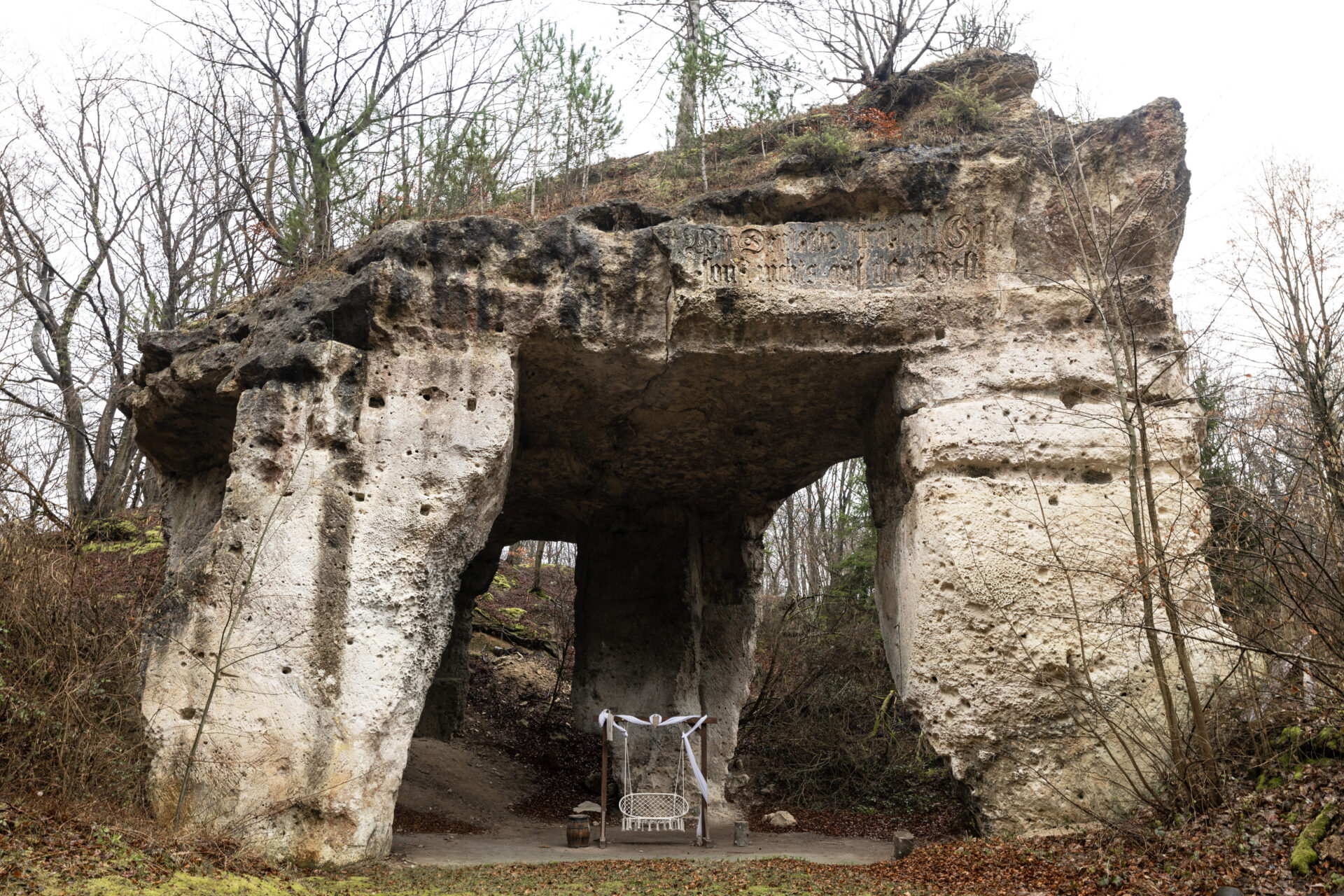
Sculpture of an imperial eagle
American:
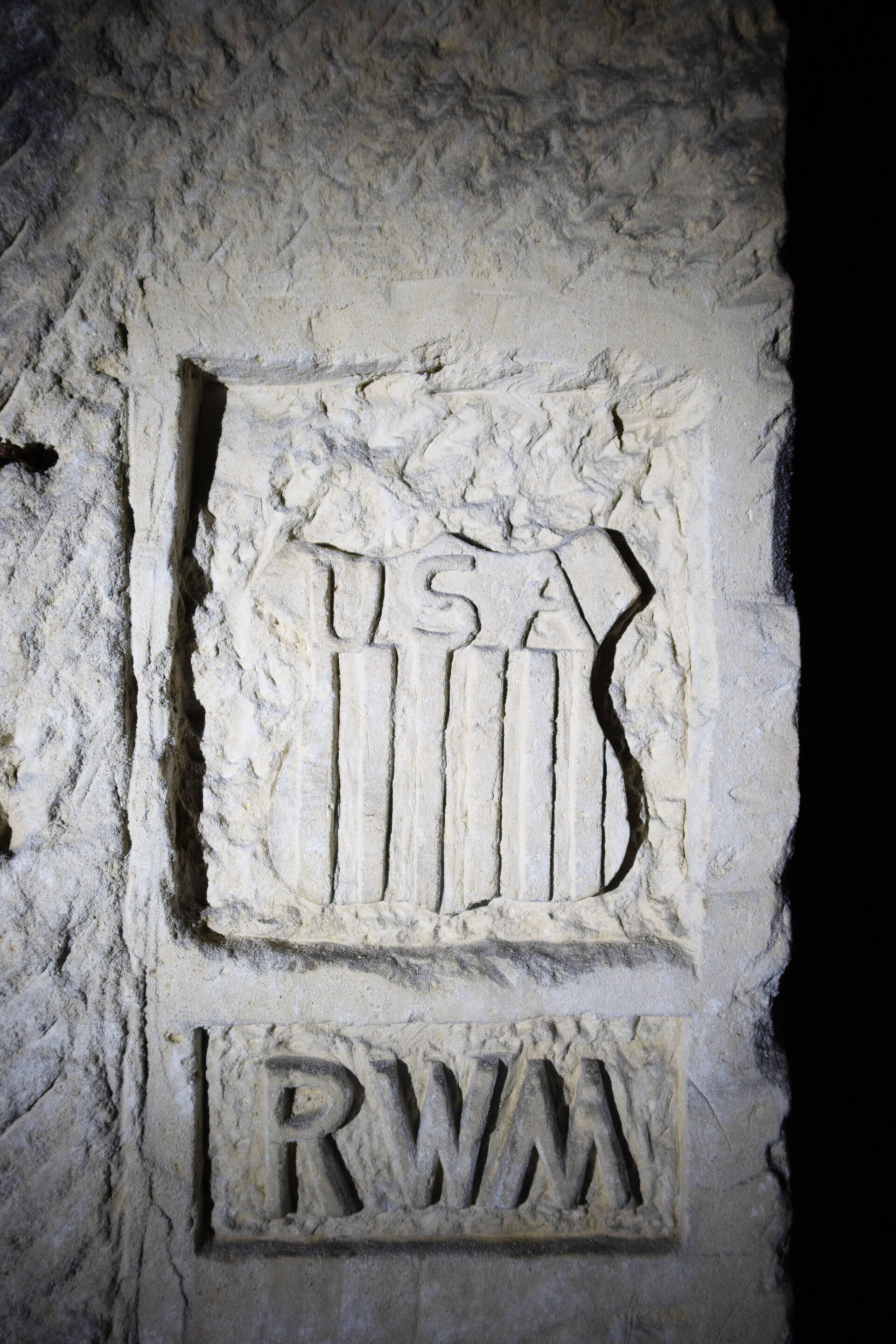
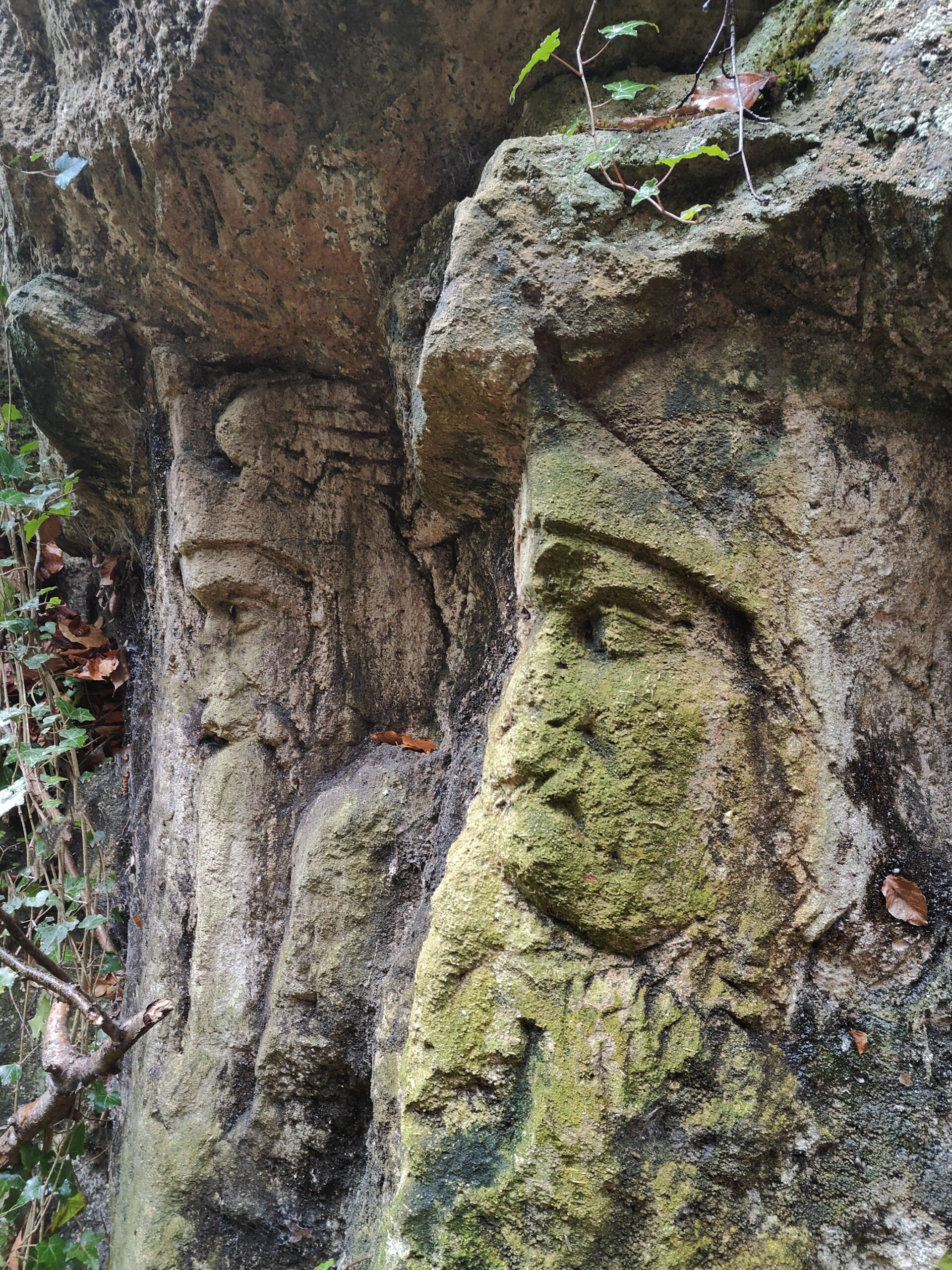
Mainly sculpted American flags are found, but also a significant number of Native Americans with their headdresses referring to Native Americans.
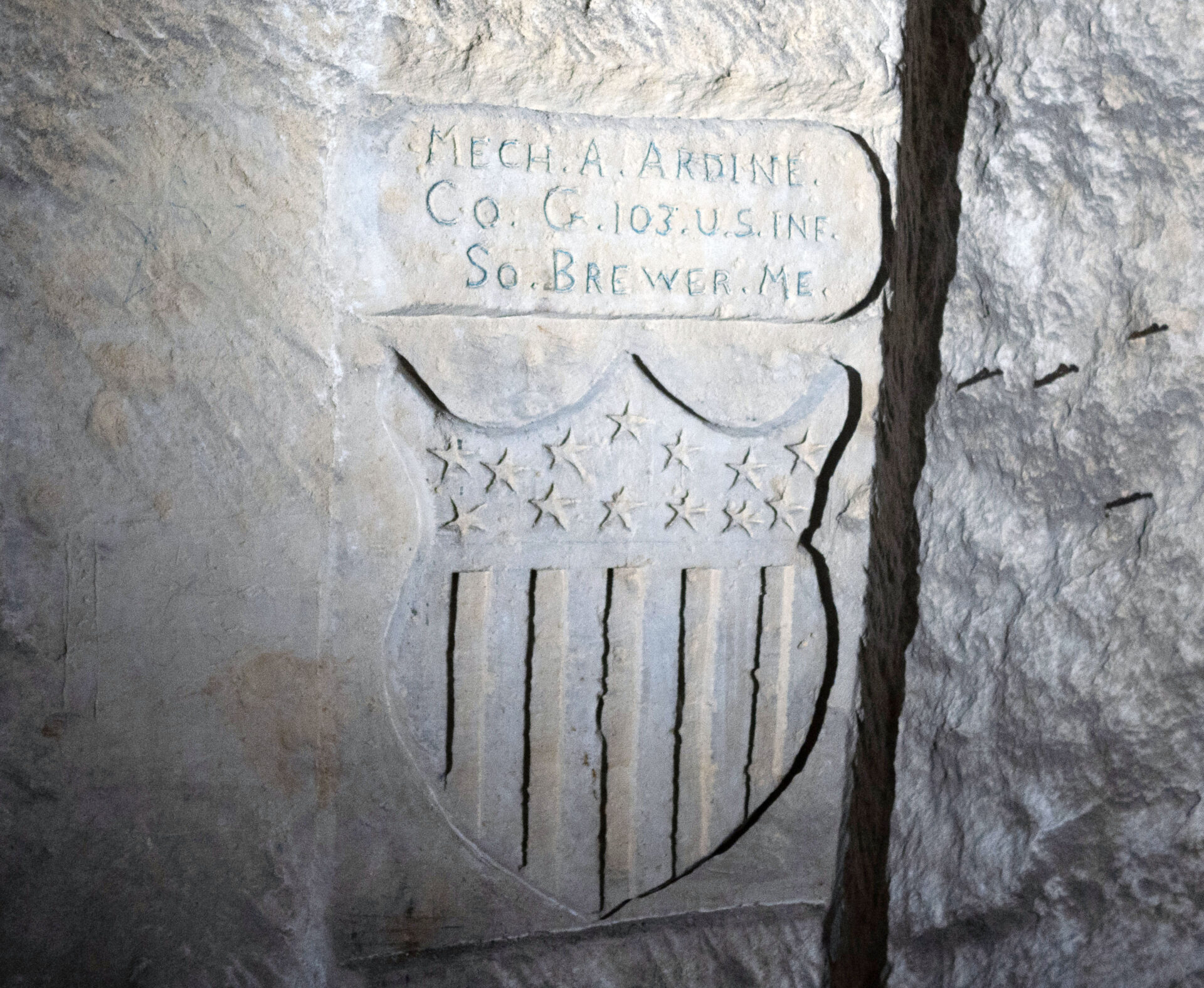
Native Americans
Eagle seal of the US Army
Algerian:
Their presence is less marked than other nationalities. Perhaps it was a unit attached to the French military force, but at least one trace remains.
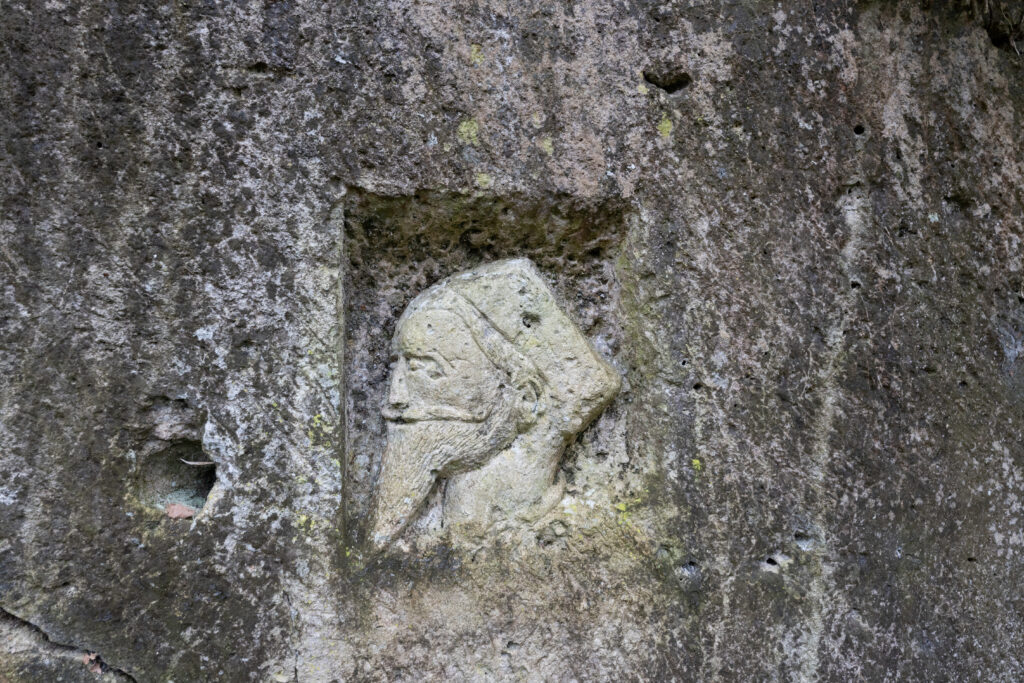
It is the “classic” representation of “TURCO”, with his tapered mustache, beard and traditional chechia. It also refers to one of the Poilu’s most precious items: the ivory pipe whose bowl is usually in the likeness of a Zouave’s head.
Female symbols:
Another theme addressed concerns women.
Soldiers were at war for years, with few leaves and letters frequently censored or lost. Married men generally found themselves cut off from their wives. Some soldiers then chose to represent their partners on the walls of the creutes. These depictions could sometimes take on a sexual, idyllic or even fantastical connotation.
The Poilu’s Dream
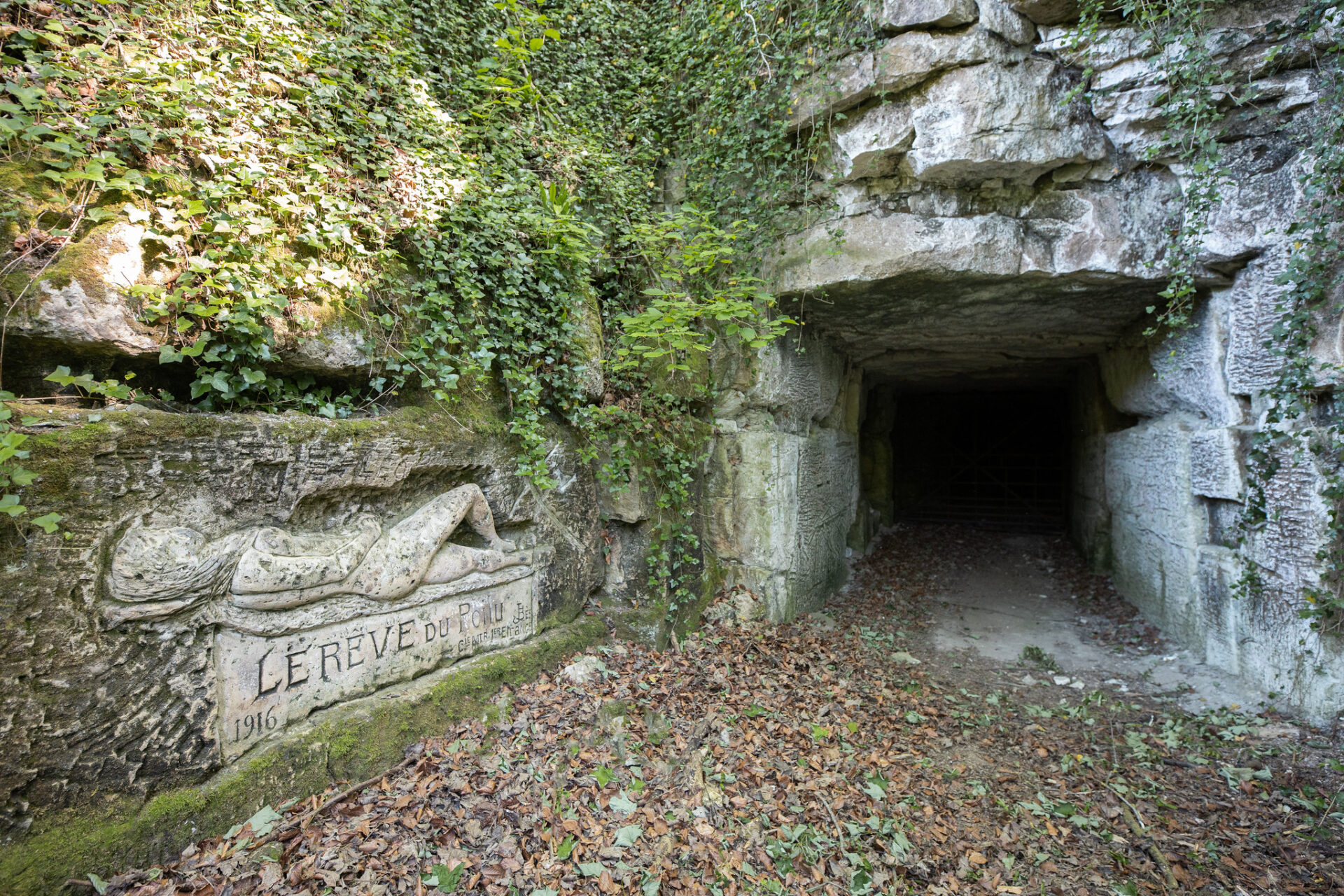
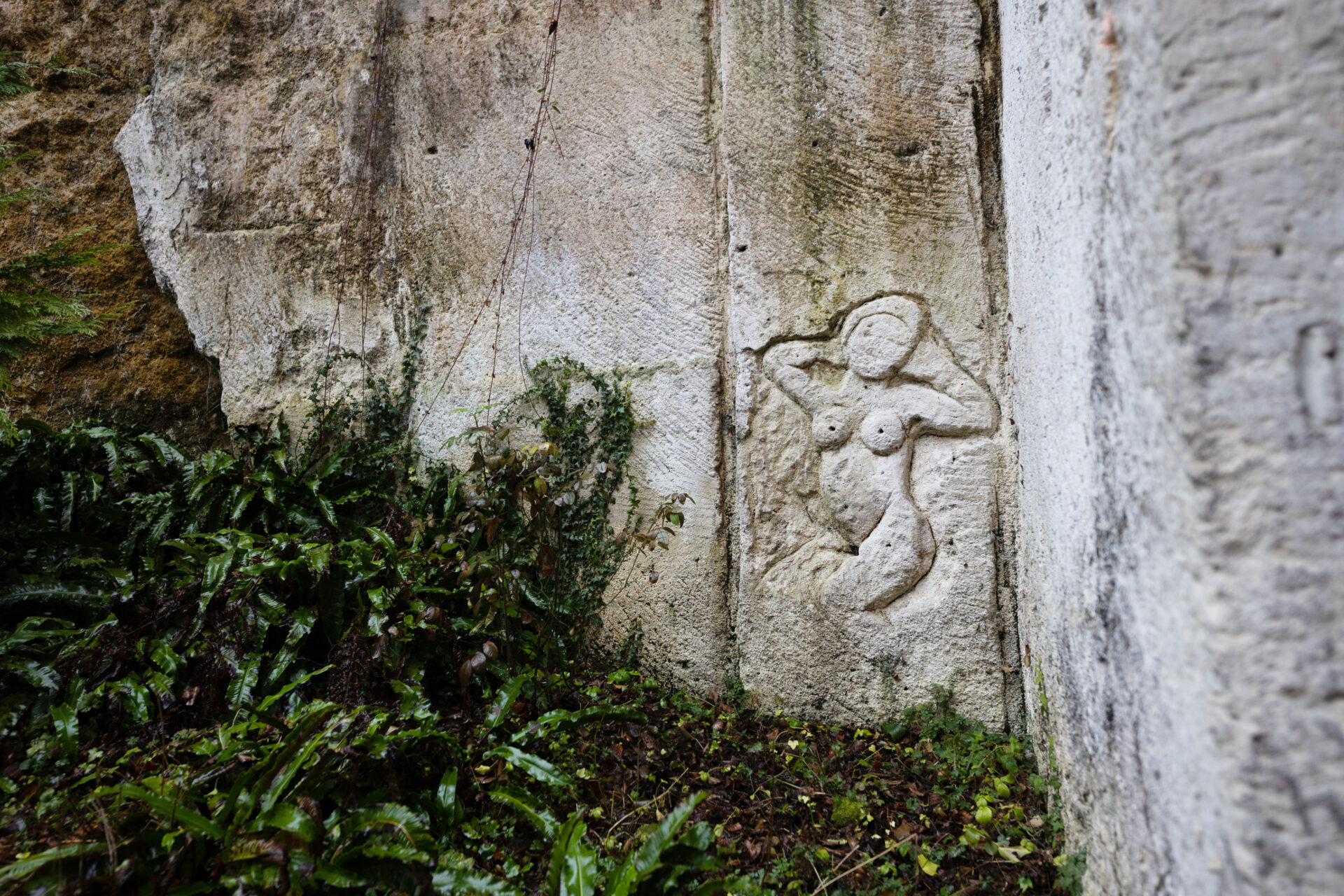
Sculpture created by a soldier of the 11th Territorial Infantry Regiment.
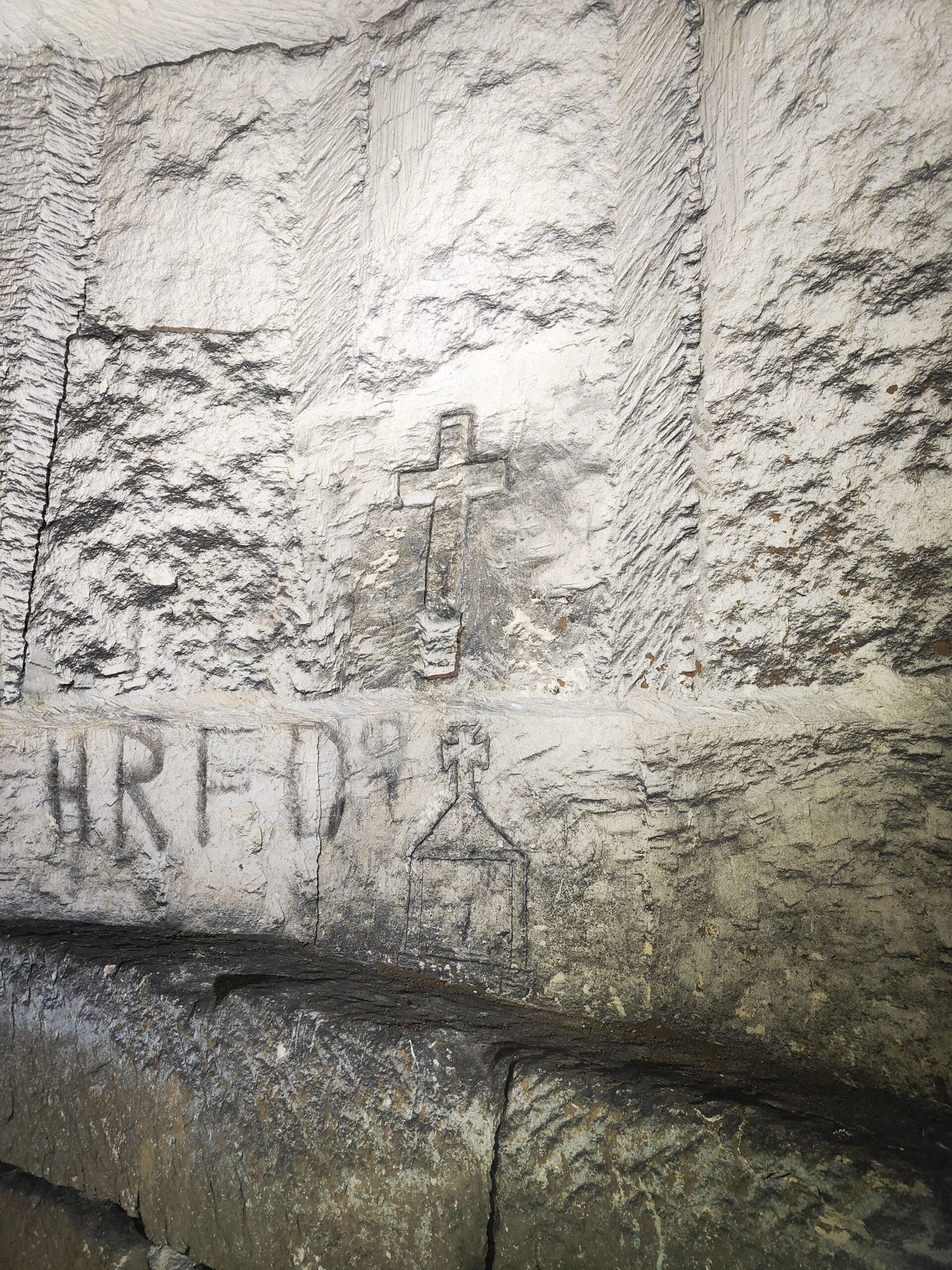
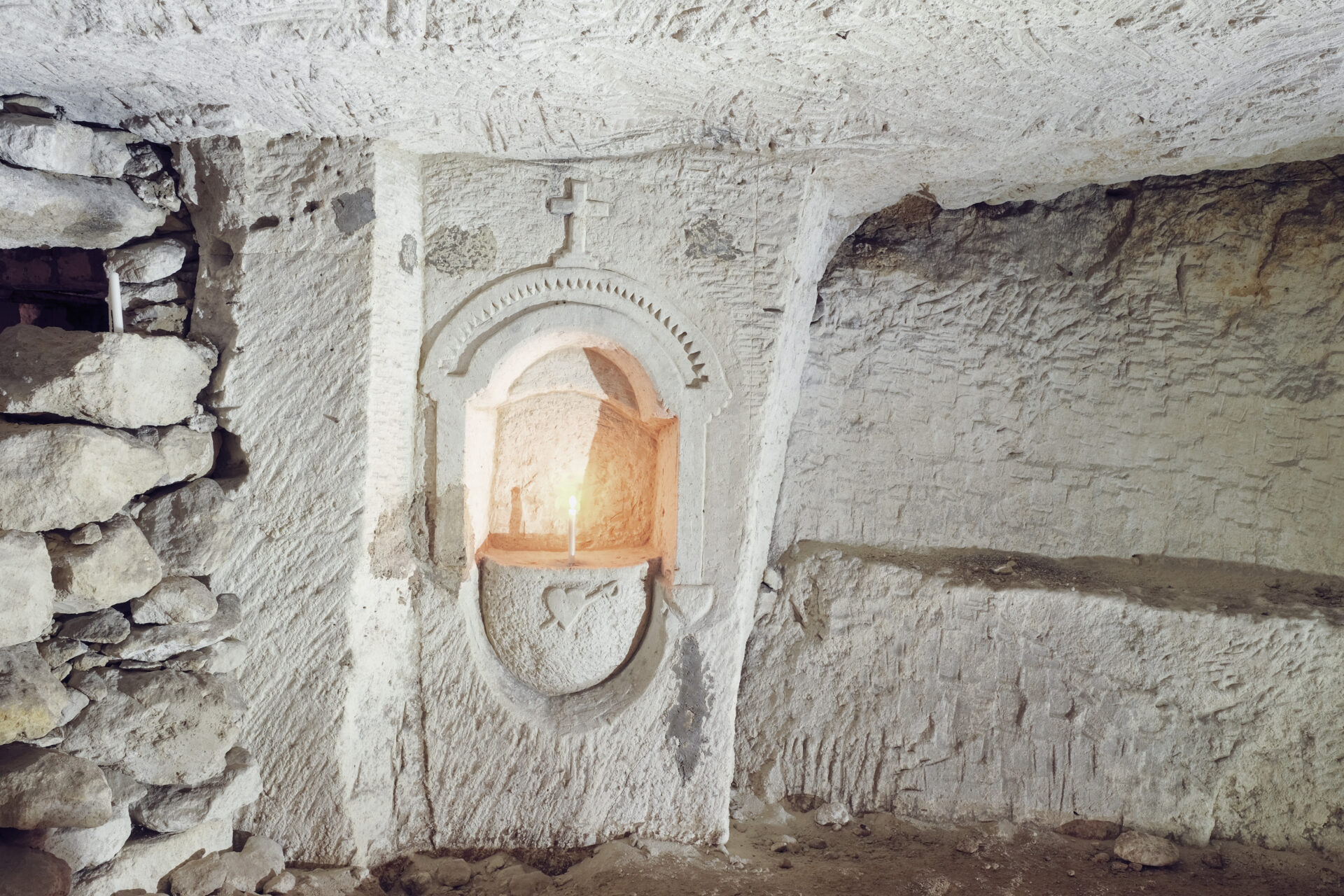
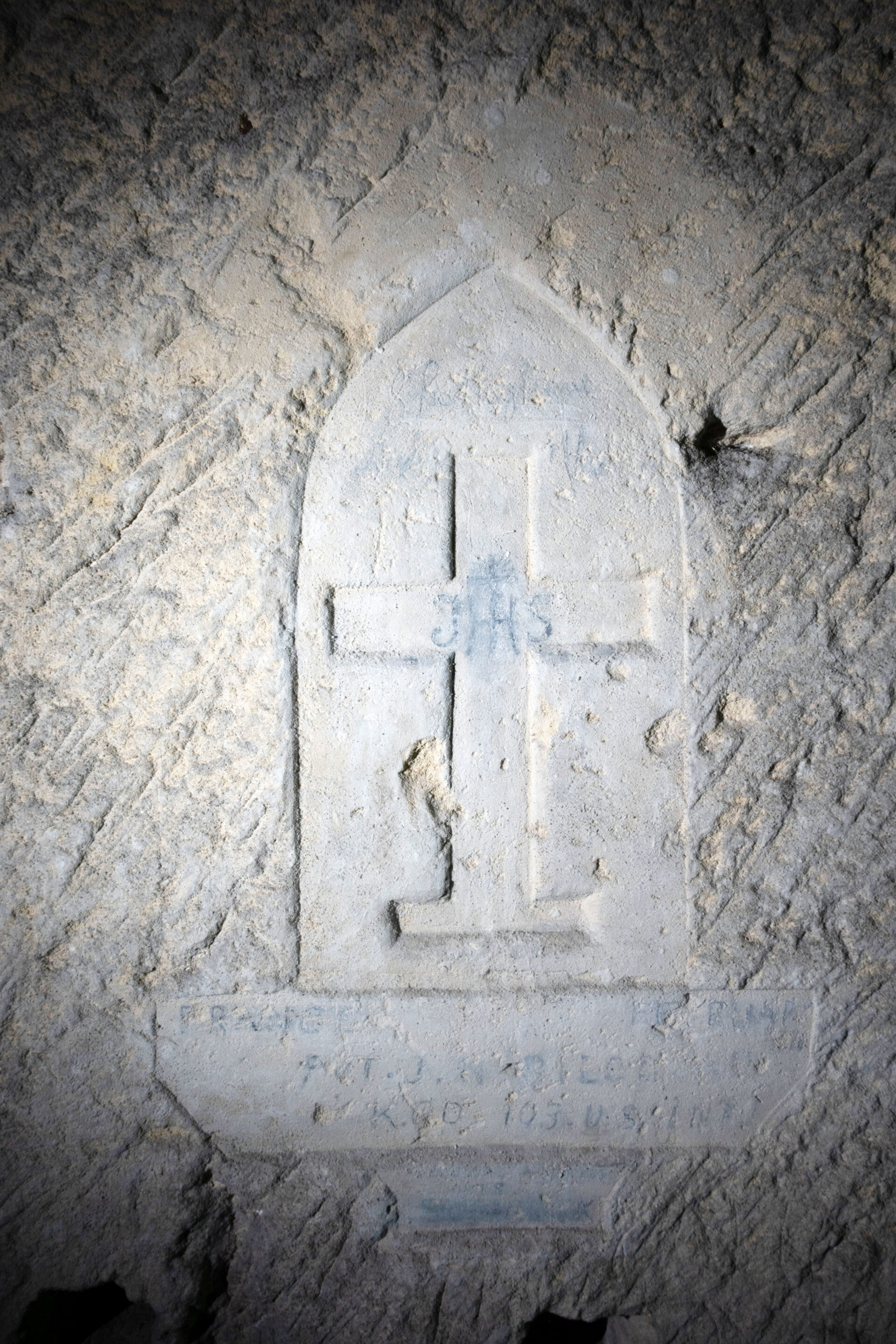
Religious representations:
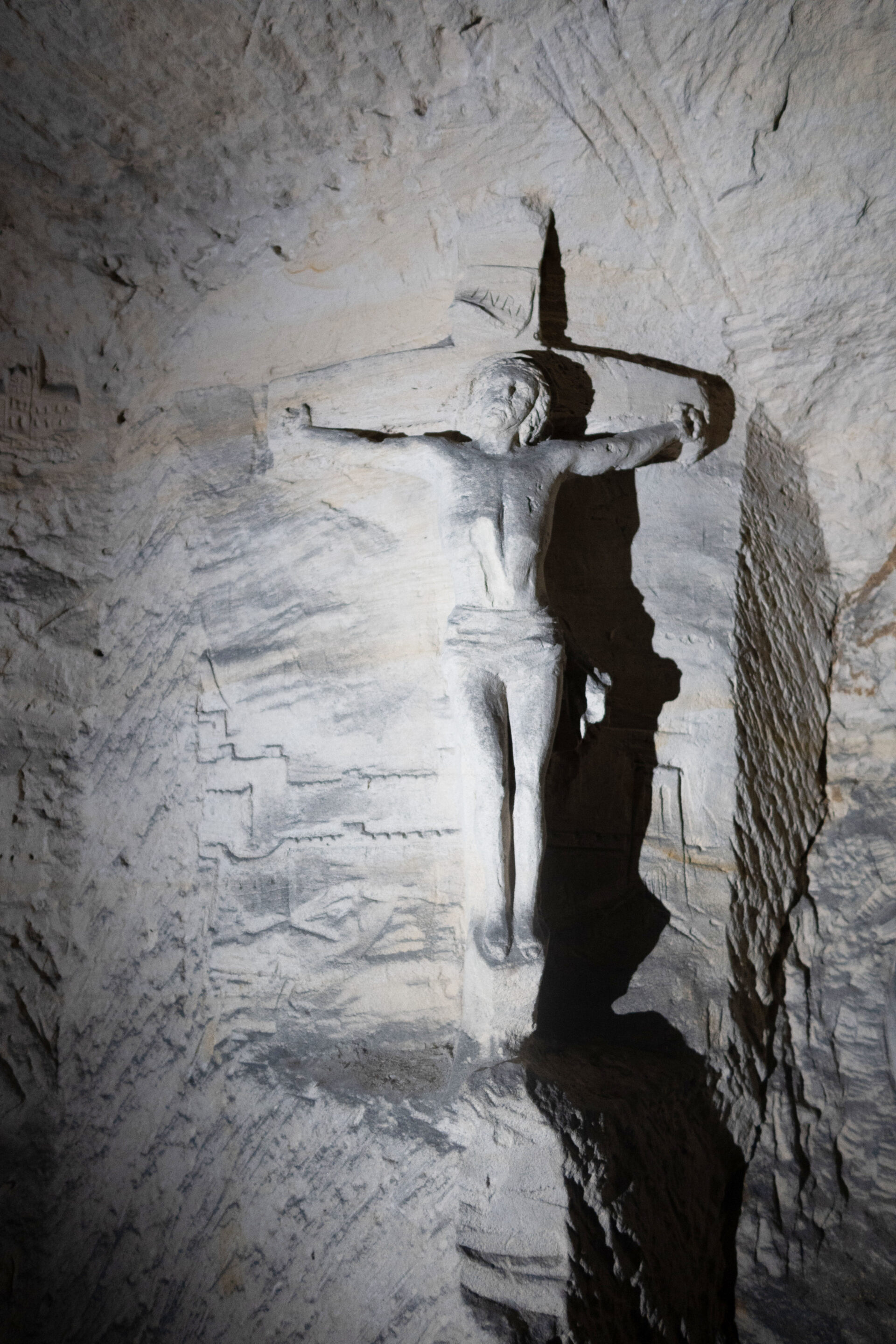
Religion is a theme usually addressed given the daily atrocities experienced during the war and the number of believers at that time. Religious representations, in the form of sculptures, take on a symbolic character: mostly crosses, angels, the dove, etc.
Nowadays:
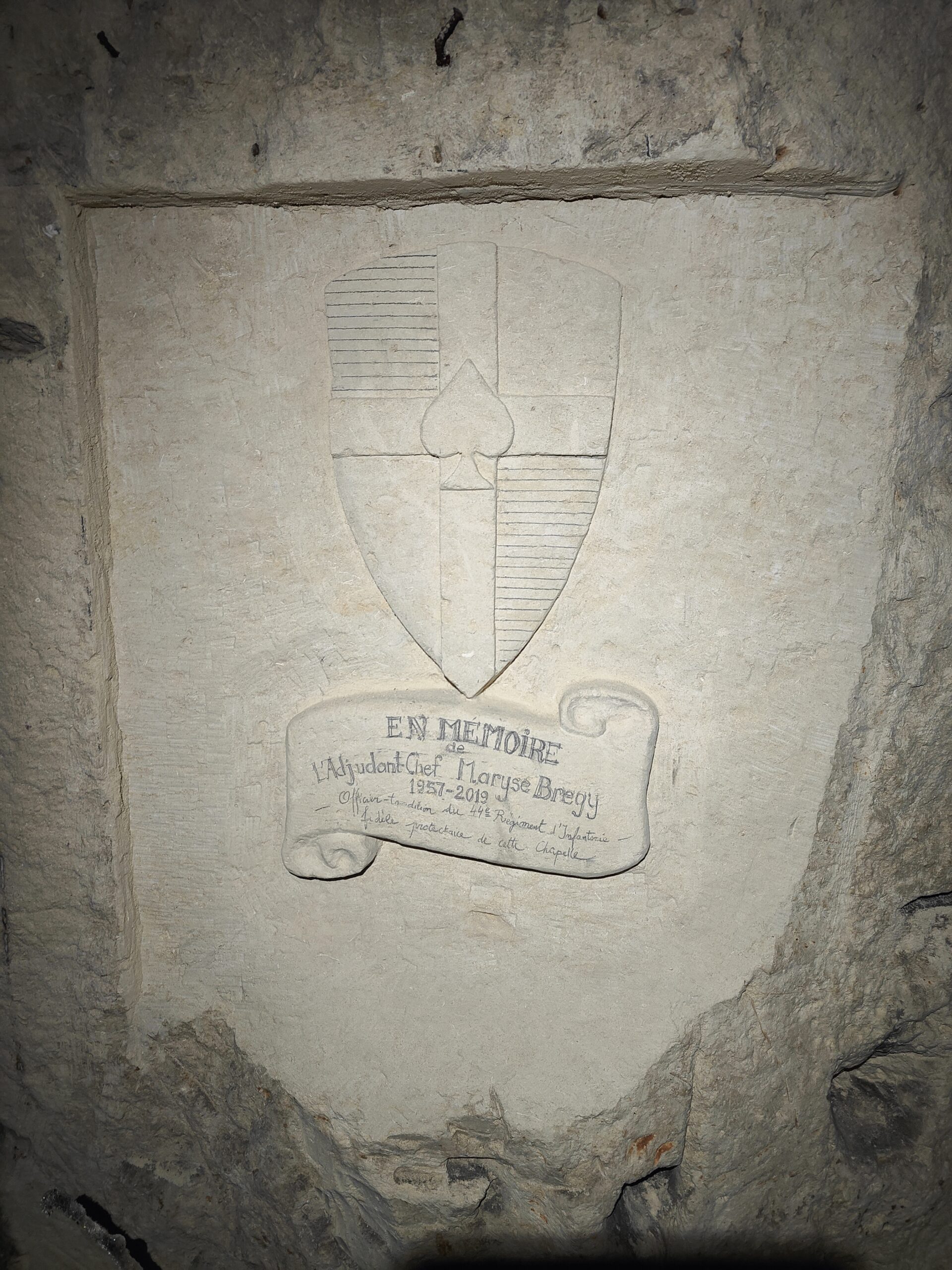
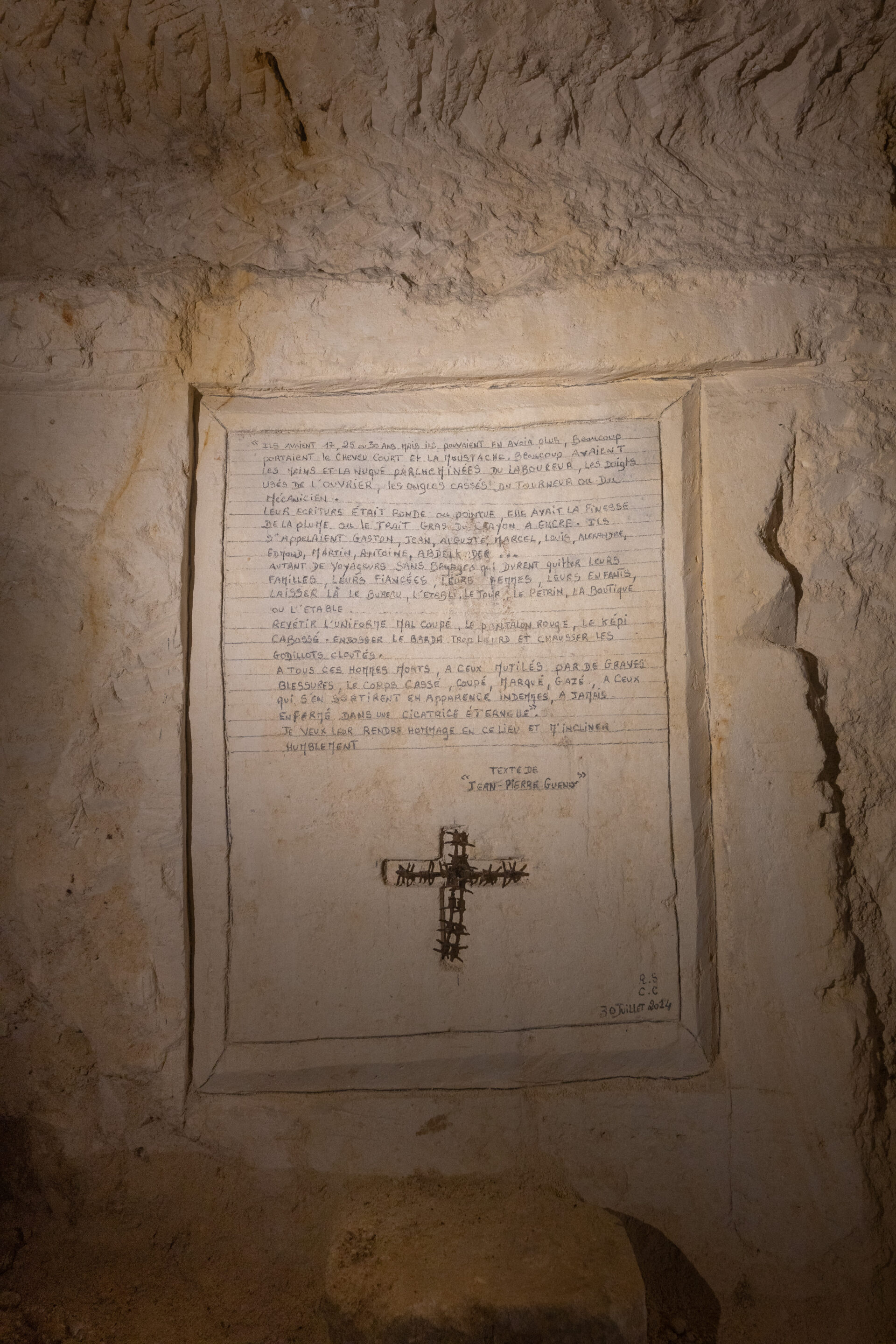
Today, numerous sculptures, inscriptions, poems or memorial altars are erected in various creutes to pay tribute to these soldiers. Here is a selection:
You might like the following articles:
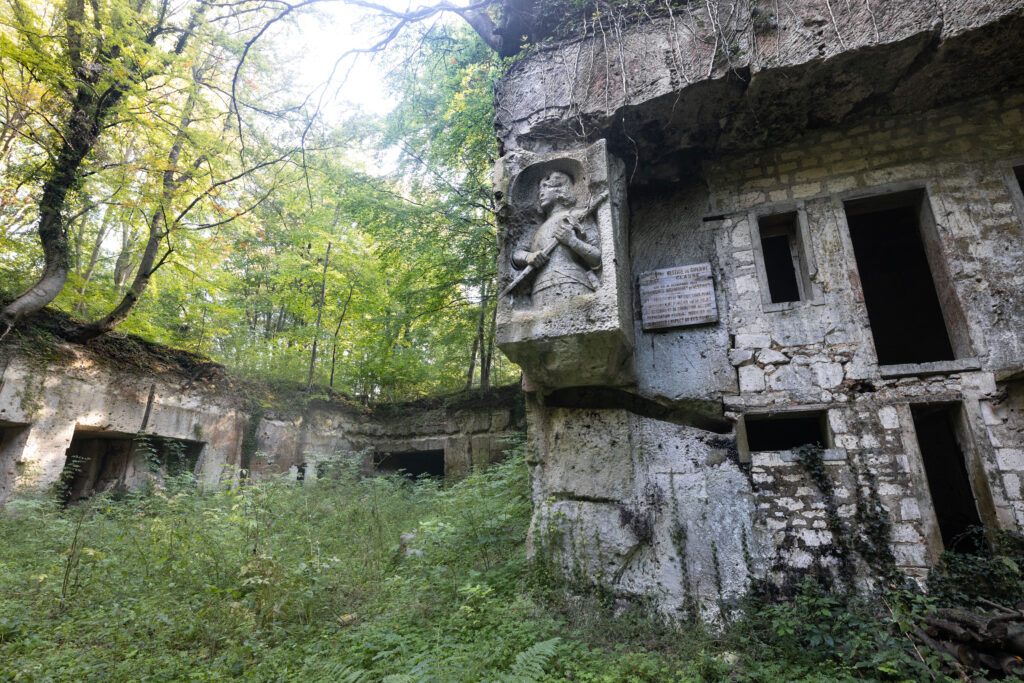
Officers’ creute
They were mainly composed of a command post as well as rest quarters.
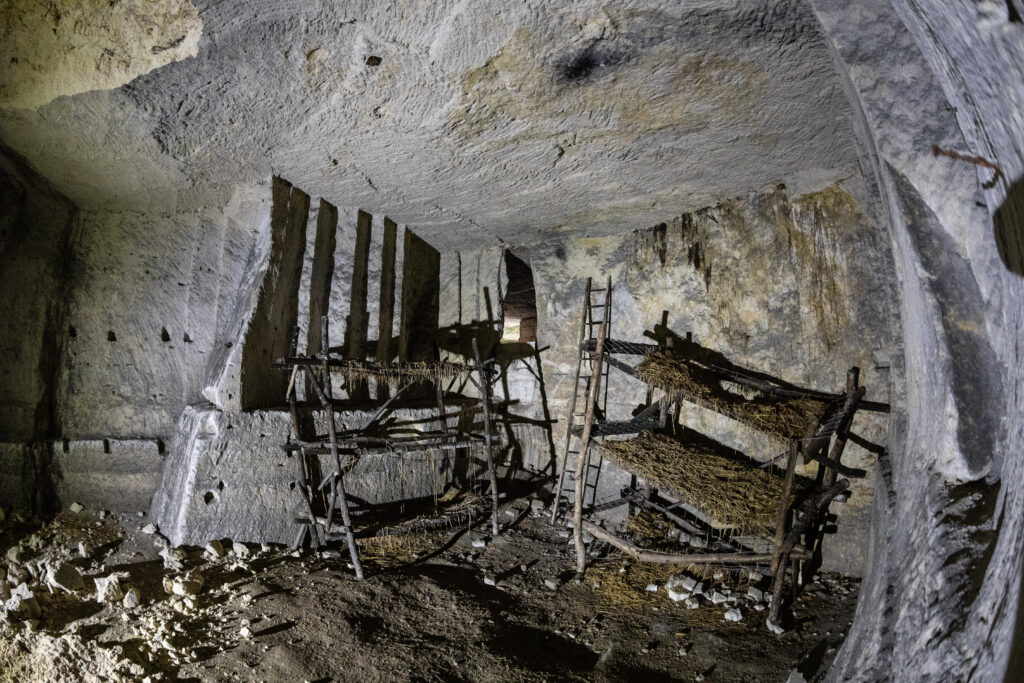
Creute of Poilus and civilians
The creutes served civilians to protect themselves from bombardments and find shelter following the destruction of their village by bombs.
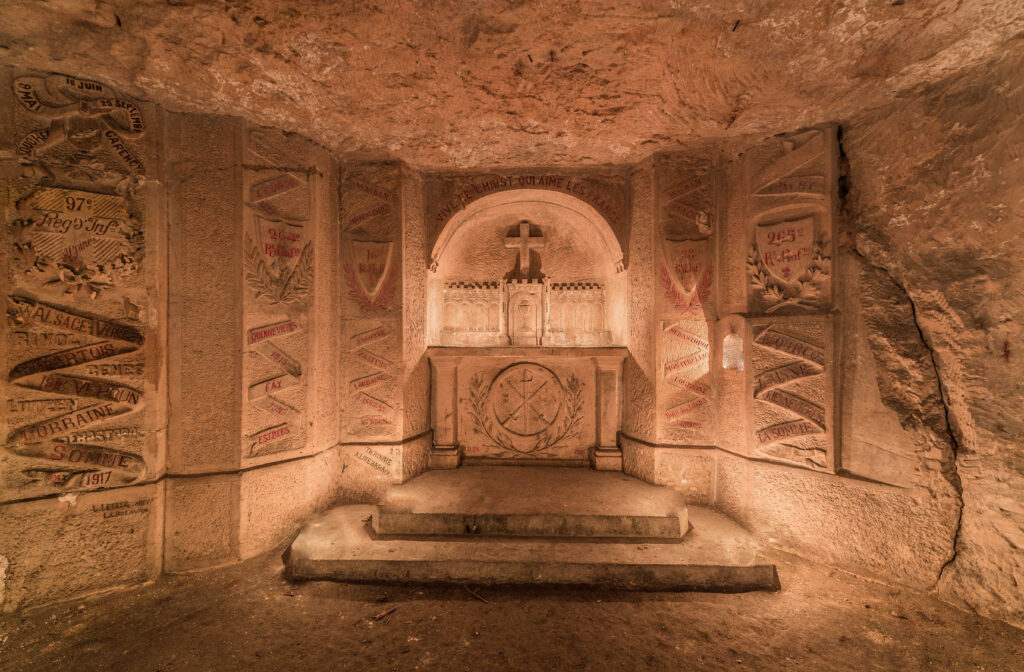
The underground chapels
The chapels were used for daily prayers.
Mines and counter-mines
A closer look at underground offensive and defensive systems during the 1st World War.