Introduction
These chapels were used for daily prayers, but also on a more exceptional basis to celebrate major religious holidays such as Christmas and Easter, or to say mass and funeral services for men who died at the front. On these occasions, a priest or military chaplain would travel to the site. Most often, these places of prayer consisted of an altar and removable furniture that left no trace. However, a significant number were carved directly out of the rock in the creutes. These altars are generally found in officers’ creutes or first aid posts.
French Altars
The diversity of altars sculpted by the various military units highlights the variety of trades and origins of the soldiers through different ornaments and symbols, while retaining common Christian codes.
Breton Altar :
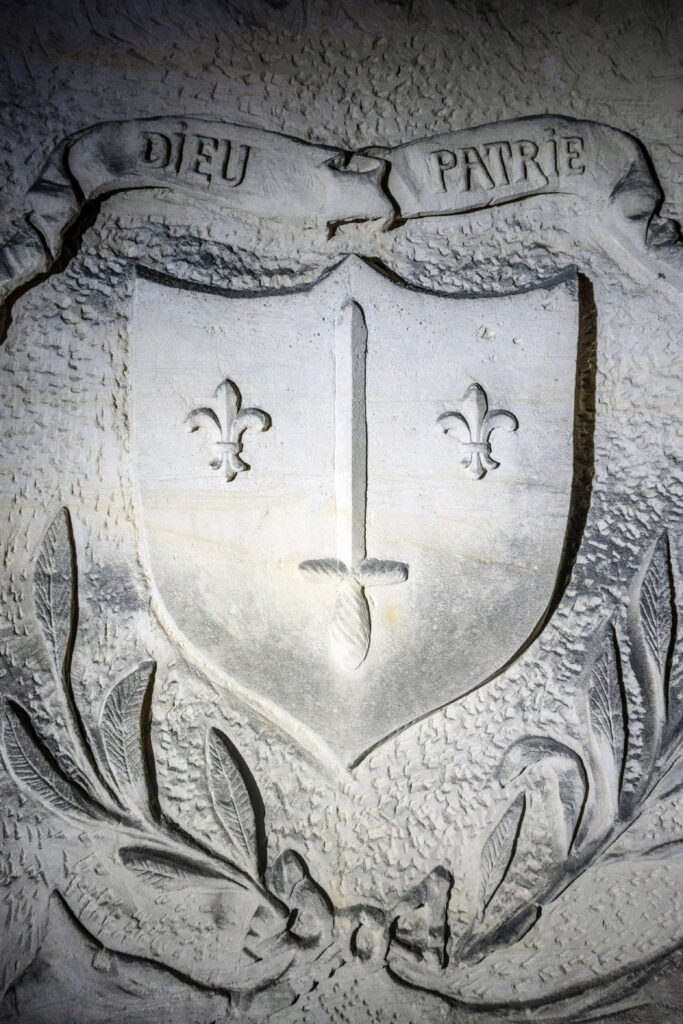
For example, it is possible to find a magnificent chapel crafted by soldiers of the 262nd Infantry Regiment from Lorient in November 1916. To access it, five wide steps were built leading to an altar bearing the inscription in Breton “Doué hag er vro” (God and country). A niche on the right wall probably housed a statue of the Virgin Mary. It seems that the creators left their names on the cross, where one can read: Pottier and Potin.
African Altar :
This chapel was surely sculpted by the 1st Zouave Regiment which occupied this quarry during WWI. Zouaves refer to soldiers from (North) Africa serving in a colonial infantry corps created in 1830. On the right, a staircase can be seen that gave direct access to the front line.
French Officers’ Altar :
This altar was mainly set up to deliver mass and funeral services for men who died at the front. The altar is surmounted by two small niches that must have housed statuettes of Saints. To the left of the altar, a rest altar supported a statue that was stolen, like many sculptures and artifacts after the war. Finally, there are portraits of soldiers killed in action.
Mountain Altars :
During the First World War, the Alpine Hunters Battalion was passing through the Chemin des Dames and left two magnificent chapels in the creutes.
MM Altar :
This chapel located in a vast space has a rather unique history, given that it was half-built by soldiers of the 86th Regiment in 1915. It was subsequently moved and completely rebuilt in 2015.
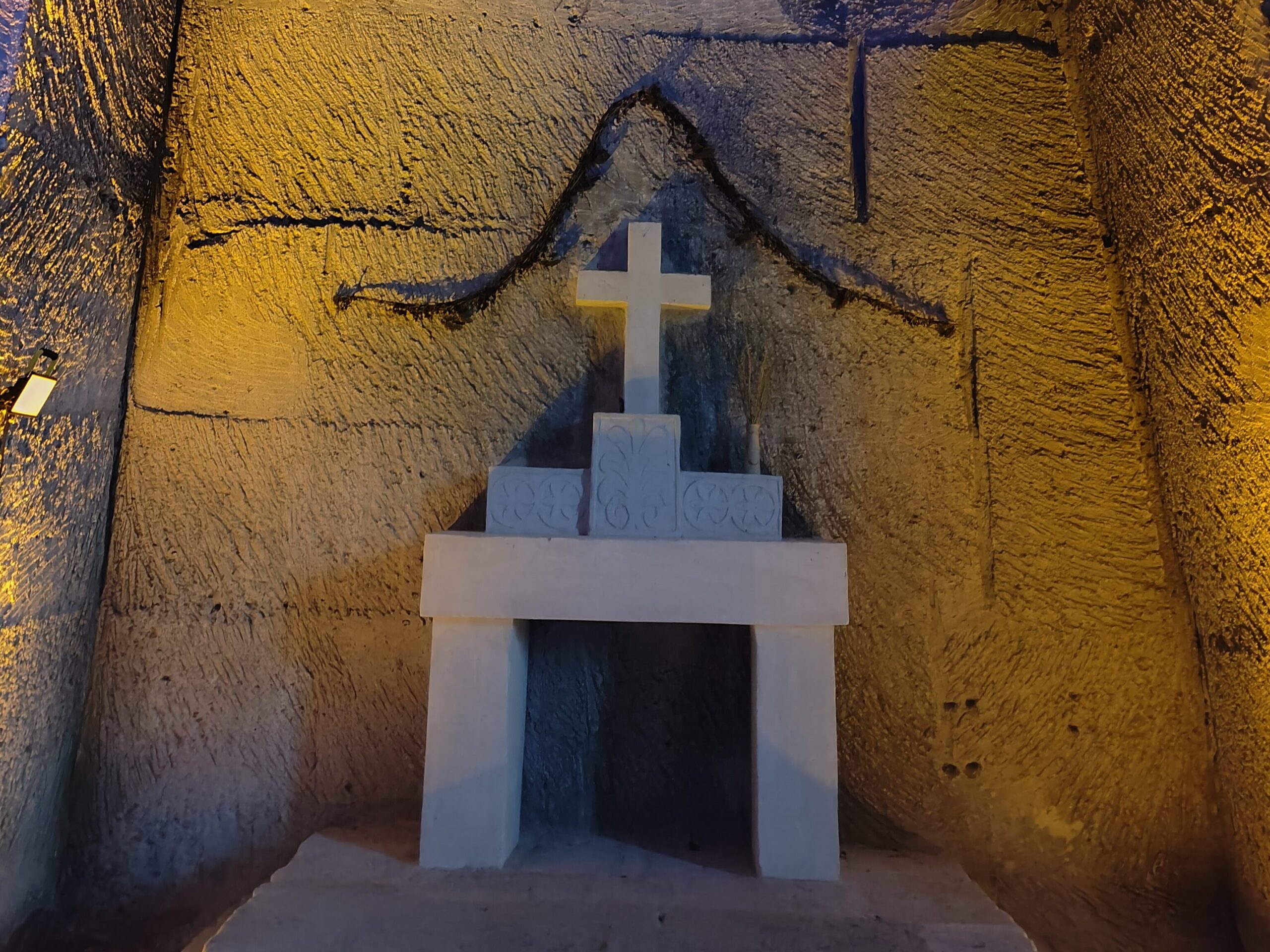
Army Altar :
This chapel was meant to house a wooden or ashlar altar that has disappeared today. Nevertheless, on the walls of the room, 18 sculptures remain, mostly with religious connotations, executed by the 1st and 3rd battalions of the 137th French Infantry Regiment in October 1917.
Swallow Altar :
Little information remains about this altar located not far from its entrance. The quarry in which it is located seems to have been worked after the military occupation, considering the boundary between the foundations of the altar’s base and the quarry floor. However, it remains distinctive due to the small, subtle swallow flying above it.
Giant Altar :
Many other altars, no less magnificent, still remain in the Soissonnais area, though less documented. For some, the work is minimalist and signed, for others, the work is titanic but unfinished. The floor was probably lowered after limestone quarrying resumed.
170th Infantry Regiment Altar :
Other altars:

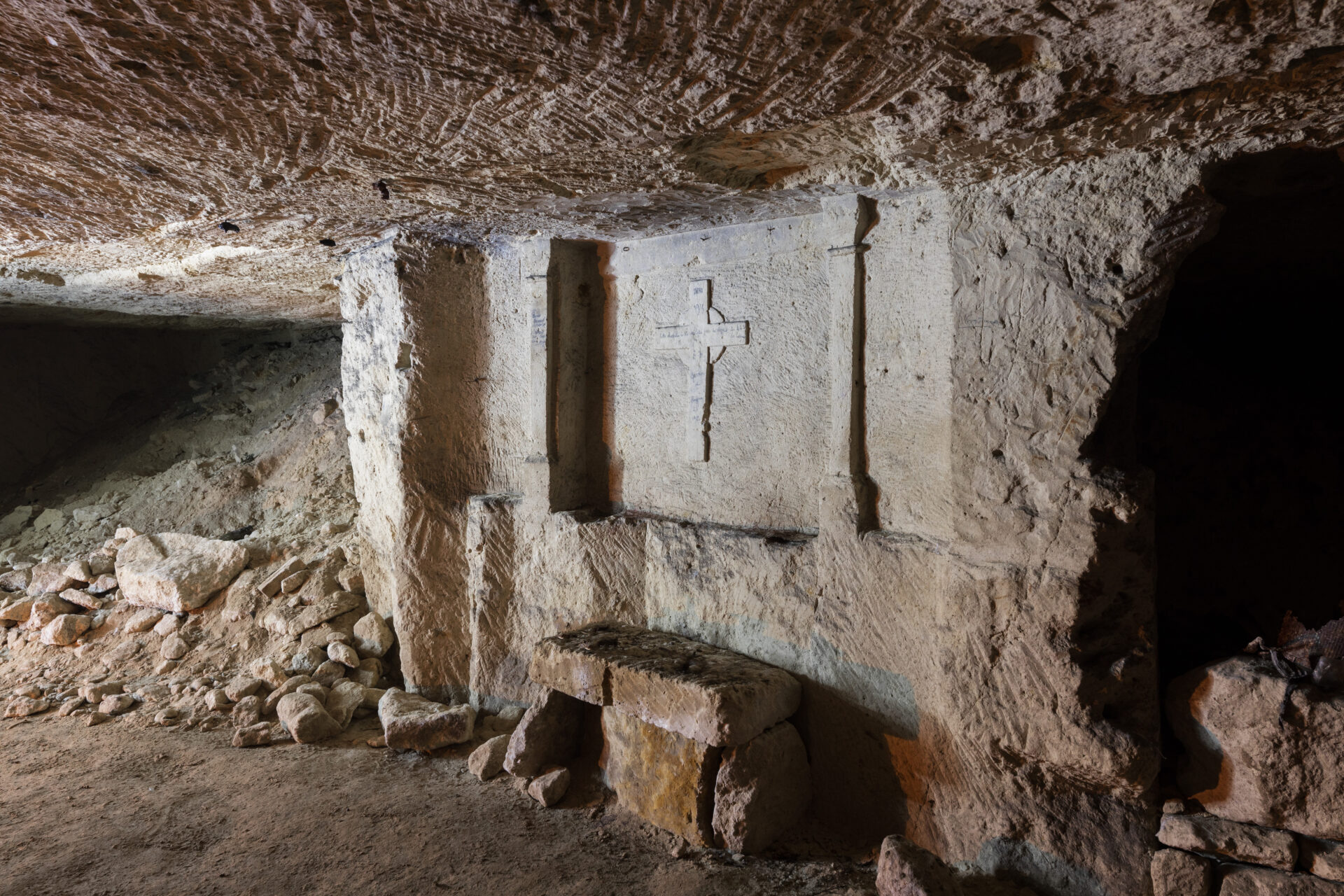

German Altars
Säule Altar :
This chapel is carved into a square pillar, which is unusual, as they are generally sculpted directly into the quarry face. However, this altar suffered damage. The lower inscription was chiselled off after the war, probably by the French. Then, the upper part was limewashed, like the rest of the quarry, when it was converted into a mushroom farm, most likely during the interwar period. Finally, in the 1990s, the columns were damaged.
Säule 2 Altar :
This one has a similar architecture, except that it is carved out of the solid rock. Strangely, it suffered similar damage. The frame on the left was chiselled away and a column was destroyed.
Zusammengebrochen Altar :
This altar is poorly documented; however, it was surely sculpted by the Germans, who spent more time there than the French. Indeed, it was occupied by the Germans until April 19, 1917, then by the French until May 27, 1918. The enemy resided there again until September 30, 1918.
You might also like the following articles:
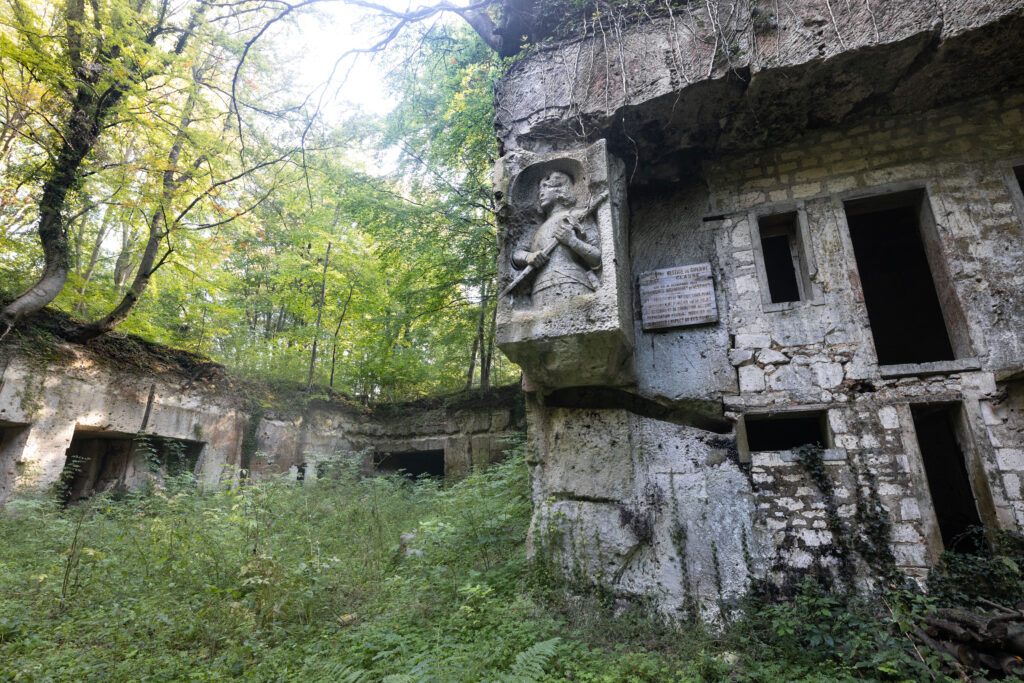
Officers’ Creute
They were mostly composed of a command post as well as rest quarters.
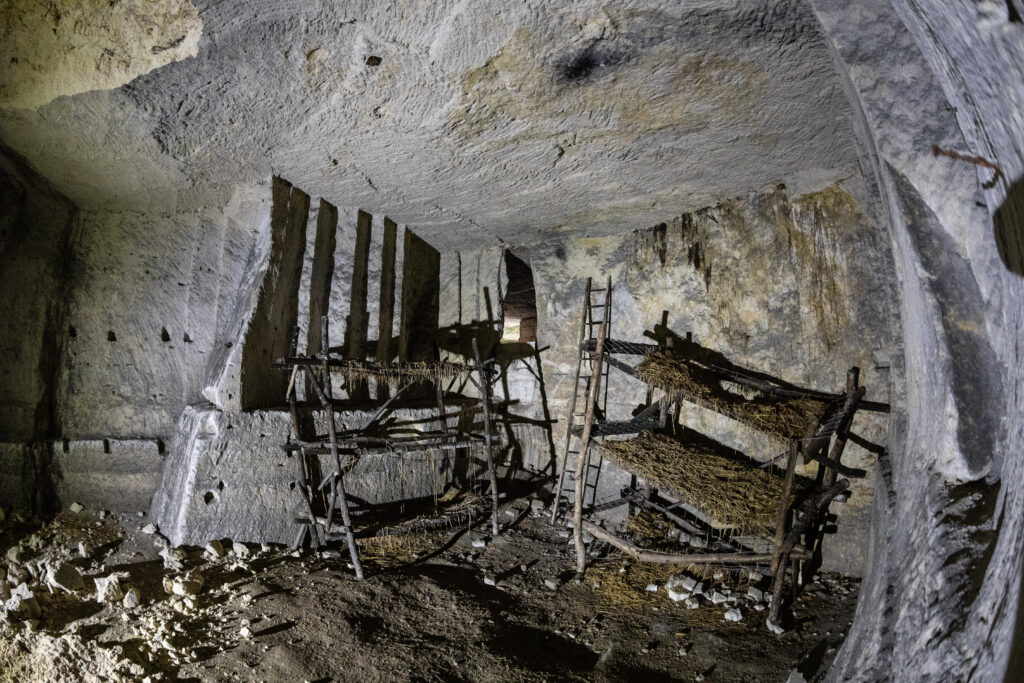
Poilus and Civilians’ Creute
The creutes served civilians as shelter from bombings and accommodation following the destruction of their village by bombs.
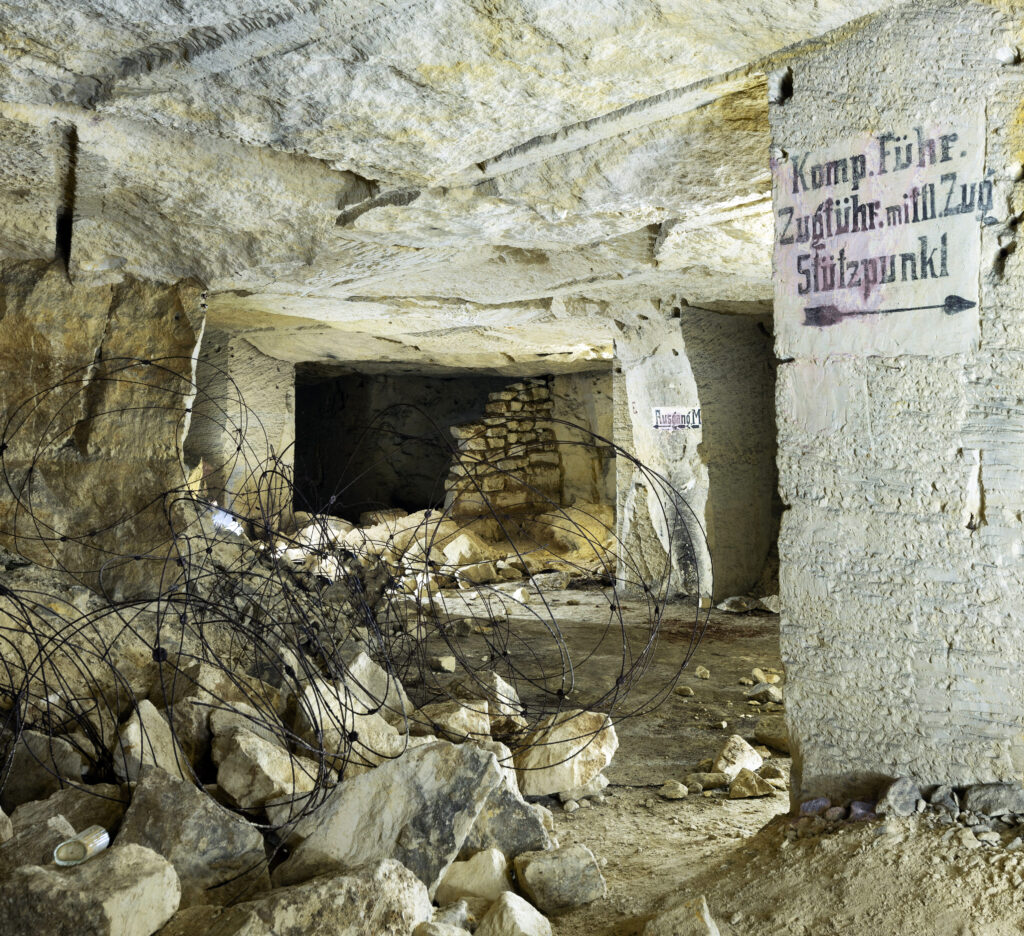
Mines and Counter-mines
A closer look at underground offensive and defensive systems during WWI.
Traces of WWI Soldiers
Collection of traces left by various soldiers during their time in the creutes.