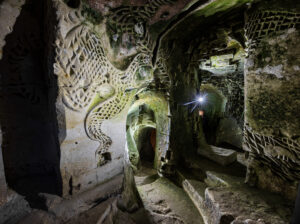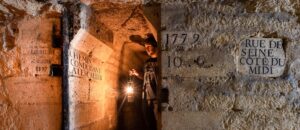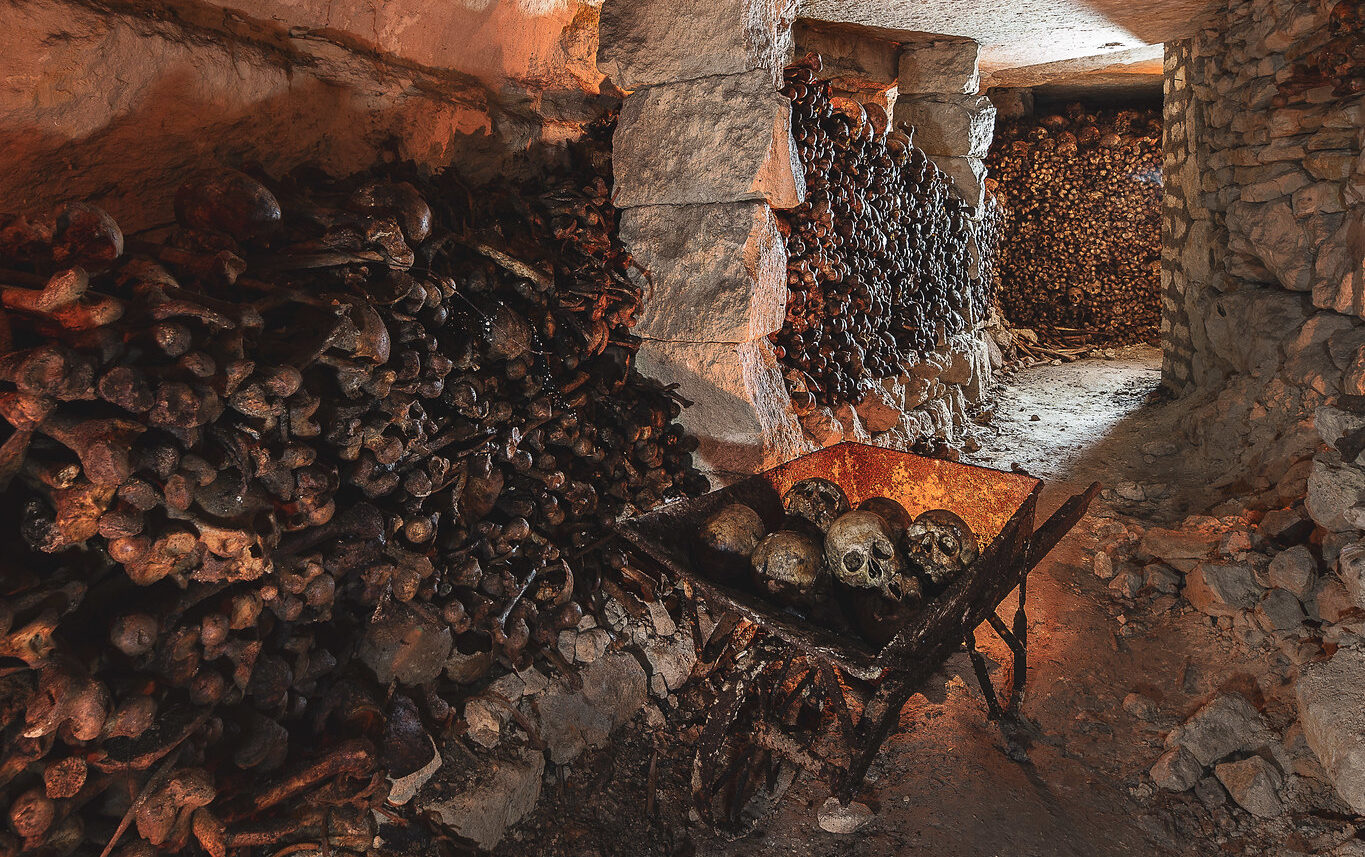
Of the twenty or so Paris cemeteries, Montrouge is the only one with an underground bone depository. It lies in the 14th arrondissement, on the Montrouge plain whose subsoil supplied a good share of the stone of Paris, and later received the bones from its cemeteries.
A cemetery born of the 1804 decree
The cemetery was created in 1819 and opened in 1821, as part of the reorganization of burial practices launched after the imperial decree of 1804 on burial places. It was then established on the territory of the commune of Montrouge, outside the limits of Paris: that was the whole principle of this reform, moving the dead away from the urban center.
The annexation of 1860, then the boundary adjustments of the 1920s, brought the cemetery into the 14th arrondissement, but it kept its original name and its unusual position as a Paris cemetery outside the city walls. The entrance today is at 18, avenue de la Porte-de-Montrouge.
The site contains a military plot and a granite stele erected in 2014 in memory of 96 soldiers of the First World War. Among the graves: Abbé Migne, priest and publisher of the great patristic collections, the painter Nicolas de Staël, the writer Henri Queffélec, the dialogue writer Michel Audiard, the Nobel laureate in physics Pierre-Gilles de Gennes, and Coluche, whose grave is by far the most visited.
Beneath the plain, the quarries
The underground context of this area is not insignificant. The Montrouge plain is riddled with old coarse limestone quarries worked until the 19th century; in the neighboring commune of Montrouge, old quarry voids are estimated to lie beneath about 40% of its surface area.
It was this abundance of voids that led, in 1785, to the decision to transfer the bones of the Cimetière des Innocents to the Tombe-Issoire quarries, beneath the Montrouge plain: the Paris catacombs. The transfer began at the end of 1785, the ossuary was blessed in April 1786, and cemetery clearances continued in waves until 1933, for a total of more than six million individuals.
Ossuaries of the same type, less well known, were set up on the outskirts in the quarries of the great southern network, notably beneath the cemeteries of Montrouge and Kremlin-Bicêtre. Since 1777, the Inspection générale des carrières, created after a series of collapses, has monitored and consolidated this subsoil: masonry pillars, bolting, grout injection.
Sources: City of Paris, cemeteries department; town of Montrouge, file on ground movement risks; Inspection générale des carrières; encyclopedic entries on the Montrouge cemetery and the Paris catacombs.
This tour is part of the catalogue of virtual tours of underground heritage.