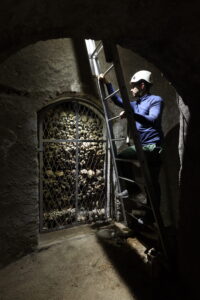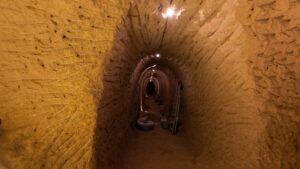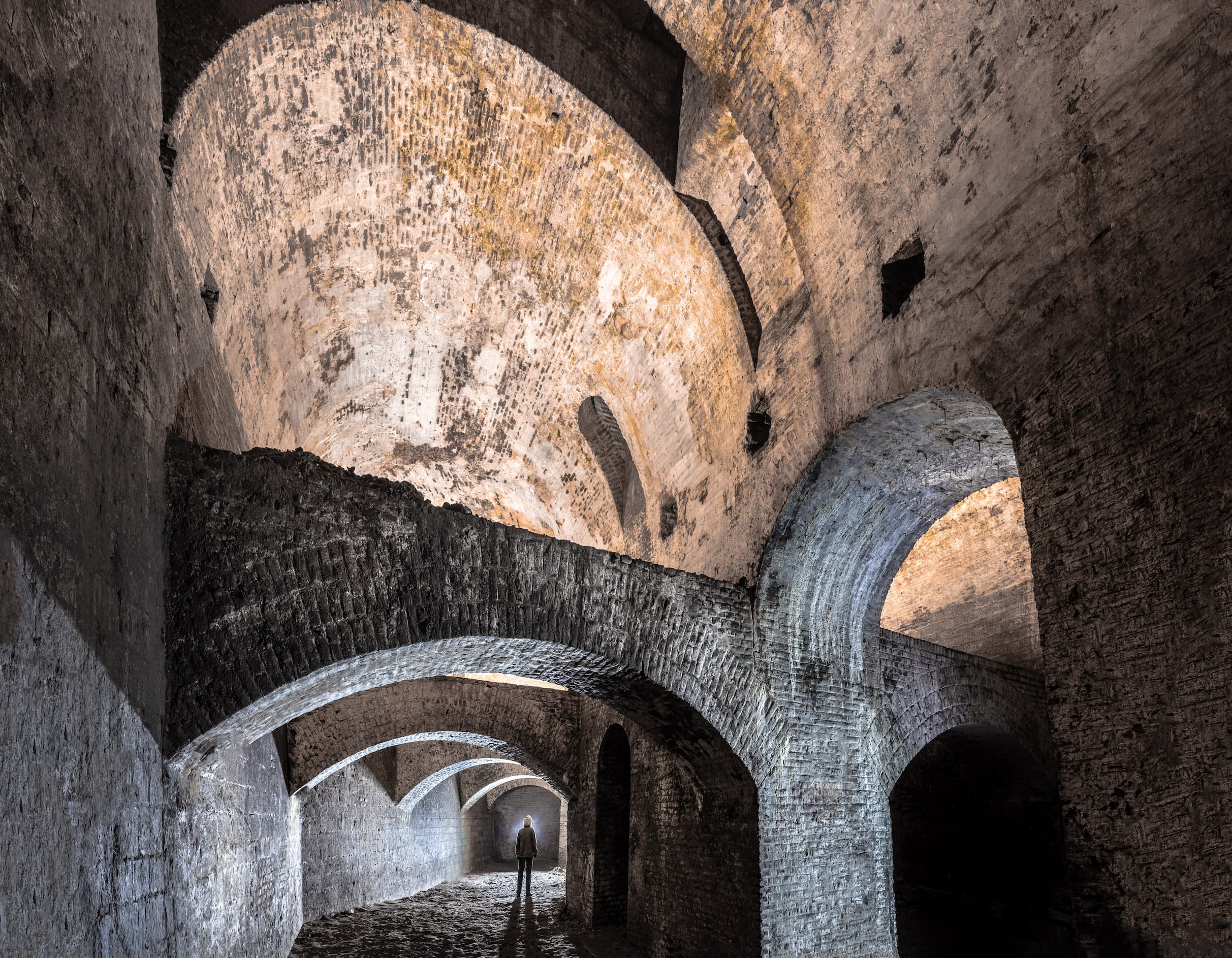
Beneath the Cambrai citadel runs a seven-kilometer labyrinth of galleries. They were never used for moving about or for storage: they were dug for listening. In a fortress of the 16th century, the most dangerous attack came from below, and the only defense against it was to go deeper than the attacker.
The citadel of Charles V
In 1543, Emperor Charles V decided to build a citadel at Cambrai. The aim was twofold: to strengthen the border against the Kingdom of France and to keep in check an episcopal city that intended to remain autonomous. A citadel, at that time, watched its own inhabitants as much as the enemy outside.
The design was entrusted to the Italian engineer Donato de’ Boni, who applied the principles of bastioned fortification then becoming established: an irregular quadrilateral reinforced at the corners by four bastions, adapted to the relief of the Mont des Bœufs. Walls became lower and thicker to absorb artillery fire, blind spots disappeared, and the ditches became the real battlefield.
The fortress gained a reputation for invincibility that held until the siege led by Louis XIV in 1677. Once under French control, the stronghold was strengthened further: the faces of the bastions were enlarged, the ditches widened, and the underground network extended accordingly.
Listening to the enemy dig
Siege warfare is fought underground. The besieger drives a mine gallery under a bastion, places a powder charge in it and blows up the rampart to open a breach. The only counter is to intercept it first: this is the countermine.
The principle is acoustic. From the ditches, the defenders dig a network of stone-vaulted galleries, pierced with loopholes and vents, radiating beneath the glacis. Lookouts take turns there in silence, an ear against the wall or against a stretched drum, to pick up the dull, regular sound of the enemy’s picks. Once the direction and distance have been estimated, a branch is dug toward the enemy gallery and a charge is set off in a mine chamber to collapse it before it reaches its target.
Through successive extensions over the centuries, this network eventually formed a true labyrinth of nearly seven kilometers. It is one of the few countermine systems of this scale open to the public in France. On the same techniques applied in the First World War, see also our page mines and countermines.
What remains
The citadel was dismantled at the end of the 19th century, when bastioned fortification became obsolete and towns wanted their land back. What survives is the Porte Royale, the monumental entrance, the arsenal, the powder magazines, and above all the entire underground network, which interested no one and so came through time undamaged.
Cambrai also has an underground world much larger than the citadel alone: medieval cellars, refuges, and shelters used during both world wars, in a town that was on the front line in 1914-1918: the Battle of Cambrai, in November 1917, saw the first massed use of tanks.
Sources: Cambrésis tourist office / Destination Cambrésis; Ville d’art et d’histoire, “La citadelle, Cambrai” file; town of Cambrai.
This tour is part of the catalogue of virtual tours of underground heritage.