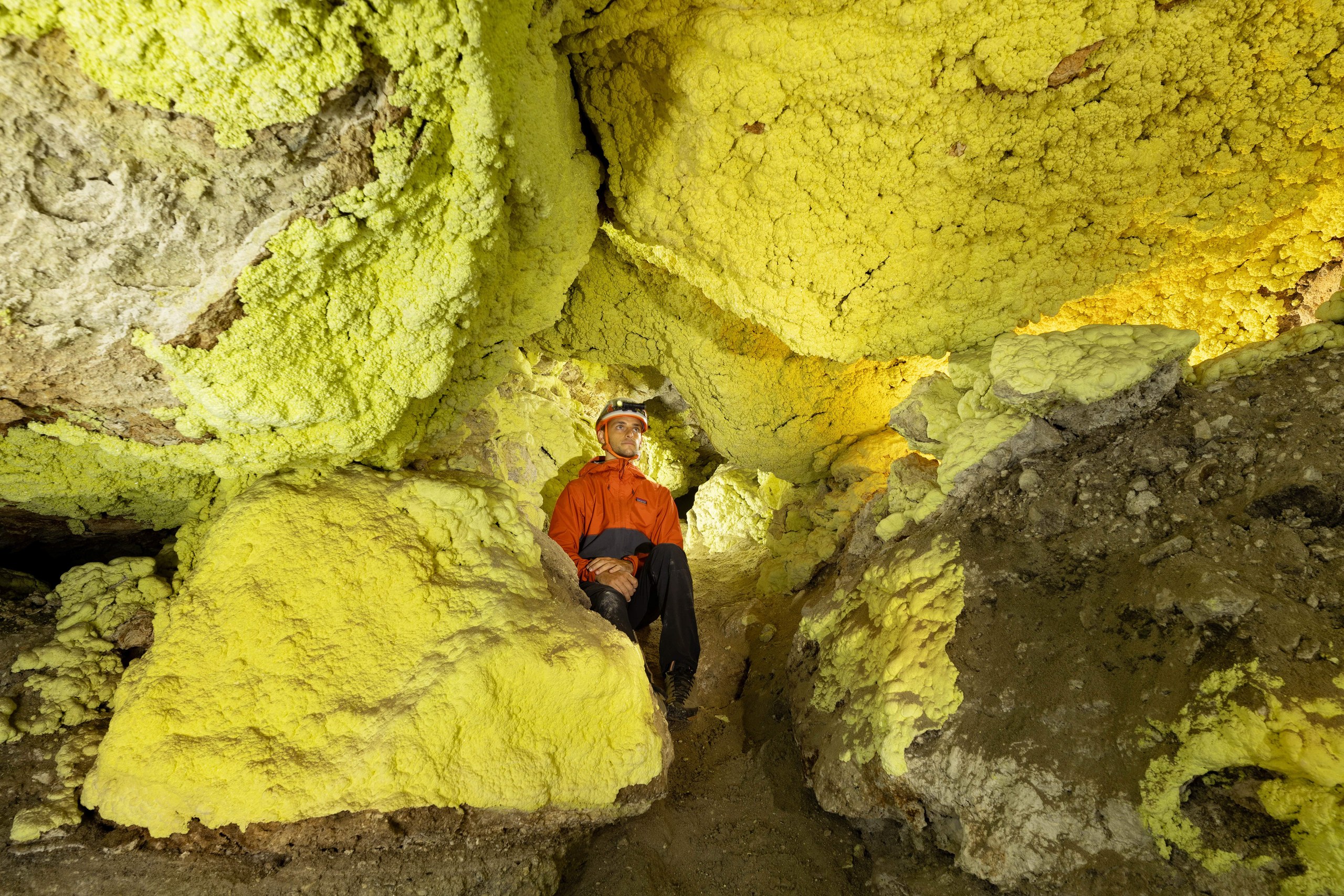
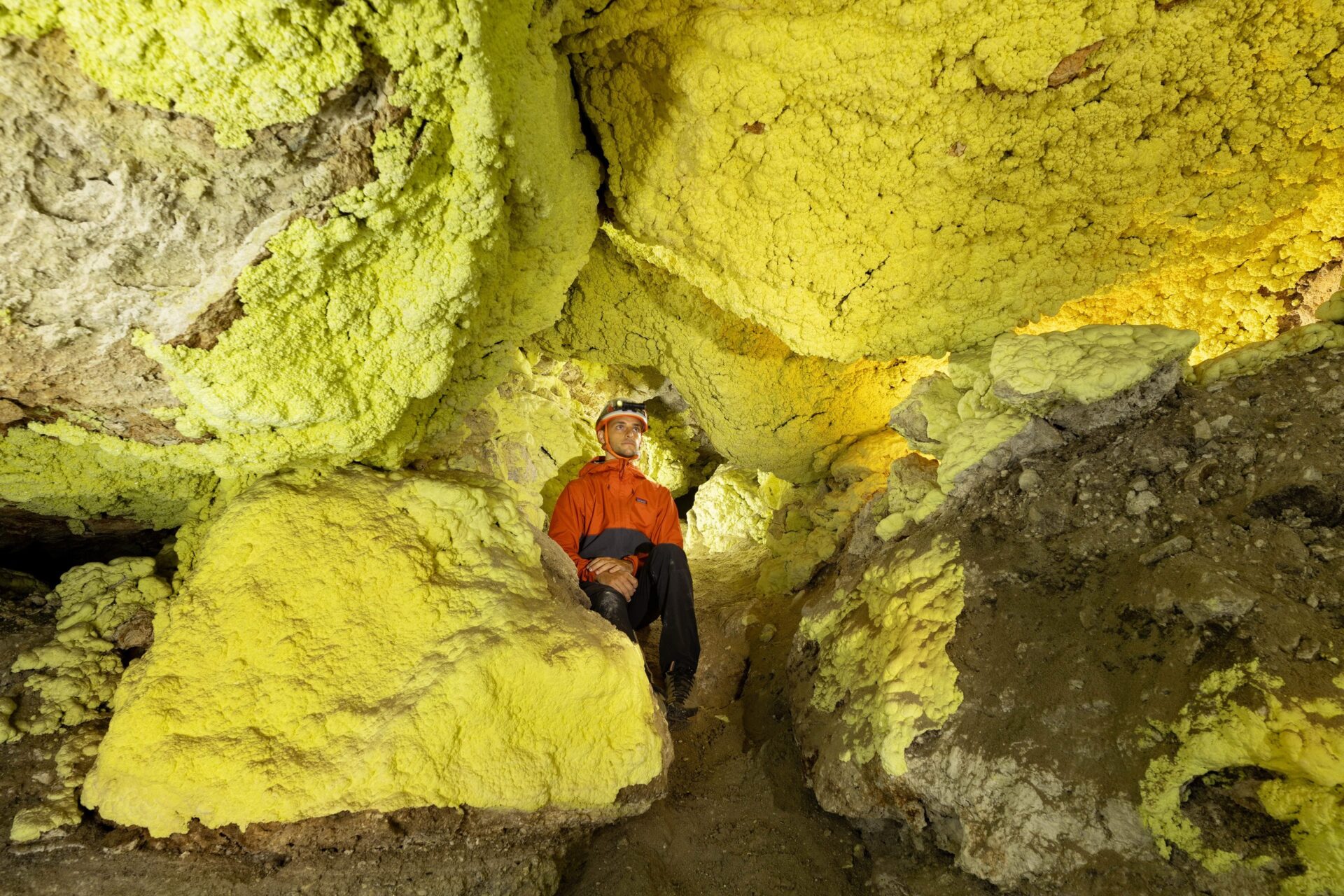
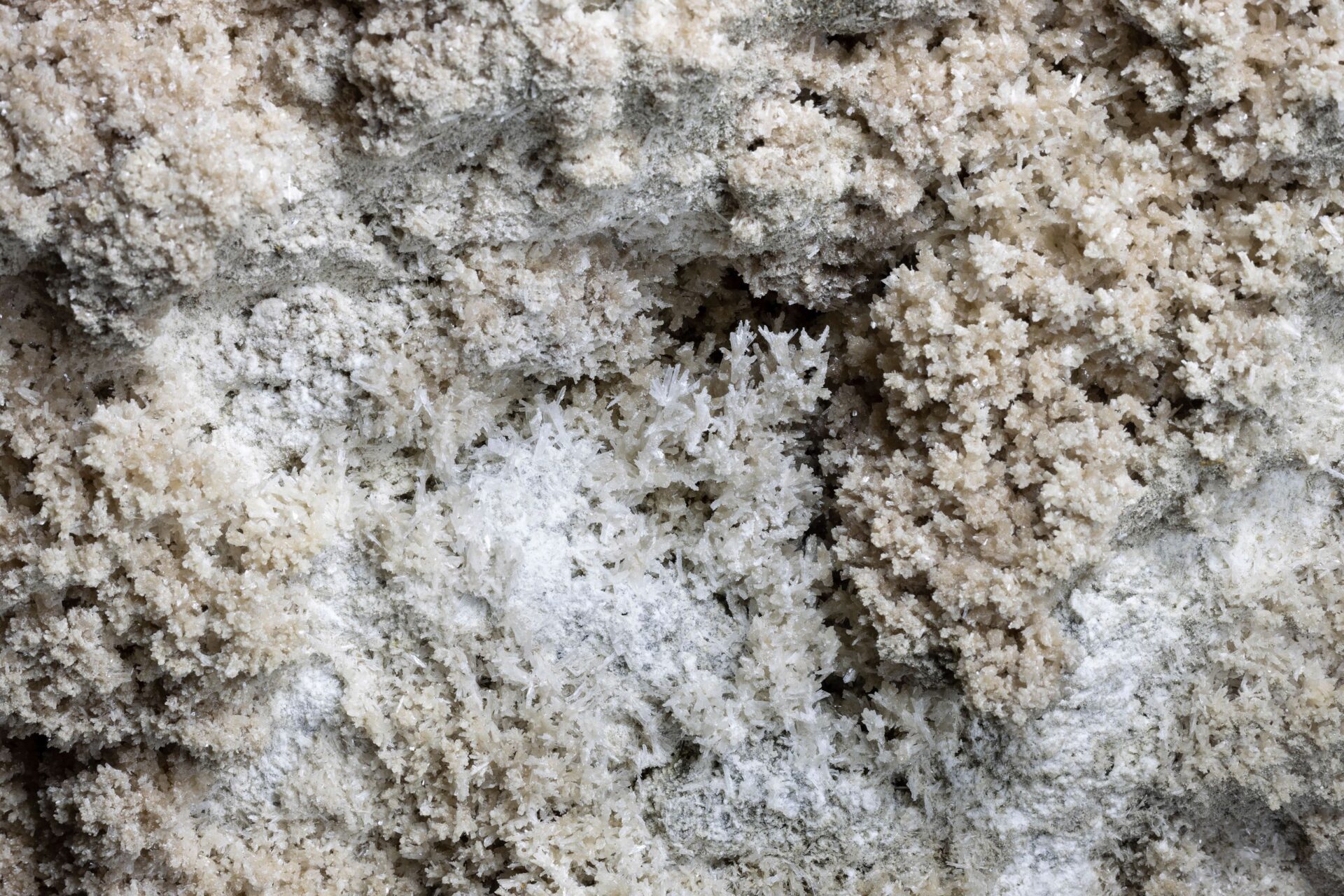
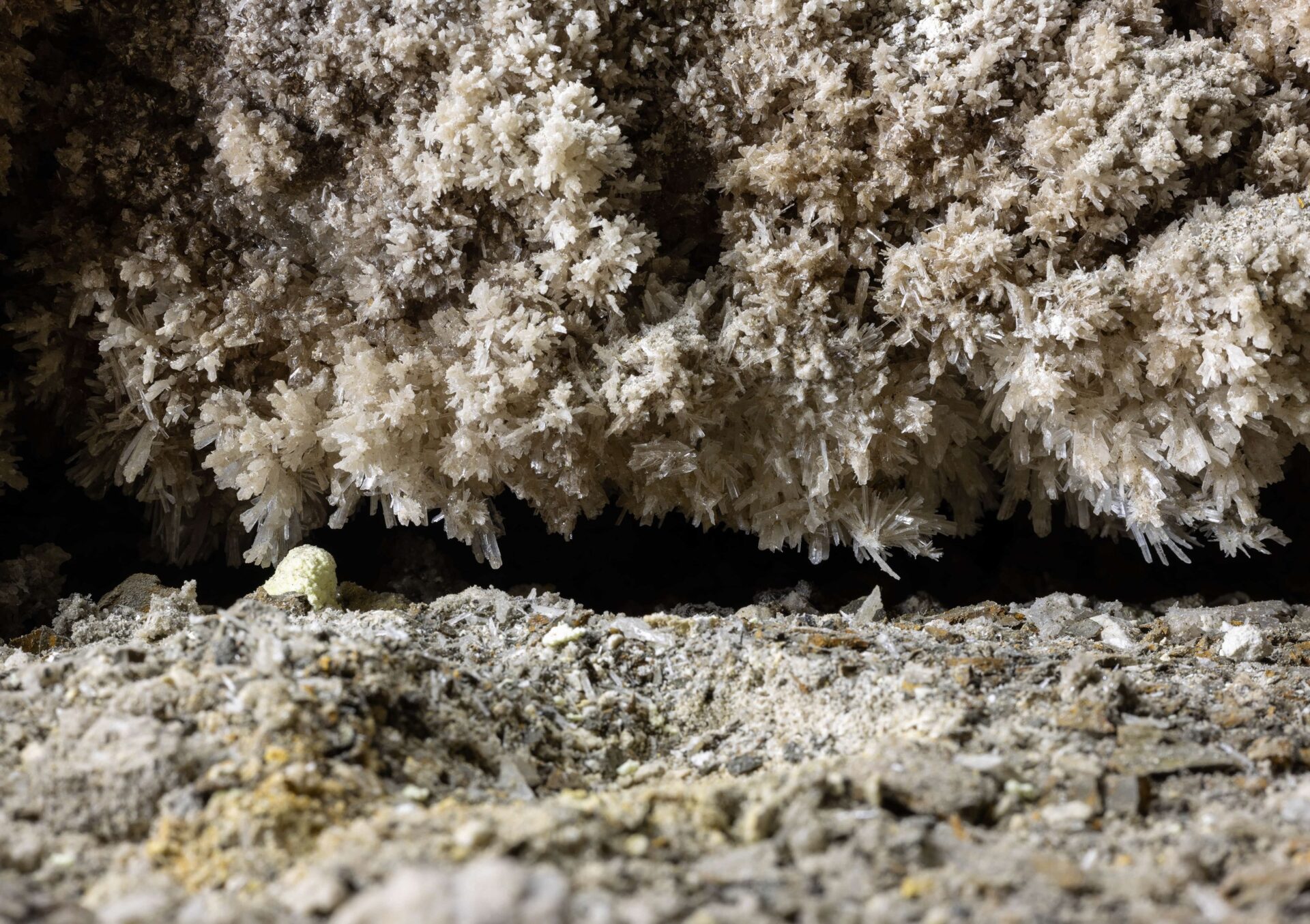
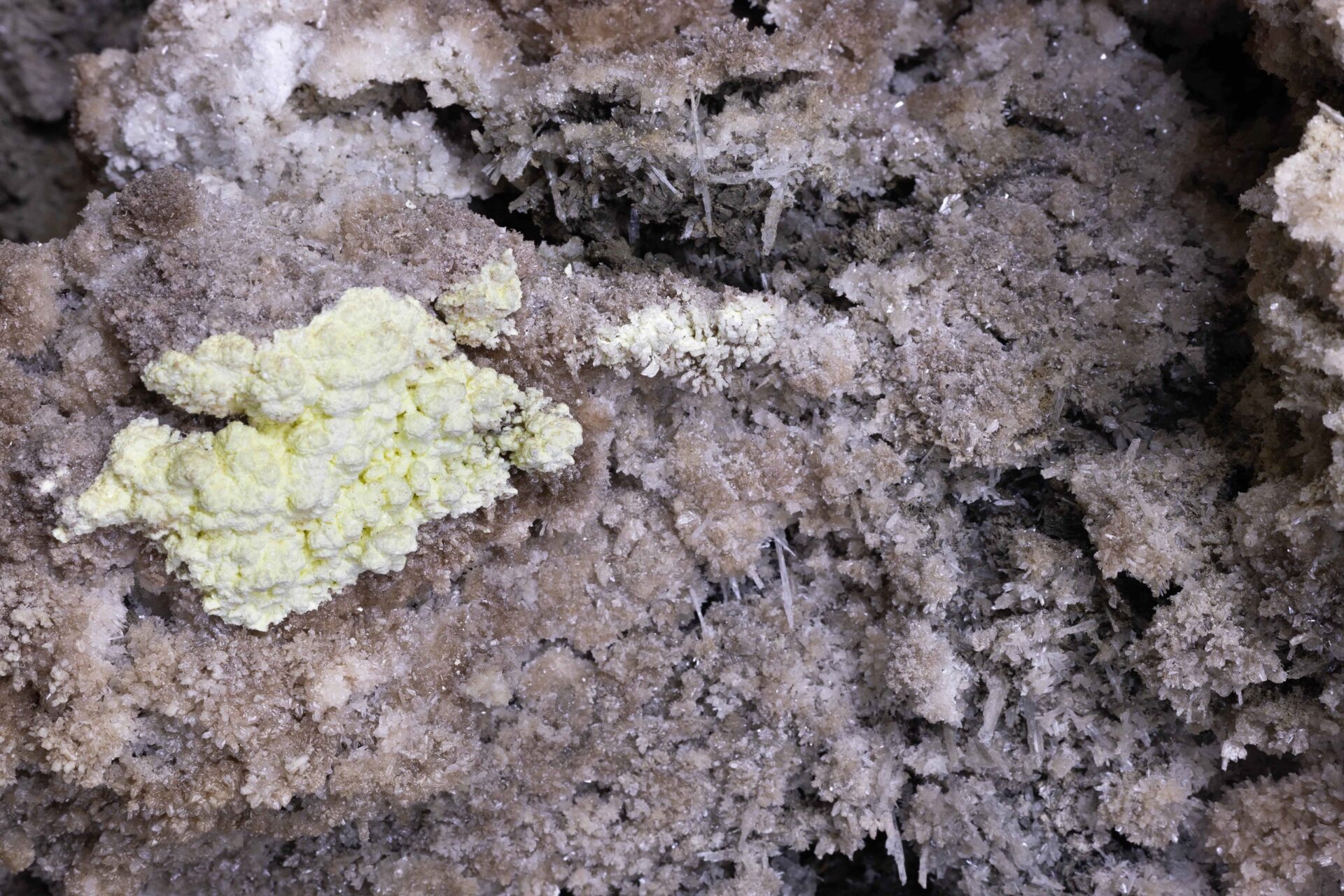
The sulfur and gypsum cave in Sicily extends over a total length of 140 m in limestone of Messinian age (Upper Miocene: between 5.97 and 5.33 Ma) and is characterized by the spectacular presence of concretions and crystals of native sulfur and secondary gypsum. The sulfur occurs on the walls and ceiling as crystals up to 1 cm long and as microcrystalline concretions one centimeter thick. The gypsum is present as acicular, prismatic and fibrous crystalline aggregates made up of crystals up to 3 cm long.
A cave carved by acid
The cave displays karst morphologies caused by acid attack on the limestone, not by the usual dissolution by flowing water. The presence of an almost static water table in the system is thought to have favored evaporation/condensation and corrosion/precipitation processes, which would have produced the mineralization of native sulfur and gypsum inside the cave.
The gypsum formed through condensation-corrosion by sulfuric acid on the cave walls, while the sulfur concretion most likely formed where H₂S and CO₂ were degassing below the water surface, the H₂S partially oxidizing to sulfur.
Because of the widespread presence of spectacular crusts of sulfur and gypsum crystals, the cave is a rare and valuable geosite that should be actively protected and preserved.
The sulfur cave in pictures
The sulfur cave, photo 1 of 4
The sulfur cave, photo 2 of 4
The sulfur cave, photo 3 of 4
The sulfur cave, photo 4 of 4
This tour is part of the catalogue of virtual tours of underground heritage.