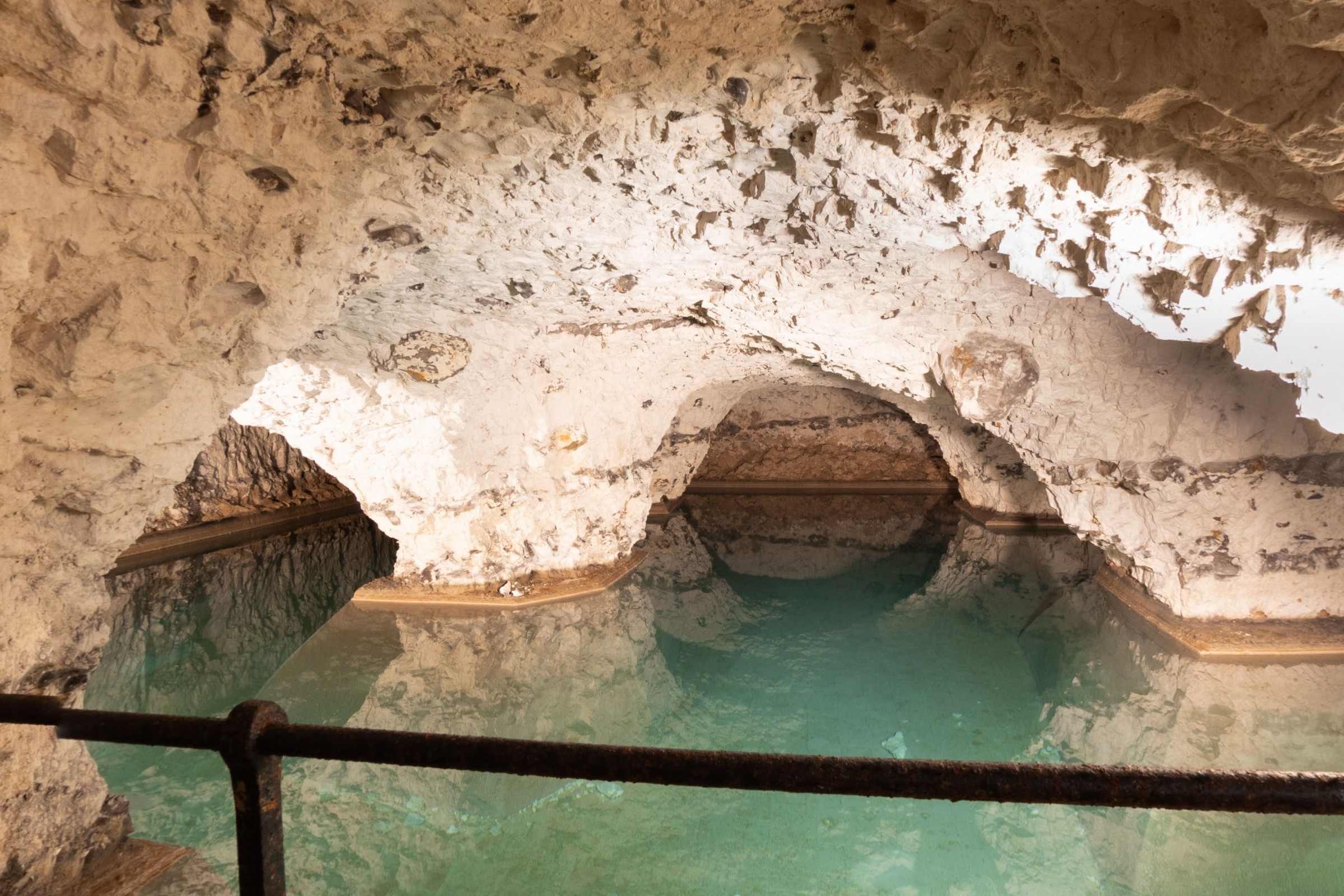
For four years, a mason dug a tunnel two and a half kilometres long into a chalk cliff, alone and with a pickaxe. The townspeople took him for a madman. Yet from 1840 to 2006 his gallery supplied the town with drinking water. The tour stops in the reservoir fitted out inside the cliff after his death, a 200 cubic metre basin cut into the chalk.
A tunnel dug by hand
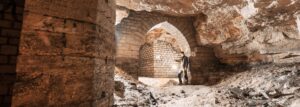
In the 19th century the town needed more and more fresh water. Its population was growing, and so was its industry, fishing above all. Between 1836 and 1840, a mason bored into the cliff to tap the water of its springs. He worked with a pickaxe, by the strength of his arms alone, and carted the rubble out in a wheelbarrow. The townspeople mocked him. From 1840, the water he had tapped supplied the town, the harbour district in particular.
The reservoir
The mason died in 1848. After his death, a 200 cubic metre reservoir was fitted out inside the cliff. The basin fills a chamber cut into the chalk. Pillars left in the rock divide it into bays spanned by arches, and an iron handrail runs around it. Above the water, a float and its counterweight hang from a pulley. Reflections on the surface double the vaults and create optical effects. On either side of the chamber, the tunnel continues as narrow galleries.
The end of operation
The water of the tunnel was used until 2006. Operation then stopped because of excessive nitrate levels. The mason was recognised only years after his death, and a plaque bearing his name was placed at the town’s post office. Records of the works are almost non-existent. The town’s heritage department opens the tunnel only on rare occasions, to groups of fifteen people.
This tour is part of the catalogue of virtual tours of underground heritage.