

Underground quarries are voids dug to exploit mineral resources mainly for construction, unlike mines used for carboniferous or metallic materials. These sites extract sedimentary rocks that result from the accumulation of solid sediments or clasts deposited in superimposed layers called strata.
Photographs present the techniques used to consolidate subterranean spaces, such as masonry pillars, turned pillars, or concrete injections. They also reveal the transport systems used for stone blocks, from narrow tracks along haulage axes to historic river access and horse-drawn wooden carts.
The following themes cover the extraction, consolidation, and transport methods used in underground quarries.
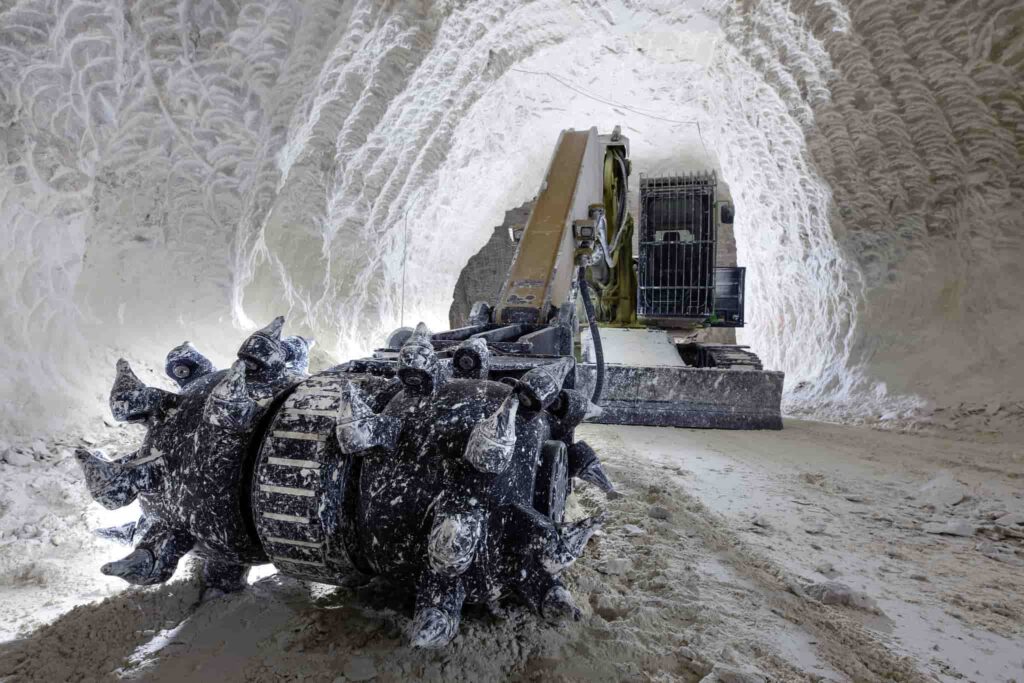
Extraction of materials
In this theme, discover how mineral resources like sedimentary rocks deposited in strata are exploited for construction.

Basement consolidation
Explore techniques used to stabilize underground voids, including masonry pillars, concrete injections and rebars.
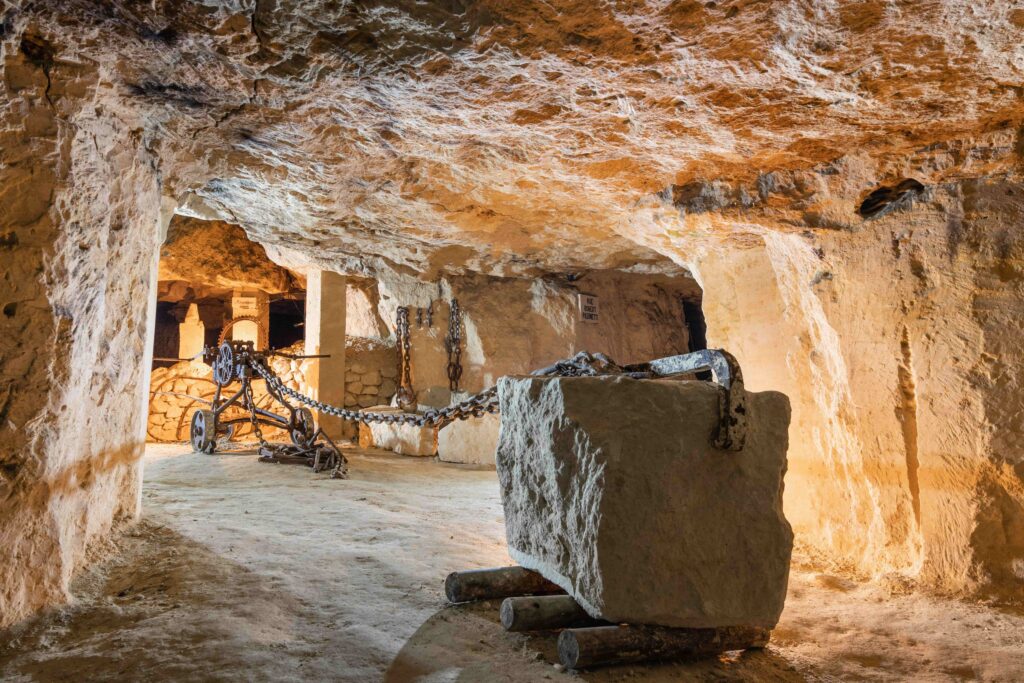
Transportation
Discover how extracted stones were transported using wooden carts pulled by horses, waterways, and narrow tracks along haulage axes.