Through a series of images and panoramas, retrace the history of a hidden heritage rich in color!
Discovering the Underground Quarries of the Massif des Ocres
In this article, we will set out to discover the underground quarries of the Massif des Ocres, a classified and protected territory.
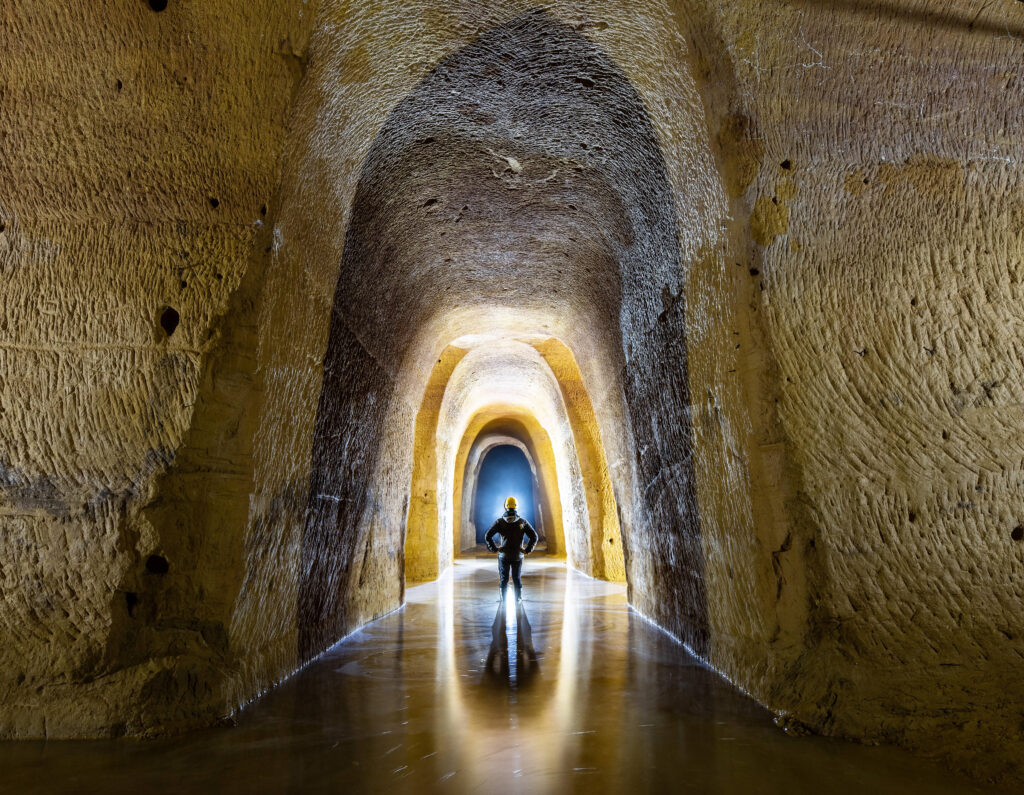
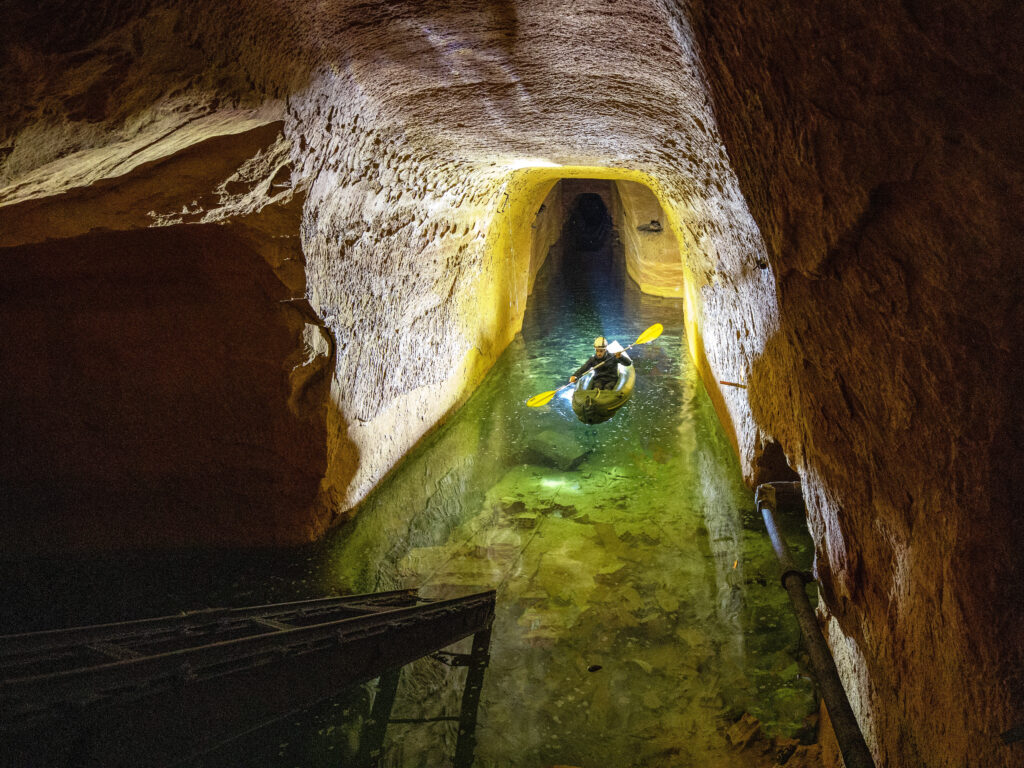
The photos taken for this article were shot in the largest deposit in France, which is also considered the richest in the world.
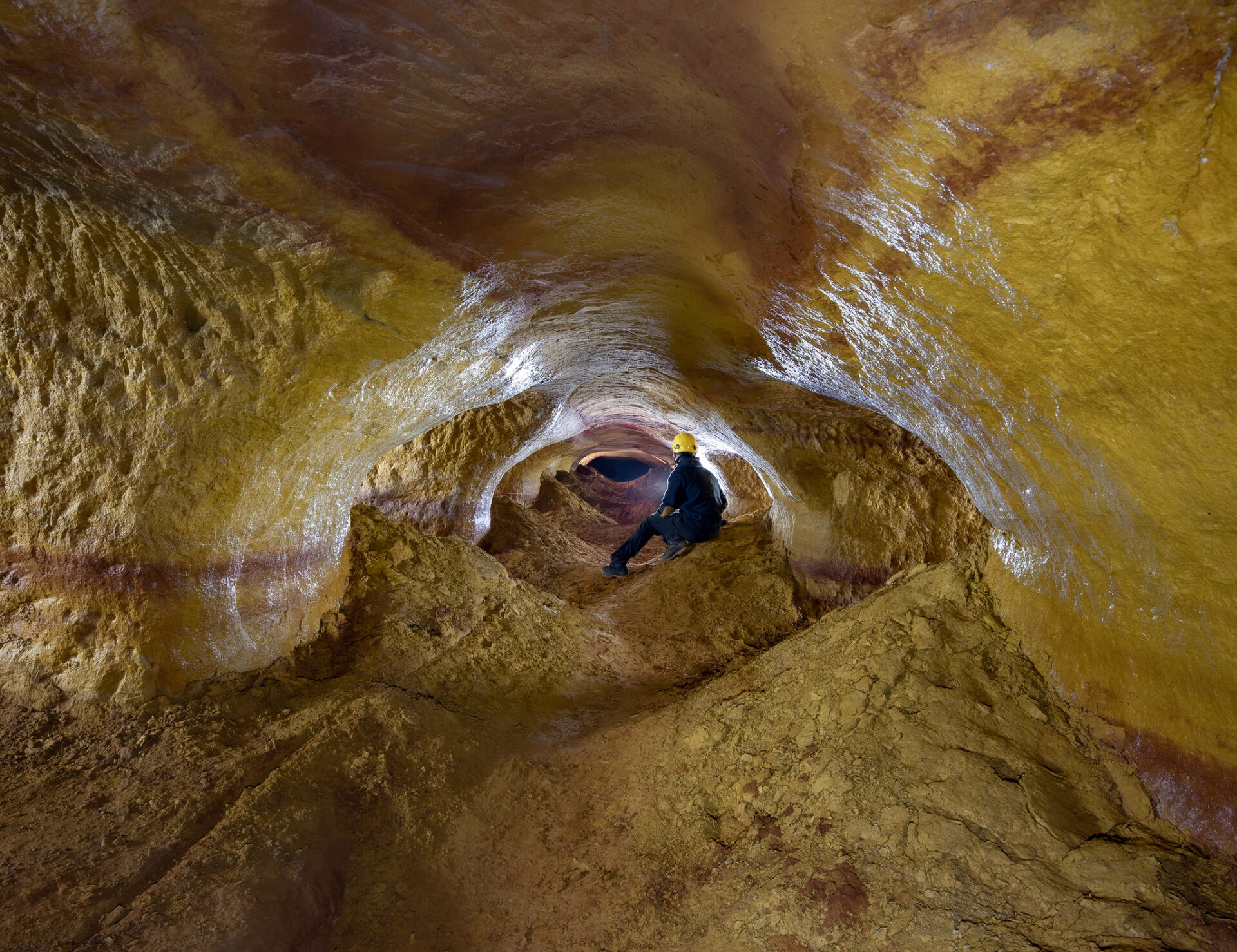
We were amazed by the beauty of these places, by these walls with their soft and warm colors.
Exploration of the Geological Basins of the Luberon Deposit
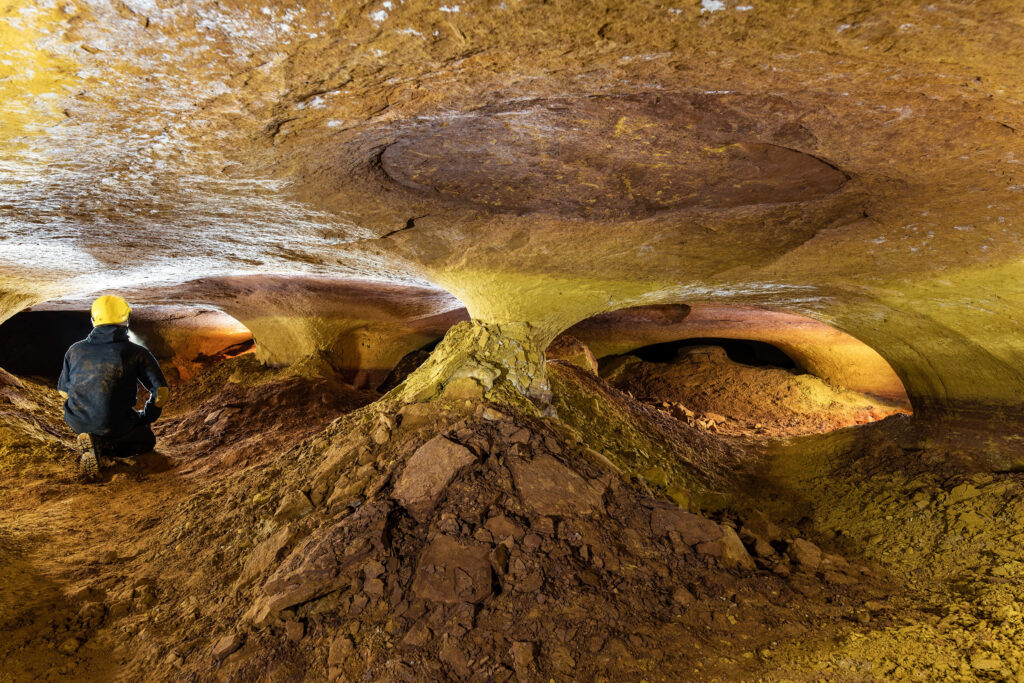
The Luberon deposit is located in two geological basins where ochre was mined. This deposit was extracted outdoors (called “open-pit”) but also underground, and it is this part that will be described here.
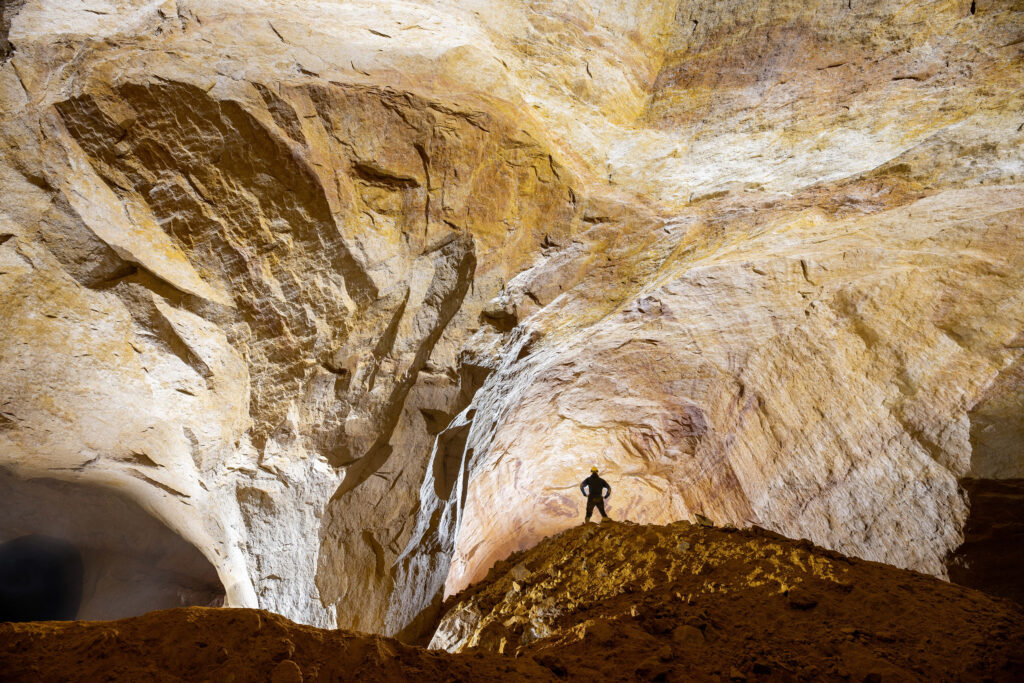
The size of the galleries varies excessively, ranging from one and a half meters to more than ten meters, quite impressive!
Ochre is a resistant, natural, and unalterable pigment. Its shades are composed of a color palette of exceptional beauty ranging from pale green to red.
Ochre is a ferric rock and owes its color to the formation of two elements:
– Pure clay (Kaolinite).
+
– iron hydroxide for the hue:
– Hematite for red ochre;
– Limonite for brown;
– Goethite for yellow.
Ochre began to attract interest from the industrial revolution (18th century) and extended into the 20th century.
In the 19th century, nearly a hundred quarries were open, as well as twenty-five processing plants.
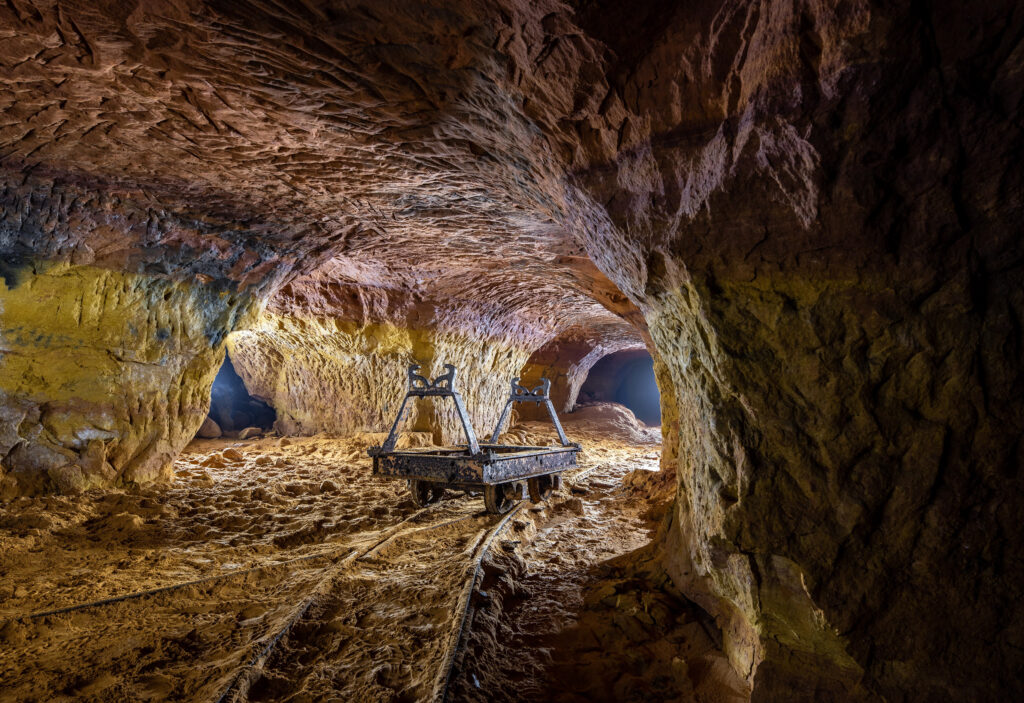
Underground miners had a miserable life. They wielded the pick, the pickaxe, and the shovel, then brought the ore out in wheelbarrows.
Their living conditions were hardly more comfortable as they worked in daily fear of collapses because the galleries were poorly consolidated and blasting was sometimes poorly controlled.
Methods of Opening Ochre Quarries
The opening of the quarries was done in several ways:
– on the hillside;
– by descents (very steep slope).
The descents allowed access to the ochre layer from the plateaus when there were no plains nearby.
These descents all had a winch at their top allowing, thanks to the mechanical cable winding device, to tow the loads of ochre placed in the wagons, out of the quarries.
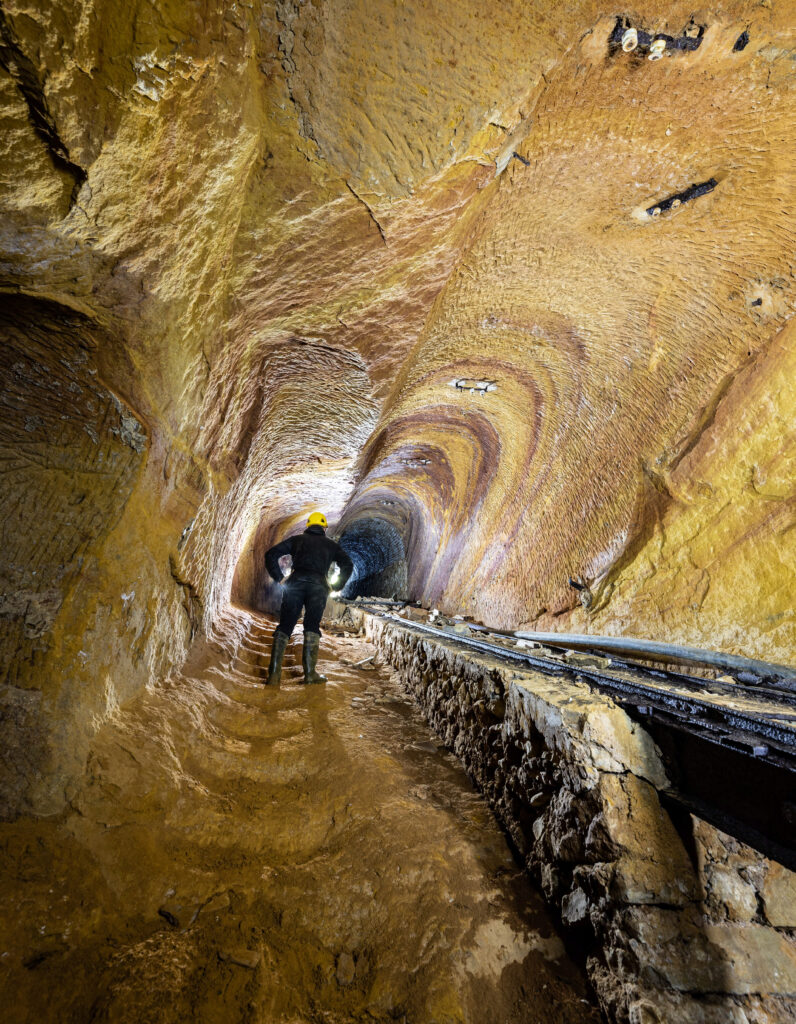
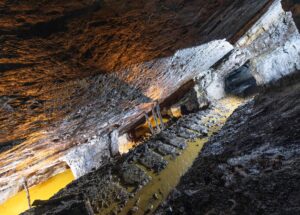
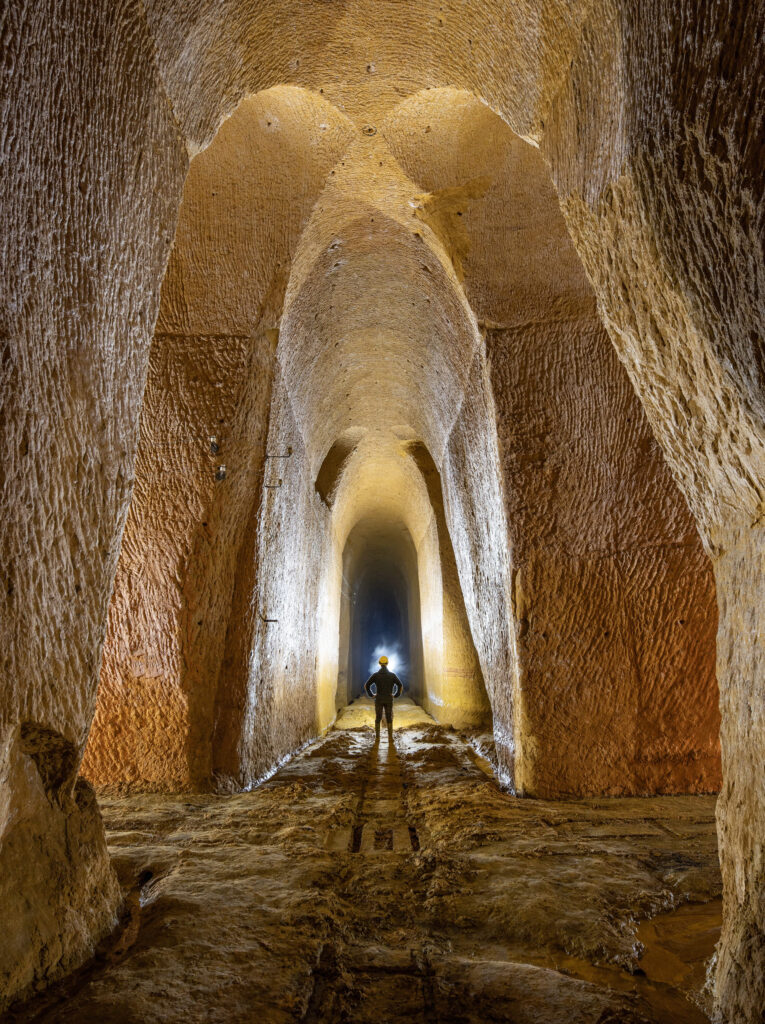
The descent crosses very colorful layers
Discovery of the deposit’s extraction structures
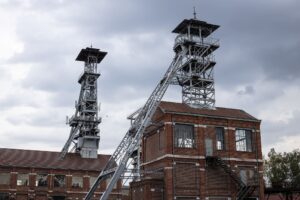
On the surface, we discovered an abandoned building. Inside it is a headframe (an assembly of planks and beams supporting pulleys) that allowed descending to the bottom or coming back up.
This well is now flooded and it is no longer possible to go down there.
Extraction Methodology in the Quarries
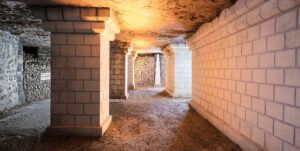
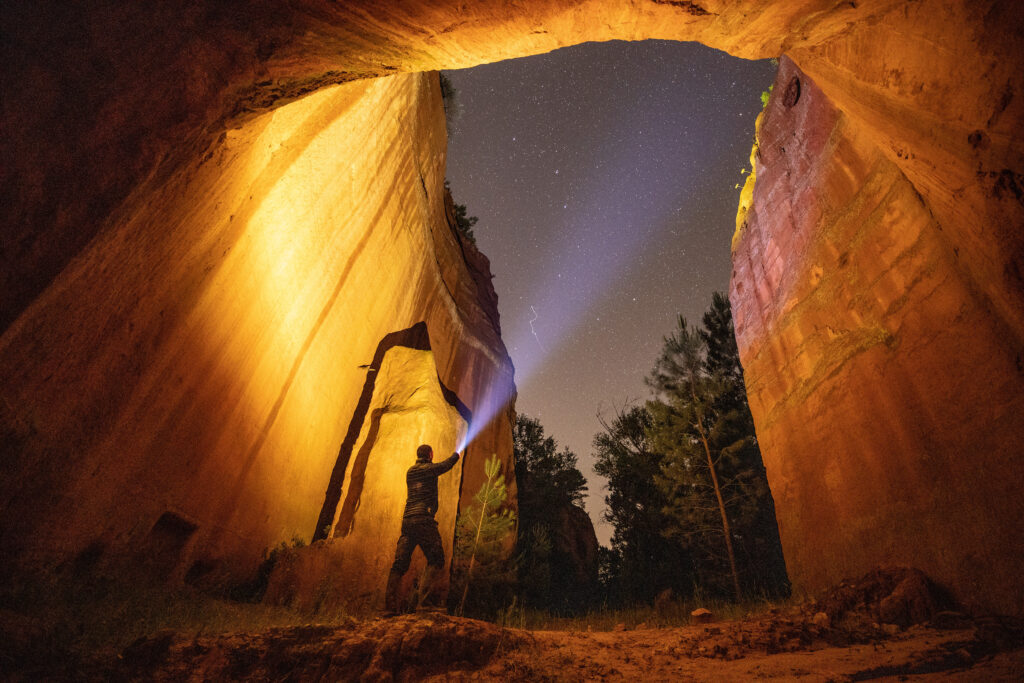
The quarries were carved from top to bottom. The quarryman began by carving the shape of the vault, then a trench was dug on each side going down. This outlined a block that remained in the center. It ended up being dynamited to be extracted. This is why the walls are carved very straight despite the use of explosives.
The quarrymen often extracted in too large quantities, leaving only a few pillars to support the roof. This resulted in numerous collapses of galleries.
The Rise and Fall of Ochre Mining
Ochre mining was booming in the early 1900s and reached up to 40,000 tons of ochre extracted in 1928, with 90% exported worldwide.
This dropped sharply in 1929 with the arrival of synthetic dyes, and only a few operations remained.
Many quarries were therefore abandoned, but not for very long because their advantages interested mushroom growers.
Indeed, the quarries are damp, dark, and the temperature is constant. They are therefore ideal for the development of mushrooms.
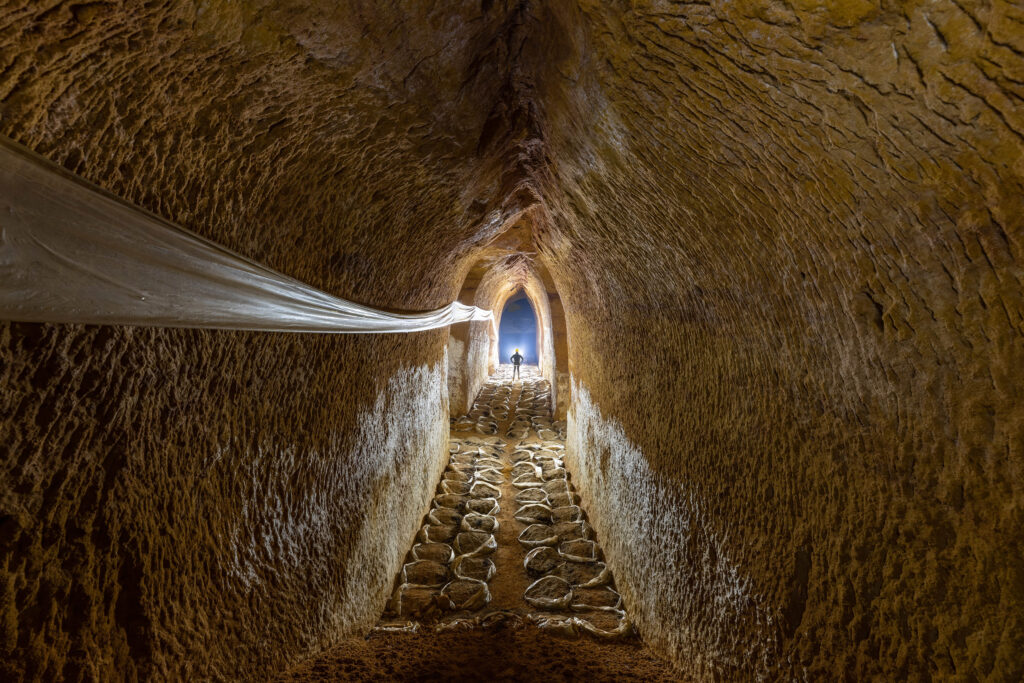
Ventilation (via the duct on the top left) was essential.
Some anecdotes about ochre:
In decorated caves such as Lascaux, Chauvet, or Cosquer, it was ochre that was used to create the cave paintings!
In the 18th century, it was Jean-Étienne Astier who had the idea of washing the ochreous sand present on the walls of his region to extract the ochre pigment.
Ochre has been used in many everyday objects, mainly for coloring but also as a polishing abrasive, protection from the sun and insects (especially among the Himbas in Africa), preservation of animal skins, or even as a waterproofing agent.
It has been determined that Neanderthals (around 250,000 years ago) were already using red ochre.
Sources:
https://www.ocres-de-france.com/fr/content/33-l-ocre
https://www.exxplore.fr/pages/Carrieres-Ocres.php
https://www.provence7.com/portails/couleurs/ocre-dans-tous-es-etats