Water reservoirs in Malta
In Malta, water has always been scarce and precious. Since prehistoric times, inhabitants dug cisterns into limestone. They then applied a waterproof plaster to retain rainwater.
Cisterns dating back to the time of the megalithic temples still exist across the archipelago. They bear witness to an ancient mastery of water collection and storage.
Malta has neither large lakes nor permanent rivers. The inhabitants therefore depended on rainfall and underground reserves.
The archipelago has two main types of aquifers. Perched aquifers are located above sea level. They are mainly found in the west of the island. Coastal aquifers are larger, but also more difficult to exploit.
Over the centuries, the Maltese improved their catchment techniques. The Arabs encouraged the settlement of villages near springs, wells, and cisterns.
Farmers used vertical wells, called spiera. They also used water wheels, the sienja, to irrigate crops.
The Knights of St. John reinforced this network. They mandated wells in the houses of Valletta. In the 17th century, they also built aqueducts to supply the capital.
During the British era, demographic growth accelerated the modernization of the network. Authorities installed motorized pumps, pumping stations, and new pipelines. They also built underground reservoirs.
Seawater distillation appeared as early as 1881. From the 1980s onwards, reverse osmosis became the main source of drinking water in the archipelago.
Today, some cisterns remain in service. Others are abandoned or used as storage spaces.
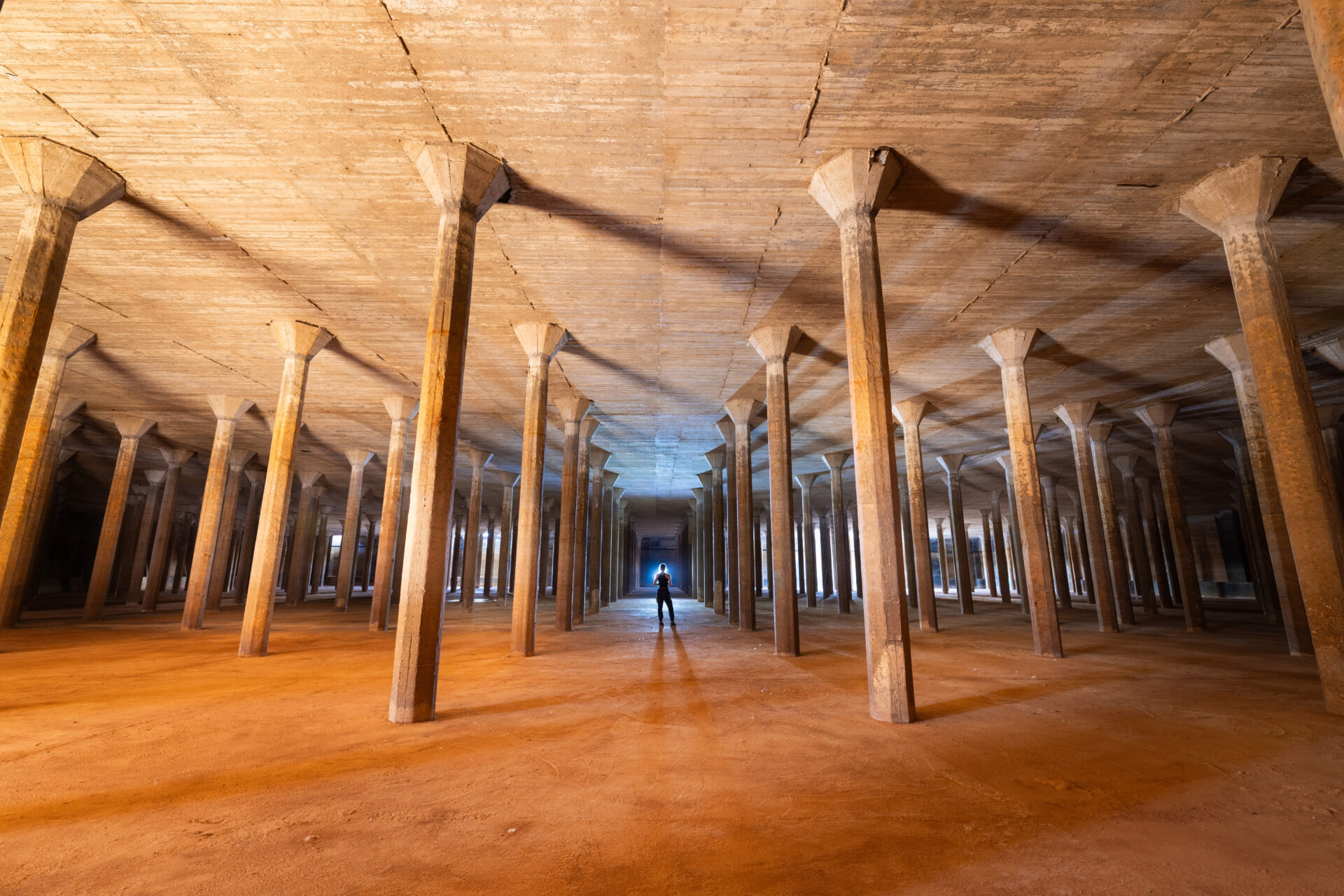
Ċisterna ta’ Wied il-Ġebel
Built in 1956, this reservoir is the largest in Malta. It can hold up to 90 million liters of water.
It receives water from reverse osmosis in Cirkewwa. A pumping station and several springs also supply it.
Its impressive red concrete pillar is one of its most recognizable features.

Ġibjun ta’ Santa Marija tal-Blat
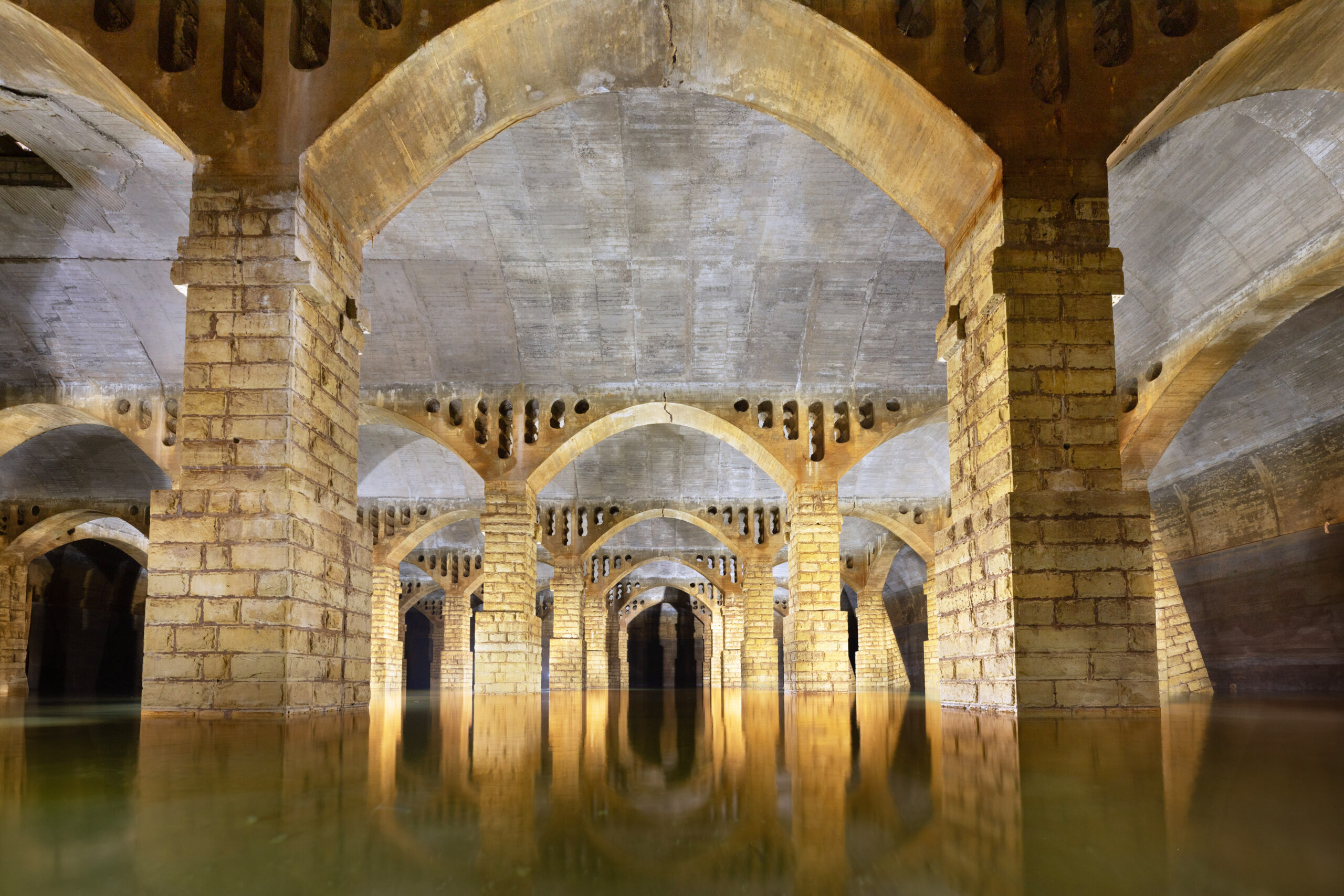
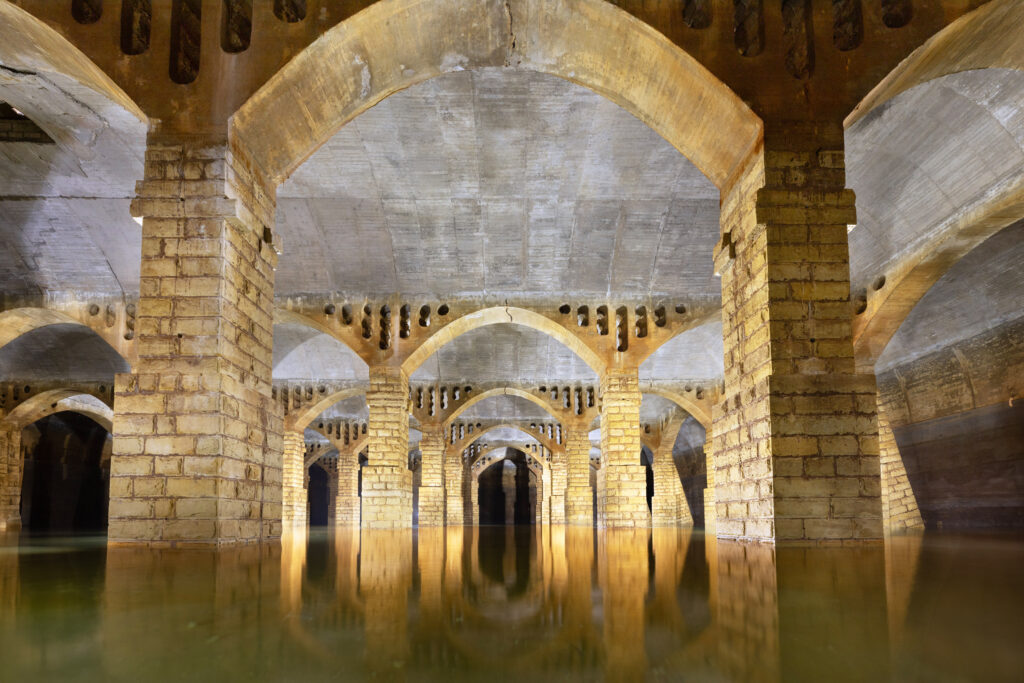
This reservoir uses a particularly elaborate concrete structure. Barrel-vaulted ceilings cover the structure. Arches reinforce the whole assembly.
A steel grid consolidates the structure. Stone pillars support the vaults. They rest on concrete foundations.
The project dates back to 1905. At the time, it was intended to supply water to the Cospicua shipyards. This reserve was primarily meant for firefighting.
The designers planned to use groundwater exclusively. The neighboring pumping station was to ensure the supply.
This reservoir was intended to supply the harbor area, located at a great distance. Its altitude allowed sufficient pressure to be created through gravity.
The cistern near the cemetery
The builders chose a plot of land located outside the cemetery. They first dug a quarry there. They used the extracted stone to build the chapel.
They probably used the rest of the stone for the surrounding walls and other structures. After extraction, they converted the quarry into a cistern.
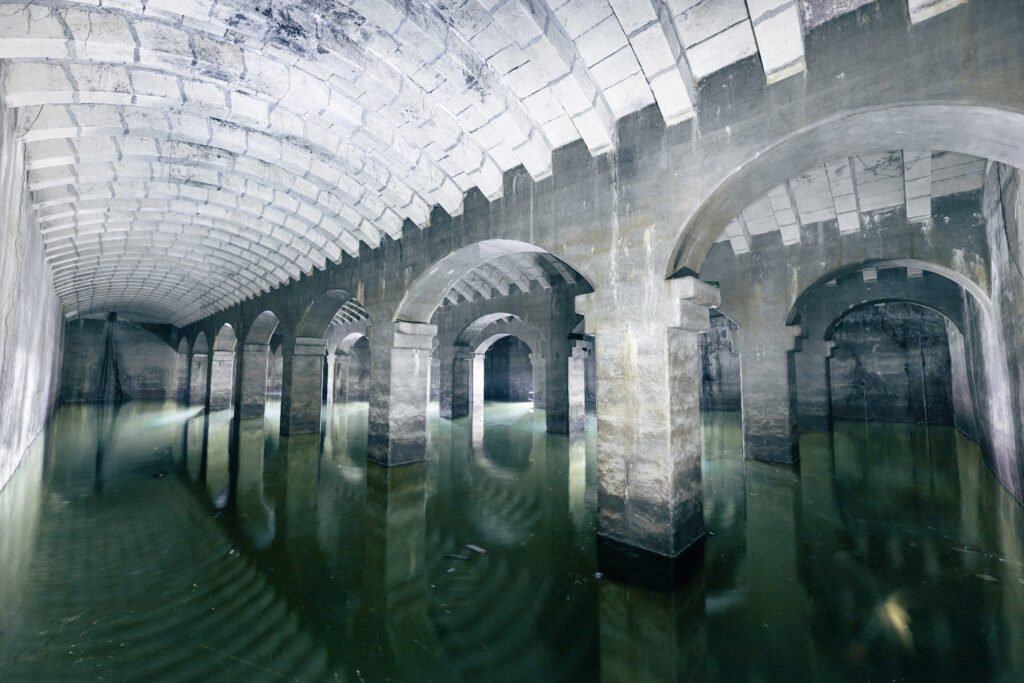
Arches and pillars cover the former excavation. Today, they form a vast Gothic-style underground reservoir.
This choice served two objectives. The elevated position facilitated the transport of stones to the construction site. The slope helped workers transport the blocks.
The site also made it possible to collect water coming from neighboring valleys and roads. Finally, its height allowed the cemetery to be supplied by gravity.
Il-Ġibjun l-Antik ta’ Għar ir-Riħ
The builders chose a plot of land located outside the cemetery. They first dug a quarry there. They used the extracted stone to build the chapel.
They probably used the rest of the stone for the surrounding walls and other structures. After extraction, they converted the quarry into a cistern.
Arches and pillars cover the former excavation. Today, they form a vast Gothic-style underground reservoir.
This choice served two objectives. The elevated position facilitated the transport of stones to the construction site. The slope helped workers transport the blocks.
The site also made it possible to collect water coming from neighboring valleys and roads. Finally, its height allowed the cemetery to be supplied by gravity.
This tour is part of the catalogue of virtual tours of underground heritage.