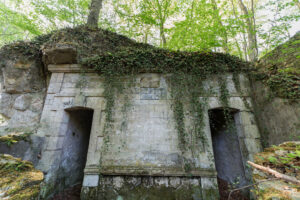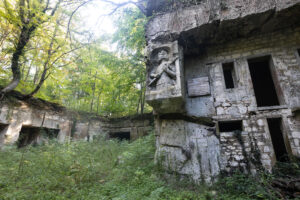
The term “Poilus” refers to the French soldiers who fought on the various fronts of the First World War, particularly those who lived in the trenches. The name “poilu” refers to their physical appearance, characterized by beards or moustaches often neglected due to the difficult conditions in the trenches.
However, some of these creutes served civilians to protect themselves from bombardments and find shelter following the destruction of their village by bombs.
Resting
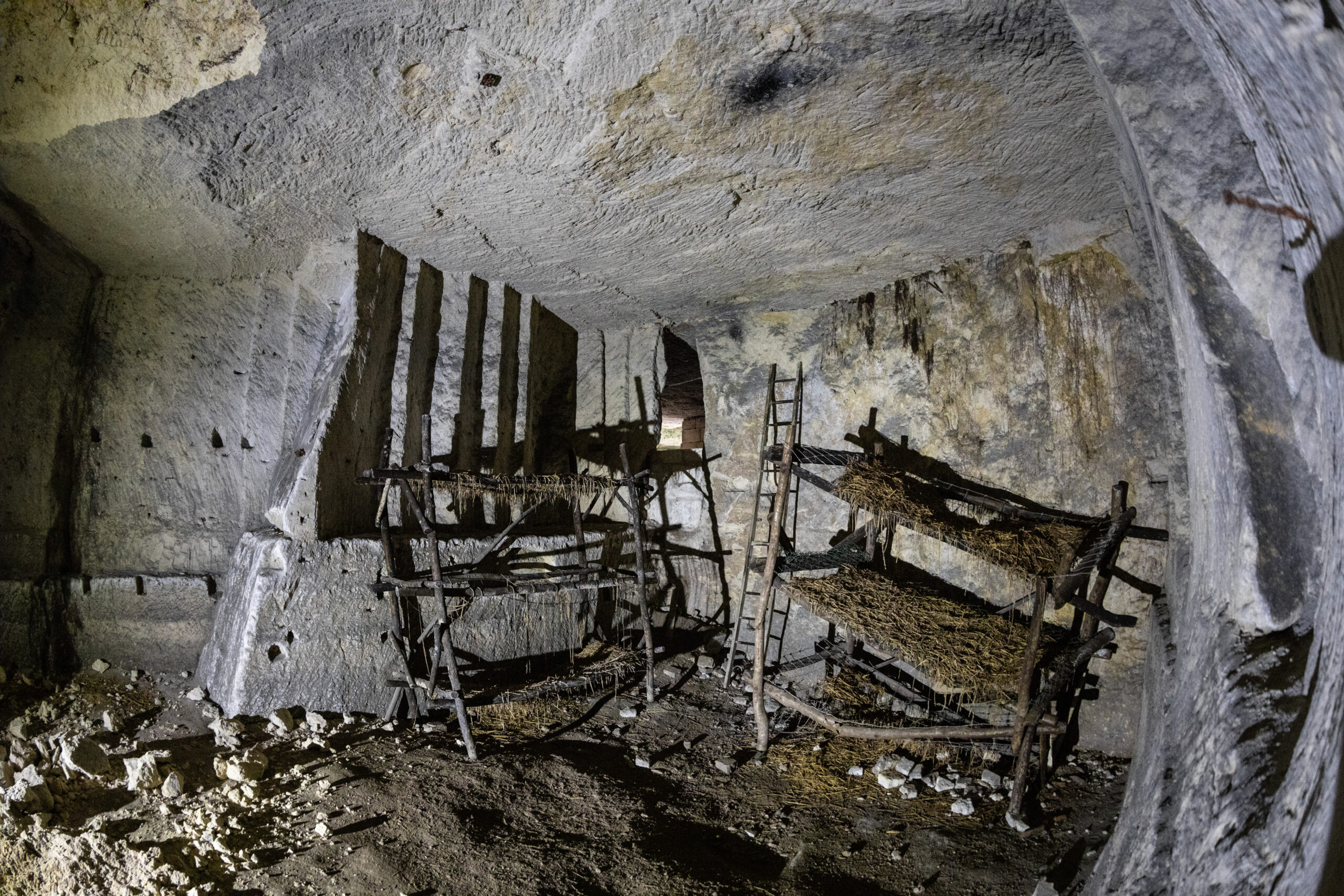
These creutes, unlike the trenches, were places of rest, but organized in a more rudimentary way than for the officers. Most of the creute was usually dedicated to soldiers’ sleeping quarters. They all lived in large spaces at the back of the creutes, directly on the ground, on straw, or on wooden bunk beds, with wire mesh as a bed base for the luckiest.

Kitchens intended to feed the troops were also present. Ovens with multiple hearths built from refractory brick could sometimes be seen. Kitchen ventilation was also a requirement, achieved by using the former ventilation wells of the quarries. Tables and chairs were often borrowed from neighboring villages, but their trace is hard to perceive today due to the wear of time. Occasionally, the regiment had a bread oven.
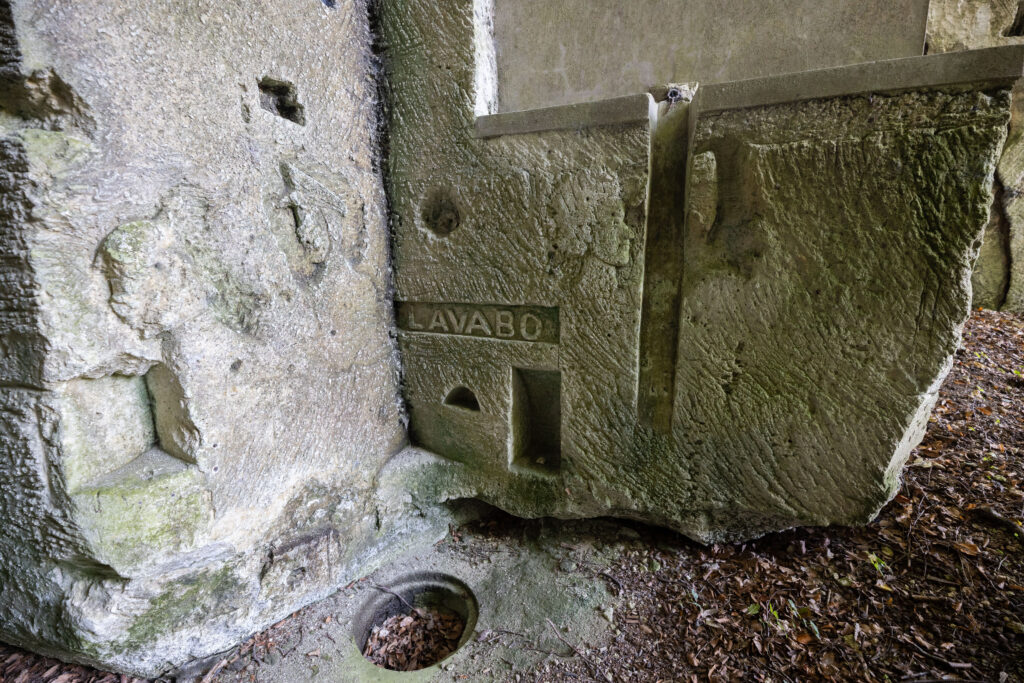
Few creutes had a water reservoir and even fewer had sinks. It seems these facilities were reserved for officers and aid stations. The poilus mainly collected water from streams, springs, or rainfall.
As for the latrines, they were rudimentary, usually a pit dug into the ground. These areas were signposted within the creutes and had to be emptied and cleaned with lime daily.
It should be noted that creutes were not associated with rest for men alone, but also for their mounts. Many facilities designed for horses can be found, such as partitioned stables or large spaces equipped with tethering rings, tack rooms, and drinking troughs carved directly into the rock.

Troughs carved into the stone

Underground stable
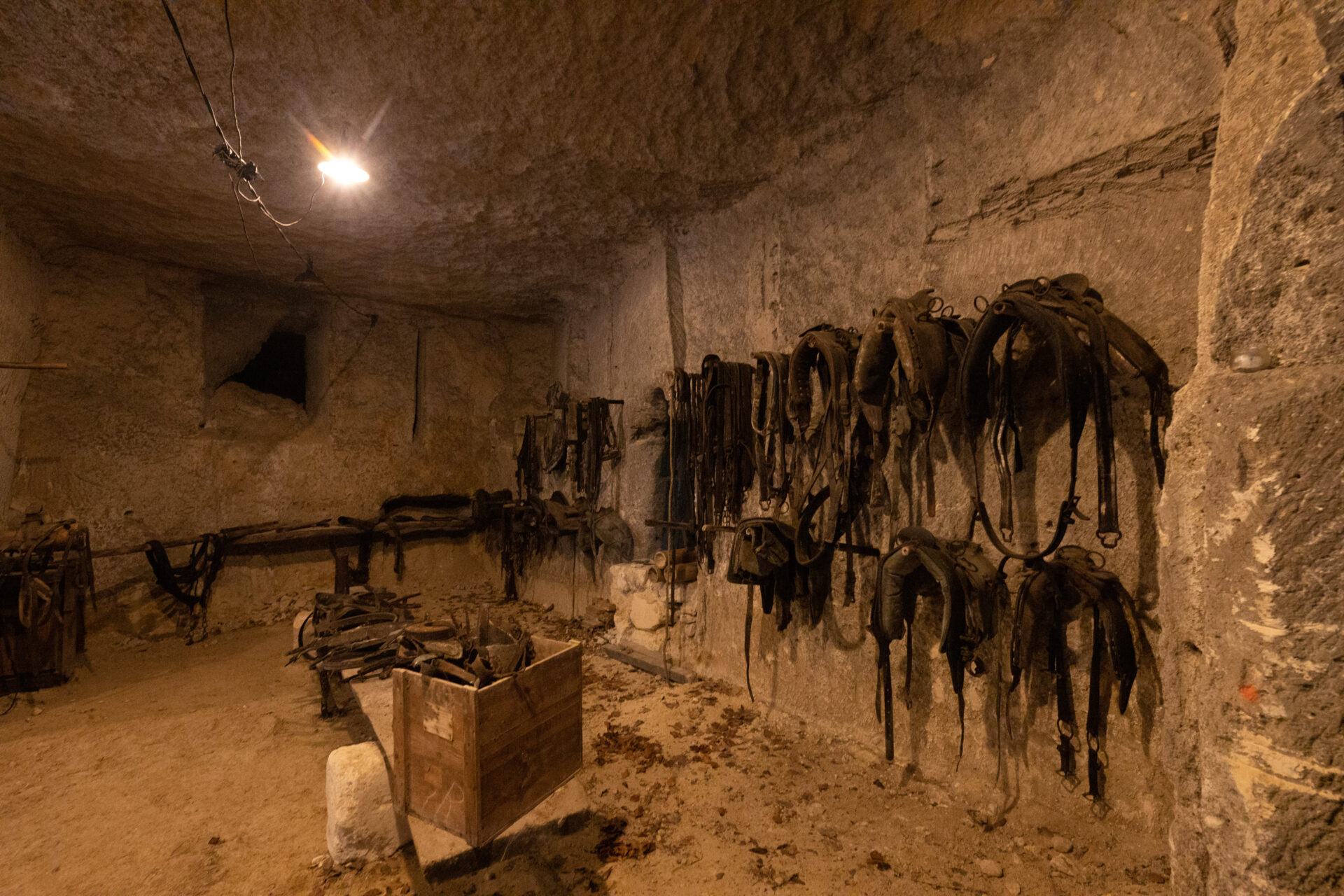
Stable
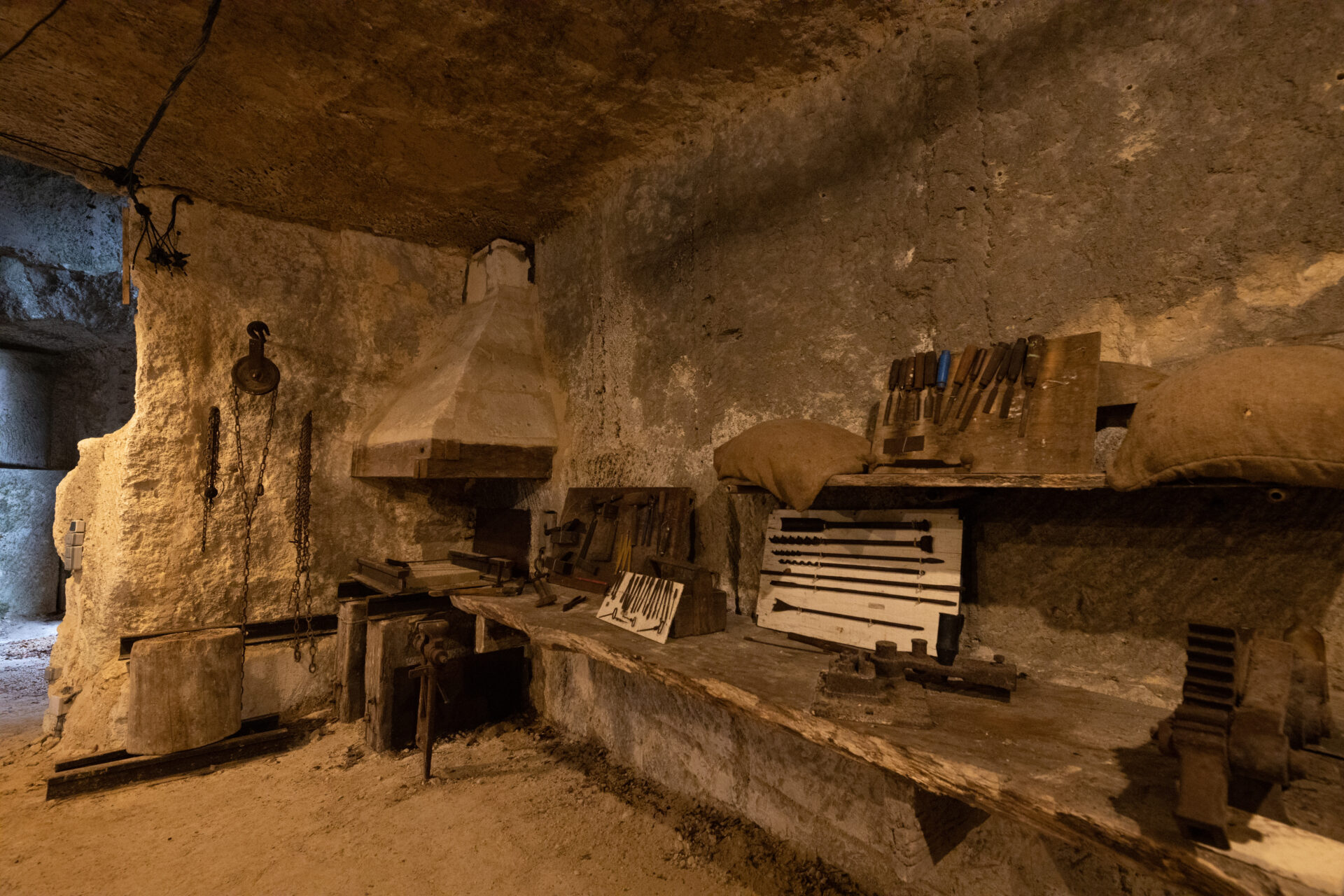
Tethers for horses
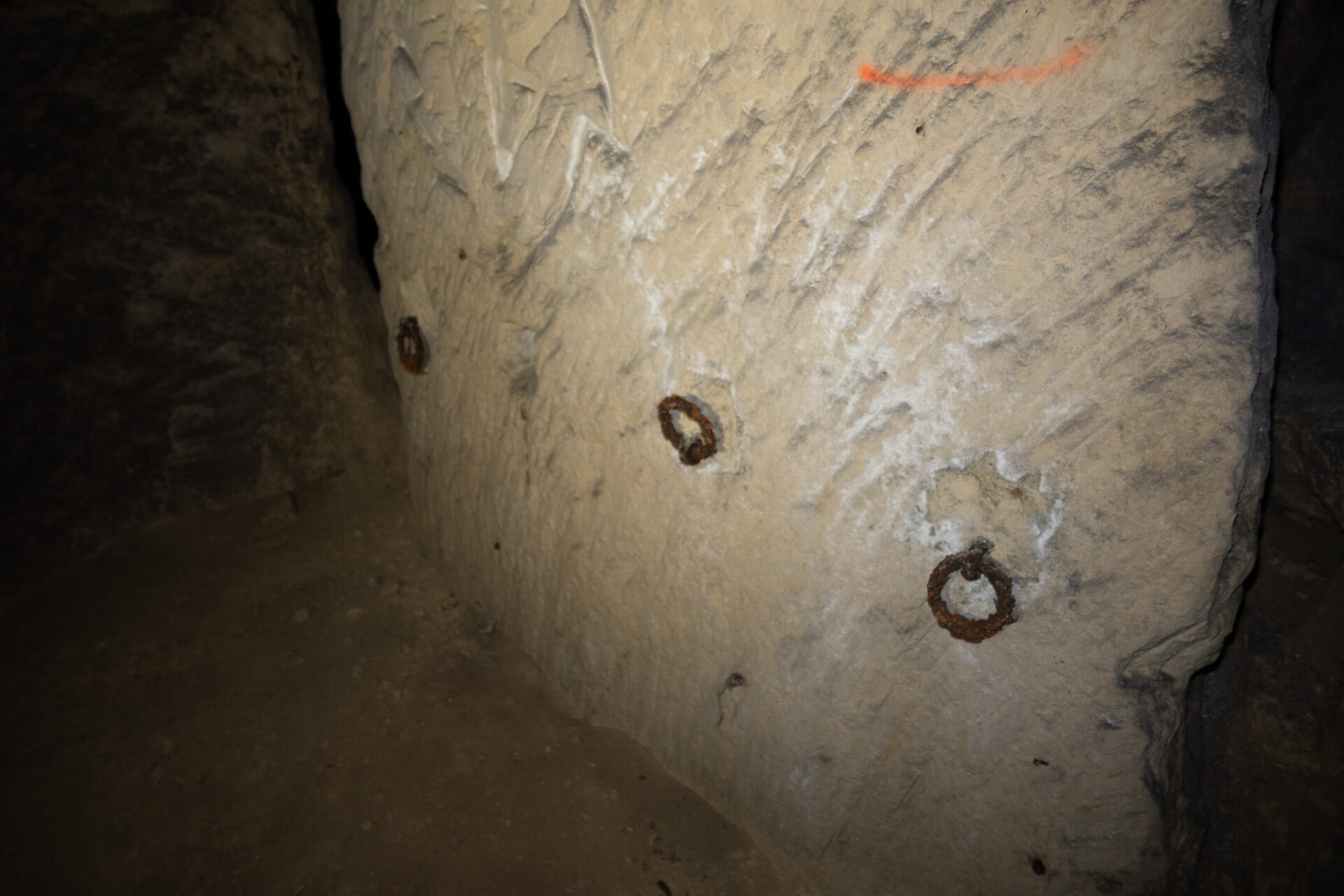
Medical Care
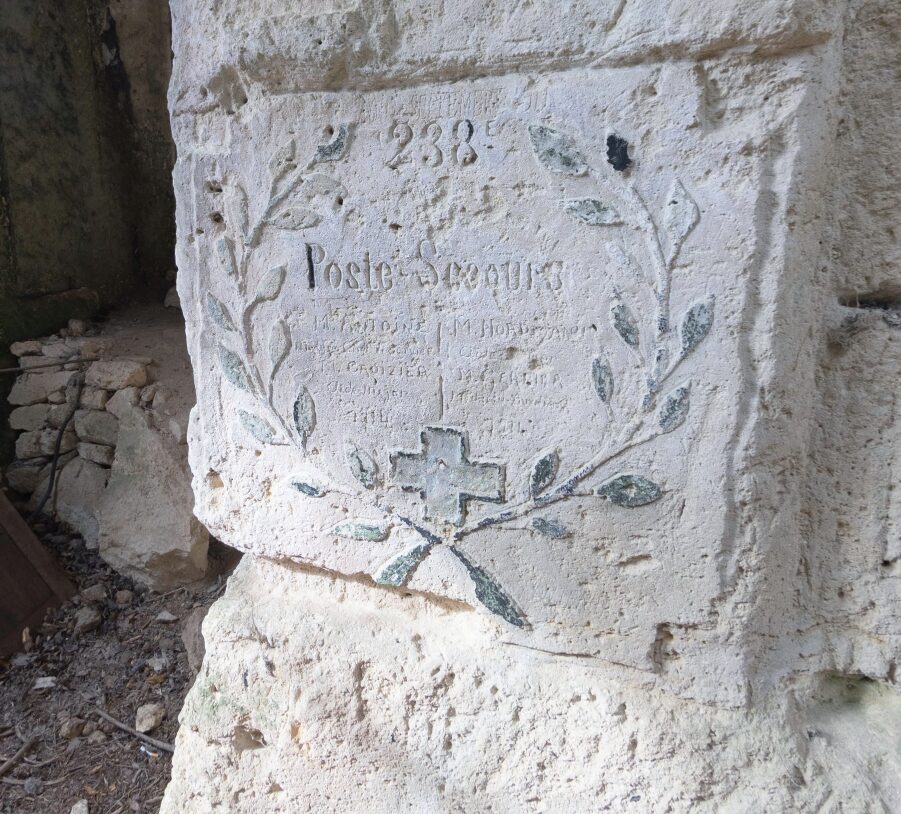
War causes many deaths, but also many casualties. These underground quarries were identifiable by a red cross placed on a flag or carved at the entrance. Two types existed: aid stations located 1 or 2 km from the front line and ambulances located much further away. They made it possible to triage between mildly and severely wounded soldiers. Today, few traces of these aid stations remain apart from the arrows on the walls, inscriptions, and sculptures by medical teams (stretcher-bearers, regimental chief medical officers, nurses).
Inscription u0022Aid Stationu0022

Sculpture of a rooster
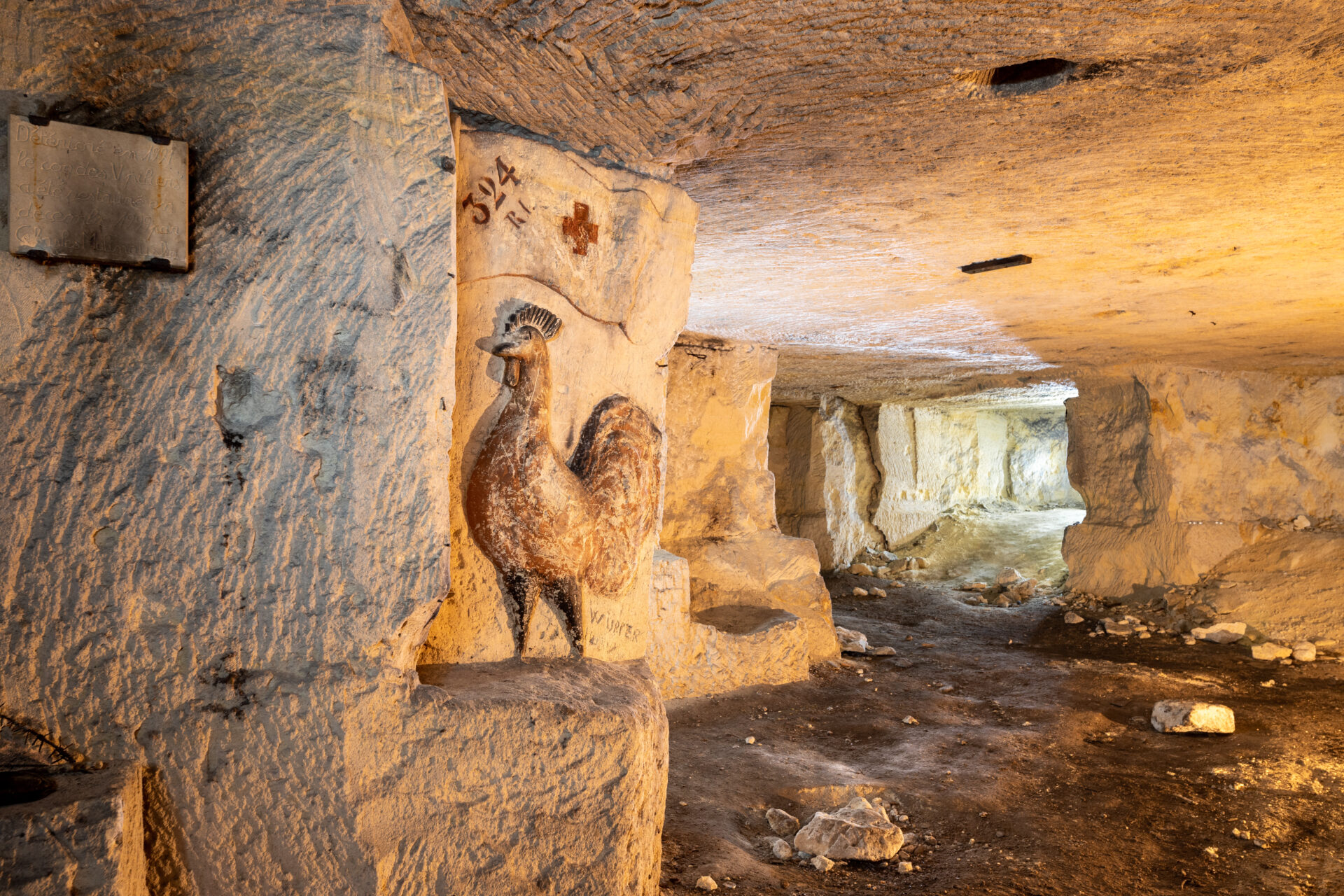
Aid station
Protection
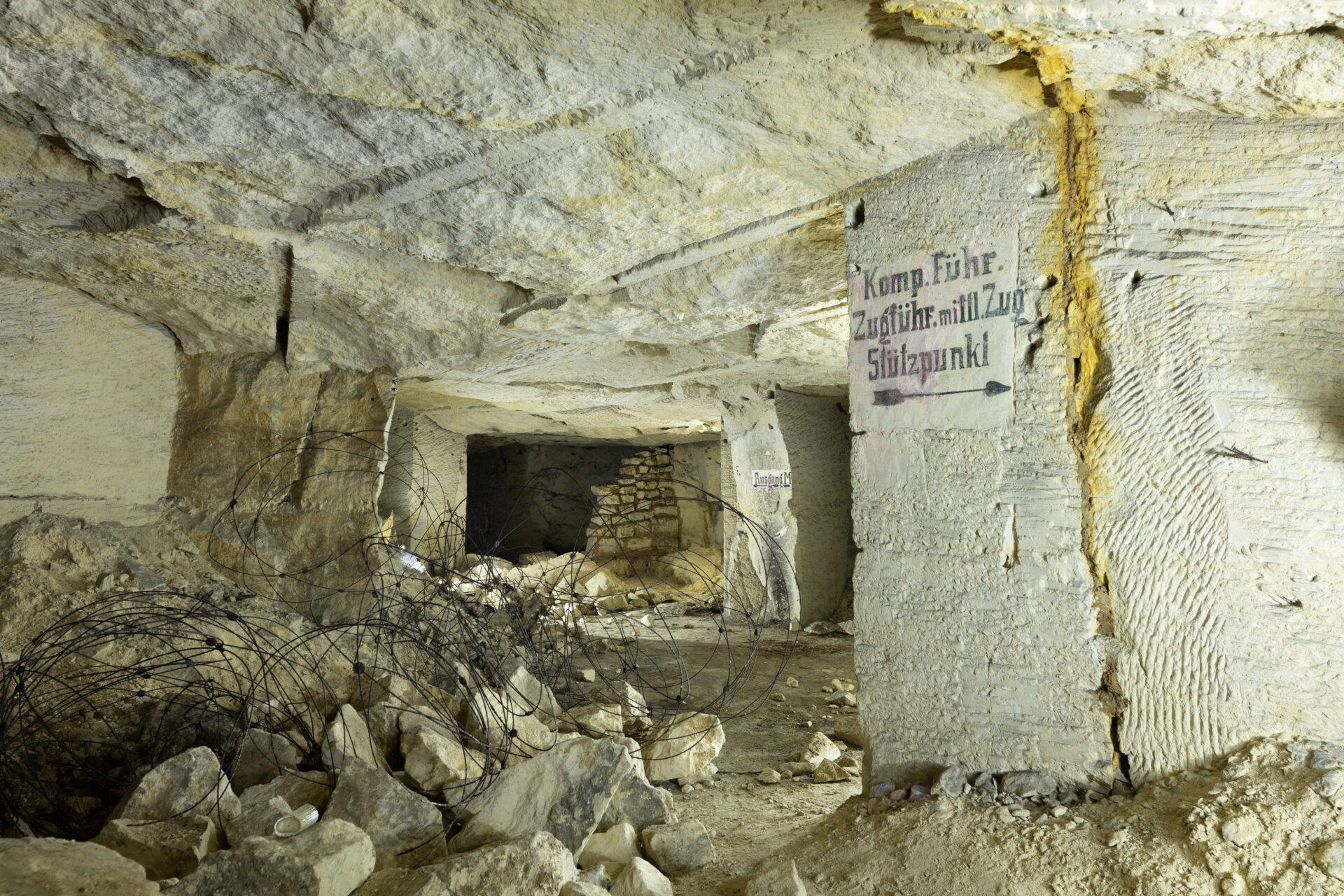
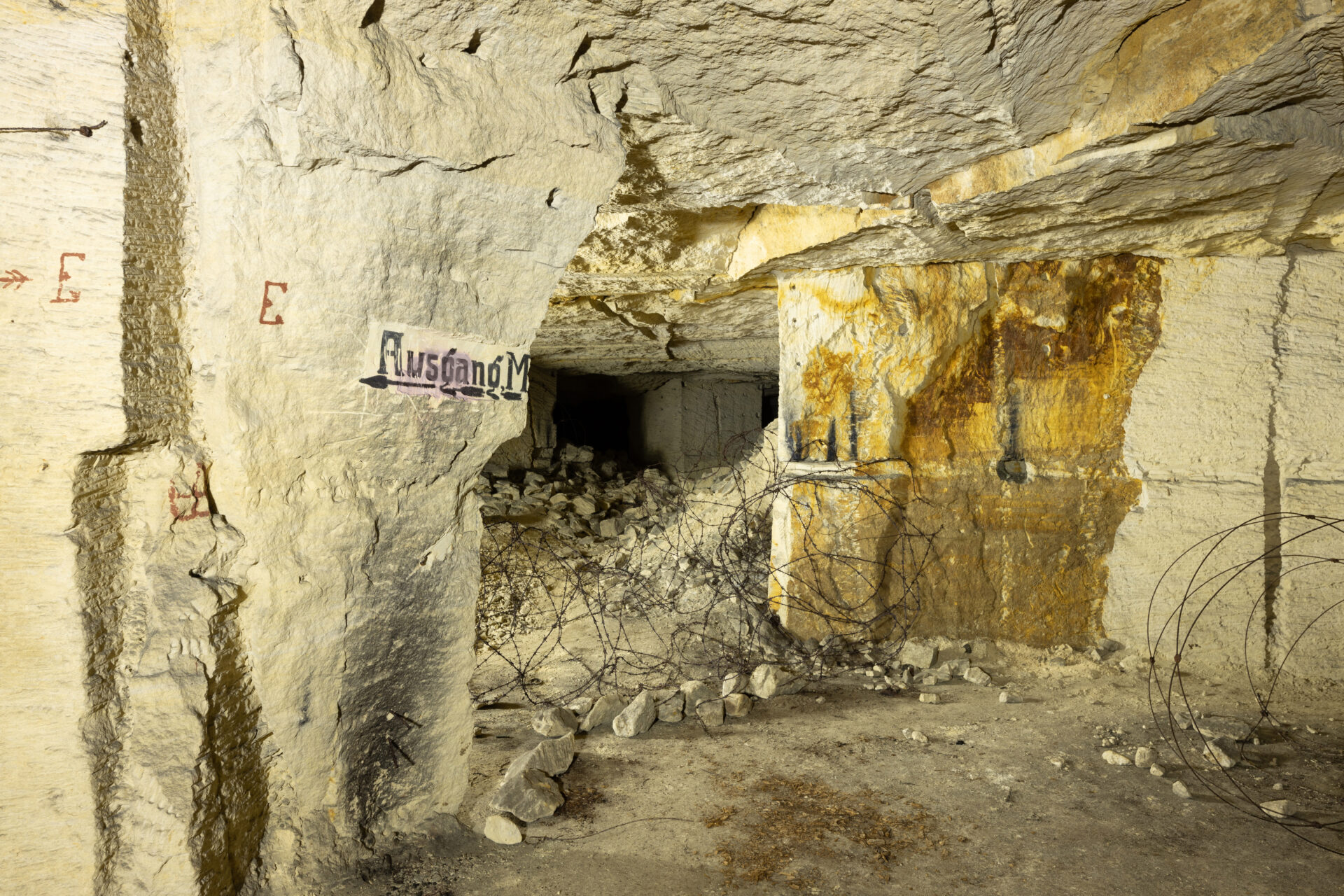
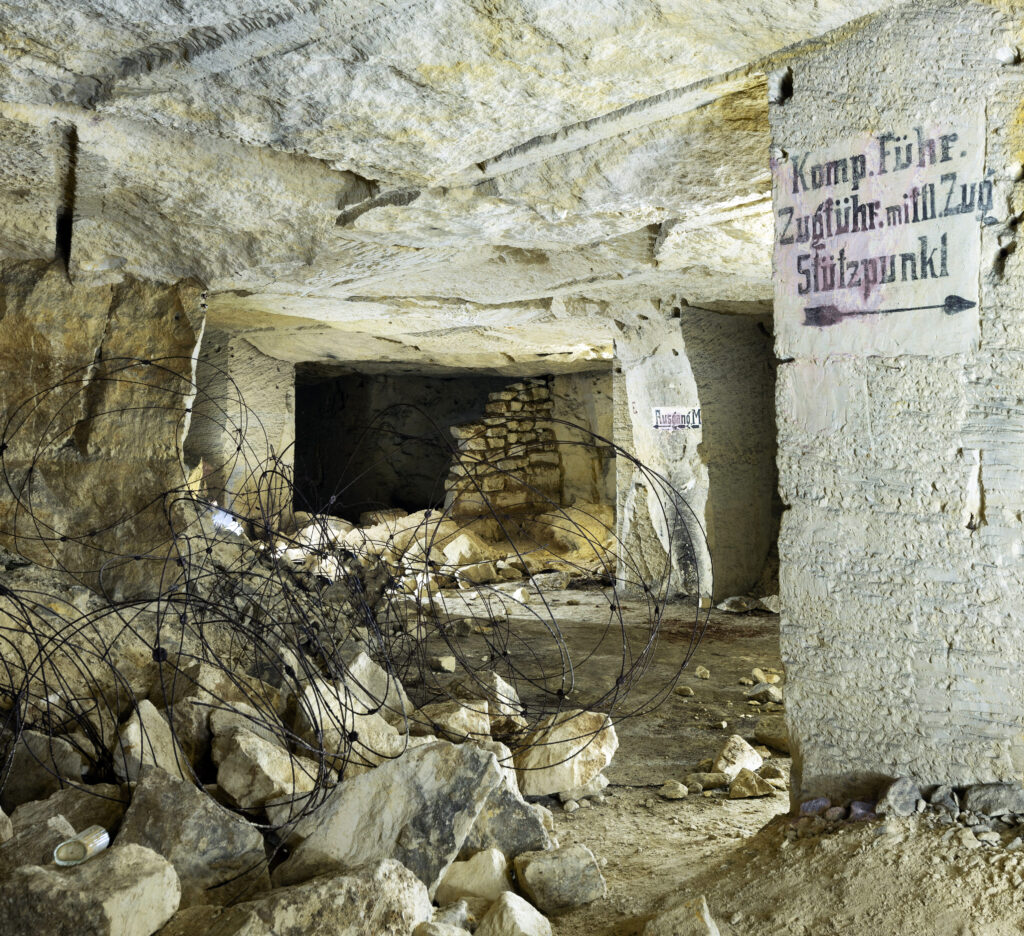
Although these creutes were slightly behind the front line, this line sometimes evolved until it reached these places of refuge. To protect themselves from an eventual attack, soldiers could install barbed wire in strategic galleries to slow down the enemy, or build ramparts made of sandbags or cement near the entrances or at the base of ventilation wells to limit the impact of explosions.
German inscription and barbed wire
German inscription and barbed wire
You might also like the following articles:
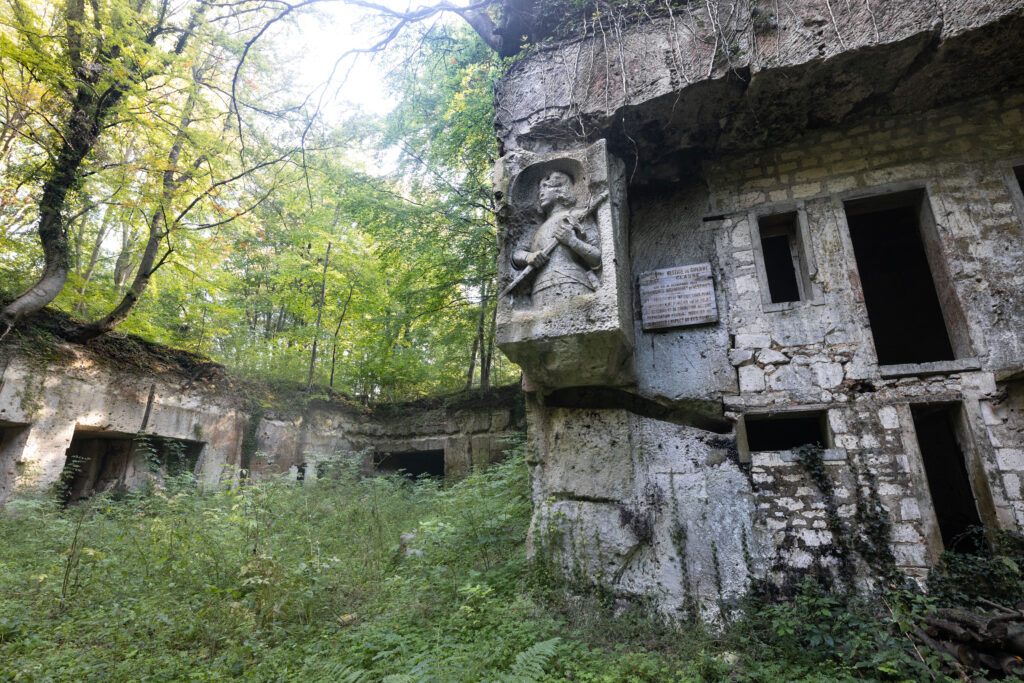
Officers’ Creute
They were mostly composed of a command post as well as resting quarters.
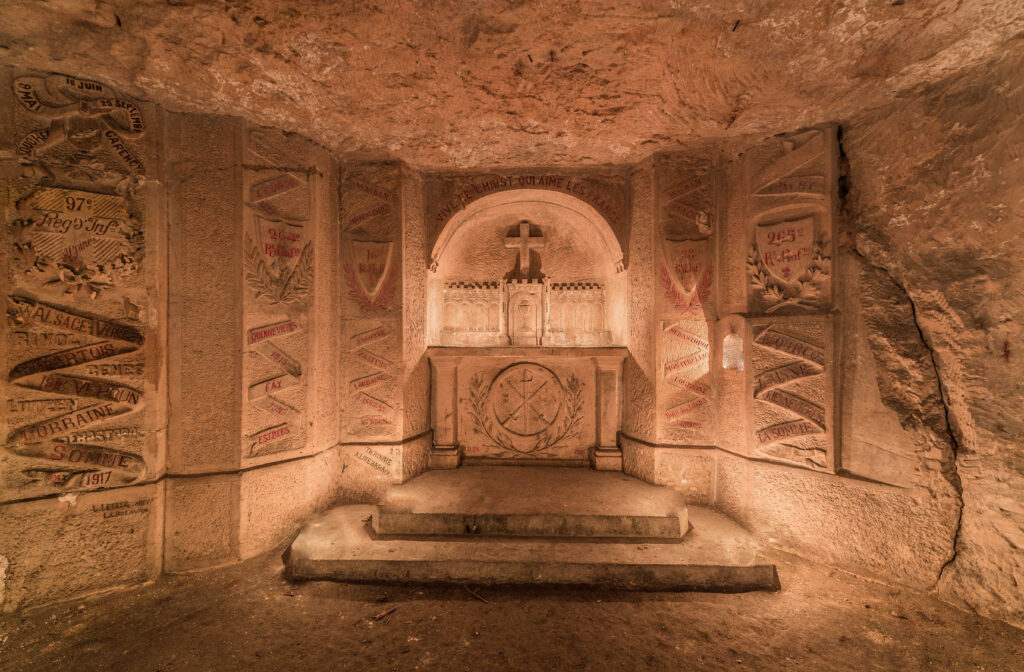
Underground chapels
The chapels were used for daily prayers.
Mines and counter-mines
A closer look at underground offensive and defensive systems during the First World War.
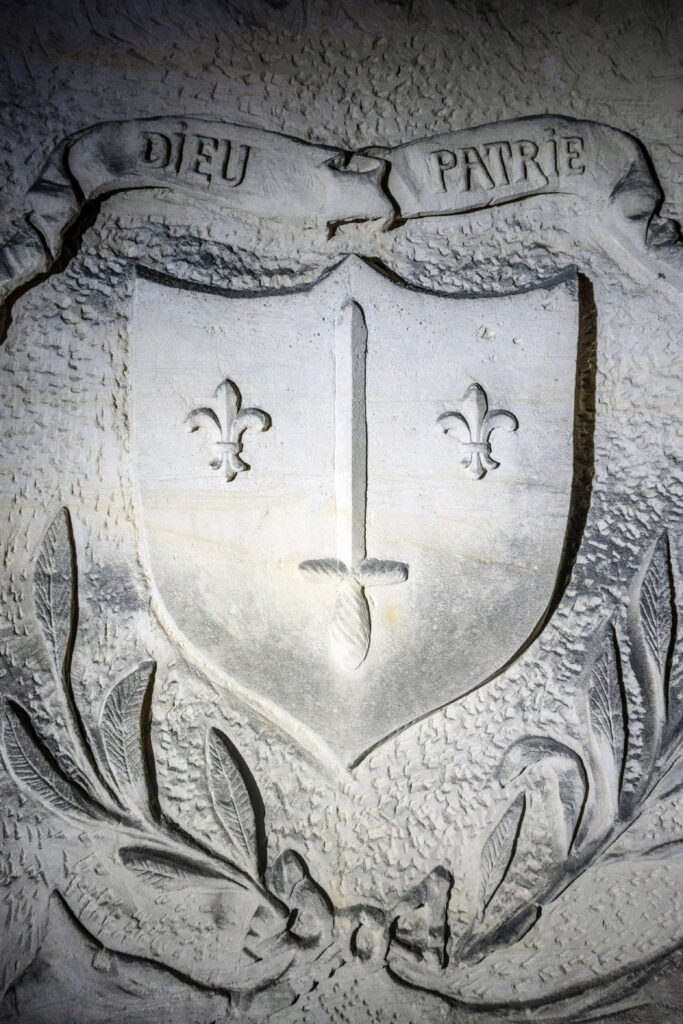
Traces of WWI soldiers
Collection of traces left by various soldiers during their stay in the creutes.