Overview of the creutes
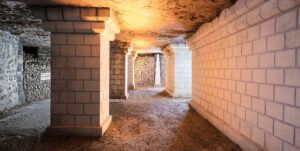
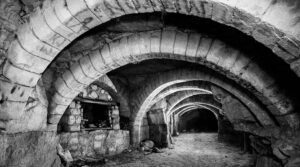
In the Picardy region, particularly around the Chemin des Dames near Soissons, the term “Creute” or “Bove” refers to the numerous cavities carved out over centuries in the thick limestone layers of the region’s hills.
Quarried since the Middle Ages, these cavities have experienced various golden ages. Initially, they were exploited for their stone, used in the construction of dwellings and monuments.
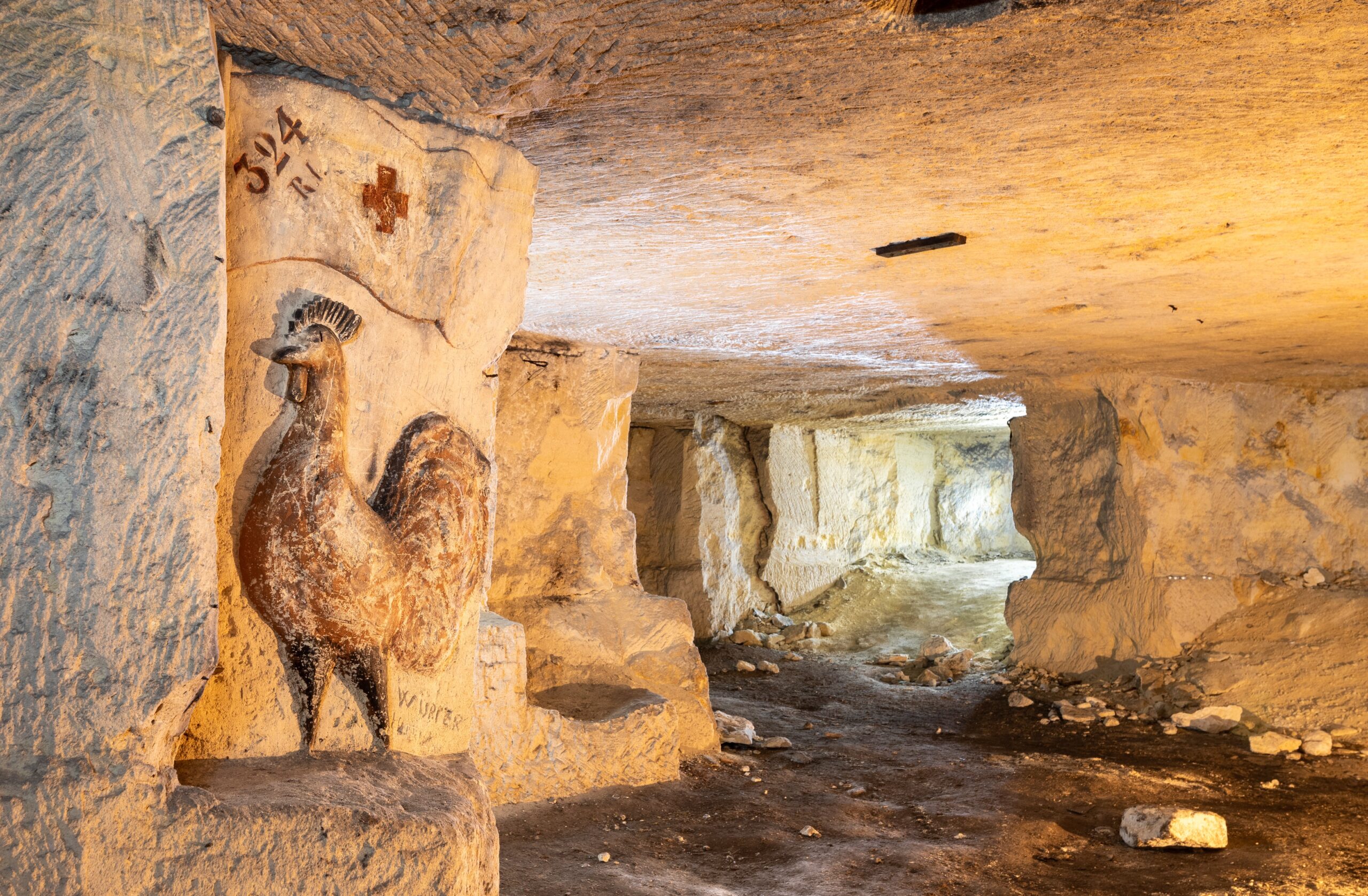
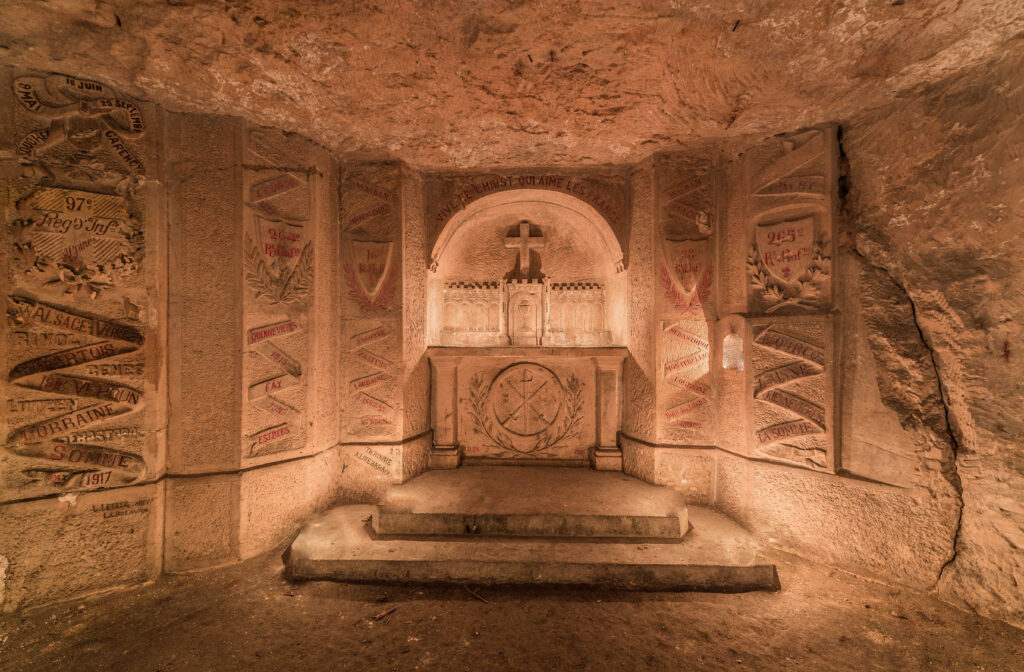
During the First World War, many creutes served as shelters or cantonments for combatants. The various armies set up complete interior installations: dormitories, command posts, infirmaries, chapels, etc., sometimes accompanied by electrical and telephone installations. French, German, British, and American combatants left graffiti, sculptures, and bas-reliefs there. Subsequently, the armies reused the creutes, on a smaller scale, during the Second World War, where once again, soldiers left traces of their presence.
Following these two wars and even today, a minority of operations were resumed or emerged to meet the growing demand for building stone. Despite this, many traces left by soldiers are still visible. This is why the term “Creute” is today mainly associated, in the collective mind, with the history of the military of the First World War. It is used to refer to all the underground quarries along the “Chemin des Dames” that were occupied by the military during this tumultuous period.
The creutes museum
La Caverne du Dragon offers a unique immersive experience, combining historical heritage and modern museography. This iconic site of the Chemin des Dames skillfully combines its original underground galleries with an innovative scenography to plunge the visitor into the heart of soldiers’ lives during the First World War. Museum: La Caverne du Dragon
Articles about the creutes:
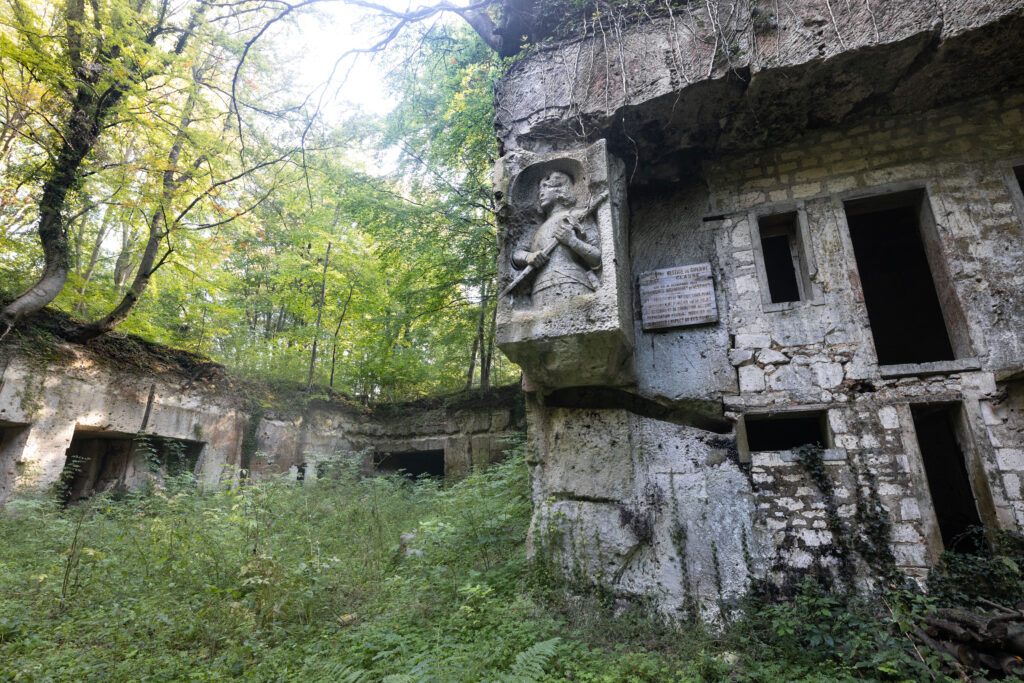
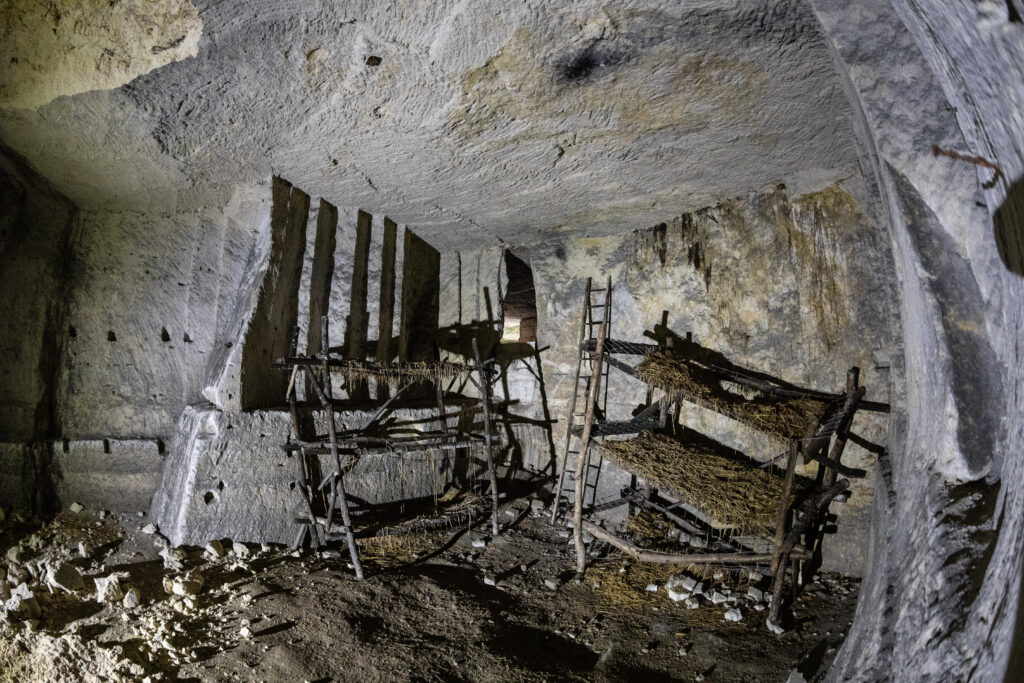
Creute of the Poilus and civilians
The creutes were used by civilians to protect themselves from bombardments and to find shelter following the destruction of their villages by bombs.
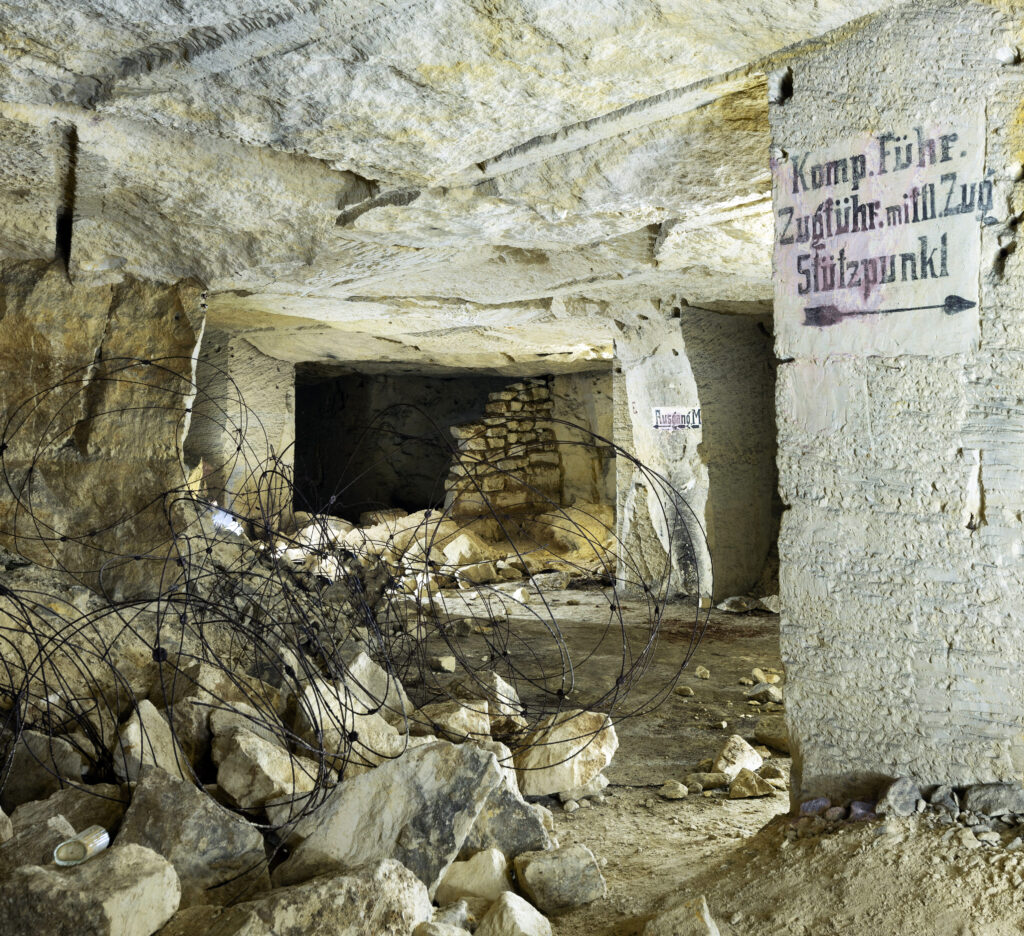
Mines and counter-mines
A closer look at the underground offensive and defensive systems during the First World War.
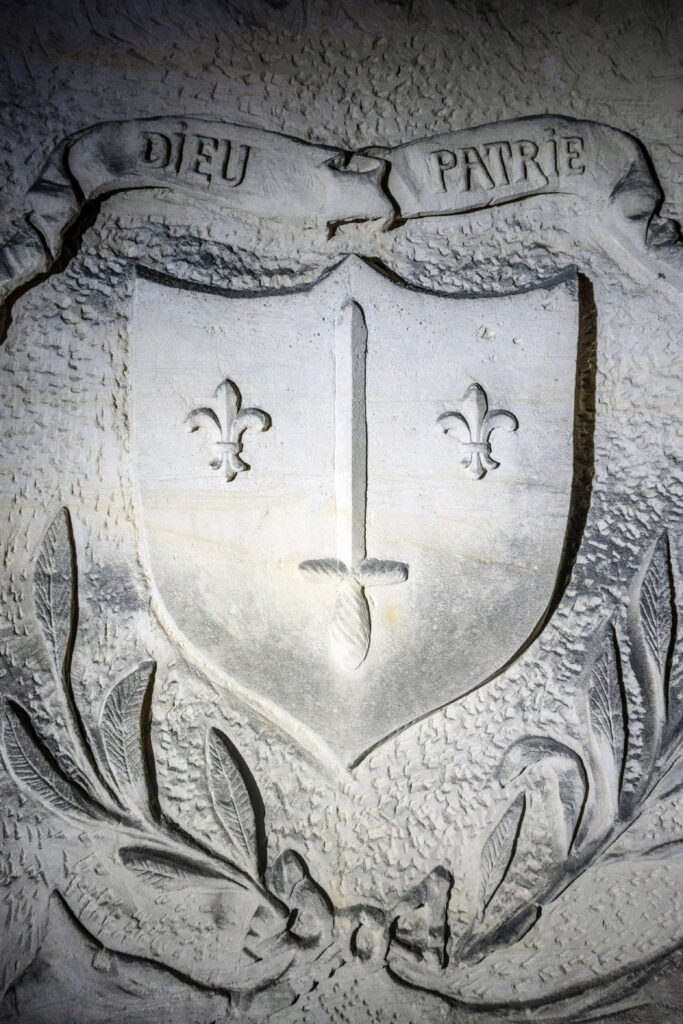
Traces of the First World War soldiers
A collection of traces left by the various soldiers during their time in the creutes.