Introduction
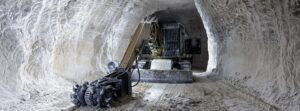
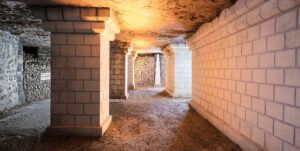
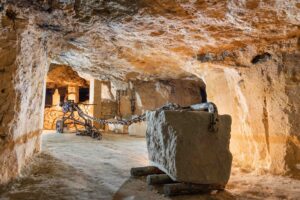
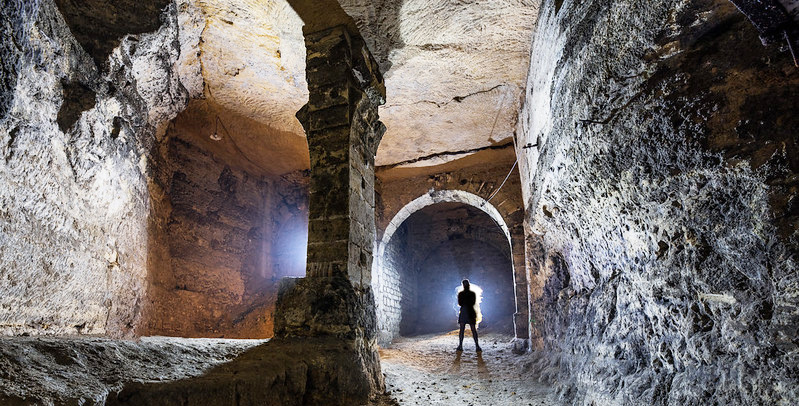
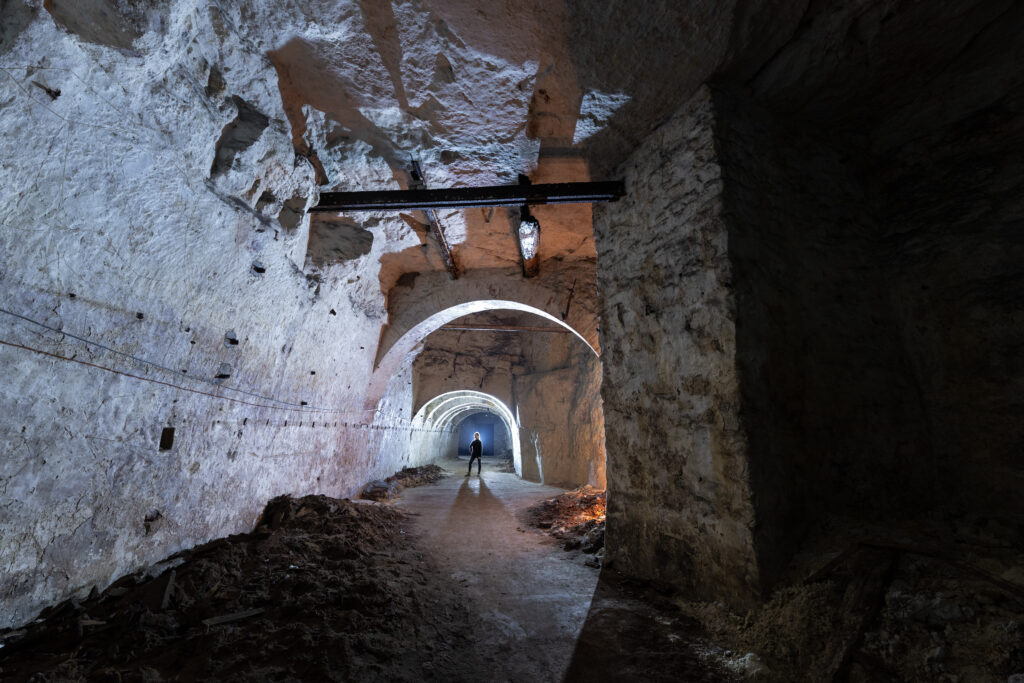
The Sèvres undergrounds have a rich and important past where winemakers, the king’s privileged wine merchants, and beer brewers succeeded one another over the years, from the 16th to the 20th century.
It all started in 1540 when the winemakers who cultivated grapes in the valley began digging underground galleries to store their (bad) wine.
Twenty years after Louis XIV settled at the Palace of Versailles, his privileged wine merchants were looking for a storage place where they could keep the wine. This was not possible in Versailles, which is a marshy area where no cellar can be dug.
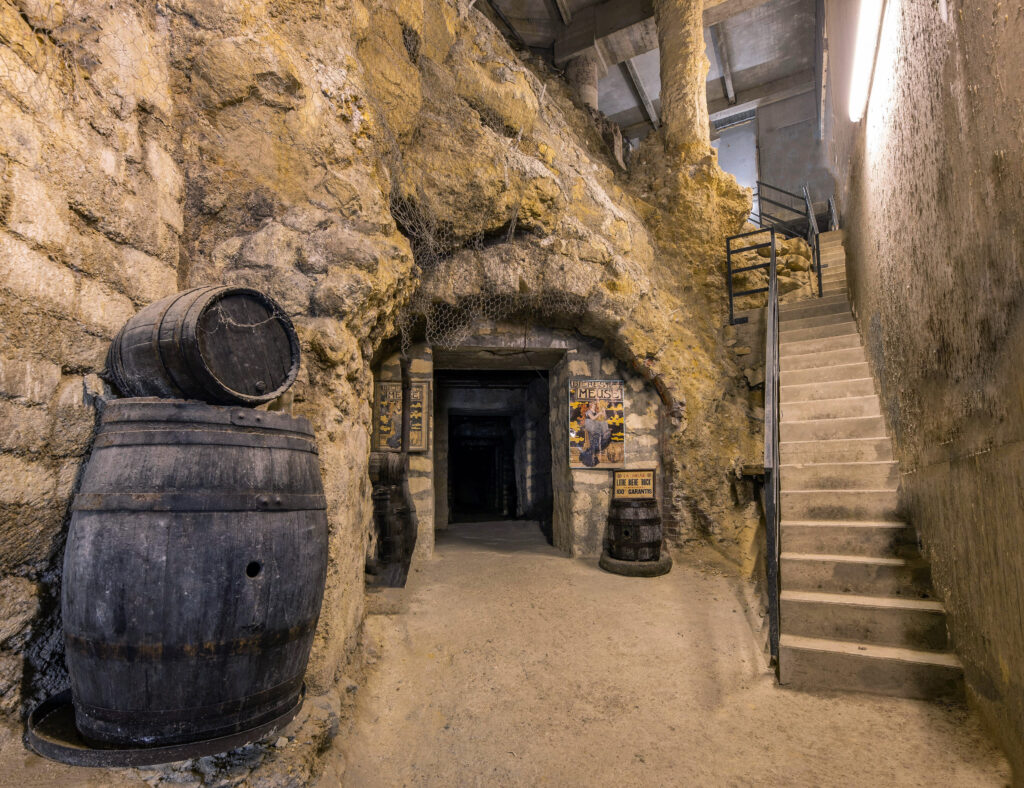
Usually, underground entrances are located on hillsides outdoors, but here the city center of Sèvres has undergone significant urbanization. A building was constructed over the cavities, thus covering the entrances.
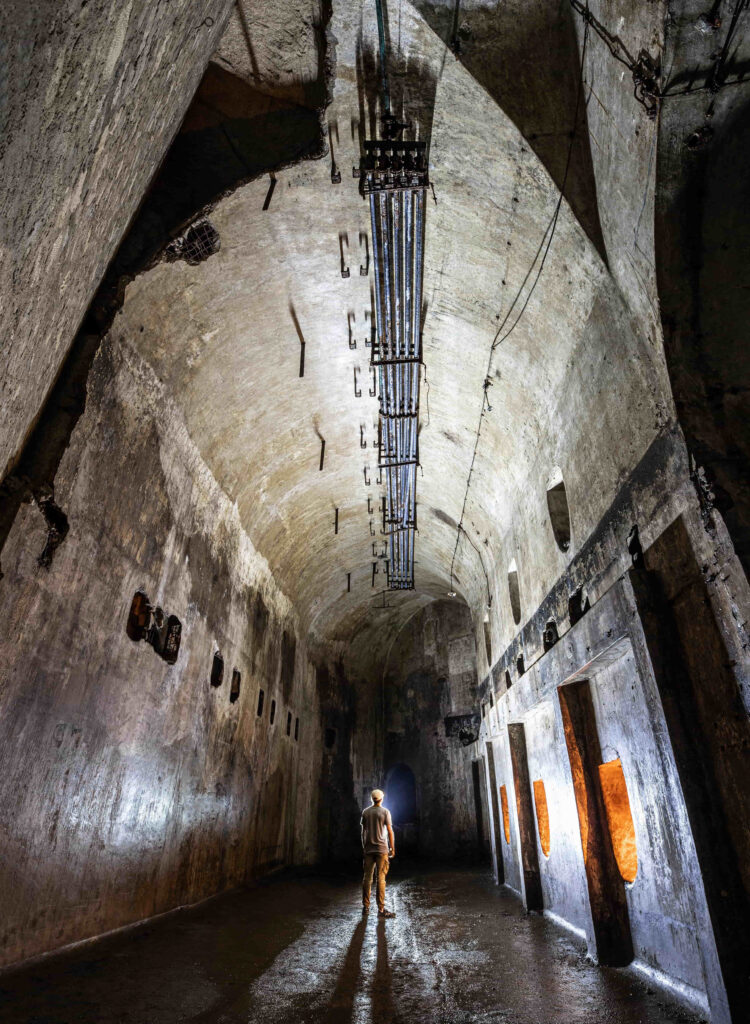
The death of Louis XVI in 1793 marked the end of the wine merchants, and during the revolution, the king’s cellars were emptied and the wine sold at auction.
About fifty years later, the demand for beer increased in Paris, and the main production located in Metz forced producers to move closer to reduce high transport costs. The undergrounds are also advantageous for resting the beer, as the temperature there is ideal.
Jean-Baptiste Reinert, already the owner of breweries in Moselle, settled there in 1851. He built a factory and everything necessary to brew beer, selling his production in Parisian cafés.
In 1873, his company was sold to the “Brasserie des Caves du roi” company, which planned to manufacture so-called “Viennese” beer. The cellar quarries were therefore expanded and modernized.
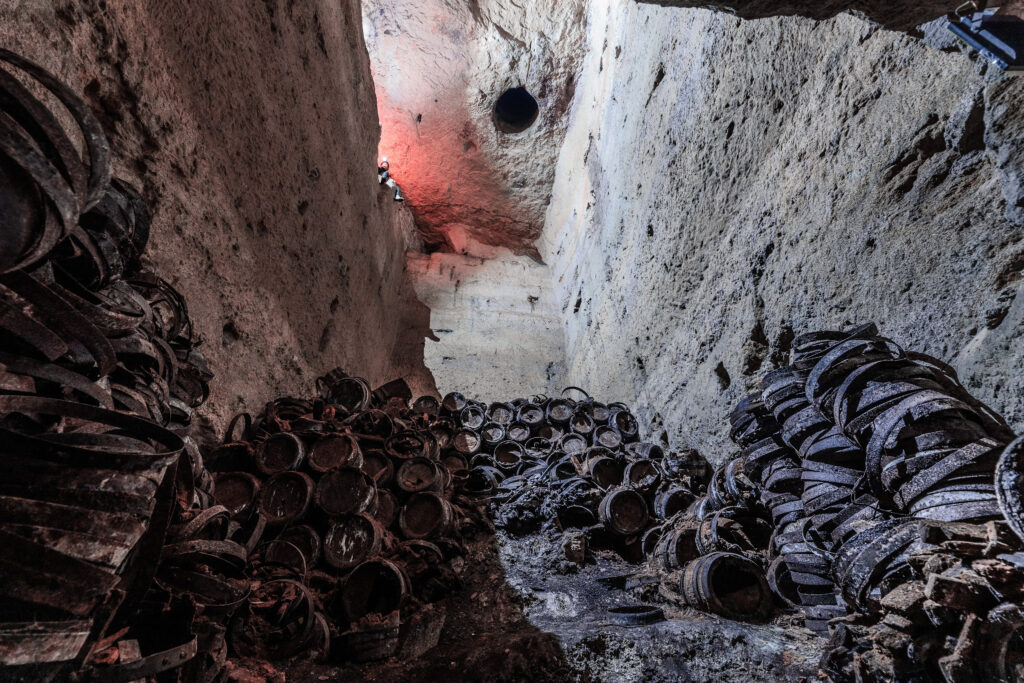
The name of the barrel room comes from the simple fact that barrels are stored there, but this designation is misleading.
Initially the place served as an icehouse
To make beer, during fermentation, yeasts transform the present sugars into alcohol and CO₂, and for this, a temperature ranging from 6 to 8 degrees is needed. In the quarry, it is generally 15 degrees.
With refrigeration, the temperature can therefore be lowered. There were five icehouses in the Sèvres cellars ranging from 450 to 950 m³. This vat seen in the photo measures 500 m³.
There was no refrigeration system, so a natural product had to be found. They then turned to ice. It was collected from the ponds of the town of Ville-d’Avray, but when the winter was too mild, they had to compensate with artificial ice. They therefore installed an ice machine capable of providing 5 to 6,000 kilos of ice per 24 hours in the form of 18-kilo blocks.
These blocks of ice were thrown into the well to lower the temperature of the icehouse.

The brewery’s water needs
In 1953, the Société Parisienne d’Embouteillage rented 4,000 square meters of premises in the factory and the Meuse hangars, but also underground galleries.
Its work consisted of packaging fruit juices, carbonated drinks, and lemonades made with water from the Caves du roi for the following brands: Fruidam, Ofco, Verger, and Orangina.
The company consumes nearly 200,000 cubic meters of water per year, a large part of which comes from this well.
Its characteristics are to draw water from the water table at a depth of 12 meters through a pumping station located 10 meters deep in the well.


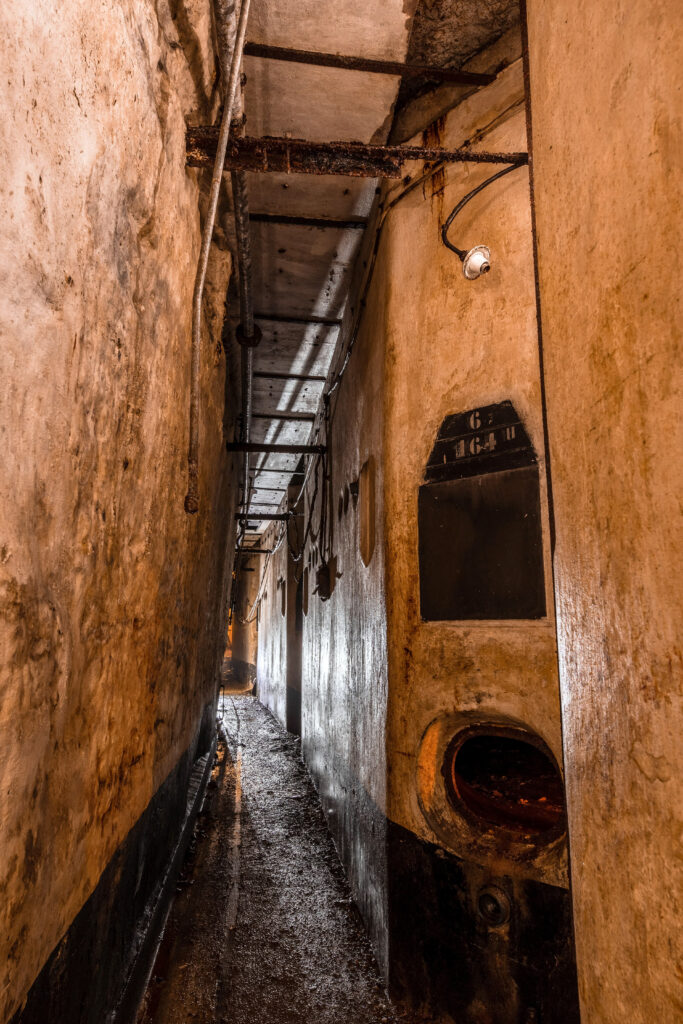
The plan of the successive appropriations of the cellars, created by Maurice Fanta, manager of the “Brasserie des Caves du roi” company, tells us that the galleries where the fermentation vats were located were near the entrances.
There were 100 vats with a capacity of 25 hectoliters. The storage vats were located in the icehouses and could hold 8,000 hectoliters!
The vats are coated with Galladona, which provides them with good waterproofing.
Sources:
Les caves du roi à Sèvres by Lucile Hubschmann
Michel Schneider from the Société d’Archéologie et d’Histoire de Sèvres