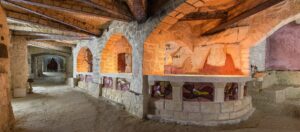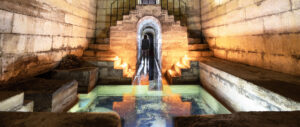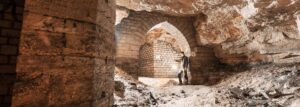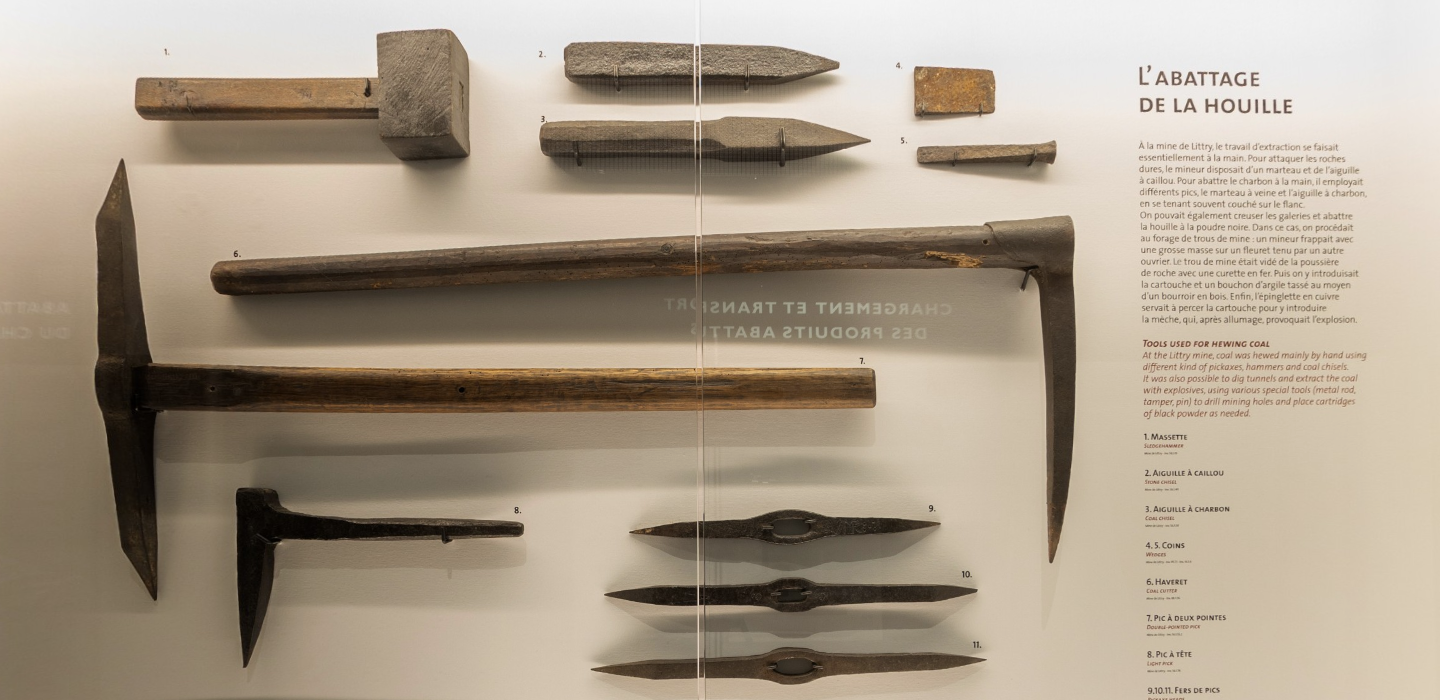
The Molay-Littry Mine Museum (Calvados) recounts the coal mining discovered in Littry as early as 1741, which left a lasting mark on the territory. On site, the visit connects surface remains, technical objects, and an immersion “down the pit”.
A Norman coal basin
The story begins in the 18th century, after the discovery in 1741 of a coal outcrop (vein), followed by the creation of the Compagnie des Mines de Littry in 1747. At its peak around 1840, the operation gathered nearly 950 workers, before a decline leading to the dissolution of the company in 1879 and the closure/flooding of the wells in 1880. The museum is built directly on this mining past, occupying the former site of the Frandemiche pit, one of the major wells of the basin.
What you can see at the museum
The Molay-Littry Mine Museum was inaugurated in 1907 and is among the oldest French mining museums. The tour highlights two main themes: the history of mining in the 18th and 19th centuries and the evolution of mining techniques up to around 1960. Among the striking features:
- The Périer brothers’ steam engine (installed at the museum, linked to the coal hoist), presented as a unique piece in France.
- A reconstructed mine gallery (about 70 m) to concretely understand the timbering, the volumes, and the working conditions/
- A room dedicated to Saint Barbara with an early 19th-century altarpiece, a rare iconographic testimony of the local mining world.