Mine galleries:
An underground mine is used to attack an enemy position by detonating explosive charges beneath the fortification, while an underground counter-mine is used to intercept and neutralize enemy mines before they explode.
An underground mine is organized as follows:
Reconnaissance: Military engineers first carry out a painstaking reconnaissance of the enemy position to determine weak points and the best areas to dig a mine.
Digging: Specialized soldiers dig an underground gallery of about 1.50 m towards the enemy fortification. This work is carried out silently and discreetly to avoid detection by the enemy.
Placement of explosives: Once the gallery is dug, explosive charges are placed at the end of the mine, usually in a dedicated airlock, near the enemy fortification.
(Airlock photo?)
Retreat: Before detonating the mine, soldiers retreat far from this gallery to avoid being caught in the explosion.
Explosion: When everything is ready, the explosive is triggered, causing an explosion beneath the enemy fortification. This can cause significant damage to enemy defenses and facilitate the assault by allied troops.
(Photos of explosive boxes?)
Counter-mine galleries:
Conversely, a counter-mine is organized as follows:
Detection of enemy mines: Defenders attempt to detect enemy miners’ activities by listening to the sound of underground work or using special detection methods.
Digging the counter-mine: Once an enemy mine is detected, defenders dig a counter-mine towards the enemy gallery.
Interception: When the counter-mine reaches the enemy gallery, defenders can set explosive charges or engage enemy miners in underground combat to prevent them from detonating their charge.
Neutralization: If defenders manage to reach the enemy gallery before the enemy charge is set, they can defuse the enemy explosive or remove it from the gallery, thus neutralizing the threat.
(summary diagram image?)
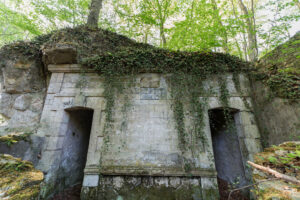
These “tunnels” can be connected to an existing creute or often connected directly to the trench system on the front line.
(photo of the Ecouvillon shelter)
You might like the following articles:
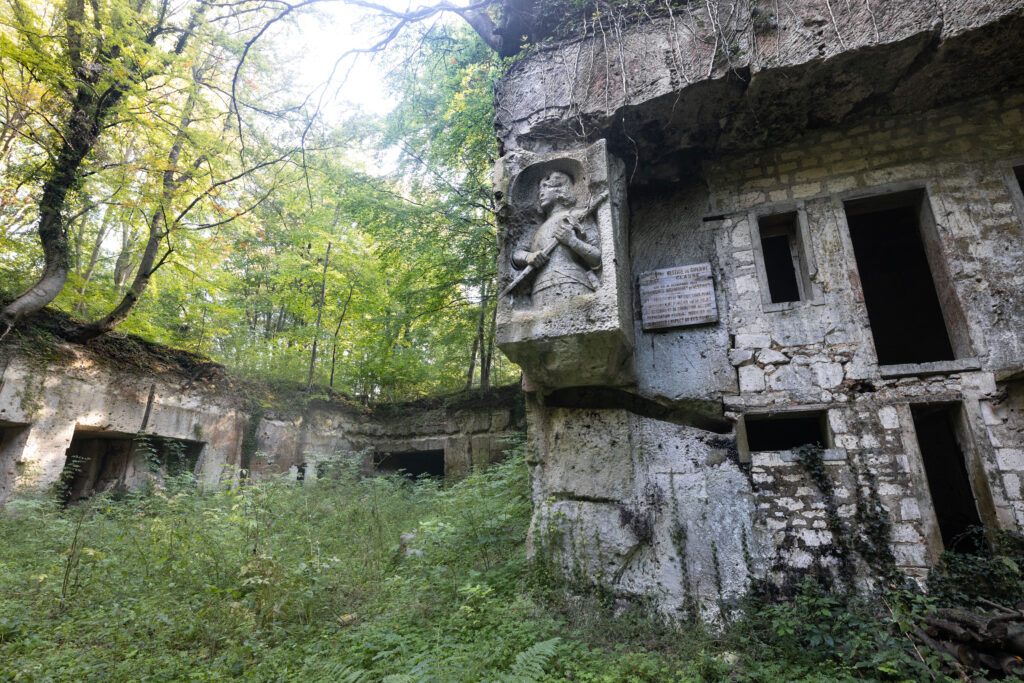
Officers’ Creute
They were mostly composed of a command post as well as rest quarters.
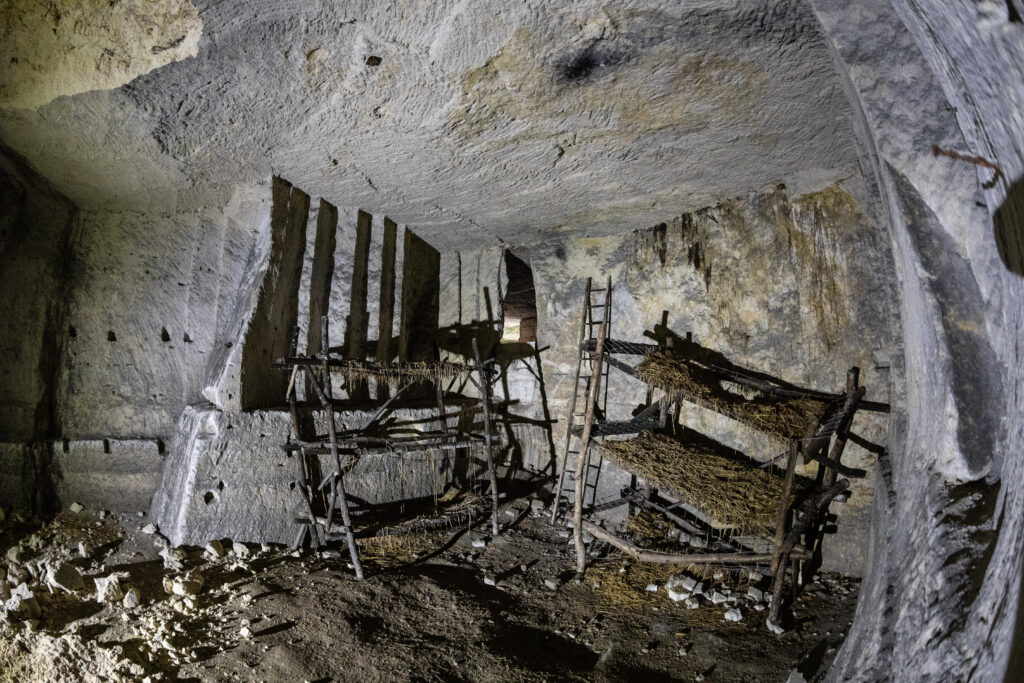
Poilus and Civilians’ Creute
The creutes served civilians as protection against bombardments and provided accommodation following the destruction of their village by bombs.
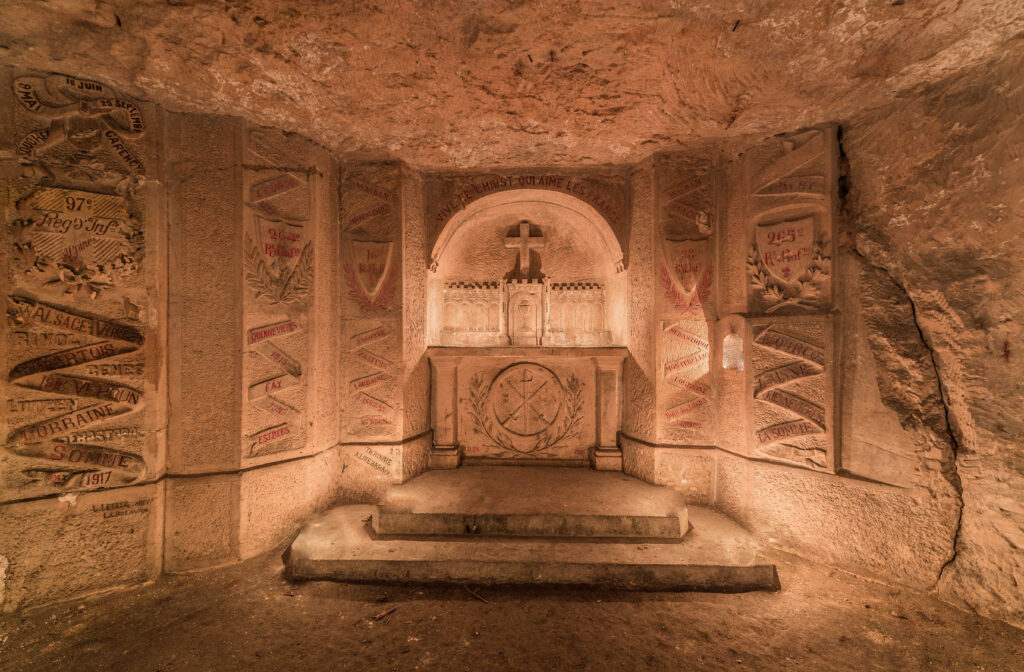
Underground Chapels
The chapels were used for daily prayers.
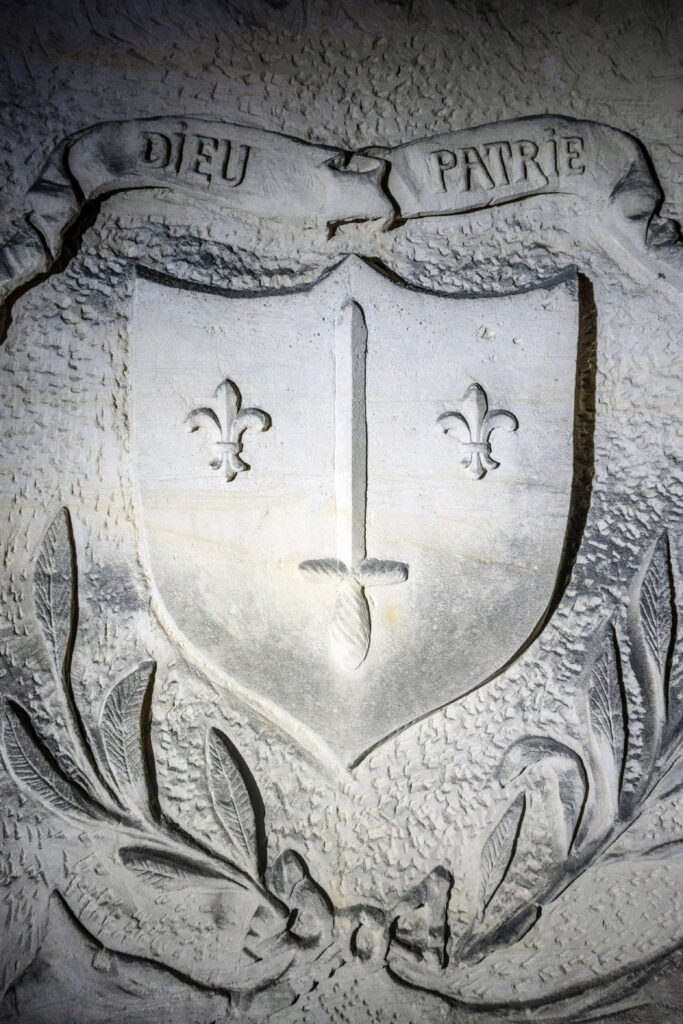
Traces of WW1 Soldiers
Collection of traces left by various soldiers during their stay in the creutes.