A power station buried beneath Paola
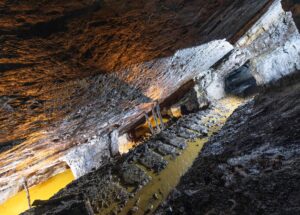
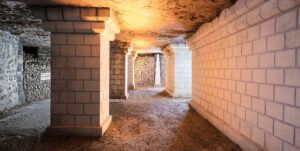
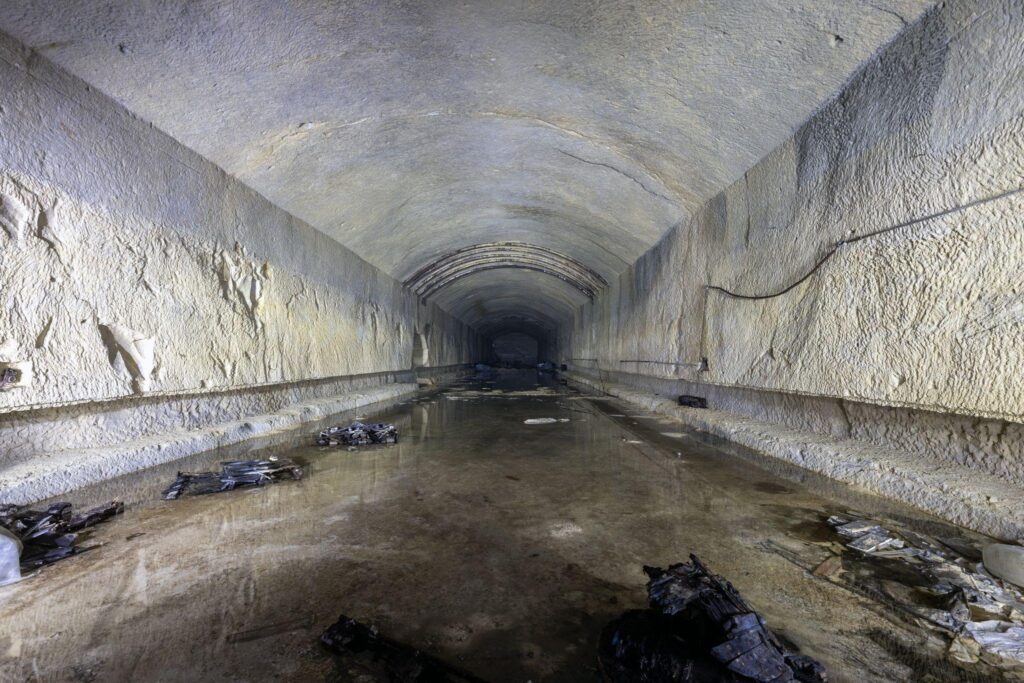
Beneath the Corradino industrial area in Paola, a network of tunnels holds one of the most remarkable industrial archaeology sites in Malta. British forces cut it into the rock during the 1930s, before the Second World War.
Going underground was not a matter of style. A buried power station withstands bombing. It could therefore keep generating electricity in wartime. For an island that would become one of the most heavily bombed of the war, the precaution proved well judged.
Six engines out of the twelve that survive
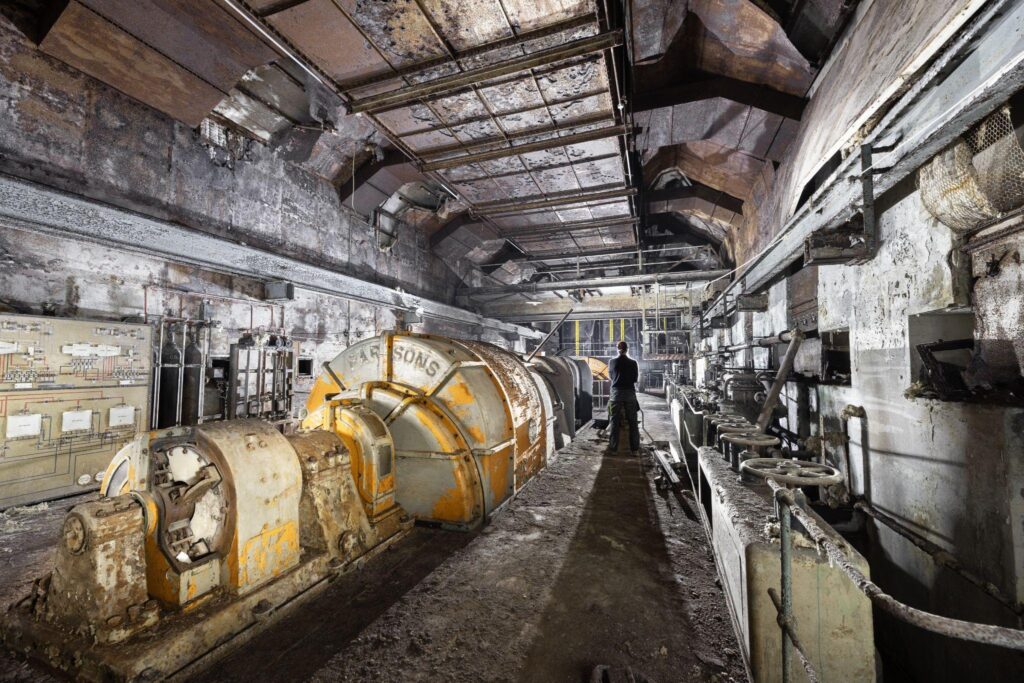
The engine hall holds six Fullagar engines. The name means little today. It nonetheless describes one of the most unusual architectures in the history of the combustion engine.
Hugh Francis Fullagar (1872-1917) patented it early in the century. The principle is a two-stroke opposed-piston design: two pistons per cylinder travelling in opposite directions. The upper piston of one cylinder is linked to the lower piston of the next by diagonal connecting rods.
The arrangement offers the advantages of the Junkers engine with far less mechanical complexity. Fullagar first conceived it as a gas engine for power stations, and founded the Fullagar Gas Engine Co in Gateshead.
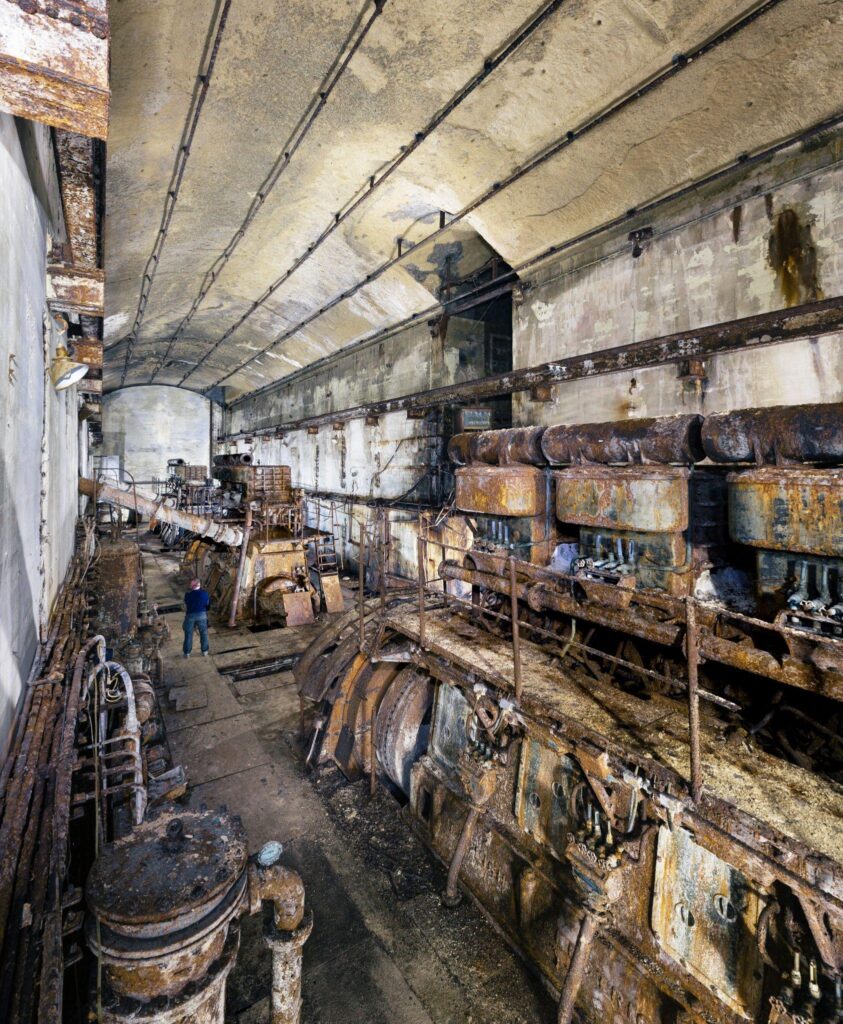
The Cammell Laird shipyard at Birkenhead then adapted it for marine propulsion. In 1920 the MV Fullagar became the first ocean-going ship with an all-welded steel hull. For land use, English Electric and Carels Frères took out licences.
English Electric went on to build about a hundred of them for power generation, up to 3,500 brake horsepower for the largest, delivered to Bermuda in 1936. Twelve survive worldwide. Six are here, in two adjoining chambers of three engines each.
Steam alongside diesel
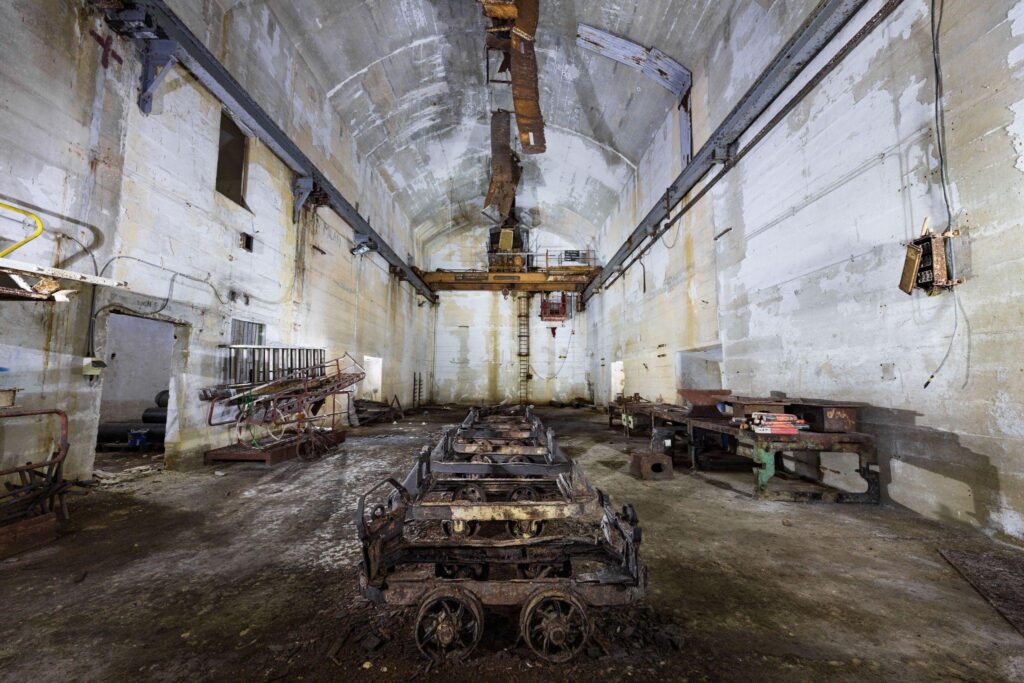
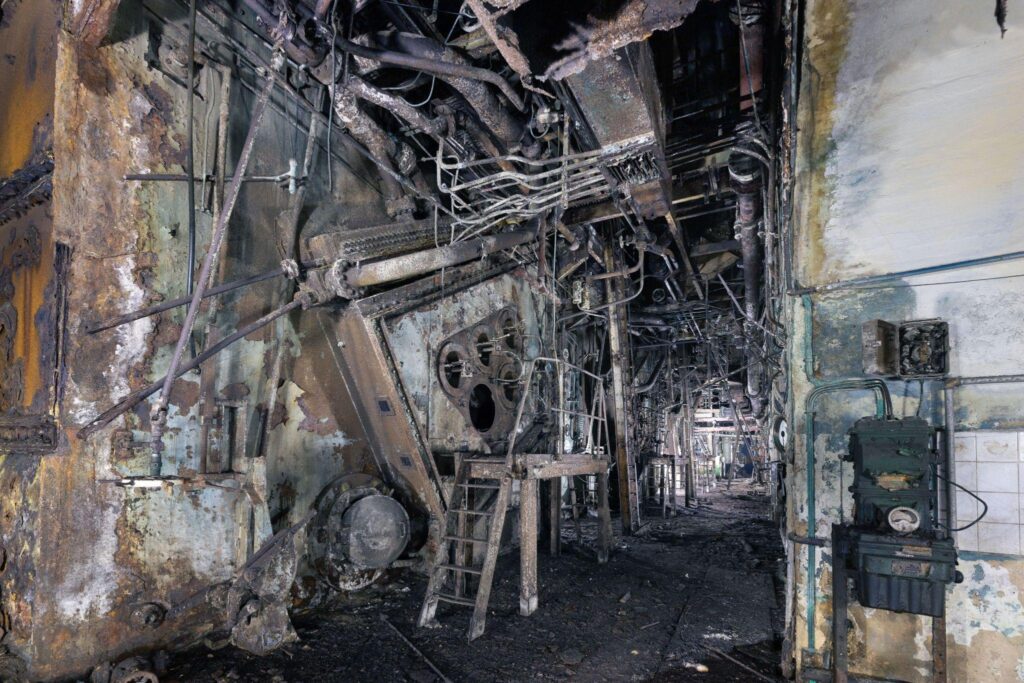
Corradino did not run on diesel alone. The station combined two processes: the Fullagars driving alternators directly, and separate boilers feeding two Parsons steam turbines. One of them carries the date 1946.
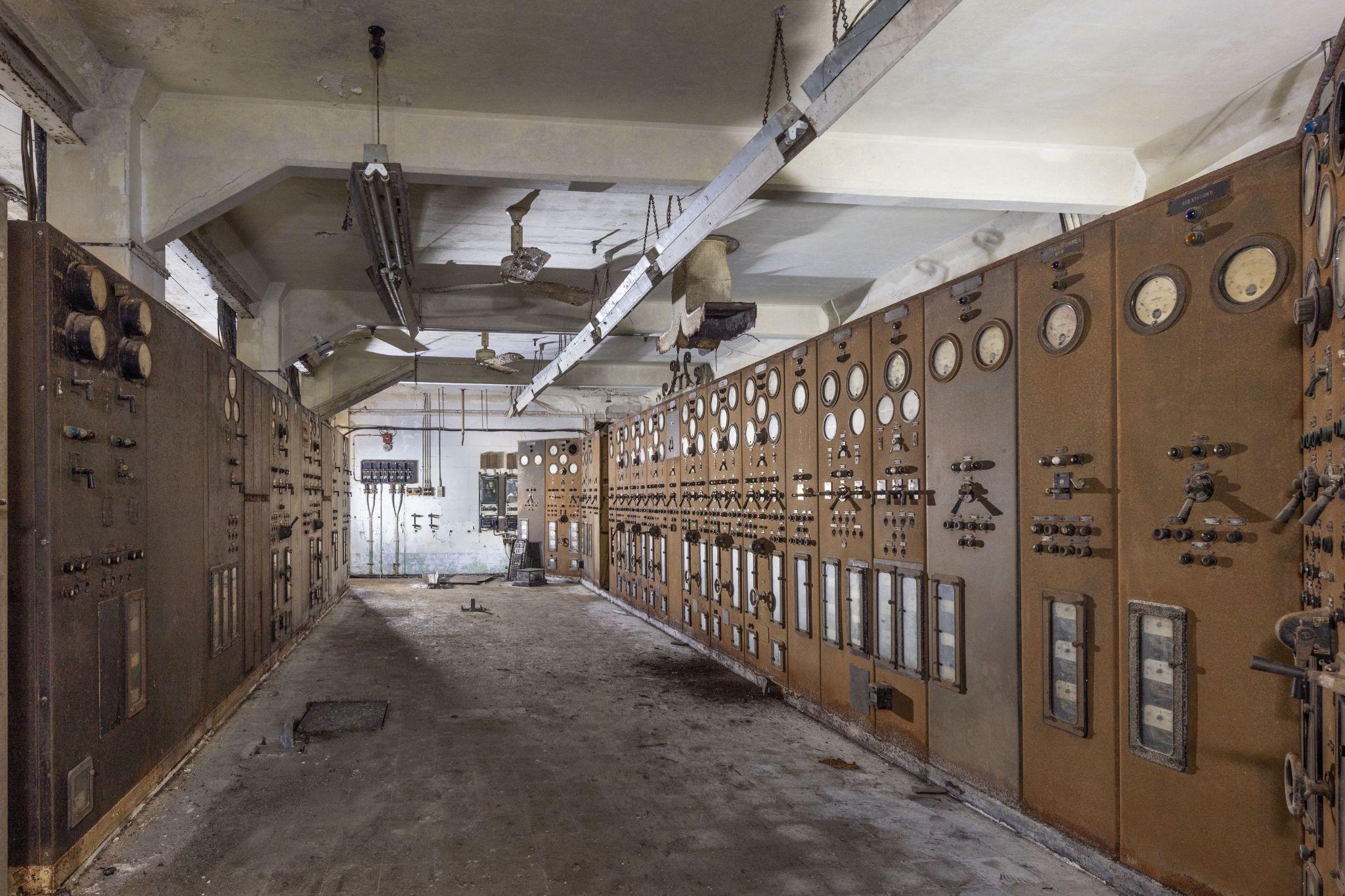
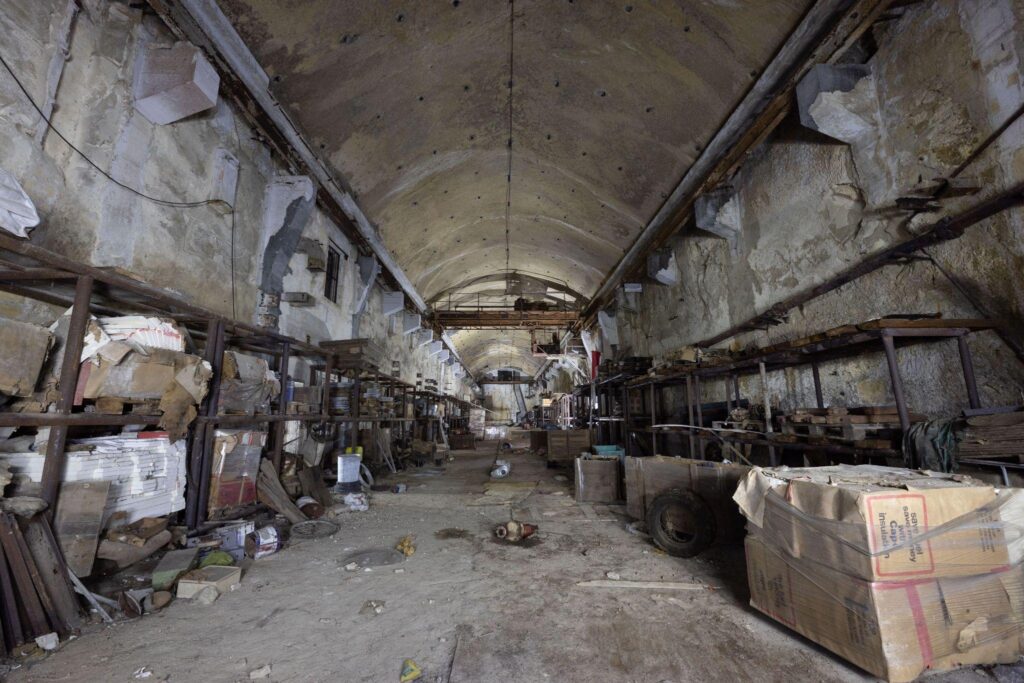
The rest of the plant followed: 350 and 300 kVA transformers, switch rooms, control positions where the wiring diagrams are still legible on the wall. An adjoining store holds several galleries of spare parts.
1979: the British withdrawal
Malta became independent in 1964, but a defence agreement kept British forces on the island. The Labour government that took office in 1971 renegotiated the lease. It was extended until the end of March 1979, at a sharply increased rent.
On 31 March 1979 the last British forces left Malta. For the first time in a thousand years, the islands were no longer a foreign power’s military base. Malta made the date a national holiday, Jum il-Ħelsien, Freedom Day.
The station passed to Enemalta, the public corporation set up in 1977 to take charge of energy supply. Corradino kept generating, but its role had changed scale: in 1982 it supplied 12 megawatts, against 115 from the two Marsa stations combined.
Shutdown, then asbestos
Steam operations ceased in 1987. The site stayed in service until 1992, then closed for good.
A second, less glorious life followed: the tunnels became an asbestos store. Twelve hundred cubic metres were held there, until a major clearance operation in 2012.
On the surface, the station’s footprint is now a sports ground. Below, the six Fullagars are still in place. The idea of turning the site into a museum comes back regularly.
These photographs are part of the underground heritage photography collection.