At the foot of the Owl Mountains, in Lower Silesia, the Nowa Ruda mine long had a grim reputation: that of the most dangerous coal in Europe. Not because of firedamp, as in most coalfields, but because of carbon dioxide, an odourless, colourless gas compressed in the rock, which could blow out a working face without the slightest warning. The mine closed in 1995; the underground route visited today follows its original galleries.
Six centuries of Silesian coal
Coal mining is recorded at Nowa Ruda as early as 1434, making it one of the oldest worked deposits in present-day Poland. For centuries, this was nothing more than surface scraping where the seams outcropped. The modern mine came into being in 1741 under the name Ruben and industrial working began around 1781.
The Lower Silesian basin was then, alongside Upper Silesia and the Lublin basin, the country’s third coal centre. Around Wałbrzych and Nowa Ruda, the seams are thin, steeply inclined and broken up by faults: every tonne cost more than elsewhere. In 1877, refractory shales were also discovered, and were mined alongside the coal.
The whole was organised into three mining fields, Piast, Lech and Słupiec, connected at depth. The mine passed from Germany to Poland in 1945, kept working throughout the socialist period, then closed in 1995 as part of the general restructuring of Polish coal. The Słupiec field held out until 2000.
The gas that blows the rock apart
What sets Nowa Ruda apart is a rare and violent phenomenon: the sudden outburst of gas and rock. Held under pressure in the pores of the coal, the carbon dioxide waits for a blow of the pick or a blasting charge to open a breach; the release then hurls several thousand tonnes of material into the gallery and fills the air with an asphyxiating gas that nothing gives away, no smell, no flame, no warning sound. Between 1908 and 1945, the mine recorded 596 of them.
On 10 May 1941, on the fifth level of the Piast field, a team was driving a cross-cut towards the “Franciszek” seam. The outburst that followed hurled out more than 4,000 tonnes of coal and killed 187 miners, among them two British prisoners of war, the mine being in German territory at the time. It is the worst disaster in the mining history of the region.
The response was structural: the Piast field was cut in two by sealed barriers, separating a northern sector exposed to outbursts from a southern sector considered safe. It is through this made-safe section that the tourist route runs today.
From closure to museum
The idea of the museum came from Czesław Lis, an engineer at the mine, who put it forward as early as 1992, before mining had even stopped. The Mining Museum and its underground route, the Podziemna Trasa Turystyczna, opened in 1996. The institution is private, an unusual feature in a country where mining heritage is most often publicly owned.
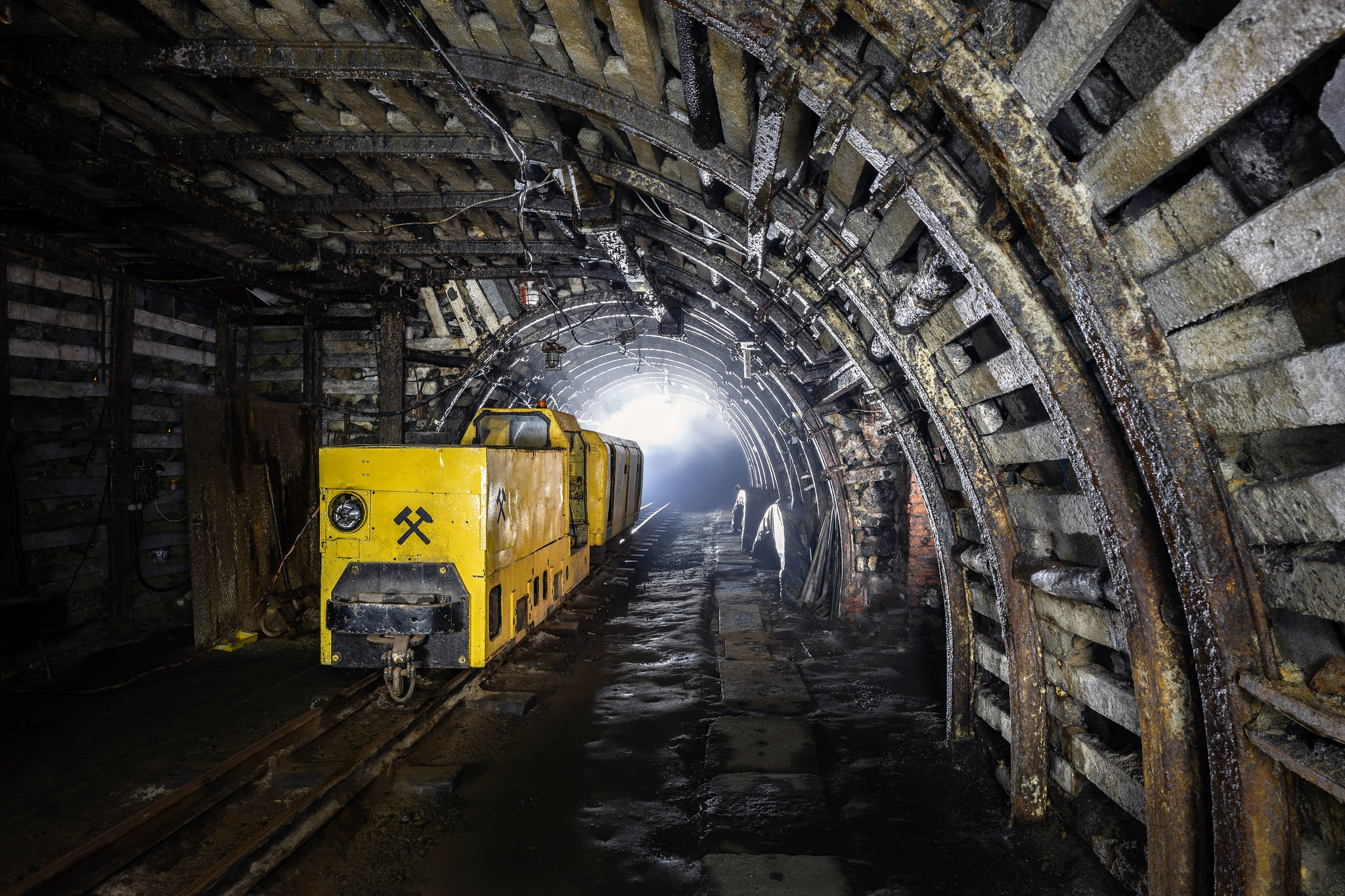
The visit begins with a descent by cage down the shaft, continues along some 700 metres of horizontal galleries in the Lech cross-cut, in the former Piast field, and ends with a ride of roughly 200 metres aboard a small 36-seat electric mine train, on track with a 430-millimetre gauge. Along the way are a shearer, an armoured conveyor, the different types of ground support, timber, sliding steel arches, rock bolting, and a 1963 Jung locomotive.
Above ground, four exhibition rooms bring together tools, lamps, rescue breathing apparatus, explosives and models of the installations. The collection places great emphasis on safety: in a mine prone to sudden outbursts, survival depended on discipline and equipment.
Sources: Muzeum Górnictwa w Nowej Rudzie; Przegląd Górniczy, “Katastrofalny wyrzut gazów i skał w kopalni Ruben, 10.05.1941” (vol. 73, no. 4, 2017); documentation from the Dawna Kopalnia Nowa Ruda site.
This tour is part of the catalogue of virtual tours of underground heritage.