The southernmost point of Malta
Bengħajsa forms the southern arm of Marsaxlokk Bay, at Birżebbuġa. It is the southernmost tip of the Maltese islands.
The British built a fort there between 1910 and 1912. Fort Bengħisa was the last Maltese work built to a polygonal plan, and the largest: some 45,000 square metres. It completed a chain protecting Marsaxlokk Harbour, together with Forts Delimara, Tas-Silġ and San Lucian, and the Pinto and Ferretti batteries.
Coastal artillery was abolished in 1956. Bengħisa and Fort St Rocco were the only two to stay armed a little longer. By 1960 every gun had been removed.
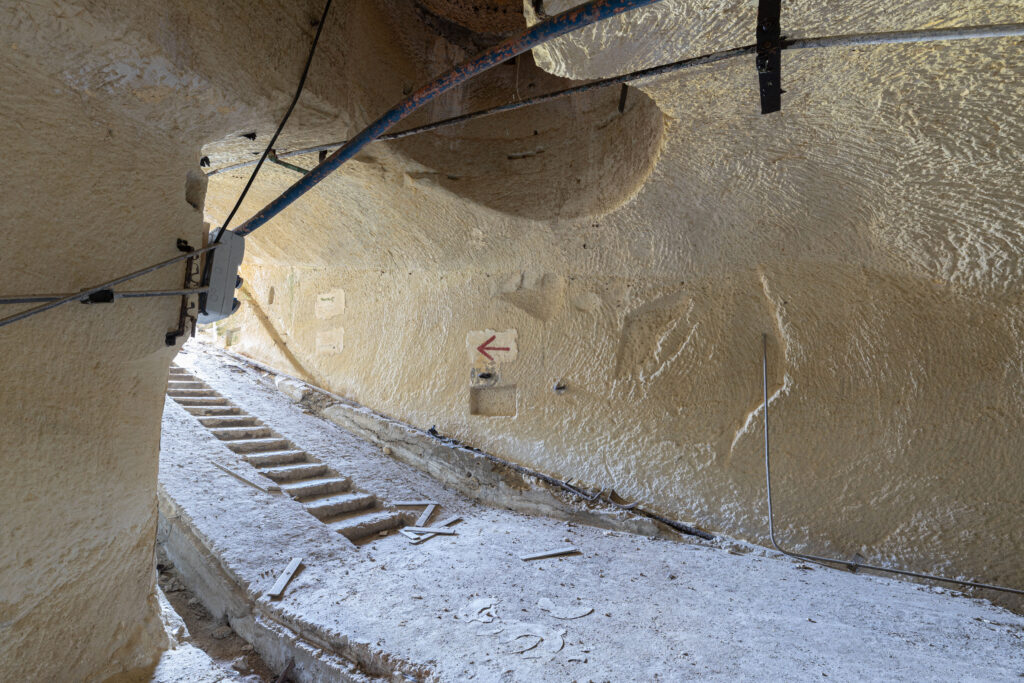
A station that spoke to five countries
The transmitting station came into service in the early 1940s. It did not broadcast to the public: this was a military transmitting site, one link in the British network across the Mediterranean.
Wireless telegraphy worked in two ways. Point to point first, on the high frequency bands (short wave) between Malta, the United Kingdom, Cyprus, Tripoli, Benghazi and Gibraltar. Ground to air next, with long-range aircraft.
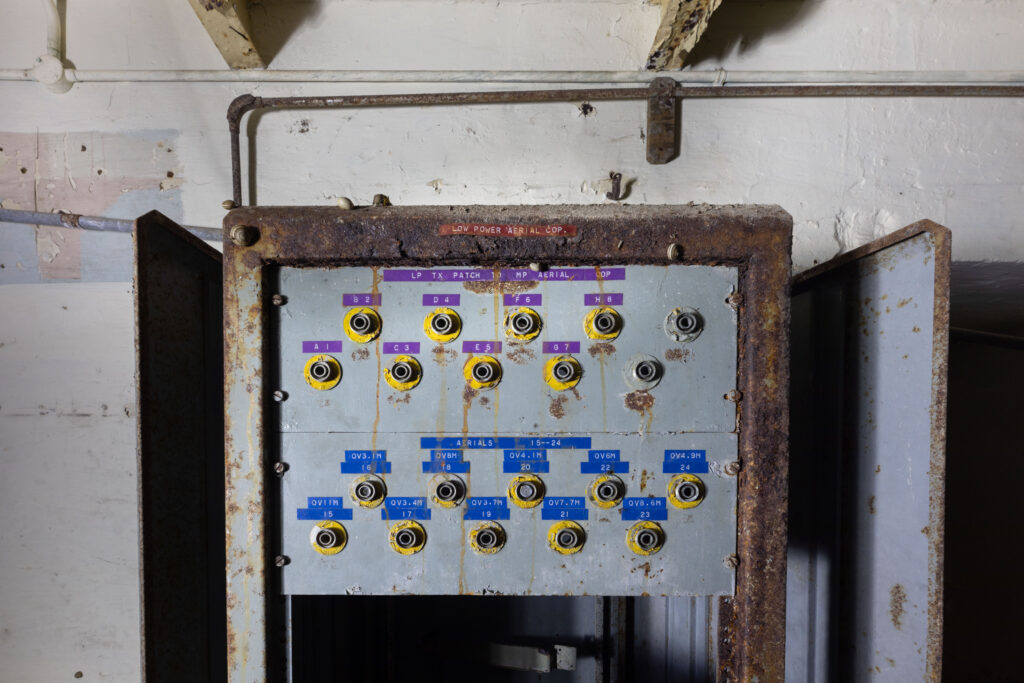
Three modes ran side by side: Morse, teleprinter and radio telephony. The site also carried a medium frequency beacon and several types of antenna.
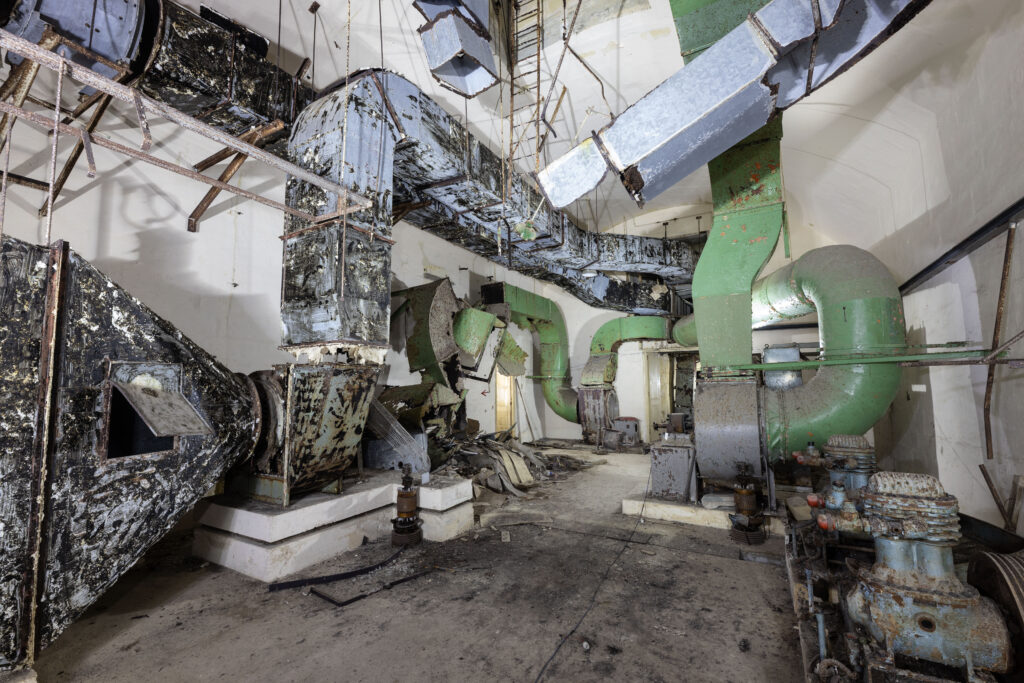
Underground, around the clock
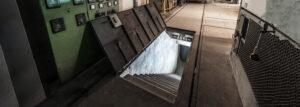
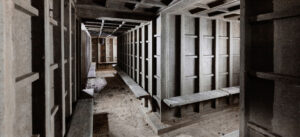
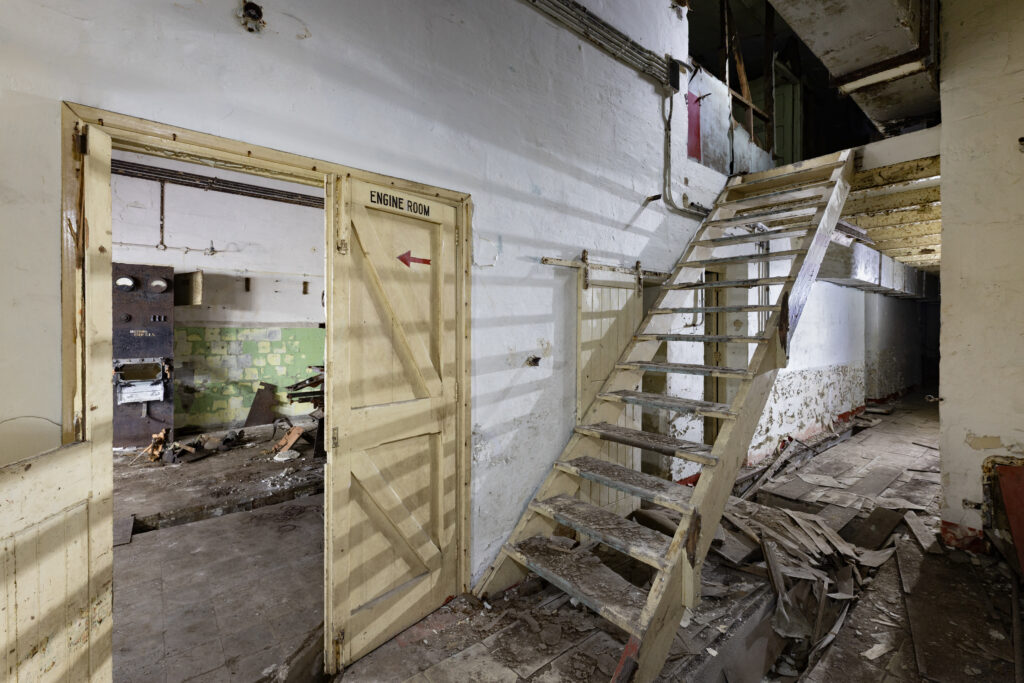
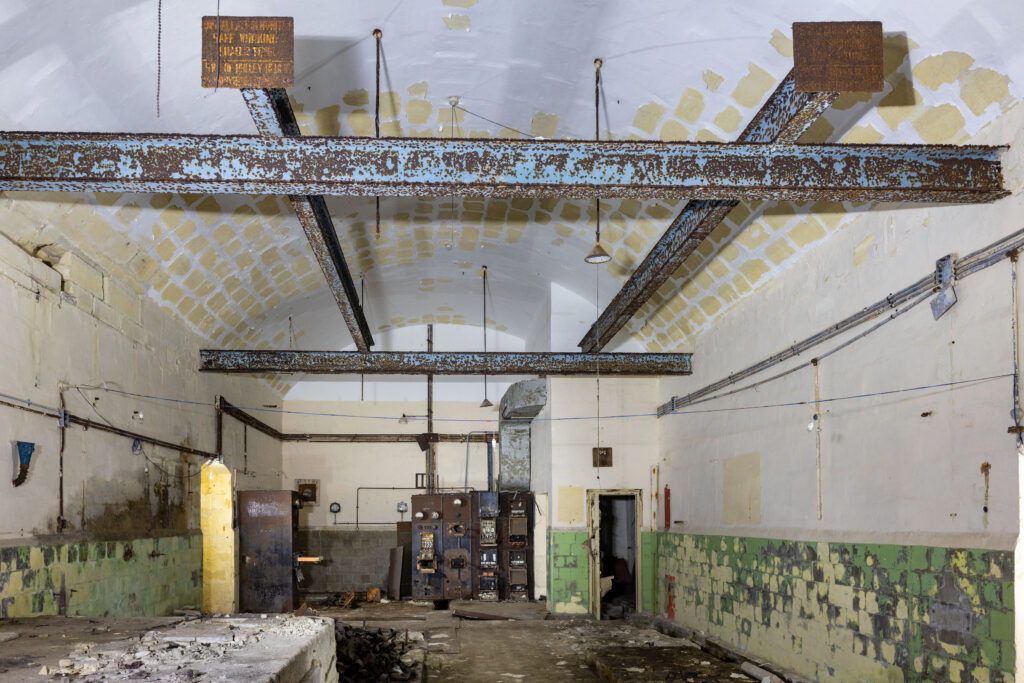
The underground rooms divided the work between them: generator room, transmitting room, workshops, pump room. A small accommodation block on the surface housed the staff on the antenna field.
The station ran twenty-four hours a day, seven days a week. The Royal Air Force operated it alone at first: between 1940 and 1960, only British personnel were stationed there.
In the early 1960s, RAF Malta personnel joined the British crews. A number of Maltese civilian technicians also worked for the RAF on site.
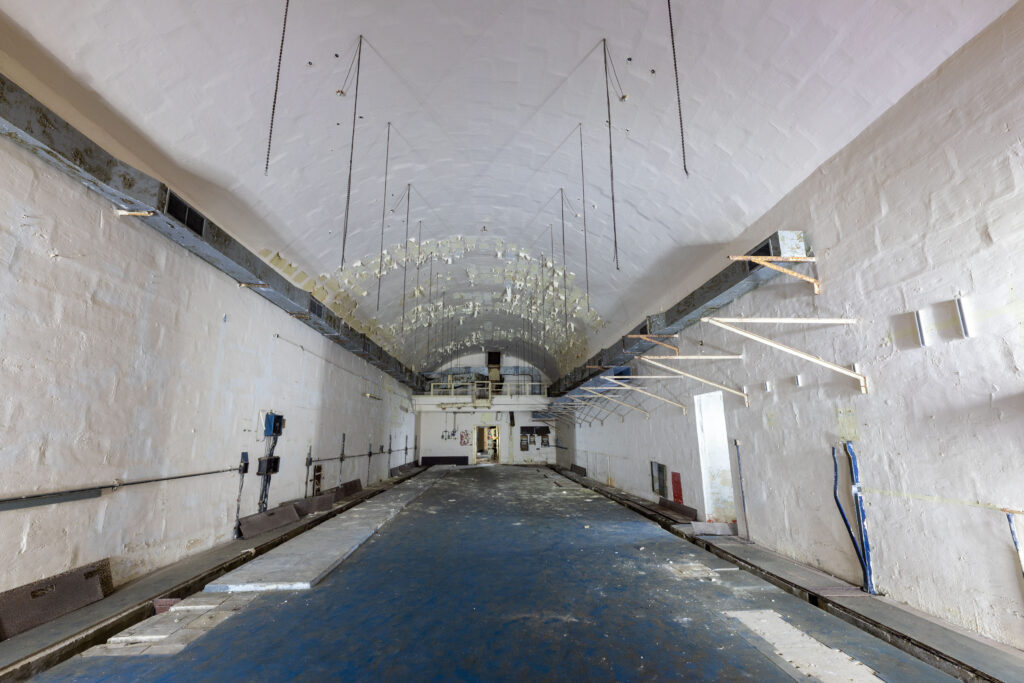
January 1979
The station stopped transmitting in January 1979. Two months later, on 31 March, the last British forces left Malta at the end of a lease extended to that date. Malta made it Freedom Day, Jum il-Ħelsien.
Bengħajsa therefore closed for the same reason as the Corradino power station, in the same year. Two underground sites (one making the current, the other carrying the voice) belong to the same page being turned.
What remains
The site now comes under Malta Air Traffic Services and is open only to authorised personnel.
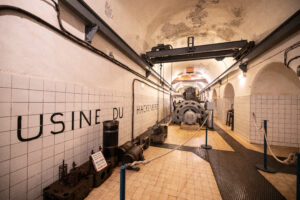
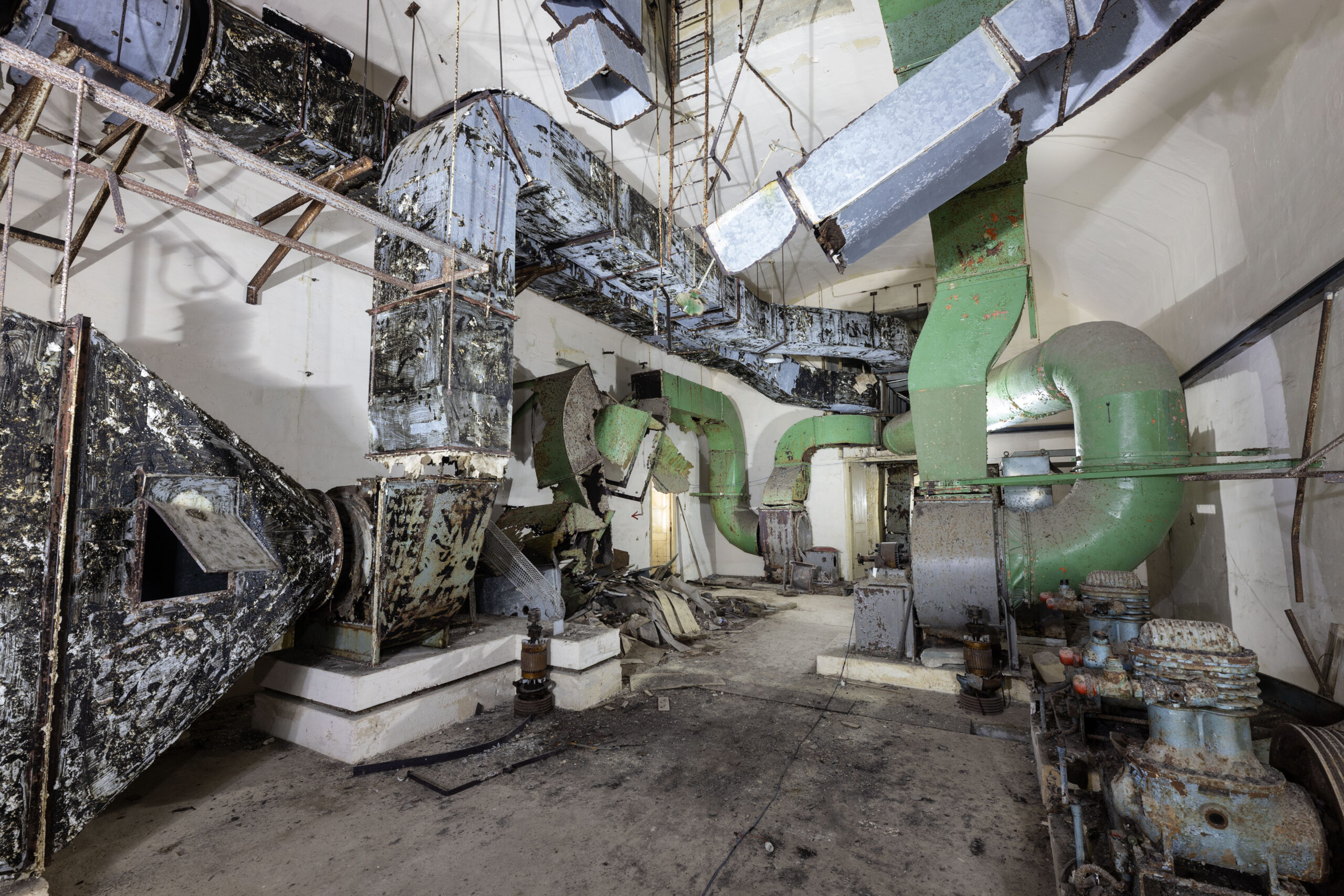
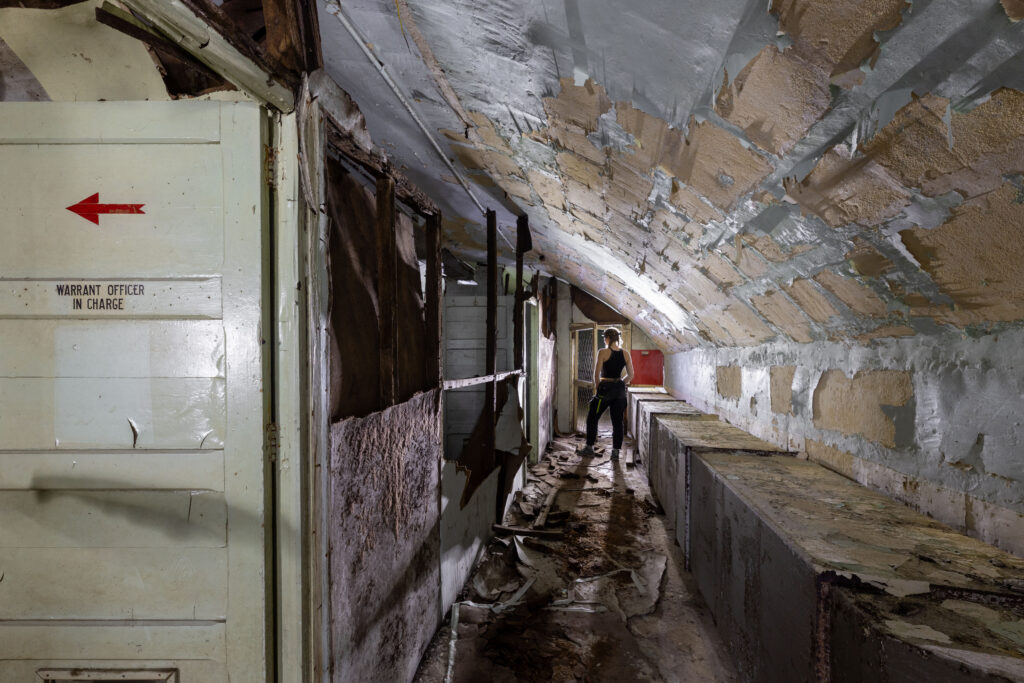
The equipment is still in place: parts from the old engine room, transmitting gear, workshop tools. Humidity is high and the metal has suffered badly. After more than eighty years, rust has taken almost everything.
These photographs are part of the underground heritage photography collection.