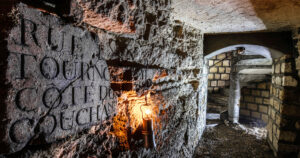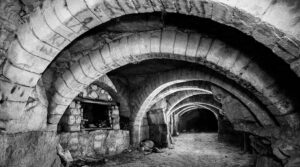
In Fécamp, the Val Criquet cavity has long been called the “German hospital”. No archive has ever established this, and the town’s guides show it to visitors as a “supposed” military hospital.
A cavity dug during the Occupation
During the war, the occupying forces fortified the entire coast. Blockhouses multiplied on the cliffs, then came the works of the Atlantic Wall, construction of which began in 1942.
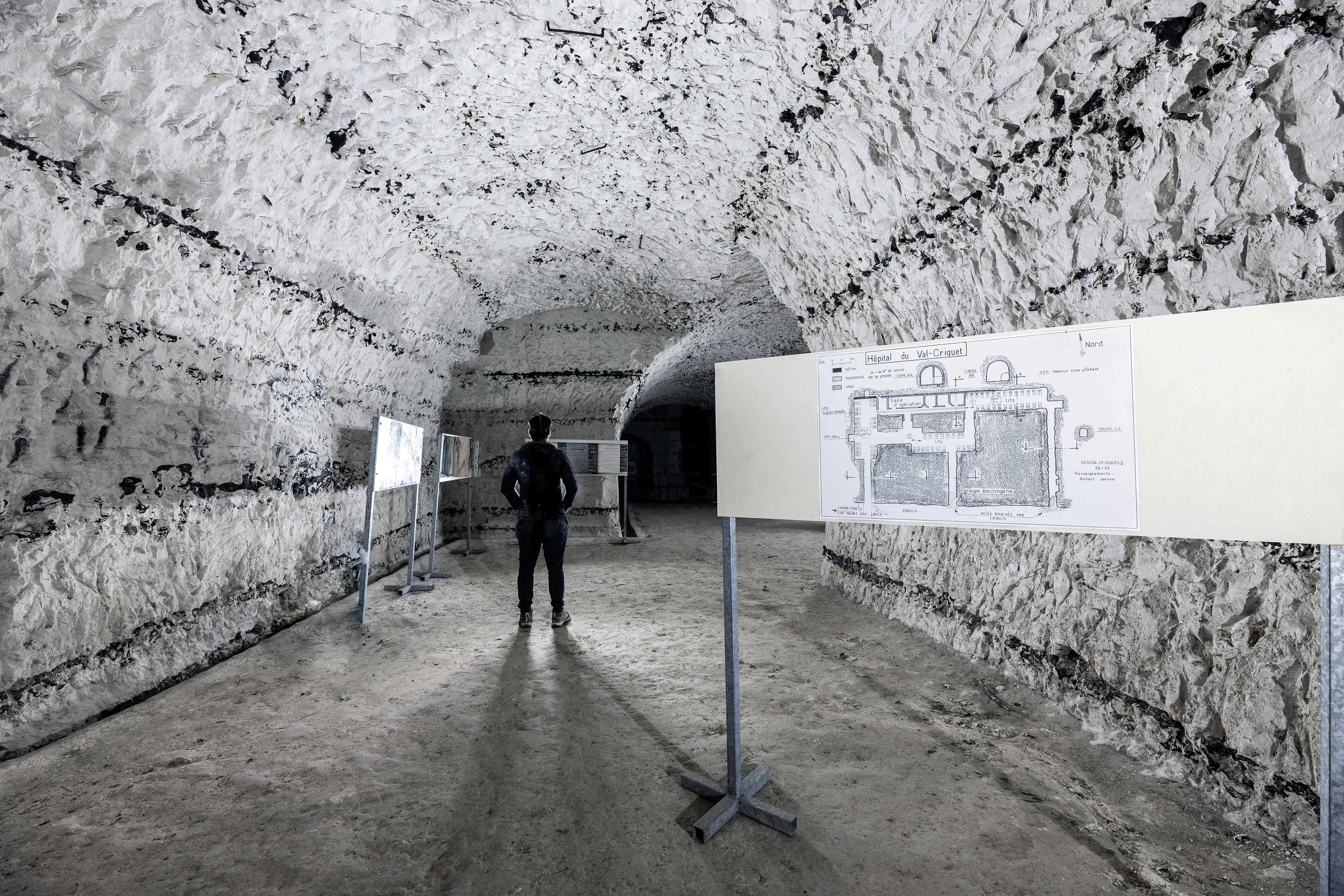
Digging began in January 1942, according to a German report that has since been found. The area was evacuated and closed off. Army pioneers attacked the chalk with pneumatic drills, and their marks can still be seen on the walls.
Three chambers in the chalk
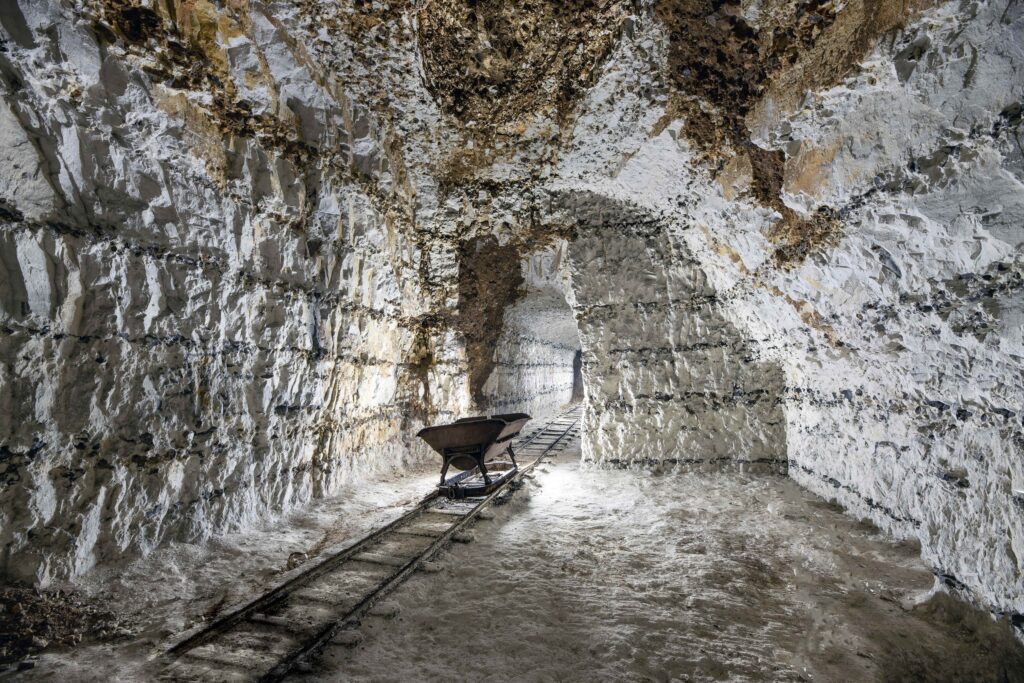
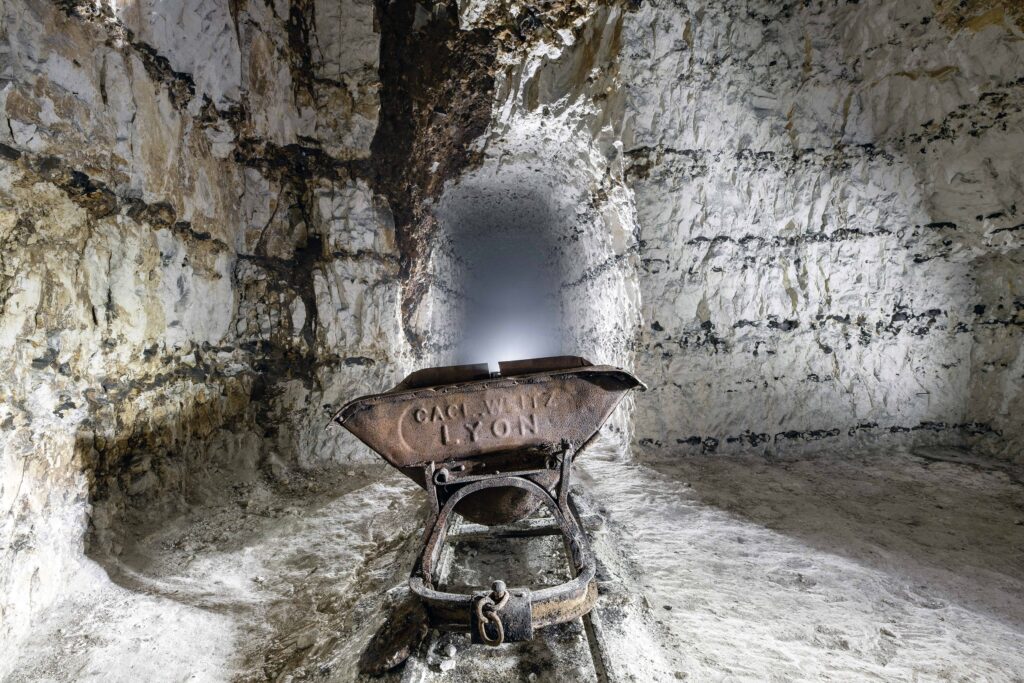
Entry is through a corridor cut straight into the chalk. It leads to a network of higher galleries and to three large vaulted chambers. Beds of chalk alternate there with layers of black flint, which streak the walls with dark bands.
A Decauville track still runs along the floor. A small wagon has remained on it, marked “CACL Weitz Lyon”, the name of a Lyon manufacturer of construction equipment.
The brick rooms
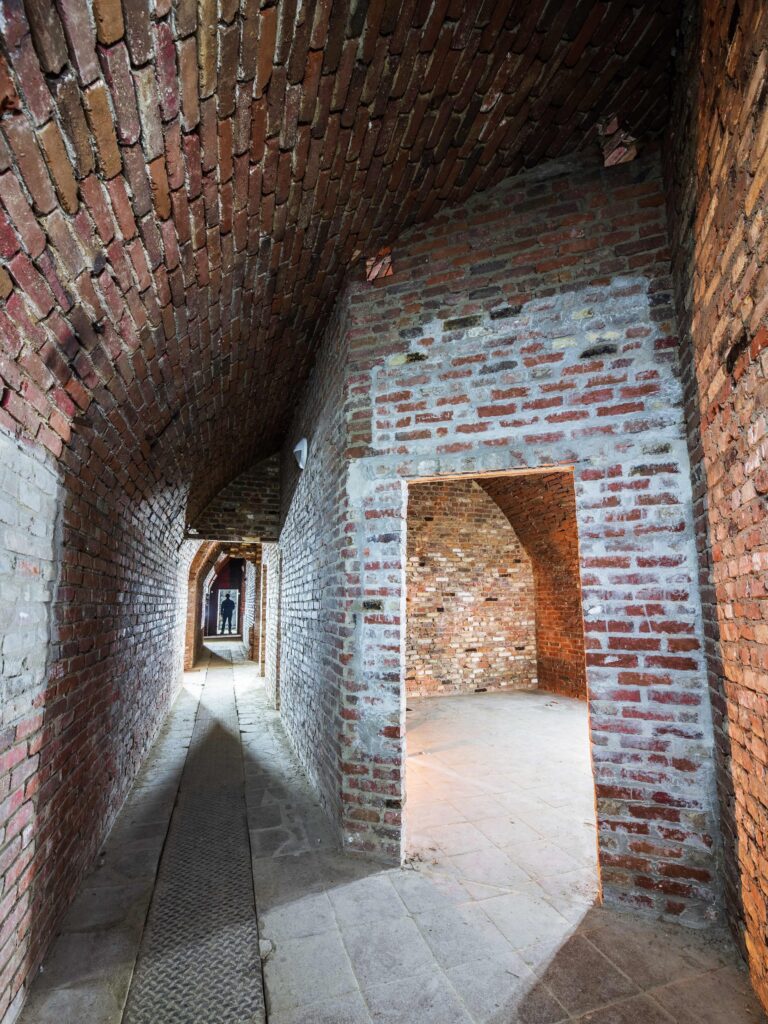
Where the three chambers meet, a row of small brick rooms stands in line. In places the masonry breaks off, as if the work had been left as it stood.
This is where local tradition places the hospital. The plan displayed at the entrance shows nearly seventy bunk beds in rooms five metres high. The brick rooms have tiled floors and effluent drains run through the galleries: some have seen operating theatres in them.
The hypothesis does not hold up well on site. The doors of these “operating theatres” are too narrow for a stretcher. The site, at the end of a steep path, is poorly suited to bringing in the wounded by vehicle, whereas more accessible quarries existed nearby. Witnesses say they saw beds and medicines at the Liberation. A box of medicines that was found is cited, which amounts to little.
The fortress engineers’ report
The only known archive document was found by one of the town’s guides. It is an inspection report written in German by the fortress engineers after a rockfall in 1943. It describes the site as a military medical shelter on the côte de la Vierge. The rockfall could explain the large retaining wall that closes off the end of one of the chambers.
Whether the site kept this purpose remains an open question. Some sections are unfinished, perhaps because the rock is fragile. The Fécamp archives service considers an ammunition, fuel or equipment depot possible. Other medical shelters are attested in the area, and another archive document places a military hospital in the neighbouring quarry by the church of Saint-Étienne, in the town centre. In 1944, the area was bombed several times, including with delayed-action bombs.
Sources: Mémoire et Fortifications, “Les cavités du Val-Criquet”; Tendance Ouest, “Un document inédit sur le supposé hôpital militaire allemand”; La France pittoresque, “Mystérieux abri de la Seconde Guerre mondiale à Fécamp” (2022)
These photographs are part of the underground heritage photography collection.